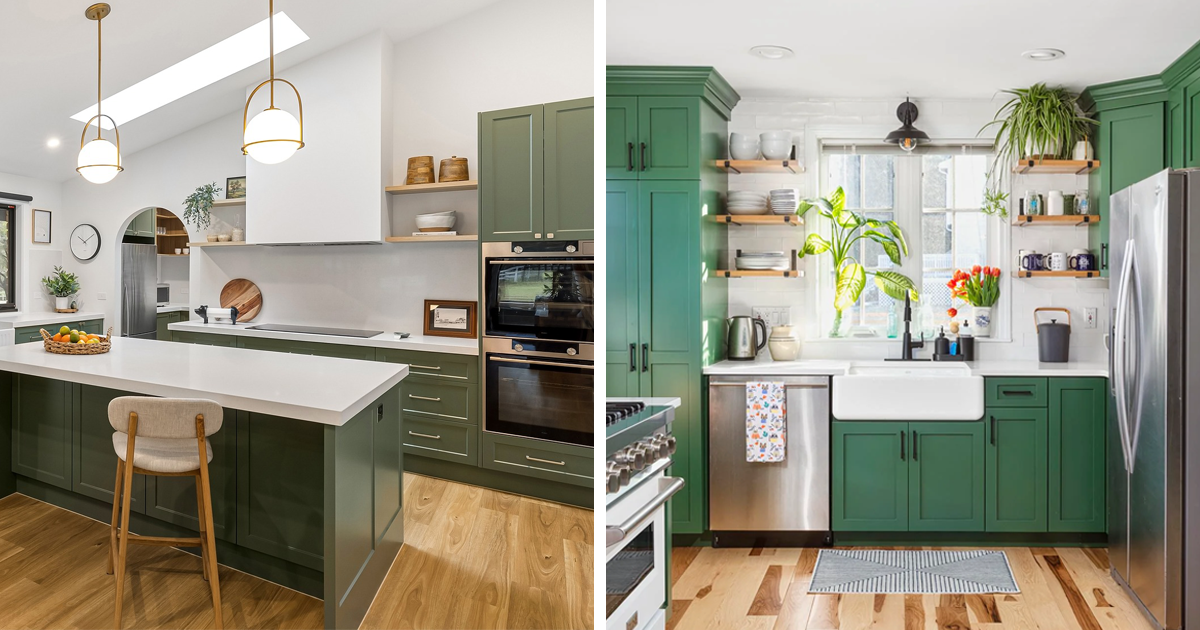
Green kitchen cabinets are having a well-earned main-character moment. After years of all-white kitchens behaving like they were the only respectable option at the design party, green has walked in wearing linen, carrying fresh herbs, and somehow making the whole room feel calmer. Whether you love soft sage, deep forest green, muted olive, cheerful mint, or moody emerald, green cabinetry brings the outdoors inside without requiring you to water anything.
The appeal is easy to understand. Green is flexible, natural, and surprisingly livable. It can read modern, cottage, farmhouse, traditional, coastal, vintage, or luxury depending on the shade and the materials around it. Pair pale sage cabinets with warm white walls and oak floors, and the kitchen feels breezy and relaxed. Choose glossy dark green cabinets with marble counters and brass hardware, and suddenly your kitchen looks like it knows how to pronounce “hors d’oeuvres.”
This guide explores 20 green kitchen cabinet ideas that can refresh your home with natural colors, along with practical styling tips, color-pairing advice, and real-life design experience to help you choose the right green for your space.
Why Green Kitchen Cabinets Work So Well
Green sits between cool and warm tones, which is why it works in so many kitchens. Blue-green shades feel crisp and elegant, yellow-green shades feel sunny and earthy, and gray-green shades act almost like neutrals. That flexibility makes green kitchen cabinets a smart choice for homeowners who want color but do not want a kitchen that screams, “I made a bold decision in 2026 and now we all have to live with it.”
Green also pairs beautifully with natural materials. Wood, stone, clay tile, marble, quartz, brass, copper, matte black metal, rattan, and linen all play nicely with green cabinetry. In other words, green does not need much babysitting. It can handle a casual breakfast nook, a polished chef’s kitchen, or a tiny apartment galley with equal charm.
20 Green Kitchen Cabinet Ideas To Refresh Your Home
1. Soft Sage Green Cabinets for a Calm Everyday Kitchen
Sage green kitchen cabinets are popular for a reason: they are gentle, sophisticated, and easy to decorate around. This muted green has gray undertones, so it behaves almost like a neutral. Use sage cabinets with white quartz countertops, brushed nickel hardware, and light oak floors for a kitchen that feels fresh but not fussy.
Sage works especially well in small kitchens because it adds color without making the room feel closed in. For extra brightness, keep upper walls light and use open shelving or glass-front cabinets to break up the cabinetry.
2. Olive Green Cabinets With Warm Wood Accents
Olive green cabinets bring a grounded, Mediterranean-inspired warmth to the kitchen. They look particularly beautiful with walnut, white oak, terracotta tile, cream walls, and antique brass hardware. Olive is a little richer than sage and a little softer than forest green, making it ideal for homeowners who want depth without drama.
For a timeless look, pair olive cabinets with marble-look quartz and simple shaker doors. For something more rustic, add handmade zellige tile and open wood shelves. Either way, olive green says, “Yes, I cook with fresh herbs,” even if your basil plant is currently negotiating with death.
3. Forest Green Cabinets for Moody Elegance
Forest green kitchen cabinets create instant atmosphere. This deep, nature-inspired shade works best in kitchens with good lighting, but it can also make a smaller space feel cozy when balanced with cream walls, reflective tile, or pale countertops.
Forest green is a strong choice for traditional and transitional kitchens. Add brass pulls, a white range hood, and dark wood floors for a refined design. If you want a modern edge, choose flat-front cabinets, black fixtures, and a slab backsplash.
4. Two-Tone Green and White Cabinets
If you are not ready for green from floor to ceiling, try two-tone kitchen cabinets. Green lower cabinets with white upper cabinets offer the perfect compromise. The green grounds the room, while the white keeps the space feeling open and bright.
This idea works beautifully in small kitchens, galley layouts, and homes with low ceilings. Choose sage, moss, or olive green for the base cabinets, then pair them with warm white uppers. Add a natural wood island or butcher block detail to soften the contrast.
5. Emerald Green Cabinets for a Jewel-Toned Statement
Emerald green cabinets are not shy. They are rich, glamorous, and perfect for homeowners who want a kitchen with personality. Emerald looks stunning with marble countertops, polished brass fixtures, and dramatic lighting.
To prevent emerald cabinets from feeling too intense, use them strategically. Paint the island emerald green while keeping perimeter cabinets white, cream, or natural wood. This creates a strong focal point without turning the entire kitchen into a gemstone cave.
6. Mint Green Cabinets for a Fresh Retro Feel
Mint green kitchen cabinets bring a cheerful, vintage-inspired energy to the home. This light green shade works well with white tile, chrome hardware, checkerboard floors, and retro appliances. It is especially charming in cottage kitchens, breakfast nooks, and older homes with original character.
The trick with mint is choosing a sophisticated version rather than a candy-colored one. Look for soft mint, celadon, or pale green with a bit of gray in the undertone. That keeps the look fresh instead of freezer-pop fluorescent.
7. Dark Green Cabinets With Brass Hardware
Few combinations are as reliable as dark green cabinets and brass hardware. The warmth of brass balances the cool richness of green, creating a look that feels both classic and current. This pairing works with shaker cabinets, inset cabinetry, modern slab doors, and even glass-front uppers.
For a polished finish, repeat the brass in the faucet, pendant lights, or shelf brackets. Just avoid overdoing it. A little brass is elegant; too much brass can make the room feel like it is auditioning for a pirate ship.
8. Green Cabinets With Butcher Block Countertops
Green and wood are natural partners. Butcher block countertops add warmth and texture, making green cabinets feel relaxed and welcoming. This combination works especially well with sage, olive, moss, and muted eucalyptus green.
Use butcher block on an island if you want the warmth of wood without committing to wood on every counter. Pair with white subway tile, black hardware, and woven bar stools for a cozy, practical kitchen that feels loved rather than staged.
9. Moss Green Cabinets for an Earthy Organic Look
Moss green cabinets are perfect for homeowners drawn to organic modern design. This shade has depth, softness, and a slightly muted quality that pairs beautifully with stone, plaster walls, warm woods, and handmade tile.
Moss green is less formal than emerald and less gray than sage. It feels like a walk through the woods after rain, which is a very poetic way of saying it looks great next to your coffee maker.
10. Green Kitchen Island With Neutral Cabinets
A green kitchen island is one of the easiest ways to bring natural color into your home. It allows you to enjoy the green cabinet trend without repainting every door and drawer. A sage, olive, or forest green island can transform a white, cream, or wood kitchen into something more layered and custom.
This is also a smart option if you are planning resale. A colorful island feels intentional and stylish, while neutral perimeter cabinets keep the overall kitchen broadly appealing.
11. Pale Green Cabinets for Small Kitchens
Light green cabinets can make a compact kitchen feel airy and uplifting. Choose pale sage, seafoam, eucalyptus, or celadon for a gentle wash of color. These shades reflect more light than darker greens and pair beautifully with white walls, light floors, and simple hardware.
To make a small green kitchen feel larger, keep the backsplash simple, avoid heavy window treatments, and use under-cabinet lighting. The goal is to let the cabinets add personality without crowding the room visually.
12. Blue-Green Cabinets for a Coastal Mood
Blue-green cabinets, such as teal, peacock, or deep sea green, offer a coastal feel without relying on beach signs or jars of seashells. These shades work well with white counters, sandy beige tile, woven textures, and aged brass or chrome fixtures.
For a refined coastal kitchen, choose a muted blue-green rather than a bright turquoise. The result feels calm, breezy, and grown-upmore “quiet seaside cottage,” less “souvenir shop with a blender.”
13. Green Cabinets With Marble Countertops
Green cabinets and marble countertops are a dream team. The natural veining in marble adds movement, while green cabinetry creates depth and warmth. White marble with gray veining works beautifully with forest, emerald, and sage cabinets. Creamy marble or quartzite pairs well with olive and moss tones.
If real marble is not practical for your lifestyle, marble-look quartz can deliver a similar visual effect with easier maintenance. This is helpful if your kitchen sees spaghetti sauce, lemon juice, red wine, or children with mysterious sticky hands.
14. Matte Green Cabinets for Modern Simplicity
Matte green cabinets feel clean, calm, and contemporary. Flat-front cabinet doors in muted green create a sleek look without feeling cold. This style works well with integrated appliances, slab backsplashes, hidden pulls, and minimalist lighting.
For warmth, add wood floors, natural stone, or a textured runner. Matte finishes can show fingerprints depending on the material, so choose durable cabinet paint or factory-finished doors if your kitchen gets heavy daily use.
15. Glossy Green Cabinets for Bold Personality
Glossy green cabinets are for people who enjoy a little drama with their morning toast. A lacquered or high-sheen finish reflects light and makes green feel more vibrant. This style works especially well in modern kitchens, Art Deco-inspired spaces, or compact rooms that need more bounce from available light.
Deep glossy green looks luxurious with brass and marble, while lighter glossy green can feel playful and retro. Keep surrounding finishes simple so the cabinets remain the star.
16. Green Shaker Cabinets for a Timeless Look
Shaker cabinets and green paint are a dependable combination. The clean lines of shaker doors allow the color to shine without making the kitchen feel overly trendy. Sage, olive, and forest green all work beautifully with this cabinet style.
For a classic design, pair green shaker cabinets with white tile, stone countertops, and simple cup pulls. For a more modern look, use slim black hardware, a vertical tile backsplash, and warm wood accents.
17. Green Cabinets With Black Countertops
Green cabinets and black countertops create a sophisticated, grounded kitchen. Soapstone, honed granite, black quartz, or dark concrete surfaces pair especially well with olive, hunter, and forest green cabinetry.
This combination is ideal for traditional homes, mountain cabins, industrial kitchens, and moody modern spaces. To keep the room from feeling too heavy, add warm lighting, cream walls, and wood details.
18. Gray-Green Cabinets for Neutral Lovers
Gray-green cabinets are perfect if you usually choose neutrals but want something more interesting than beige, white, or gray. These shades shift beautifully throughout the day, sometimes reading green, sometimes gray, and sometimes like the exact color of calm.
Gray-green pairs well with warm white walls, brushed nickel, antique brass, limestone, oak, and soft black accents. It is one of the safest green cabinet choices for a long-lasting kitchen design.
19. Green Cabinets With Open Shelving
Open shelving can make green cabinetry feel lighter and more casual. Instead of installing upper cabinets everywhere, use wood or painted shelves above green lower cabinets. This works especially well in cottage, farmhouse, Scandinavian, and organic modern kitchens.
Style the shelves with everyday dishes, glassware, cookbooks, bowls, and a small plant or two. Just remember: open shelves are not magic. If you own 47 mismatched mugs and a leaning tower of plastic containers, closed storage may still be your best friend.
20. Color-Drenched Green Kitchen Cabinets and Walls
For a bold designer look, paint the cabinets, trim, and walls in similar green tones. This color-drenched approach creates a cozy, immersive space that feels intentional and high-end. It works best with muted greens such as olive, moss, sage, or gray-green.
To add dimension, vary the finishes. Use satin or semi-gloss on cabinets, matte on walls, and natural texture in the backsplash, flooring, or lighting. The result is layered rather than flat.
How To Choose the Right Green for Your Kitchen
Look at Your Natural Light
Before choosing green kitchen cabinets, study your kitchen throughout the day. North-facing rooms may make green look cooler and grayer. South-facing rooms can warm the color and make it appear brighter. If your kitchen has limited daylight, pale sage or gray-green may be safer than a very dark forest shade.
Match the Undertone to Existing Finishes
Cabinet color should work with your floors, counters, backsplash, and appliances. Warm woods look great with olive and moss green. Cool marble pairs beautifully with emerald, forest, and blue-green. Creamy quartz works well with sage and gray-green.
Test Large Paint Samples
Never choose cabinet paint from a tiny chip alone. Paint large sample boards and move them around the kitchen. Look at them in morning light, afternoon light, and evening artificial light. Green can change dramatically, and you do not want to discover after installation that your “soft sage” becomes “hospital hallway pea soup” at 7 p.m.
Best Colors To Pair With Green Kitchen Cabinets
White and Cream
White and cream are the easiest partners for green cabinets. Crisp white creates contrast, while warm cream softens the look. If your green has warm undertones, choose creamy white. If your green is cool or blue-based, a cleaner white may work better.
Natural Wood
Wood adds warmth and prevents green cabinets from feeling flat. White oak, walnut, maple, and reclaimed wood can all work depending on the shade of green. Light oak feels airy with sage; walnut feels luxurious with forest green.
Brass, Black, and Nickel
Brass hardware warms up green cabinets and adds a classic touch. Matte black creates a modern, graphic contrast. Nickel and chrome feel crisp and timeless, especially with pale green or blue-green cabinetry.
Stone, Tile, and Texture
Green cabinets love texture. Consider handmade tile, marble, quartzite, soapstone, brick, terracotta, or plaster-style walls. Natural textures make the green feel intentional and connected to the rest of the home.
Common Mistakes To Avoid With Green Cabinets
The biggest mistake is choosing a green that is too bright for the space. Neon, overly grassy, or highly saturated greens can feel tiring in a kitchen because cabinets take up so much visual real estate. A bold green can work, but it needs balance and confidence.
Another mistake is ignoring the backsplash. A busy backsplash paired with strong green cabinets can overwhelm the room. When in doubt, keep the backsplash simple and let the cabinets lead.
Finally, do not forget lighting. Green cabinets can look dull under cold bulbs or too yellow under overly warm bulbs. Aim for balanced, high-quality lighting that flatters the cabinet color and makes food look appetizing. No one wants a kitchen where salad looks suspicious.
Experience Notes: What It Is Really Like To Live With Green Kitchen Cabinets
After studying many green kitchen cabinet designs and comparing how different shades behave in real homes, one thing becomes clear: green is not just a trend color. It is a mood-setter. A kitchen with green cabinets often feels more relaxed than a stark white kitchen and more personal than a standard gray one. The color gives the room a sense of rhythm, especially when repeated in small details such as plants, patterned rugs, artwork, or dishware.
In everyday use, softer greens tend to be the easiest to live with. Sage, gray-green, eucalyptus, and muted olive do not demand constant attention. They create a peaceful background for cooking, cleaning, talking, and doing the glamorous household activity known as standing in front of the fridge wondering what you came for. These shades also hide minor dust and fingerprints better than pure white or very dark cabinets.
Dark green cabinets are more dramatic and often more rewarding visually, but they require better planning. They look best when the kitchen has enough contrast: pale counters, good lighting, reflective tile, or warm metallic accents. Without those elements, dark green can become heavy. With them, it becomes rich and elegant. A forest green island, for example, can make even a simple kitchen feel custom.
Hardware makes a bigger difference than many people expect. Brass can make green cabinets feel warm and classic. Black hardware makes them feel modern and slightly edgy. Nickel or chrome keeps them clean and practical. If you are updating existing cabinets, changing both the paint color and hardware can create a surprisingly large transformation without a full remodel.
Another real-world lesson: green cabinets look best when they connect to something else in the room. That does not mean everything must match. In fact, please do not match your cabinets, curtains, toaster, and dog bed in the same exact shade of sage. Instead, create a natural conversation between materials. Green cabinets can connect to wood floors, a stone countertop, leafy views outside the window, or even a vintage rug with green threads.
Maintenance depends more on finish than color. A durable satin or semi-gloss cabinet finish is usually easier to clean than a flat matte paint. Factory-finished cabinets may hold up better in busy family kitchens, while professionally painted cabinets can be excellent when properly prepped, primed, and sealed. If you cook often, choose washable finishes and avoid delicate surfaces near the sink, stove, and trash pullout.
For homeowners nervous about commitment, the best entry point is a green island, pantry wall, coffee bar, or lower cabinets only. These options deliver the refreshing effect of natural color without overwhelming the whole room. Once you see how green changes the energy of the kitchen, you may wonder why you spent so many years pretending white was the only responsible adult in the cabinet aisle.
Conclusion
Green kitchen cabinets are one of the most versatile ways to refresh your home with natural colors. From soft sage to dramatic forest green, this palette can make a kitchen feel calm, stylish, warm, vintage, modern, or luxurious. The key is choosing the right undertone, testing it in your actual light, and pairing it with materials that support the mood you want.
If you want a gentle update, try pale sage or gray-green cabinets with warm white walls. If you want richness, consider olive, moss, or forest green with brass and stone. If you want personality, experiment with emerald, mint, or a green kitchen island. No matter which direction you choose, green has a rare design superpower: it feels fresh and timeless at the same time.
Note: This article was created as original web-ready content based on current U.S. interior design guidance, cabinet color trends, paint-brand recommendations, and practical kitchen styling principles.