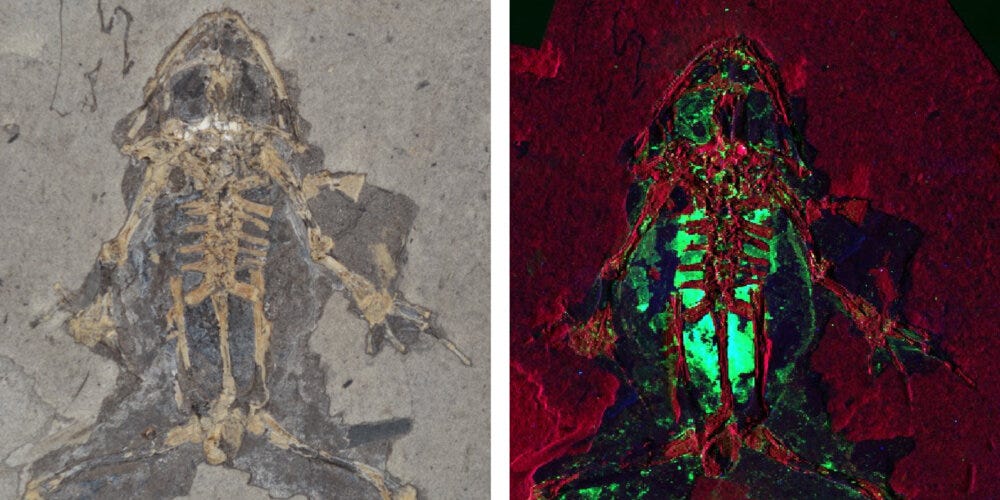
For a long time, reconstructing extinct animals sounded like a job shared by two very different people: a scientist with a microscope and an artist with a suspiciously dramatic imagination. One brought measurements, fossils, and stern warnings about evidence. The other brought muscles, feathers, skin, colors, andoccasionallya dinosaur that looked like it was late for a heavy metal concert. Today, however, the line between science and reconstruction has become much sharper, smarter, and more exciting.
Scientists have learned how to reconstruct long-extinct animals by combining fossil evidence, comparative anatomy, CT scanning, 3D modeling, ancient DNA, protein analysis, biomechanics, and a careful dose of artistic interpretation. The goal is not simply to make a prehistoric creature look cool, although let us be honest, that part is a delightful bonus. The real goal is to understand how extinct animals moved, ate, sensed the world, reproduced, survived, and eventually disappeared.
This field matters because extinct animals are not just museum decorations with excellent cheekbones. They are data-rich clues to evolution, climate change, ecosystems, and the history of life on Earth. When researchers reconstruct a woolly mammoth, saber-toothed cat, giant ground sloth, ancient whale, or feathered dinosaur, they are rebuilding a chapter of nature’s autobiographyone bone, molecule, and digital model at a time.
What Does It Mean to Reconstruct an Extinct Animal?
Reconstructing an extinct animal does not mean scientists can always bring the animal back to life. That is a common misunderstanding, usually caused by movies where a mosquito in amber starts a theme park disaster and everyone pretends this was not obviously a terrible business plan. In real science, reconstruction usually means creating the most accurate possible picture of an animal’s anatomy, appearance, behavior, habitat, and evolutionary relationships.
There are several types of reconstruction. A skeletal reconstruction arranges fossil bones into a complete body frame. A life reconstruction adds muscles, skin, feathers, fur, fat, posture, and sometimes color. A digital reconstruction uses software to model missing parts or simulate movement. A genomic reconstruction attempts to rebuild parts of an extinct species’ DNA. In rare cases, de-extinction research explores whether traits from extinct animals could be recreated in living relatives through biotechnology.
Each version has limits. Fossils rarely preserve every body part. DNA breaks down over time. Soft tissue is usually gone. Behavior is tricky because animals did not politely leave instruction manuals beside their skeletons. Still, modern tools have made reconstruction more evidence-based than ever before.
The Fossil Record: The Original Puzzle Box
Fossils remain the foundation of extinct animal reconstruction. Bones reveal size, posture, muscle attachment points, tooth shape, age, injuries, and growth patterns. A skull can suggest bite force, vision, smell, and hearing. Limb bones can indicate whether an animal was a runner, climber, swimmer, digger, or a professional couch potato in prehistoric terms.
Paleontologists compare fossil bones with the skeletons of living animals. For example, if an extinct predator had long legs, flexible joints, and blade-like teeth, researchers may compare it with wolves, big cats, crocodilians, or birds of prey depending on its evolutionary group. This method, called comparative anatomy, helps scientists infer how missing muscles and soft tissues may have been arranged.
Trackways also provide valuable evidence. Fossil footprints can show walking speed, group movement, stride length, and posture. Bite marks can reveal predator-prey relationships. Coprolitesfossilized feces, because science has no shame when truth is involvedcan show what animals ate. Nests and eggs can reveal reproductive behavior. Skin impressions can tell researchers whether an animal had scales, feathers, wrinkles, pads, or other external features.
CT Scans and 3D Modeling: Looking Inside Stone
One of the biggest breakthroughs in reconstructing extinct animals is the use of computed tomography, better known as CT scanning. CT scanners allow scientists to see inside fossils without cutting them open. This is especially useful when bones are trapped inside rock, crushed, fragile, or too valuable to risk damaging.
With CT data, researchers can create detailed 3D models of skulls, inner ears, brain cavities, teeth, and hidden bones. These models can be rotated, enlarged, printed, measured, and tested in ways that physical fossils cannot. A fossil skull that once looked like a mysterious rock lump can become a digital anatomy map.
For example, scientists use skull scans to create endocasts, which are models of the space where the brain and sensory organs once sat. These do not show the brain in perfect detail, but they can reveal the relative size of sensory regions. A large olfactory area may suggest a strong sense of smell. Inner ear structures can help researchers understand balance, hearing, and head posture.
Digital modeling also helps with missing pieces. If a fossil is incomplete on one side, scientists can sometimes mirror the preserved side to estimate the missing shape. If a species is known from several partial specimens, researchers can combine evidence to build a more complete reconstruction. It is like assembling a 3D jigsaw puzzle where half the pieces are rock, several are missing, and one might actually belong to a different puzzle. Paleontology is not for the easily discouraged.
Muscles, Movement, and Biomechanics
A skeleton is only the starting framework. To understand an extinct animal as a living creature, scientists must estimate muscles, tendons, cartilage, and movement. Muscle scars on bones show where muscles attached. Joint surfaces reveal possible ranges of motion. Bone thickness and shape can suggest stress patterns from running, climbing, swimming, or supporting massive weight.
Biomechanical models let researchers test how extinct animals may have moved. A digital limb can be given estimated muscles and body mass. Then scientists can simulate walking, running, biting, or lifting. These tests help answer practical questions: Could this dinosaur sprint? Could that ancient whale hear underwater? Could a saber-toothed cat use its famous teeth without accidentally giving itself the worst dental problem in history?
These models are not perfect, but they are powerful because they make assumptions testable. Instead of saying, “This animal probably moved like this because it looks right,” scientists can ask, “Does this movement fit the bones, joints, muscle forces, and physics?” The result is a more disciplined reconstruction.
Skin, Feathers, Fur, and Color: The Soft Parts Problem
Soft tissue is the great challenge of extinct animal reconstruction. Bones fossilize far more easily than skin, feathers, hair, organs, or fat. That is why older dinosaur art often showed animals as shrink-wrapped skeletons with skin pulled tightly over every bone. Modern paleoartists and scientists now recognize that living animals have soft tissue volume, display structures, fat deposits, lips, cheeks, wattles, feathers, and other features that may not fossilize well.
Exceptional fossils can preserve skin impressions, feathers, or even outlines of soft tissue. These fossils are scientific treasures because they show what bones alone cannot. Some dinosaur fossils preserve scale patterns. Some feathered dinosaurs preserve feather placement. Some ancient mammals from cold environments preserve hair or skin. These details help scientists move from “educated guess” to “evidence-backed reconstruction.”
Color is even harder, but researchers have made remarkable progress. In some fossils, microscopic pigment-bearing structures called melanosomes are preserved. By comparing their shape and arrangement with melanosomes in modern birds, scientists have inferred color patterns in certain feathered dinosaurs and ancient birds. The famous feathered dinosaur Anchiornis, for instance, became one of the first dinosaurs whose color pattern could be reconstructed from direct fossil evidence.
Still, color reconstruction must be handled carefully. Not all pigments preserve. Geological processes can alter microscopic structures. Many reconstructions remain partial. If a dinosaur did not leave preserved feathers, skin impressions, or pigment structures, its exact color may remain unknown. In other words, science can sometimes tell us whether the animal had reddish stripes, but it cannot always confirm whether it was “forest green with villain energy.”
Ancient DNA: The Molecular Time Machine With a Short Battery Life
Ancient DNA has transformed the study of extinct animals, especially species that vanished relatively recently. DNA can reveal evolutionary relationships, population history, adaptations, and sometimes physical traits. Researchers have sequenced genomes from woolly mammoths, Neanderthals, cave bears, giant ground sloths, horses, and other ancient organisms.
But DNA is fragile. After death, it breaks into small fragments. Heat, moisture, oxygen, microbes, and time all damage genetic material. Cold, dry, stable environments are much better for preservation, which is why permafrost has been so important for mammoth research. For very old fossils, especially non-avian dinosaurs from tens of millions of years ago, recoverable DNA is not expected under current scientific understanding.
This is why scientists are far more likely to reconstruct genetic information from a 50,000-year-old mammoth than from a 66-million-year-old Tyrannosaurus rex. The mammoth may still contain broken but usable DNA fragments. The T. rex, despite its excellent branding, is far beyond the realistic DNA preservation window.
Ancient DNA reconstruction is not simply a matter of finding a complete genome sitting in a fossil like a saved document. Researchers extract tiny fragments, identify authentic ancient sequences, remove contamination, compare them with living relatives, and computationally assemble the data. It is painstaking work, and the result may still contain gaps. Even so, those fragments can reveal extraordinary information about extinct life.
The Woolly Mammoth and the New Age of Genome Reconstruction
The woolly mammoth has become the celebrity case of extinct animal reconstruction. It had the right combination of recent extinction, cold habitat, preserved remains, and living relatives. Mammoths disappeared from most of their range thousands of years ago, with small island populations surviving longer. Their closest living relatives are Asian elephants, which gives scientists a reference point for studying mammoth traits.
In 2024, researchers reported an extraordinary advance: preserved 3D chromosome structures from a roughly 52,000-year-old woolly mammoth skin sample. This mattered because ancient DNA usually survives as tiny fragments. In this case, the preserved structure helped scientists study how mammoth chromosomes were organized, offering a deeper view of the animal’s genome and gene activity.
This kind of work does not mean a full mammoth is ready to stroll into a snowy field tomorrow morning, looking majestic and mildly confused. It does mean scientists are learning how extinct genomes were arranged and how certain traits may have worked. That knowledge helps researchers understand mammoth biology, adaptation to cold, hair growth, fat storage, and evolutionary differences from modern elephants.
Proteins, Chemistry, and Clues Beyond DNA
When DNA is too damaged, proteins can sometimes last longer. Protein analysis, or paleoproteomics, can help identify evolutionary relationships and biological traits in ancient remains. Tooth enamel proteins, for example, can survive in some conditions where DNA does not.
Chemical analysis can also reveal diet and habitat. Stable isotopes in bones and teeth can show whether an animal ate grasses, leaves, meat, or marine foods. Tooth wear can show feeding style. Bone chemistry may reveal migration patterns or climate conditions. These clues do not create a full body image, but they add life to the reconstruction.
Think of fossils as the skeleton of the story, DNA as the family records, proteins as backup files, and chemical signatures as receipts from the animal’s daily life. Together, they help scientists rebuild not just what an extinct animal looked like, but how it lived.
De-Extinction: Can Scientists Bring Animals Back?
De-extinction is the most headline-grabbing part of this field, but it is also the easiest to misunderstand. Scientists are not likely to resurrect exact copies of long-extinct animals. A more realistic approach involves identifying key traits from extinct species and editing related living species to express some of those traits.
For example, mammoth-inspired research focuses on cold-adapted traits in elephants, not on magically cloning a perfect mammoth from a frozen hairball. Similar discussions exist around the passenger pigeon, thylacine, and other recently extinct animals with usable genetic information and close living relatives.
Even if technical hurdles can be overcome, ethical and ecological questions remain. Where would a reconstructed animal live? Would the habitat still exist? Could it survive socially and biologically? Would resources be better spent protecting endangered species that are still alive? These are not minor details. Rebuilding an animal without rebuilding its ecosystem would be like restoring a classic car and then realizing roads no longer exist.
Why Reconstruction Is Not Guesswork Anymore
Modern extinct animal reconstruction is evidence-based, layered, and transparent about uncertainty. Scientists often classify reconstruction details by confidence level. Bones and preserved skin impressions may be high-confidence evidence. Muscle volume may be moderate-confidence based on living relatives. Color may be high-confidence in some feathered fossils and unknown in others. Display features such as crests, wattles, or bright skin may be plausible but harder to prove.
This is why responsible paleoart has become an important scientific partner. Paleoartists do not simply decorate science; they visualize hypotheses. A good reconstruction shows what the evidence supports while acknowledging what remains uncertain. When new fossils appear, the artwork changes. That is not failure. That is science updating its wardrobe.
Consider how dinosaur reconstructions have changed. Many dinosaurs once stood upright with dragging tails. Later evidence showed more horizontal postures and elevated tails. Some dinosaurs once looked scaly by default. Fossil feathers changed that picture dramatically. The creatures did not change, of course. Our evidence improved.
Specific Examples of Reconstructed Extinct Animals
Anchiornis: A Dinosaur With Evidence-Based Color
Anchiornis was a small feathered dinosaur from the Late Jurassic. Fossil feathers preserved microscopic melanosomes, allowing scientists to infer patterns of black, white, gray, and reddish coloration. This made Anchiornis a landmark case in paleo-color reconstruction.
Woolly Mammoth: The Genomic Superstar
The woolly mammoth is one of the best-known examples of ancient DNA research. Frozen remains have provided DNA, hair, skin, and other tissues. Scientists have used this evidence to study cold adaptation, population decline, and genetic differences from elephants.
Thrinaxodon: Hearing in a Mammal Relative
Thrinaxodon, a mammal-like reptile from about 250 million years ago, has helped researchers study the evolution of hearing. CT models and biomechanical analysis allow scientists to test how jaw and ear structures may have functioned before modern mammal ears fully evolved.
Edmontosaurus: Skin Impressions and Body Shape
Some duck-billed dinosaur fossils preserve extensive skin impressions and body outlines. These exceptional specimens help scientists understand external anatomy, scale patterns, and soft tissue contours that ordinary bones cannot reveal.
The Human Experience of Reconstructing Extinct Animals
There is something deeply human about wanting to see extinct animals again. We know they are gone, yet we keep asking what they looked like, how they moved, and whether they would have ignored us, eaten us, or simply judged our footwear. This curiosity is not just entertainment. It is part of how people connect with deep time.
Imagine standing in a museum hall beneath a mounted mammoth skeleton. At first, it feels like a display. Then you notice the curve of the tusks, the height of the shoulders, the space where muscles once powered each step. Suddenly, the animal becomes less like an object and more like a former neighbor from a very old version of Earth. Reconstruction gives the mind a bridge from bone to being.
The experience becomes even stronger when you see how much patience the science requires. A fossil preparator may spend months removing rock grain by grain. A researcher may scan a skull, segment digital bone from stone, compare it with living animals, and revise the model repeatedly. A paleoartist may study anatomy, climate, ecology, and fossil evidence before deciding how a fold of skin should sit over a rib cage. That level of care changes the way we see the final image.
Reconstructing extinct animals also teaches humility. Every generation thinks it has the clearest view of the past, and every generation gets corrected by new discoveries. The dinosaur you met in a childhood book may now need feathers, a new posture, or a less dramatic tail-dragging lifestyle. Science is not embarrassed by these updates. It thrives on them.
There is also a strange emotional tug in de-extinction research. The idea of seeing a mammoth-like animal again is thrilling. It can feel like repairing a hole in nature. But the excitement comes with responsibility. Extinction is not just the disappearance of an animal; it is the unraveling of relationships among climate, habitat, food, predators, microbes, and behavior. Bringing back traits is not the same as restoring a lost world.
For students, readers, museum visitors, and science lovers, the best experience may be learning to appreciate reconstruction as a living conversation. Every fossil asks a question. Every scan adds a clue. Every genome fragment opens another window. Every responsible artwork says, “Here is what we know, here is what we infer, and here is where mystery still has room to breathe.” That mystery is not a weakness. It is the reason the field remains so fascinating.
The next time you see a reconstruction of a long-extinct animal, look at it twice. First, enjoy the creature: the teeth, feathers, tusks, claws, fur, scales, or wonderfully weird face. Then look again and imagine the evidence behind itthe quarry, the lab, the scanner, the microscope, the computer model, the debate, the revision. What appears to be one image is actually a scientific argument wearing skin.
Conclusion: Rebuilding the Past Without Pretending It Is Simple
Scientists have learned how to reconstruct long-extinct animals with a level of detail that would have amazed earlier generations. Fossils still provide the foundation, but modern paleontology now adds CT scans, 3D modeling, biomechanics, pigment analysis, ancient DNA, protein chemistry, and careful ecological reasoning. The result is not fantasy. It is a disciplined reconstruction of life from evidence that survived millionsor at least thousandsof years.
Still, the best reconstructions are honest about uncertainty. Some details are strongly supported. Others remain educated interpretations. That balance makes the field exciting. It reminds us that science is not a museum label frozen forever; it is an ongoing investigation.
Long-extinct animals may never return exactly as they were, but they are not silent. Their bones, footprints, feathers, skin impressions, molecules, and chemical traces still speak. Scientists have simply become much better listeners. And if the past occasionally answers in the form of a feathered dinosaur with surprisingly fashionable colors, well, that is just nature proving it had style long before humans invented mirrors.
Note: This article is an original, publication-ready synthesis based on established paleontology, genomics, fossil imaging, ancient DNA, and de-extinction research. It avoids copied wording, unnecessary source-code elements, and artificial citation placeholders.