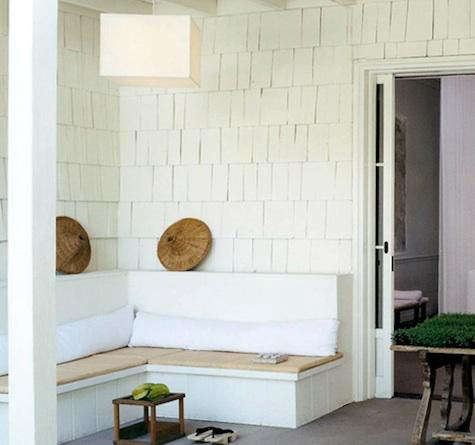
Some homes shout. Some homes whisper. And then there are the rare interiors by designer Michaela Scherrer, which seem to inhale, exhale, and quietly remind everyone in the room to put down the phone, stop rearranging the throw pillows, and simply breathe. In Pasadena, a city already famous for historic architecture, garden-framed streets, Craftsman details, and sun-soaked California calm, Scherrer’s design language feels especially at home.
The phrase “Designer Visit: Michaela Scherrer in Pasadena” instantly suggests more than a house tour. It feels like an invitation into a design philosophy: minimalist, warm, spiritual without being precious, refined without looking as if a museum guard is about to tell you not to sit down. Scherrer’s work is often described through words like serene, harmonious, natural, and Zen-like, but those descriptions only get you halfway there. Her interiors are not empty for the sake of looking expensive. They are edited so the people inside them can feel grounded.
That idea came into focus in her Pasadena Showcase House project, where Scherrer, working with designer Rozalynn Woods, transformed a 1940s pool house into a spa-like sanctuary. Inspired by the clarity of architect John Pawson and the disciplined minimalism of Donald Judd, the project captured what makes her approach so memorable: simplicity with soul, restraint with texture, and a kind of quiet drama that does not need a chandelier the size of a meteor.
Who Is Michaela Scherrer?
Michaela Scherrer is a Southern California interior designer known for creating modern, peaceful environments that connect architecture, nature, and daily life. Based in the Los Angeles area, she brings decades of experience to residential and environmental design. A graduate of FIDM in Los Angeles, she opened her own design firm at a young age and built a practice around carefully balanced spaces rather than trend-chasing decoration.
Her work has been featured by design publications for its calm palette, thoughtful materials, and poetic approach to modern living. But the most interesting thing about Scherrer’s interiors is not that they are minimalist. It is that they are deeply personal. They do not feel like blank rooms waiting for someone to explain them. They feel like rooms that have already done the explaining and are now politely asking you to enjoy the silence.
A Designer Who Believes Space Has Energy
Scherrer’s design philosophy centers on the belief that every object in a home contributes to the feeling of the environment. In her view, a room should not simply look attractive; it should support the person who lives there. That means proportions matter. Materials matter. Light matters. Even the distance between a chair and a wall can change the way a space feels.
This is why her interiors often appear pared back but never careless. The simplicity is the result of decisions, not absence. A pale wall is not just a pale wall. It may be the exact warm white that softens the light at 4 p.m. A piece of furniture is not just “a nice piece.” It must belong to the room’s rhythm, the homeowner’s lifestyle, and the surrounding landscape.
The Pasadena Project: A Pool House Becomes a Sanctuary
The Pasadena Showcase House project is one of the clearest examples of Scherrer’s design DNA. The assignment involved the interior of a 1940s pool house, a structure with its own history and limitations. Rather than burying the space under decorative noise, Scherrer and Rozalynn Woods created a retreat-like setting that felt clean, meditative, and quietly luxurious.
The space drew inspiration from John Pawson, the British architect associated with minimalist architecture, and Donald Judd, the American artist whose furniture and sculptural work are known for precision, function, and uncompromising form. That does not mean the Pasadena room looked cold or severe. Instead, it translated minimalism into something softer and more livable: a sanctuary where light, texture, and proportion did the heavy lifting.
The Genius of the Window Coverings
One of the most memorable details from the Pasadena project was the window treatment. Instead of ordinary curtains or blinds, the designers used sheer shades set inside a wood frame, raised and lowered by ceiling-mounted cables. The idea was inspired by a design spotted in Europe, and it gave the pool house a custom, architectural quality.
This is the kind of detail that separates thoughtful interior design from “we bought the beige curtains because they were on sale.” The window coverings were functional, but they also shaped the experience of the room. They filtered light, added texture, and brought in a crafted element without overwhelming the space. In other words, they behaved themselves beautifully.
Why Pasadena Is the Perfect Backdrop
Pasadena is not just a location in this story; it is part of the design conversation. The city has long been associated with architectural heritage, from Craftsman homes and bungalow courts to lush gardens and cultural landmarks. The Gamble House, built in 1908 and designed by Greene and Greene, remains one of the most important examples of the American Arts and Crafts movement. Pasadena’s historic bungalow courts also reflect a design tradition rooted in proportion, craft, gardens, and human-scaled living.
Scherrer’s work fits naturally into this context because she respects the relationship between a building and its surroundings. Her rooms do not try to erase the past. They modernize it, edit it, and let it breathe. In a city where architecture often carries memory, that sensitivity matters.
Modern Minimalism Meets California Warmth
Minimalism can be tricky in Southern California. Done poorly, it can look like a luxury dental office where nobody is allowed to chew. Done well, it can feel like sunlight, linen, stone, wood, and air have formed a small committee and agreed to make your day better. Scherrer belongs firmly in the second category.
Her Pasadena work shows how modern restraint can coexist with warmth. The palette may be quiet, but the textures are alive. The forms may be simple, but the effect is layered. The room is not trying to impress guests with obvious glamour. It is trying to restore them, which is much harder and far more useful.
Key Elements of Michaela Scherrer’s Design Style
Scherrer’s interiors are recognizable not because she repeats a formula, but because she repeats a set of values. Her work is grounded in harmony, authenticity, and a strong connection to nature. Each project may look different, but the underlying principles remain consistent.
1. A Soft, Nuanced Palette
White is often associated with Scherrer’s interiors, but calling her rooms “white” is like calling a symphony “some noise with violins.” Her use of pale tones is nuanced, layered, and deeply sensitive to light. She has been known for mixing her own shades of white, experimenting until the color feels exactly right for the room.
This matters because white can easily go wrong. Too cold, and a room feels clinical. Too yellow, and it starts whispering “old refrigerator.” Scherrer’s whites tend to feel warm, calm, and dimensional, allowing architecture, shadow, texture, and personal objects to become more visible.
2. Less Clutter, More Feeling
Scherrer’s minimalism is not about deprivation. It is about clarity. She removes visual distractions so the important elements can speak. A room might include fewer objects, but each one earns its place. This is a helpful lesson for homeowners who assume a room needs more accessories when it may actually need fewer, better choices.
The goal is not to live like a monk unless, of course, you are a monk with excellent taste in plaster walls. The goal is to create a home where the eye can rest and the body can relax.
3. Architecture First
Many decorators begin with furnishings. Scherrer appears to begin with the bones of the space. What is the structure asking for? Where does the light fall? How does the room connect to the garden, pool, courtyard, or sky? These questions lead to interiors that feel integrated rather than applied.
In the Pasadena pool house, the result was not a decorated shell but a complete environment. The architecture, window treatments, furnishings, and atmosphere all worked together.
4. Nature as a Design Partner
Scherrer’s work often emphasizes the connection between interior and exterior space. This is especially meaningful in Pasadena, where mature trees, gardens, mountains, and golden light are part of daily life. A well-designed room in this setting should not compete with nature. It should frame it.
Natural materials, pale finishes, soft textures, and restrained forms all help create that bridge. The home becomes less of a sealed container and more of a living environment.
Design Lessons Homeowners Can Steal From This Pasadena Visit
You do not need a 1940s pool house or a Showcase House budget to learn from Michaela Scherrer’s work. Her Pasadena project offers practical lessons for anyone who wants a calmer, more beautiful home.
Edit Before You Add
Before buying another side table, lamp, basket, vase, or mysterious decorative orb, step back. What is already in the room? What feels heavy? What feels visually loud? Often, the fastest path to elegance is subtraction.
Use Light as a Material
Scherrer’s work shows that light is not just something that happens to a room. It can be shaped. Window treatments, wall color, furniture placement, and reflective surfaces all influence the mood. In bright California spaces, filtering light can be just as important as inviting it in.
Choose Texture Over Pattern When You Want Calm
A restful room does not have to be boring. Instead of relying on bold patterns, consider texture: linen, wood, stone, plaster, woven shades, handmade ceramics, or matte metal. These elements create depth without visual shouting.
Let Furniture Breathe
One secret of minimalist rooms is spacing. Furniture should not feel as though it has been pushed into a room during a moving-day emergency. Give each piece room to exist. The empty space around an object can be just as important as the object itself.
Why Michaela Scherrer’s Pasadena Work Still Feels Fresh
Design trends move quickly. One minute everyone wants gray walls, the next minute gray walls are being blamed for emotional distress. Yet Scherrer’s Pasadena work still feels relevant because it was never built around a temporary trend. It was built around enduring ideas: calm, proportion, authenticity, craft, and the human need for peaceful surroundings.
That is why her rooms continue to attract attention. They are not loud enough to date themselves. They do not depend on novelty. They rely on atmosphere, and atmosphere ages better than fashionable gimmicks.
The Experience of Visiting a Scherrer-Inspired Space
Imagine stepping into a Pasadena garden on a warm afternoon. The air smells faintly of dry leaves, citrus, and sun-warmed stone. Somewhere nearby, a pool reflects light onto the ceiling. You enter the pool house and immediately notice what is missing: no clutter, no harsh color, no furniture trying to become the main character.
The room feels composed. The windows soften the brightness outside. Pale surfaces catch the light without glare. A chair sits where it should, not where a catalog told it to sit. The materials are quiet but tactile. You notice the grain of wood, the fall of fabric, the shadow line where wall meets ceiling. The space does not demand a reaction. It gives you permission to slow down.
This is the real luxury of Scherrer’s design. It is not about owning more. It is about needing less from the room because the room is already doing its job. It supports calm. It makes daily life feel more intentional. It proves that beauty does not always need applause; sometimes it just needs good proportions and a very well-behaved shade of white.
Added Experiences: What a Designer Visit in Pasadena Teaches You
A designer visit like this is different from scrolling through interior photos online. Photographs can show the palette, the furniture, and the overall mood, but they rarely capture the full physical experience of a room. In person, design is not flat. It has temperature, sound, scent, and rhythm. A Scherrer-inspired Pasadena space would likely teach visitors that the best interiors are not merely seen; they are felt.
The first experience is the quiet adjustment of the eye. At first, a minimalist room may seem simple. Then, as you stay longer, the details begin to appear. You notice how the window covering changes the color of daylight. You notice that the pale wall is not plain but softly textured. You notice how the furniture sits low enough to keep the room open, or how a single object on a surface has more power because it is not surrounded by twelve nervous accessories.
The second experience is emotional. Many people do not realize how much visual clutter affects them until they step into a space that has been carefully edited. In a Scherrer-style interior, the mind has fewer things to process. That does not mean the room is empty. It means the room is organized around ease. The shoulders drop. The breathing slows. Even people who claim they “like a lot of stuff” may suddenly understand the appeal of restraint. Do not worry; their souvenir mug collection will survive the revelation.
The third experience is practical inspiration. Visitors might leave thinking about their own homes differently. Maybe the living room does not need a complete makeover; maybe it needs better light control. Maybe the bedroom does not need more color; maybe it needs calmer bedding, fewer objects on the nightstand, and art hung at a more thoughtful height. Maybe the bathroom could feel more spa-like with warmer whites, natural texture, and less packaging sitting around like a tiny plastic skyline.
The fourth experience is a deeper appreciation for Pasadena itself. The city’s architecture encourages this kind of attentive design. Its historic homes, gardens, bungalow courts, and mountain light all reward interiors that listen before they speak. A designer visit in Pasadena is not just about one room; it is about how a room belongs to a place. Scherrer’s work demonstrates that modern design does not have to erase local character. It can refine it, frame it, and make it feel newly alive.
Finally, the experience reminds us that good design is not about perfection. It is about alignment. A room should align with the architecture, the landscape, the light, and the people who use it. When those elements come together, even a small pool house can feel expansive. Even a simple white wall can feel expressive. And even the most practical feature, like a window shade, can become a small act of poetry.
Conclusion
Designer Visit: Michaela Scherrer in Pasadena is more than a look at a beautiful Southern California interior. It is a reminder that the most memorable rooms often come from restraint, sensitivity, and respect for place. Scherrer’s Pasadena project shows how a 1940s pool house can become a spa-like sanctuary through light, proportion, texture, and thoughtful editing.
Her work stands out because it understands the difference between minimal and empty. Minimal is intentional. Empty is just waiting for furniture. In Scherrer’s hands, simplicity becomes warm, human, and deeply calming. Pasadena, with its architectural history and natural beauty, provides the ideal setting for that vision. The result is design that feels timeless, not because it avoids personality, but because it knows exactly how much personality a room needs.