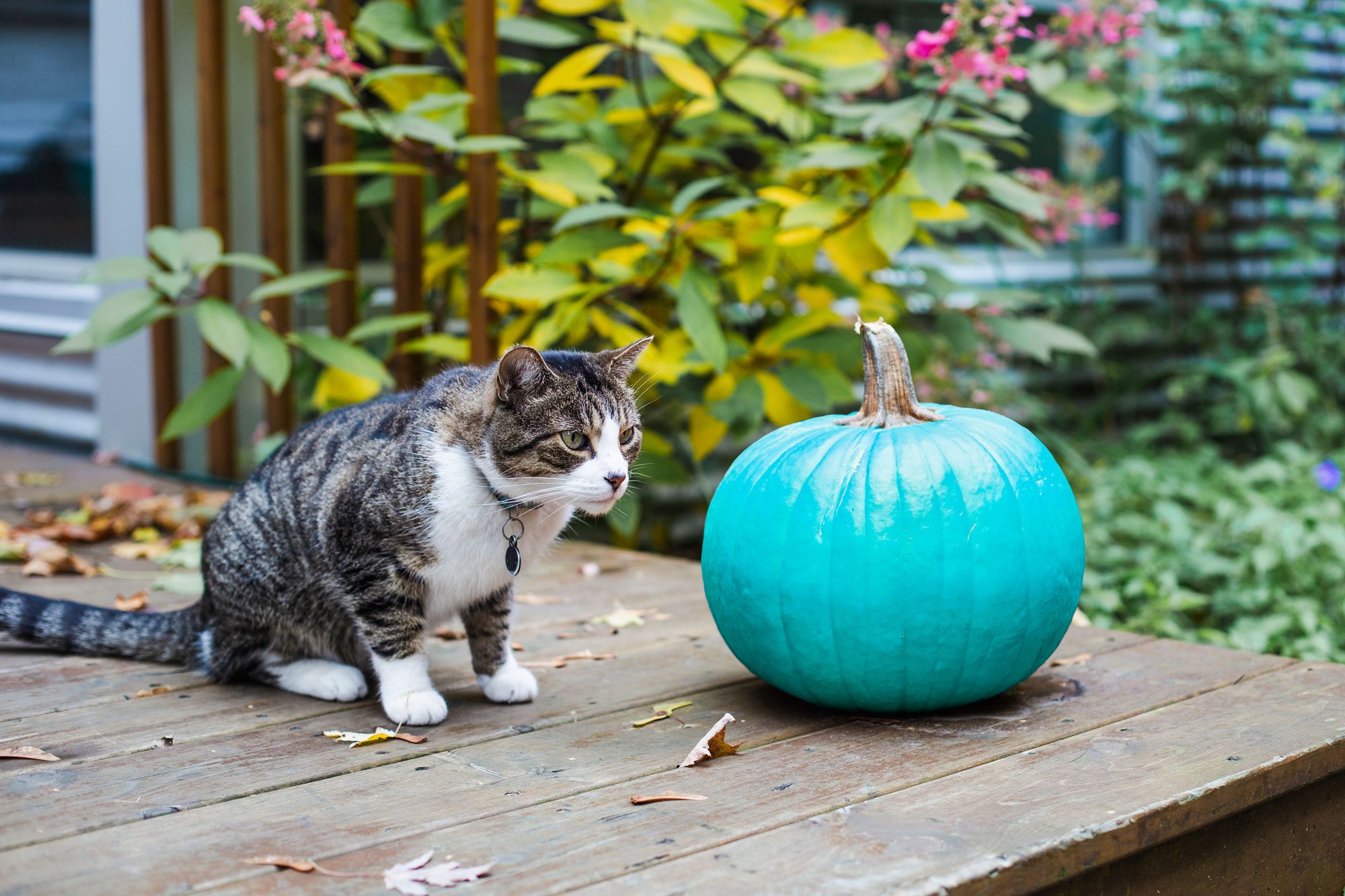
Halloween is famous for orange pumpkins, black cats, fake spiderwebs, and at least one neighbor who turns their garage into a low-budget haunted mansion with Oscar-level commitment. But in recent years, another color has joined the Halloween palette: teal. If you see a teal pumpkin sitting on a porch, hanging on a door, printed on a sign, or even carried as a trick-or-treat bucket, it is not just someone trying to win the neighborhood decorating contest by choosing an unexpected shade.
A teal pumpkin means that the household is participating in the Teal Pumpkin Project, a food allergy awareness movement that encourages families to offer non-food treats for trick-or-treaters. In plain English: that home has something besides candy available, such as glow sticks, stickers, pencils, bubbles, temporary tattoos, mini toys, or other small trinkets. It is a simple signal, but for children with food allergies, food intolerances, diabetes, celiac disease, feeding restrictions, or other medical needs, it can turn Halloween from stressful to magical.
The teal pumpkin is small, cheerful, and surprisingly powerful. It tells kids, “You are included here.” And honestly, that may be the best treat on the porch.
What Does a Teal Pumpkin Mean on Halloween?
A teal pumpkin on Halloween means that a home offers non-food treats for trick-or-treaters. It is most closely associated with the Teal Pumpkin Project, led by Food Allergy Research & Education, commonly known as FARE. The goal is to make Halloween safer and more inclusive for children who cannot safely eat many traditional candies.
For many families, Halloween candy is not as simple as “grab a chocolate bar and enjoy.” A fun-size candy may contain peanuts, tree nuts, milk, eggs, wheat, soy, sesame, or other ingredients that can trigger an allergic reaction. Some candies may also be made on shared equipment, creating a risk of cross-contact. Even worse, mini or seasonal candy versions can have different ingredients from the full-size version, which means a candy that looks familiar is not automatically safe.
The teal pumpkin acts like a friendly neighborhood signpost. It says, “We thought about you. We have another option.”
Why Teal?
Teal is the color used for food allergy awareness, which is why it became the signature color of the Teal Pumpkin Project. It stands out beautifully against the usual Halloween orange, purple, and black, making it easy for families to spot from the sidewalk. It is bright enough to say “look over here,” but calm enough to avoid looking like the pumpkin drank three energy drinks.
People can participate in several ways. Some paint a real pumpkin teal. Others buy a reusable teal plastic pumpkin, hang a printable sign on the front door, or place a teal-colored bucket beside the candy bowl. The exact decoration matters less than the message: non-food treats are available here.
Why the Teal Pumpkin Project Matters
Food allergies are not rare. According to recent U.S. health data, millions of American children live with diagnosed food allergies. For those families, Halloween can feel like a high-speed label-reading exam conducted in the dark while a child dressed as a dinosaur is yelling, “Can I eat this now?”
Food allergy reactions can range from mild symptoms, such as hives or stomach discomfort, to severe reactions, including anaphylaxis. Anaphylaxis is a serious, potentially life-threatening reaction that may involve breathing trouble, swelling, a sudden drop in blood pressure, or loss of consciousness. This is why parents and caregivers of children with severe allergies often carry epinephrine and carefully check every treat before it is eaten.
The Teal Pumpkin Project does not replace medical caution, label reading, or emergency preparedness. It simply makes the holiday easier and kinder. By offering a small toy or trinket, a household gives children with allergies the chance to take part in trick-or-treating without being handed something they may have to give away later.
Common Halloween Candy Allergens to Watch For
The most common major food allergens recognized in the United States include milk, eggs, fish, crustacean shellfish, tree nuts, peanuts, wheat, soybeans, and sesame. Many of these ingredients appear in popular Halloween treats. Chocolate candies may contain milk, peanuts, or tree nuts. Chewy candies may contain egg or wheat. Some treats may include sesame or be produced in facilities where allergens are present.
One tricky part of Halloween is that candy labels are not always as helpful as parents would like. Individually wrapped mini candies may not include full ingredient lists. A large bag may have information printed on the outer package, but once individual pieces are tossed into a trick-or-treat bag, that package is long gone. That is why allergy organizations and pediatric experts often recommend that children do not eat candy while trick-or-treating and that all treats be checked at home first.
What Counts as a Good Non-Food Halloween Treat?
The good news is that non-food treats do not have to be expensive, complicated, or boring. In fact, many kids love small toys because they last longer than candy. A chocolate bar disappears in thirty seconds. A glow stick turns a child into a tiny parade marshal for the rest of the night.
Popular Teal Pumpkin Treat Ideas
Great non-food Halloween treats include glow sticks, glow bracelets, stickers, spider rings, bubbles, pencils, erasers, mini notebooks, bouncy balls, temporary tattoos, stamps, bookmarks, small puzzles, vampire fangs, whistles, keychains, slap bracelets, and small containers of slime. The best choices are inexpensive, individually packaged when possible, and safe for the age group visiting your home.
For very young children, avoid small items that could be choking hazards. Tiny balls, miniature toys, or small plastic pieces may not be appropriate for toddlers. When in doubt, choose larger items such as stickers, crayons, coloring sheets, or glow bracelets.
How to Set Up a Teal Pumpkin Porch
Setting up a teal pumpkin station is wonderfully easy. You do not need a spreadsheet, a committee meeting, or a fog machine named “Gary.” Just follow a few practical steps.
1. Display the Teal Pumpkin Clearly
Place a teal pumpkin or sign where families can see it from the sidewalk. A front step, porch table, window, or door works well. If your street is dark, put it near a safe light source so it does not disappear into the shadows like a shy ghost.
2. Keep Food and Non-Food Treats Separate
If you are offering both candy and non-food treats, use two separate bowls. This helps avoid cross-contact and makes it easier for kids or parents to choose the right option. Labeling the bowls can also help: “Candy” and “Non-Food Treats” is simple and clear.
3. Let Kids Choose When Possible
Some children with allergies may still be able to eat certain candies, while others may prefer a toy. Offering a choice is inclusive and respectful. You can say, “Would you like candy or a toy?” That one sentence can make a child feel completely normal, which is the whole point.
4. Add Your Home to the Teal Pumpkin Map
FARE has promoted a Teal Pumpkin Project map that allows participating homes and community events to be listed. Families looking for allergy-friendly stops can use the map to plan a safer trick-or-treat route. If you participate, adding your home or event can make your porch easier to find.
Is a Teal Pumpkin Only for Children With Food Allergies?
No. While the Teal Pumpkin Project began as a food allergy awareness effort, non-food treats can benefit many children. Some kids have diabetes and need to monitor sugar. Some have celiac disease or food intolerances. Some have feeding tubes, sensory issues, dietary restrictions, or medical conditions that make candy difficult or unsafe. Some families simply prefer less candy in the house because they do not want to negotiate with a sugar-powered pirate at bedtime.
A teal pumpkin says that Halloween is not only for children who can eat every candy in the bowl. It is for the child in the superhero costume who needs safe options, too.
What Parents Should Know About Teal Pumpkins
If your child has food allergies, a teal pumpkin can be a helpful sign, but it should not be treated as a medical guarantee. Parents should still inspect all treats, check labels, avoid unlabeled items, and follow their child’s allergy action plan. If epinephrine has been prescribed, it should be available during trick-or-treating.
It is also smart to bring safe snacks from home, especially for younger children who may want to eat while walking. Many families use a “trade-in” system after trick-or-treating. Unsafe candy can be swapped for safe candy, toys, books, or a special prize. Some families call this the “Switch Witch” or “Treat Fairy,” which sounds much more exciting than “Mom’s Allergy Sorting Committee.”
What Neighbors Should Know Before Halloween Night
You do not need to be an allergy expert to participate. You only need to be thoughtful. Non-food treats are often the safest choice because they avoid the complicated world of ingredient labels, manufacturing facilities, and cross-contact. If you do choose to provide allergy-friendly candy, keep the original packaging available so parents can read the label.
Avoid making promises such as “This is totally safe for everyone.” Even with good intentions, no single candy is safe for every child. A better phrase is, “We have non-food treats available.” That keeps things accurate and helpful.
Does a Teal Pumpkin Mean No Candy at All?
Not necessarily. Many households with teal pumpkins still hand out candy. The teal pumpkin simply means there is a non-food option available. You can absolutely be a candy house and a teal pumpkin house at the same time. In fact, that is one of the easiest ways to include more children without changing the whole tradition.
Think of it like adding a ramp beside stairs. The stairs are still there, but now more people can reach the door.
Teal Pumpkins vs. Blue Buckets: What Is the Difference?
You may also hear about blue Halloween buckets. A teal pumpkin usually signals non-food treats for children with food allergies or other dietary needs. Blue buckets have sometimes been used by families to indicate that a trick-or-treater may have autism or may communicate differently. However, not every family uses or supports blue buckets because they can unintentionally ask children to disclose personal information.
The best rule for any Halloween symbol is simple: be kind. A child may not say “trick or treat.” A child may be older than you expect. A child may need extra time choosing a treat. None of this requires an investigation from the porch detective. Smile, offer the bowl, and let Halloween stay fun.
How Schools, Churches, and Community Events Can Use Teal Pumpkins
The Teal Pumpkin Project works especially well at trunk-or-treat events, school festivals, church gatherings, library parties, and neighborhood block parties. These events often attract large groups of children, so having non-food options available can make a big difference.
Event organizers can create a clearly marked teal station, list non-food treat stops on an event map, or ask each booth to provide at least one non-food option. This makes inclusion part of the event design instead of an afterthought. It also helps parents relax, which is always welcome during a holiday involving costumes, crowds, candy, and children holding plastic swords.
Real-Life Experiences: What a Teal Pumpkin Feels Like on Halloween
Imagine being a parent walking through the neighborhood with a child who has a severe peanut allergy. Other kids are racing from porch to porch, comparing chocolate bars and trading gummies. Your child is excited too, but every piece of candy comes with a question mark. Is there a label? Was it made near peanuts? Is the wrapper torn? Did someone drop it into a bowl that also had nut-filled candy? Halloween becomes less like a carefree parade and more like a tiny risk-management conference with capes.
Then you see it: a teal pumpkin glowing on a porch. Suddenly, your shoulders drop a little. You are not asking for special treatment. You are not trying to make anyone redesign the holiday. You are just hoping your child can knock on a door and receive something they can actually keep. The child walks up, says “trick or treat,” and the neighbor offers a choice: candy or a glow bracelet. The glow bracelet wins. It snaps, shakes, and lights up. For the next ten minutes, your child is not “the kid with allergies.” They are the kid waving a neon bracelet like they are directing airport traffic for witches.
That is the emotional power of a teal pumpkin. It removes the awkward pause. It saves parents from explaining a medical condition at every doorway. It lets kids participate without feeling like the holiday was built for everyone else. Sometimes inclusion looks like a policy. Sometimes it looks like a $1 pack of spider rings.
On the neighbor’s side, the experience can be just as meaningful. Many people who put out teal pumpkins discover that children without allergies love non-food treats too. Some kids choose bubbles over candy. Some pick stickers because they are decorating their costume in real time. Some grab glow sticks because, obviously, glowing in the dark is elite Halloween behavior. The teal pumpkin does not take away fun; it adds another kind of fun.
One of the best parts is how easy it is to explain to children. A parent might say, “Some kids cannot eat certain candies, so we are putting out toys too.” Most children understand immediately. Kids are often more flexible than adults. They do not need a lecture on cross-contact or federal allergen labeling to grasp the idea that everyone should get a treat. In fact, many kids become enthusiastic porch ambassadors, proudly telling visitors, “We have toys if you need them!”
For families new to food allergies, the first Halloween after a diagnosis can feel intimidating. There may be new medications to carry, new labels to read, and new worries about foods that once seemed harmless. A teal pumpkin does not solve all of that, but it sends a reassuring message: your family is not alone. There are people in the neighborhood who see you. There are small ways to make old traditions work again.
And for the wider community, that may be the lasting lesson. Halloween is supposed to be spooky, not exclusionary. The haunted house can be scary. The candy bowl should not be.
Final Thoughts: A Small Pumpkin With a Big Message
If you see a teal pumpkin this Halloween, now you know what it means: that home is offering non-food treats so more children can enjoy trick-or-treating safely. It is a simple idea with a big heart. Paint a pumpkin, print a sign, buy a bag of glow sticks, and keep a separate bowl by the door. You do not need to be perfect. You just need to make room for one more kind of treat.
Halloween has always been about imagination. Kids become astronauts, vampires, princesses, robots, dragons, and occasionally something so specific that only their parents understand it. The teal pumpkin adds one more beautiful transformation: a regular porch becomes a more welcoming place.