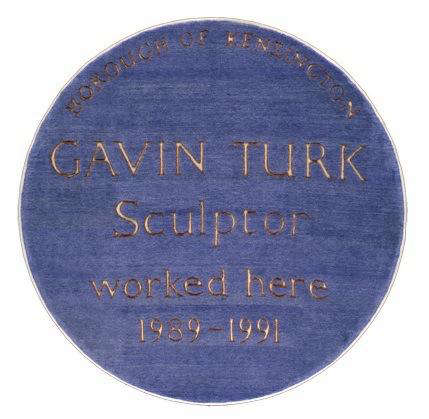
Some rugs politely sit in a room and behave themselves. The Cave Rug by Gavin Turk for Christopher Farr does not. It arrives with a wink, a backstory, and the rare ability to make your floor feel like it has an art-history degree. Based on Turk’s now-famous Cave concept, this circular rug turns the language of London’s commemorative blue plaques into something tactile, domestic, and surprisingly charming underfoot.
The title “Walls, Windows & Floors: Cave Rug by Gavin Turk for Christopher Farr” sounds like a design editor’s dream because it brings three worlds together: architecture, conceptual art, and luxury textile craftsmanship. It is a rug, yes, but also a conversation piece, a visual joke, a collector’s object, and a reminder that the floor can do more than simply catch crumbs from a croissant. In the right room, it can become the most intelligent thing below eye level.
What Is the Cave Rug?
The Cave Rug is an artist-designed rug created by British conceptual artist Gavin Turk for Christopher Farr, the contemporary rug company known for transforming work by artists and designers into hand-crafted textile pieces. The rug is circular, approximately eight feet in diameter, and made using hand-knotted construction with handspun wool. Its visual identity comes from the British blue plaque tradition: those round ceramic signs placed on buildings to mark where notable people lived, worked, or changed history by doing something more memorable than forgetting where they parked.
In Turk’s hands, the plaque becomes less of a polite public marker and more of a mischievous artistic device. Instead of honoring a long-departed historical figure, it points back to Turk himself and to the story of Cave, his 1991 Royal College of Art degree-show installation. That original work consisted of an empty white space and a blue plaque commemorating the artist’s presence. His examiners famously failed him. Art history, however, had other plans. What looked like absence became a highly memorable statement about authorship, fame, expectation, and the strange machinery that decides what counts as art.
Gavin Turk, the Artist Behind the Idea
Gavin Turk is closely associated with the generation of British artists who became known for pushing boundaries, questioning authorship, and treating the art world’s rituals as both material and subject. His work often explores identity, celebrity, authenticity, and the way cultural value is assigned. In other words, he is the kind of artist who can make an empty room feel crowded with ideas.
The original Cave was a bold move because it asked viewers to consider what remained when the expected artwork was removed. Was the artist’s absence the artwork? Was the plaque a memorial, a joke, a prophecy, or a very elegant way to annoy an exam committee? The brilliance of Turk’s gesture lies in its refusal to settle down into one tidy explanation. It keeps shifting depending on where you stand, which is exactly what good conceptual art tends to do.
Why the Blue Plaque Matters
Blue plaques are familiar cultural symbols in Britain. They usually identify places connected with writers, scientists, politicians, artists, and other people considered historically significant. By borrowing that format, Turk plays with the idea of recognition before recognition has officially arrived. The plaque appears to say, “Remember this person,” while the surrounding emptiness asks, “For what, exactly?”
That tension makes the Gavin Turk Cave Rug especially interesting as a design object. When the plaque becomes a rug, its authority softens. It no longer sits on a wall, above everyone’s head, acting grand and civic. It lies on the floor, close to daily life, where people gather, walk, read, lounge, spill coffee, and pretend not to notice the dog claiming the most expensive spot in the house.
Christopher Farr and the Art of the Contemporary Rug
Christopher Farr has built a reputation around the belief that rugs can be serious works of design, not merely background accessories. Since the late 1980s, the company has worked at the intersection of contemporary art, craft, and interior design, collaborating with artists and designers while maintaining a strong commitment to traditional weaving techniques.
That is why the Cave Rug by Gavin Turk for Christopher Farr feels so natural despite being conceptually unusual. Christopher Farr’s best pieces do not flatten art into decoration. Instead, they translate artistic ideas into textile form with respect for scale, material, and the realities of living spaces. A painting can dominate a wall; a rug has to survive furniture, feet, and the occasional guest who says, “Oh wow, is this safe to step on?” Yes, it is. That is part of the fun.
When Fine Art Meets Floor Design
Artist-designed rugs have a unique power because they make art physically usable without reducing it to a poster or souvenir. A rug must work with texture, proportion, light, furniture placement, and movement. Unlike a framed artwork, it does not wait passively for attention. It organizes the room. It changes how people move through space.
The Christopher Farr Cave Rug does this with unusual confidence. Its circular form immediately creates a focal point. In a living room, it can anchor a seating area. In a library, it can bring wit and structure beneath a reading chair. In an entryway, it can announce that the home has personality before anyone has even removed their shoes. It is not loud in the way a neon sofa is loud. It is loud in the way a clever remark can silence a dinner table for two seconds before everyone starts laughing.
Design Details: Shape, Scale, and Material
The most recognizable feature of the Cave Rug is its circular silhouette. At roughly eight feet across, it is large enough to command attention but not so massive that it requires a ballroom, a palace, or an uncle who collects chandeliers. The round format also reinforces the blue plaque reference, making the object instantly legible even to viewers who do not know the full art-history backstory.
The hand-knotted construction gives the rug depth and durability. Handspun wool adds warmth, variation, and a natural tactile quality that machine-made rugs often struggle to imitate. The result is an object that balances graphic clarity with handmade richness. It looks crisp from a distance but rewards closer inspection with texture and subtle irregularity.
Why the Round Rug Works So Well
Round rugs can be tricky. In the wrong setting, they look like decorative islands floating nervously in the room. In the right setting, they soften hard edges and create rhythm. The Cave Rug has a built-in advantage because its roundness is not arbitrary. It belongs to the concept. The shape is part of the meaning.
This makes it easier to use than many statement rugs. Place it under a round table, and the geometry feels intentional. Set it beneath a sculptural chair, and it becomes a stage. Use it in a square room, and it breaks up all those bossy right angles. The rug is graphic enough to stand alone but disciplined enough to coexist with strong furniture, especially pieces in wood, leather, steel, linen, or plaster-toned upholstery.
How to Style the Cave Rug at Home
Because the Cave Rug by Gavin Turk has such a specific identity, the goal is not to bury it under visual noise. Let it breathe. Think of it as the witty guest at a party: give it enough room to speak, but do not force it to perform magic tricks next to twelve competing patterns.
1. Use It as a Living Room Centerpiece
In a living room, the Cave Rug works beautifully beneath a coffee table or centered within a seating arrangement. Pair it with low-profile furniture so the circular form remains visible. A glass coffee table can be especially effective because it allows the design to show through. Wood tables also work well, particularly if the room leans warm, collected, and slightly gallery-like.
2. Give It Space in an Entryway
An entryway is a bold location for this rug, but a memorable one. It immediately tells visitors that the home values art, craft, and humor. The circular format can soften a rectangular foyer, while the plaque-inspired design creates a sense of arrival. It is almost as if the house is saying, “Welcome. We have taste, and yes, we also have opinions.”
3. Pair It with Minimal Walls
White, cream, pale gray, or plaster-finished walls allow the blue and typographic details of the rug to stand out. This does not mean the room must be sterile. Natural wood, vintage ceramics, black metal accents, and linen curtains can add warmth without overwhelming the rug. The trick is to create contrast without turning the space into a design shouting match.
4. Use It Near Windows for Natural Light
Natural light helps bring out the texture of handspun wool. If the rug is placed near windows, the changing light throughout the day can make the surface feel more alive. However, as with any fine rug, direct sunlight should be managed with shades, curtains, or UV-filtering window treatments to help reduce fading over time.
Why Collectors and Design Lovers Notice It
The Gavin Turk rug stands out because it is not merely “inspired by art.” It is rooted in a specific artwork, a specific moment, and a specific debate about what art can be. That gives it more depth than a decorative pattern with a fancy name. It carries a story.
Collectors often respond to pieces that combine scarcity, authorship, craftsmanship, and cultural relevance. The Cave Rug checks all four boxes. It is tied to Turk’s best-known conceptual language. It is produced by a respected rug maker. It translates a famous artistic gesture into a domestic object without draining away the humor. And, perhaps most importantly, it remains usable. This is not art locked away in a climate-controlled vault, looking lonely and expensive. It belongs in a room.
The Appeal of Functional Conceptual Art
Functional conceptual art has a special appeal because it collapses the distance between museum culture and everyday life. The Cave Rug is not asking you to stand silently in front of it while pretending to understand every reference. It lets you live with the reference. You can walk across it, arrange chairs around it, and slowly discover its layers over time.
That daily relationship matters. The best interiors are not showrooms frozen in perfect silence. They are spaces where objects earn affection. A rug like this can become part of the household vocabulary: the place where people gather, the thing guests ask about, the piece that makes a room feel edited rather than merely furnished.
Walls, Windows & Floors: Why This Title Fits
The phrase Walls, Windows & Floors suits the Cave Rug because it captures how the object moves across categories. The original plaque belonged to a wall. The idea behind Cave opens a window into questions of memory, absence, and artistic identity. The rug itself belongs to the floor. In one design object, a wall sign becomes a floor covering, and a conceptual artwork becomes something you can arrange furniture around.
That category-shifting quality is the magic. Most home objects do one job. A chair chairs. A lamp lamps. A bowl waits patiently for lemons. The Cave Rug does several things at once. It decorates, anchors, questions, jokes, commemorates, and performs. It turns the domestic floor into a site of cultural memory, without becoming so serious that the room starts demanding museum labels.
Buying and Living With an Artist-Designed Rug
A rug like this should be approached as both a design investment and a living object. Before choosing it, measure the room carefully. An eight-foot round rug needs enough open space around it to make the circle feel intentional. If furniture covers too much of the design, the concept may get lost. If the rug floats too far from everything else, it may look disconnected. Balance is everything.
Consider the color palette of the surrounding room. Since the Cave Rug has a strong graphic identity, it pairs well with restrained backgrounds, sculptural furniture, and materials that feel honest rather than overly glossy. Think oak, walnut, travertine, plaster, wool, leather, brushed metal, and quiet upholstery. This allows the rug’s conceptual personality to shine without making the room feel like an art fair booth after three espressos.
Care Tips for a Hand-Knotted Wool Rug
Fine wool rugs appreciate consistent care. Vacuum gently without using aggressive beater bars. Rotate the rug occasionally so foot traffic and light exposure are distributed more evenly. Clean spills quickly by blotting rather than rubbing. For deeper cleaning, use a professional rug cleaner who understands hand-knotted wool. This is not the moment to experiment with mystery sprays from the back of the laundry cabinet.
A high-quality rug should age with grace. Small signs of use can add character, especially when the piece is made from natural materials. The goal is not to keep the rug in a state of nervous perfection. The goal is to let it live well.
Experience Notes: Living With the Idea of the Cave Rug
Experiencing the Walls, Windows & Floors: Cave Rug by Gavin Turk for Christopher Farr is different from simply admiring it in a product photograph. In person, the first impression is graphic: a bold circular form, plaque-like authority, and a sense that the floor has suddenly developed a dry sense of humor. But after that first visual punch, the rug becomes quieter and more interesting. It starts to behave less like a logo and more like a piece of domestic theater.
Imagine stepping into a room where the Cave Rug sits beneath a simple chair and a reading lamp. Nothing else needs to compete. The walls may be plain. The windows may be dressed in linen. The floors may be wood, concrete, or stone. Then the rug lands in the middle of the space like a thought bubble from art history. It says something, but it does not explain itself too eagerly. That restraint is part of its charm.
One of the most enjoyable experiences with a rug like this is watching how people react to it. Some guests notice the blue plaque reference immediately. Others see a beautiful round rug first and only later understand the conceptual connection. A few may ask whether they are allowed to step on it, which is always a deliciously awkward moment. The answer is yes, but the hesitation proves the point: the rug sits between art object and useful object, and that tension makes people think.
In daily life, the Cave Rug can change how a room is used. A round rug naturally creates a gathering zone. People tend to move around it differently than they would a rectangular rug. Chairs angle inward. Coffee tables become more intentional. Even negative space feels designed. The rug does not merely fill the floor; it edits the room.
The experience is also surprisingly emotional. The original Cave artwork dealt with absence, authorship, and the memorializing of an artist’s presence. When that idea is translated into wool, it becomes warmer and more human. The rug still carries the cleverness of conceptual art, but it gains softness, tactility, and domestic intimacy. It is theory with a pile height. That may sound ridiculous, but it is exactly why the object works.
For homeowners who enjoy interiors with a story, the Cave Rug offers more than surface appeal. It becomes an anchor for conversations about art education, failure, recognition, and the strange fact that being misunderstood can sometimes be the beginning of becoming unforgettable. Turk’s failed degree-show project eventually became one of his most iconic ideas. The rug carries that reversal into the home. It is a reminder that good design often comes from friction, not politeness.
From a styling perspective, the most satisfying approach is to let the rug remain the cleverest object in the room. Avoid surrounding it with too many novelty pieces. Instead, pair it with furniture that has strong lines and calm materials. A modern lounge chair, a vintage side table, a ceramic lamp, and a stack of art books can create a setting that feels thoughtful without becoming precious. The Cave Rug does not need a theatrical set. It already brought the plot.
Over time, the rug can become one of those rare interior pieces that feels both collectible and personal. It may begin as a design statement, but it can settle into the rhythm of ordinary life: morning coffee, evening reading, weekend conversations, and the occasional moment when someone pauses, looks down, and asks, “Wait, what is this?” That question is the rug doing its job.
Conclusion
The Cave Rug by Gavin Turk for Christopher Farr is not just a rug with an art-world backstory. It is a smart, tactile translation of one of Gavin Turk’s most provocative ideas into the language of interiors. It brings together conceptual wit, hand-knotted craftsmanship, and the visual authority of the blue plaque. For collectors, it offers authorship and cultural resonance. For interior designers, it offers scale, shape, and graphic impact. For homeowners, it offers something even better: a floor that starts conversations without trying too hard.
In a world full of safe beige rectangles, the Cave Rug proves that the floor can still surprise us. It can hold history, humor, and beauty all at once. And if that sounds like a lot for a rug to handle, remember: this one began as an empty room and still managed to become unforgettable.
Note: This article is written as original, publication-ready content based on real product, artist, and design-industry information. It contains no raw source-link markers or unnecessary citation placeholders.