Proxima Centauri is the kind of neighbor that makes astronomers keep peeking over the cosmic fence. It is the closest known star to our Sun, only about 4.24 light-years away, which sounds nearby until you remember that “nearby” in astronomy still means “pack a lunch for 70,000 years if you are using current spacecraft.” Small, red, faint, and too dim to see with the naked eye, Proxima Centauri does not look like a headline-maker. Yet this quiet-looking red dwarf has become one of the most watched stars in the sky.
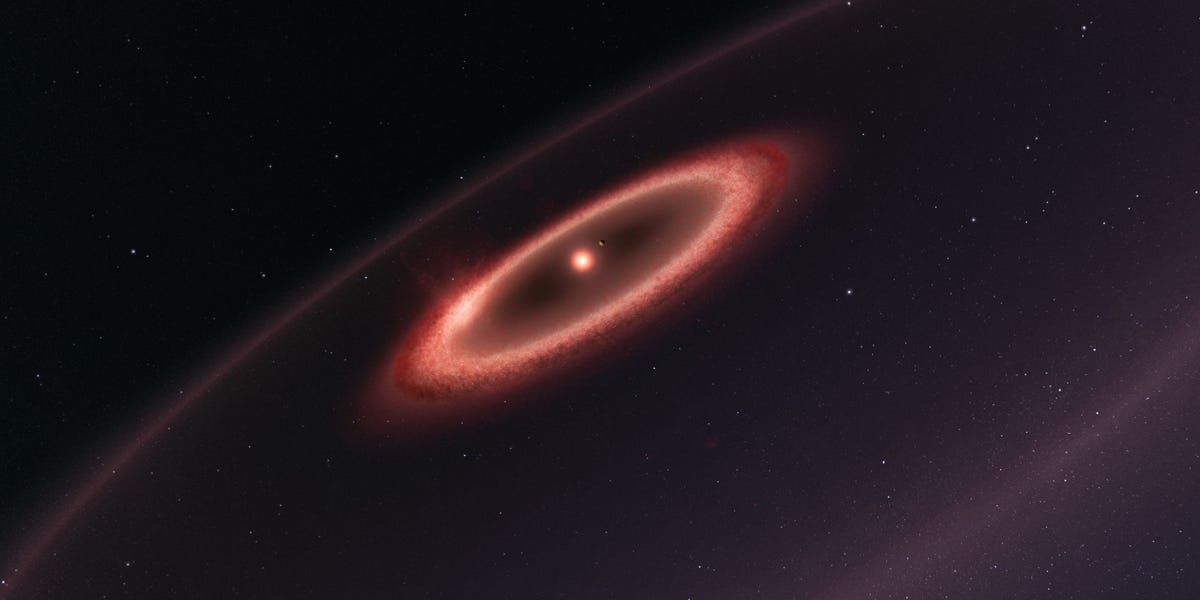
Why? Because Proxima Centauri hosts planets, including the famous Proxima b, a roughly Earth-mass world orbiting in the star’s temperate zone. Even better, astronomers have reported evidence of cold dust around the star, possibly forming a belt of debris similar in spirit to the Kuiper Belt in our own Solar System. Dust may sound unimpressive unless you are allergic to cleaning, but in astronomy, dust is a clue. It can point to leftover planet-building material, hidden worlds, gravitational sculpting, and a planetary system more complicated than a simple star-plus-one-planet setup.
The headline is exciting: the closest star may have a dust belt and perhaps more planets. The reality is even more interesting because it includes discovery, debate, follow-up observations, and the scientific equivalent of saying, “Hold my telescope, we need better data.”
Meet Proxima Centauri: The Tiny Star Next Door
Proxima Centauri is part of the Alpha Centauri system, a three-star family that also includes the brighter Sun-like stars Alpha Centauri A and Alpha Centauri B. Proxima is the smallest sibling, a red dwarf with only a fraction of the Sun’s mass and brightness. If our Sun is a blazing stage spotlight, Proxima is more like a moody red night-light with a dramatic personality.
That personality matters. Red dwarfs are the most common stars in the Milky Way, and they often live for extremely long periods. Their small size makes it easier for astronomers to detect the gravitational tug of orbiting planets. But they can also be magnetically active, producing flares that blast nearby planets with radiation. Proxima Centauri is no exception. It is faint, but it is not boring.
Because Proxima is so close to Earth, it is a prime target for exoplanet research. When scientists study planets around Proxima, they are not examining some remote star system lost in the galactic suburbs. They are studying the nearest possible laboratory for understanding planets around red dwarfs, the kind of stars that may host huge numbers of worlds across the galaxy.
What Is a Dust Belt, and Why Should We Care?
A dust belt is a region of small particles, rocky fragments, icy bodies, and debris orbiting a star. In our Solar System, the asteroid belt between Mars and Jupiter and the Kuiper Belt beyond Neptune are familiar examples of leftover material from the planet-building era. These belts are not just cosmic junk drawers. They preserve information about how a planetary system formed and evolved.
When astronomers detect dust around another star, they often ask several questions. Is the dust produced by collisions among comets or asteroids? Is it being shaped by unseen planets? Does it suggest that the system once had more building blocks than we can currently detect? In other words, dust can act like glitter at a party: once you see it, you know something happened, and it probably involved more characters than are currently standing in the room.
The ALMA Discovery: Cold Dust Around Proxima Centauri
In 2017, astronomers using the Atacama Large Millimeter/submillimeter Array, better known as ALMA, reported evidence of cold dust around Proxima Centauri. ALMA is especially good at detecting faint millimeter-wavelength light from cold material in space. The observations suggested dust in a region roughly 1 to 4 astronomical units from Proxima Centauri. One astronomical unit, or AU, is the average distance between Earth and the Sun.
At first glance, 1 to 4 AU might sound like a cozy inner-system zone. Around the Sun, Earth lives at 1 AU and Mars at about 1.5 AU. But Proxima Centauri is far dimmer than the Sun, so material at those distances would be very cold. The reported dust temperature was about 40 kelvin, which is brutally chilly. This is not a beach destination. It is more like the freezer section of a grocery store that has lost all sense of hospitality.
The original interpretation described this dust as a possible small-scale analog of the Kuiper Belt. The estimated total mass, including larger bodies up to tens of kilometers across, was roughly comparable to a modest debris reservoir. The observations also hinted at warmer dust closer to the star and even a possible outer, extremely cold belt much farther out. Those hints were less certain, but they made the system look potentially rich and layered.
Why Dust Could Mean More Planets
Dust belts often do not stay neatly arranged by accident. Planets can stir, sculpt, trap, or clear debris. In our Solar System, Jupiter shapes the asteroid belt, while Neptune influences the Kuiper Belt. If Proxima Centauri has a structured dust belt, one possibility is that additional planets are helping organize the material.
This does not mean astronomers can point to the dust and declare, “There are exactly three hidden planets behind door number two.” Science is less like a game show and more like detective work in a foggy parking lot. But dust features can suggest gravitational interactions. Sharp edges, gaps, clumps, or tilted structures may indicate that unseen bodies are shaping the debris.
For Proxima Centauri, that possibility is especially tempting because the star already has known planets and candidates. A dust belt would add another layer to the story: not just a lonely red dwarf with a small planet, but a miniature planetary system with inner rocky worlds, possible outer bodies, and leftover debris from its formation.
The Known Planets: Proxima b and Proxima d
Proxima b: The Famous Neighbor
Proxima b is the celebrity planet in this system. Discovered in 2016 through the radial velocity method, it has a minimum mass close to Earth’s and orbits Proxima Centauri every 11.2 days. That short year may sound scorching, but because Proxima is so dim, the planet receives an amount of stellar energy that places it in the broad habitable zone, where liquid water could exist under the right conditions.
That phrase “under the right conditions” is doing a lot of work. Proxima b may be rocky, but astronomers do not yet know whether it has an atmosphere, oceans, a magnetic field, or surface conditions friendly to life. It orbits very close to an active red dwarf, so stellar flares and high-energy radiation are major concerns. A planet can sit in the habitable zone and still be about as welcoming as a locked hotel room with no roof.
Proxima d: A Tiny Inner World
Proxima d is smaller and closer to the star than Proxima b. It orbits in about 5.1 days and has a minimum mass estimated at roughly a quarter of Earth’s mass. That makes it one of the lightest exoplanets detected by the radial velocity method. It is not usually considered a prime habitability candidate because it orbits inside the habitable zone, closer to the star.
Still, Proxima d is scientifically valuable. Detecting such a small planet around our nearest stellar neighbor shows how precise modern instruments have become. Astronomers are now measuring tiny stellar motions caused by worlds that would have been nearly impossible to find not long ago. That is a big deal, even if the planet itself is not exactly real estate material.
What About Proxima c?
Proxima c has had a more complicated career. It was proposed as a possible outer planet, perhaps a super-Earth or mini-Neptune on a long orbit around Proxima Centauri. Its possible distance from the star made it interesting in connection with the dust-belt discussion because outer planets can influence debris structures.
However, the evidence for Proxima c remains debated. Some studies found hints of a long-period signal, while later observations have been less conclusive. The best way to describe Proxima c is not “confirmed world” but “candidate that still needs stronger evidence.” In astronomy, that distinction matters. A planet candidate is like a suspicious footprint in the mud; exciting, yes, but not the same as catching the dinosaur on camera.
The Flare Twist: When Dust Might Not Be Dust
The dust-belt story became more complicated when later researchers reanalyzed ALMA observations and found that Proxima Centauri produced a powerful millimeter flare during the observing period. The flare dramatically increased the star’s brightness for a short time. That matters because a flare can affect measurements that might otherwise be interpreted as excess emission from dust.
Some researchers argued that the observed signal did not require a dust belt at 1 to 4 AU after all, or that at least part of the excess emission could be explained by stellar activity rather than dust. This does not make the original report worthless. It makes the story scientific. Observations are tested, challenged, refined, and sometimes reinterpreted. Space does not hand us labeled diagrams. It sends faint signals, and astronomers have to untangle them from noise, flares, and cosmic mischief.
The safest conclusion is this: Proxima Centauri may have a dust belt, and the ALMA observations opened an important line of investigation, but the exact structure and even the strength of the dust evidence require caution. Future observations with ALMA, the James Webb Space Telescope, extremely large ground-based telescopes, and next-generation radial velocity instruments may clarify the picture.
Why Proxima’s Dust and Planets Matter for Habitability
Whenever Proxima Centauri appears in the news, the word “habitable” usually follows close behind, wearing a shiny hat and attracting clicks. But habitability is not a simple yes-or-no label. A planet needs more than the right average temperature. It may need a stable atmosphere, surface pressure, water, protective chemistry, and a history that does not include being roasted by stellar tantrums every few minutes.
Red dwarf planets face special challenges. Because the habitable zone is close to the star, planets may become tidally locked, with one side always facing the star and the other trapped in darkness. Strong flares can erode atmospheres or alter surface chemistry. On the other hand, some climate models suggest that thick atmospheres and ocean circulation could distribute heat around tidally locked planets. The answer is not “Proxima b is Earth 2.0” or “Proxima b is doomed.” The answer is “we need more data,” which is science’s favorite sentence after “That’s weird.”
A dust belt could matter here because it tells us about the system’s architecture. Debris reservoirs can deliver icy bodies or volatiles to inner planets, but they can also indicate a history of impacts. The presence, absence, and shape of dust may help scientists reconstruct whether Proxima’s planets formed calmly, migrated, collided, or were influenced by other unseen worlds.
How Astronomers Search for Hidden Worlds Around Proxima
Finding planets around Proxima Centauri is difficult because the star is active. The same stellar spots, magnetic cycles, and flares that make Proxima scientifically fascinating can also imitate or obscure planetary signals. Astronomers use several methods to separate planets from stellar behavior.
Radial Velocity
The radial velocity method measures tiny shifts in a star’s light as it moves toward and away from us. A planet’s gravity tugs on the star, producing a repeating wobble. Proxima b and Proxima d were detected this way. The challenge is that stellar activity can also create signals, so researchers must compare planet-like periods with activity indicators.
Millimeter Observations
ALMA observes cold material by detecting millimeter-wavelength emission. This is useful for dust belts, but Proxima’s flares show why timing and interpretation matter. A short stellar flare can masquerade as something more permanent if scientists are not careful.
Direct Imaging and Future Telescopes
Directly imaging small planets around Proxima is extremely hard because planets are faint and close to their star in the sky. Future extremely large telescopes may improve the odds, especially for studying atmospheres or detecting reflected light. If astronomers can someday analyze the atmosphere of Proxima b, the nearest exoplanet may become one of the most important worlds in astrobiology.
A Miniature Solar System or Something Stranger?
It is tempting to imagine Proxima Centauri as a tiny version of our Solar System: inner rocky planets, an outer cold belt, maybe a few hidden worlds keeping everything gravitationally tidy. That picture may be partly right, but nature rarely copies and pastes. Red dwarf systems can be compact, active, and surprisingly different from our own.
Proxima’s known planets orbit much closer to their star than Mercury orbits the Sun. If a cold debris belt exists farther out, the system would have an enormous contrast between tight inner worlds and distant frozen leftovers. That arrangement could teach astronomers how planet formation works around low-mass stars. Did planets form where we see them now? Did they migrate inward? Did outer bodies survive in a quiet belt? Did stellar flares erode dust or reshape observations? Each answer leads to another question, because astronomy is basically curiosity with a telescope budget.
Why the Closest Star Still Feels Mysterious
The most charming part of the Proxima Centauri story is that the nearest star remains mysterious. Distance matters, but proximity does not automatically make something easy to understand. Proxima is close enough to become a target for detailed study, yet faint and active enough to keep astronomers humble.
That humility is useful. Early headlines can make discoveries sound final: dust belt found, planets confirmed, habitability possible, aliens probably packing snacks. The real scientific story is slower and better. It involves signals, uncertainties, improved instruments, competing interpretations, and a growing map of the system. Proxima Centauri is not giving up its secrets in one dramatic reveal. It is handing them over one faint wobble, flare, and millimeter signal at a time.
Experience Section: What Proxima Centauri Teaches Us When We Look Up
Thinking about Proxima Centauri changes the experience of looking at the night sky. Most people glance upward and see a beautiful scatter of stars, maybe Orion, maybe the Moon, maybe a suspiciously bright “star” that turns out to be an airplane. But once you know that the nearest star has planets and may have dusty debris around it, the sky becomes less like wallpaper and more like a neighborhood map.
One useful experience is to imagine scale. If the Sun were a grapefruit in your city, Earth would be a tiny speck nearby, and Proxima Centauri would still be far away across a huge distance. Yet in galactic terms, it is next door. That contradiction is part of the wonder. The closest star is both unimaginably distant and astronomically close. It reminds us that space is not built for human convenience. It is built on a scale that makes our measuring tapes cry.
Another experience is learning how patient science must be. A dust belt is not photographed like a ring of flour around a red candle. It is inferred from faint signals collected by sensitive instruments, then tested against other explanations. A planet is not usually seen as a little blue marble waving hello. It is detected through tiny shifts in starlight, repeated over many nights, filtered through models and checked against stellar activity. Understanding Proxima means learning to respect uncertainty. That is not a weakness; it is the engine of discovery.
For students, skywatchers, and casual science fans, Proxima Centauri also offers a helpful lesson in headline reading. “Possible dust belt” does not mean “confirmed alien asteroid highway.” “Habitable zone” does not mean “vacation-ready.” “Planet candidate” does not mean “planet confirmed.” Good astronomy is exciting enough without turning every maybe into a marching band. The real story is better because it is alive. New observations can strengthen, revise, or overturn old interpretations.
There is also an emotional experience here. Proxima b, Proxima d, and the possible dust structures around the star make the universe feel less empty. Not because we know life exists therewe do notbut because planet formation seems to be a natural habit of the cosmos. Even the nearest dim red dwarf appears to have built worlds. That fact alone is stunning. The universe is not just stars burning in isolation. It is systems, disks, belts, rocks, atmospheres, collisions, and possibilities.
If you ever stand outside under a clear sky, remember that the closest star is too faint for your eyes, but not too faint for human curiosity. Somewhere in the direction of Centaurus, a small red star is being tugged by planets, flashing with flares, and perhaps surrounded by cold dust left over from ancient construction work. We cannot visit it yet. We cannot fully map it yet. But we can measure it, question it, and slowly turn a point of light into a place. That is the experience Proxima gives us: the feeling that the next great frontier is not only far away, but also right next door.
Conclusion
Proxima Centauri is small, faint, and easy to overlook, but it has become one of the most important stars in modern exoplanet science. Its confirmed planets show that even the closest red dwarf hosts worlds. The reported dust belt, though still debated because of flare-related complications, hints that the system may include leftover planetary building material and possibly additional unseen bodies. Together, these clues suggest a dynamic planetary system that deserves careful, repeated observation.
The best takeaway is not that Proxima Centauri is definitely a miniature Solar System or that Proxima b is definitely habitable. The better takeaway is that our nearest stellar neighbor is complex. It has planets, activity, mystery, and maybe dust. For astronomers, that is more than enough reason to keep watching. For everyone else, it is a reminder that the universe can hide extraordinary stories in the dimmest lights.