Buying nothing sounds dramatic, like moving into a cabin, befriending a squirrel, and turning old socks into soup strainers. Relax. A buy-nothing lifestyle is not about rejecting every modern convenience or judging anyone for owning a toaster with seven settings. It is about pausing before spending, using what you already have, borrowing before buying, accepting help from your community, and learning that “new” is not always better than “already paid for.”
The “Buy Nothing” idea has grown from neighborhood gift economies into a broader movement around mindful consumption, waste reduction, financial confidence, and community sharing. At its simplest, it asks one powerful question: “Can I meet this need without buying something?” Sometimes the answer is yes. Sometimes the answer is “not unless I want to brush my teeth with a twig.” The goal is not perfection. The goal is awareness.
Whether you want to save money, declutter your home, reduce waste, stop impulse shopping, or simply stop wondering why you own three garlic presses, these 13 steps will help you buy less, use more, and feel surprisingly rich in the process.
What Does “Buy Nothing” Actually Mean?
To buy nothing means choosing not to purchase nonessential items for a set period of time. It may last one day, one week, one month, or a full year. Most people still pay for essentials such as housing, groceries, utilities, healthcare, transportation, school supplies, and necessary repairs. The challenge focuses on cutting unnecessary purchases: random home decor, duplicate gadgets, sale items you did not want yesterday, fast fashion, convenience splurges, and “just because” shopping.
The practice works best when it is realistic. A family with kids, a college student, a retiree, and a busy professional will all approach it differently. The common thread is intentional spending. You are not banning joy. You are banning autopilot.
How to Buy Nothing: 13 Practical Steps
1. Define Your Buy-Nothing Rules Before You Start
A successful buy-nothing challenge needs clear rules. Otherwise, your brain will become a tiny courtroom where every purchase somehow wins the case. Start by writing down what counts as essential and what does not.
Essentials may include groceries, rent, bills, medicine, hygiene products, transportation, pet food, and required work or school items. Nonessentials might include new clothes, takeout coffee, streaming upgrades, home accessories, books you could borrow, beauty extras, hobby supplies, and anything purchased because an ad whispered, “You deserve this.”
Choose your timeline. Beginners can try seven days. A solid reset is 30 days. More experienced minimalists may try three months or longer. The key is to make rules strict enough to change your habits but flexible enough that you do not quit on day three because your shoelace broke.
2. Track Every Purchase for One Week First
Before you stop buying, observe how you already buy. For seven days, write down every expense, no matter how small. Include coffee, snacks, parking, app subscriptions, online orders, delivery fees, and that mysterious checkout add-on that cost $4.99 and brought you zero happiness.
This step is powerful because spending leaks are often quiet. You may think your budget problem is one big purchase, but it might actually be twenty tiny purchases wearing a fake mustache. Tracking reveals patterns: boredom shopping, stress spending, late-night scrolling, reward purchases, or buying duplicates because your home is too cluttered to see what you already own.
Use a notebook, spreadsheet, notes app, or budgeting app. Do not judge the data. Just collect it. Your receipts are not moral documents; they are clues.
3. Separate Needs, Wants, and “Marketing Made Me Do It”
Every buy-nothing challenge depends on one skill: telling the difference between needs and wants. A need supports your health, safety, work, education, or basic daily life. A want may be enjoyable, but life continues without it. The third category“marketing made me do it”is the sneaky one. That is the item you did not know existed until a perfectly targeted ad found you at 11:37 p.m.
Try the three-question test before buying anything:
- Do I truly need this now?
- Do I already own something that solves the same problem?
- Would I still want this if it were not on sale?
If the answer gets fuzzy, wait. Most false needs fade when they are not fed immediately. Real needs usually remain clear tomorrow.
4. Create a 24-Hour Rule for Every Nonessential Purchase
Impulse buying thrives on speed. One-click checkout, saved cards, free shipping thresholds, limited-time deals, and “only 2 left” messages are designed to shorten the distance between desire and payment. Your job is to make that distance longer.
Use a 24-hour rule for small purchases and a 7-day rule for larger ones. Put the item on a waiting list instead of in your cart. Write down the product, price, date, and why you want it. After the waiting period, ask whether it still feels necessary.
You will be shocked by how many purchases become boring after a pause. That sweater, gadget, or decorative basket may go from “life-changing” to “why was I emotionally attached to beige storage?” in less than a day.
5. Remove Shopping Triggers From Your Daily Life
Buying nothing gets easier when you stop inviting temptation to breakfast. Unsubscribe from promotional emails. Delete shopping apps from your phone. Turn off sale notifications. Remove saved payment methods. Avoid browsing stores for entertainment. If your favorite retailer sends more messages than your closest friends, it may be time for boundaries.
Also watch emotional triggers. Many people shop when they are tired, lonely, bored, stressed, or celebrating. None of those feelings are wrong. But if shopping becomes the default answer to every emotion, your closet may become a very expensive diary.
Replace the trigger with a different habit. When you want to shop, take a walk, make tea, stretch, call a friend, clean one drawer, read, journal, or put the money you would have spent into savings. The goal is not to remove pleasure. It is to stop confusing spending with self-care.
6. Shop Your Home Before You Shop Anywhere Else
Most homes contain hidden inventory. Before buying, check cabinets, closets, drawers, storage bins, the garage, the pantry, the freezer, and that one shelf everyone pretends not to see. You may already own batteries, tape, notebooks, candles, cleaning supplies, gift bags, craft materials, toiletries, chargers, and enough pens to open a small office supply museum.
Shopping your home works especially well for food. Plan meals around what is already in your pantry and fridge. Use older items first. Store leftovers where you can see them. Keep a “use soon” section in the refrigerator. Food waste is often just forgotten food wearing an invisibility cloak.
For clothing, try creating new outfits from what you own. For home items, rearrange before replacing. For hobbies, finish old projects before buying new supplies. The cheapest item is the one already sitting in your house, patiently waiting to be useful.
7. Borrow, Share, and Swap Instead of Buying
Many items are needed rarely: ladders, drills, camping gear, party supplies, specialty baking pans, formal clothes, carpet cleaners, luggage, baby gear, and certain tools. Buying all of them can drain money and storage space. Borrowing lets you access what you need without becoming the permanent landlord of a waffle maker shaped like a dinosaur.
Ask neighbors, friends, family, coworkers, local libraries, community centers, or tool libraries. Many communities also have swap groups where people exchange clothing, books, toys, plants, sports gear, and household goods.
When borrowing, be respectful. Return items clean, on time, and in good condition. If something breaks, offer to repair or replace it. A buy-nothing lifestyle works best when trust is treated like the most valuable currency.
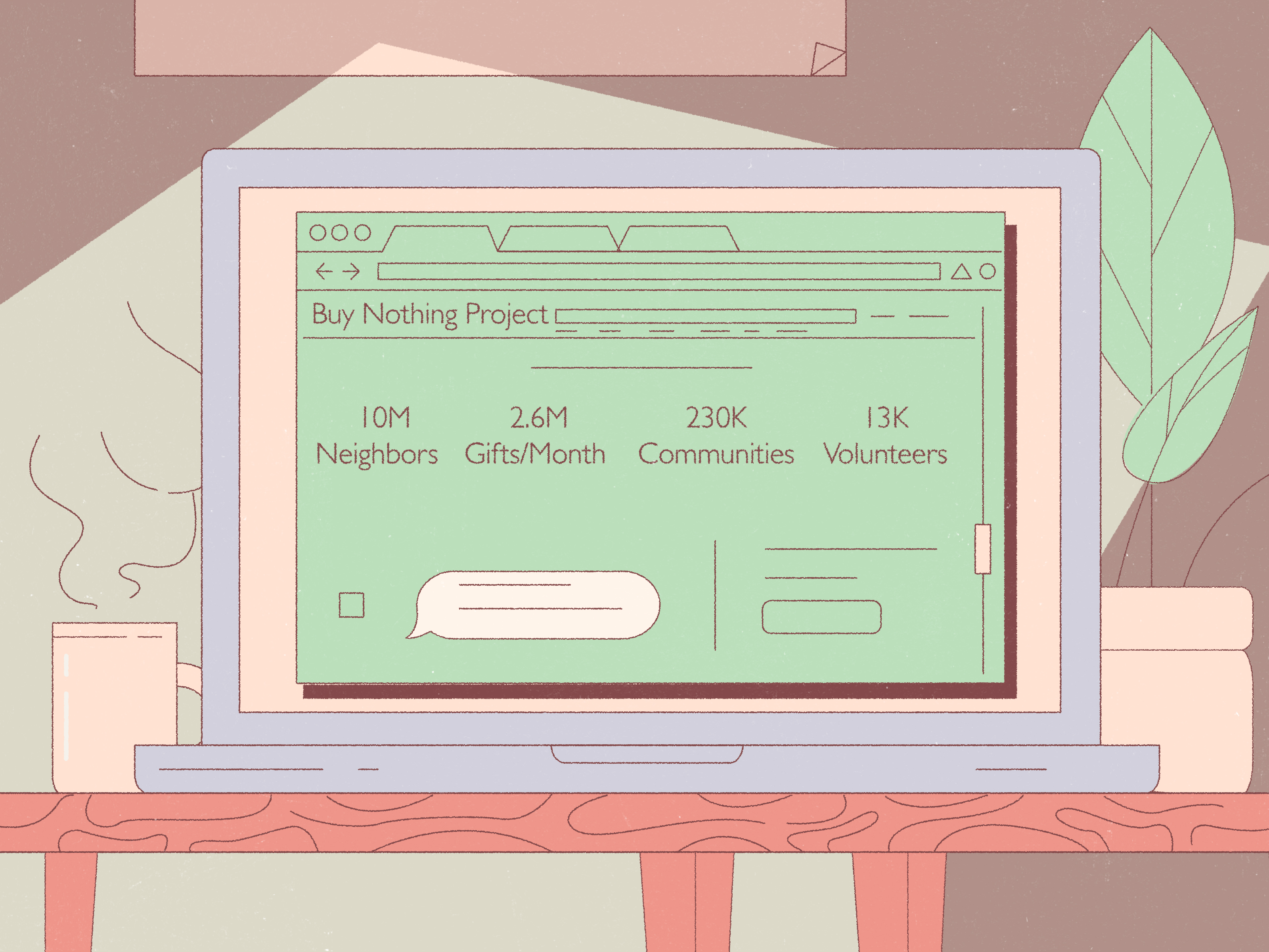
8. Join a Local Buy Nothing Group
Local gift economies help people give, receive, lend, and share within their neighborhood. Instead of selling unwanted items, members offer them freely. Someone’s extra moving boxes become another person’s packing solution. A child’s outgrown bike becomes a new adventure. A stack of jars becomes someone’s pantry organization system. It is like a treasure hunt, except the treasure is community and occasionally a very specific lamp.
To participate well, give as generously as you receive. Offer useful items clearly, include honest descriptions, and avoid treating the group like a personal shopping catalog. When asking for something, be polite and specific. Gratitude matters. So does showing up when you say you will.
These groups are not only about free stuff. They build local connection. You begin to see neighbors not as strangers but as people with extra tomato cages, spare puzzles, and surprisingly strong opinions about moving blankets.
9. Repair Before You Replace
Modern shopping culture often trains us to replace anything that becomes inconvenient. A missing button? Replace the shirt. A wobbly chair? Buy a new one. A dull knife? Panic dramatically. But many items can be repaired with basic skills or low-cost help.
Start small. Sew buttons. Patch tiny holes. Glue loose soles. Tighten screws. Replace batteries. Clean filters. Sharpen blades. Watch reputable tutorials for simple fixes. Visit repair cafes if your area has them. Ask handy friends for guidance. Keep a small repair kit with needles, thread, glue, tape, a screwdriver, and other basics.
Repairing saves money and builds confidence. It also changes your relationship with possessions. Instead of seeing objects as disposable, you begin to see them as maintainable. That mindset alone can reduce a huge amount of unnecessary buying.
10. Use a “One In, One Out” Rule After the Challenge
A buy-nothing challenge can reset your habits, but the real win is what happens afterward. To avoid returning to clutter, use a “one in, one out” rule. If you buy or receive a new shirt, release an old one. If you bring in a new mug, donate or gift one you no longer use. If a new toy enters the house, an unused toy leaves.
This rule prevents accumulation and makes each purchase more thoughtful. Suddenly, buying a new item comes with a question: “What am I willing to let go of?” If the answer is “nothing,” maybe you do not need the new thing after all.
For families, make it collaborative instead of punitive. Children can help choose toys to pass along. Adults can model generosity by giving away items that still have value. The goal is not scarcity. It is flow.
11. Plan Meals Like a Person Who Owns a Refrigerator
Food is one of the easiest places to overspend because grocery stores are basically obstacle courses with lighting. A buy-nothing approach to food does not mean buying no groceries. It means buying intentionally and using what you buy.
Before shopping, inventory your pantry, fridge, and freezer. Build meals around what you already have. Create a list and stick to it. Plan flexible meals such as soups, stir-fries, casseroles, grain bowls, omelets, tacos, salads, and pasta dishes that can absorb odds and ends before they become science experiments.
Designate one night per week as “leftover night.” Give it a better name if needed: fridge buffet, snack dinner, kitchen treasure hunt. The branding is up to you. The point is to use food before buying more food.
12. Make Free Fun Your New Hobby
Many people worry that buying nothing will make life dull. In reality, it often reveals how much fun does not require a receipt. Free activities include hiking, neighborhood walks, library events, board games, potlucks, home movie nights, public concerts, community festivals, volunteering, drawing, writing, gardening, exercising, learning online, visiting parks, or hosting a clothing swap.
Make a “free fun list” before cravings hit. When the weekend arrives, you will not default to shopping because you already have options. Invite friends into the challenge. Instead of meeting at a mall or restaurant every time, meet for a walk, picnic, game night, or homemade dinner.
Buying nothing becomes easier when your life still feels full. The secret is not deprivation. It is replacing paid entertainment with connection, creativity, movement, and rest.
13. Review What Changed and Keep the Best Parts
At the end of your challenge, review the results. How much money did you save? What purchases did you avoid? Which cravings disappeared? Which habits felt hard? Which free alternatives worked? What did you learn about your home, your schedule, your emotions, and your community?
Do not measure success only by dollars. You may also notice less clutter, fewer packages, more creative meals, better planning, stronger neighbor connections, and a calmer relationship with money. Maybe you discovered that you do not need to buy books because the library is magnificent. Maybe you learned that you do need a better pair of shoes because your current ones squeak like a haunted hamster. Both lessons are useful.
Afterward, keep the practices that fit your life: the 24-hour rule, meal planning, borrowing, repair, gift groups, home inventory, or one in, one out. A buy-nothing challenge is not a finish line. It is a reset button.
Common Mistakes When Trying to Buy Nothing
Going Too Extreme Too Fast
If you cut everything at once, you may burn out. Start with one category, such as clothes, takeout, home decor, beauty products, books, or online shopping. Small wins build confidence.
Ignoring Real Needs
Buying nothing should never mean neglecting health, safety, hygiene, school, work, or necessary repairs. If your winter coat is not warm enough, replacing it is not failure. It is common sense wearing sleeves.
Replacing Shopping With Endless Free Clutter
Free stuff is still stuff. Before accepting anything, ask where it will live and how you will use it. Do not turn a buy-nothing challenge into a museum of other people’s decluttering projects.
Making It a Personality Contest
You do not need to become the most minimalist person on the internet. Avoid judging others. Focus on your goals, your budget, your home, and your habits.
Real-Life Experiences From a Buy-Nothing Challenge
The first week of buying nothing often feels louder than expected. Not because life changes dramatically, but because you suddenly hear all the little urges that were previously covered by checkout sounds. You notice the desire to order takeout after a tiring day. You notice the urge to buy a new notebook because starting fresh feels easier than finishing the half-used notebook in the drawer. You notice how often boredom disguises itself as “I should just look online for a minute.” That minute, of course, has historically been a trapdoor.
One of the most useful experiences is rediscovering what is already available. A person might begin the challenge convinced they need more storage bins, only to realize the real problem is too much unused stuff. After decluttering one closet, they find three tote bags, unopened shampoo, batteries, gift wrap, a phone charger, and a sweater they forgot they liked. The urge to buy storage fades because the home itself becomes more functional.
Food planning can also change quickly. At first, using pantry ingredients may feel like a cooking show challenge hosted by a very strict accountant. But after a few days, it becomes satisfying. Rice, beans, frozen vegetables, eggs, pasta, sauces, canned tomatoes, oats, and leftover chicken suddenly turn into real meals. The freezer stops being a cold archive of good intentions and becomes part of dinner. Grocery trips become shorter because the list is based on actual gaps, not vague hunger.
Another memorable experience is learning how social spending works. Many people buy things to participate: coffee with friends, lunch out, new outfits for events, gifts, decorations, activities, or small treats during errands. A buy-nothing challenge forces more honest invitations. “Want to come over for coffee?” “Can we walk instead?” “Let’s do a potluck.” Some people may not understand at first, but many appreciate the simplicity. It can even make friendships feel less transactional. Nobody has to spend $38 to prove they enjoy conversation.
Joining a local gift group can feel awkward in the beginning. Asking for something free may trigger pride. Offering items may trigger doubt: “Will anyone want this?” Then someone gratefully picks up your extra plant pots, and another neighbor offers the exact size picture frame you needed. The exchange feels practical, but also oddly cheerful. It reminds you that abundance is not always about owning more. Sometimes it is about circulation. The thing sitting unused in your closet may be genuinely useful to someone five blocks away.
The hardest moments usually come from emotional habits. After a frustrating day, buying something can feel like taking control. During a celebration, shopping can feel like a reward. During stress, browsing can feel like escape. The challenge does not remove those feelings; it reveals them. That is where the real growth happens. You begin building a menu of non-shopping responses: walking, resting, cooking something simple, cleaning a small area, calling someone, reading, stretching, or putting $10 into savings and naming it “future me deserves snacks.”
By the end, most people do not want to buy literally nothing forever. They want to buy differently. They want purchases to feel chosen, not automatic. They want fewer regrets, fewer duplicate items, fewer mystery boxes at the door, and fewer moments of wondering where the money went. The experience proves that buying less is not about having a smaller life. It is about creating more room for the parts of life that do not fit in a shopping cart.
Conclusion: Buying Nothing Helps You Notice Everything
Learning how to buy nothing is less about strict denial and more about paying attention. It helps you notice your spending triggers, your hidden household inventory, your community resources, and your real needs. It can save money, reduce waste, lower clutter, and make everyday life feel less controlled by sales, ads, and one-click temptation.
Start small. Make clear rules. Track your spending. Pause before purchases. Borrow, repair, reuse, swap, and enjoy what you already own. You do not have to become a perfect minimalist. You just have to become a little harder to trick with a discount code.