
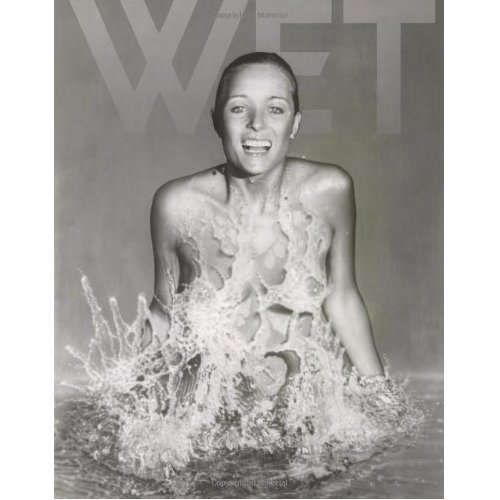
Before wellness became a trillion-dollar vocabulary word and before every boutique hotel bathtub looked like it was waiting for an influencer with eucalyptus, there was WET: The Magazine of Gourmet Bathing. Founded by Leonard Koren in Venice, California, in 1976, WET was a strange, stylish, slippery little miracle: a magazine about bathing that quickly became a magazine about art, design, fashion, music, Los Angeles, bodies, humor, and the delightful absurdity of being alive.
Making WET: The Magazine of Gourmet Bathing, Koren’s 2012 book, tells the story behind this cult publication. It is not merely a scrapbook of old covers or a nostalgic soak in the hot tub of the 1970s. It is a case study in artistic entrepreneurship, independent publishing, and how a wildly specific idea can become a cultural lens. WET began with bath parties, bath art, friends, improvisation, and a title that sounded like a joke you might hear at midnight in a Venice studio. Somehow, it became one of the most memorable avant-garde magazines of its era.
What Was WET Magazine?
WET was officially devoted to “gourmet bathing,” a phrase so charmingly ridiculous that it practically arrives wearing a tiny towel. The magazine ran from 1976 to 1981 and published 34 issues. At first, the concept seemed literal: bathing, showers, hot tubs, swimming pools, water, soap, bodies, towels, steam, mud, and the mysterious emotional power of becoming clean. But the definition quickly expanded. Gourmet bathing became less about plumbing and more about perception.
In WET’s universe, bathing could mean a mineral spring in California, a hot tub built by hand, a waterbed, a health craze, a fashion statement, a social ritual, or an excuse to interview musicians and artists who had absolutely no business being near a loofah. That was part of the brilliance. WET understood that a narrow theme can become a huge playground when the editor has enough imagination and just enough nerve.
Leonard Koren and the Birth of “Gourmet Bathing”
Leonard Koren trained in architecture and urban planning, but instead of heading directly into conventional practice, he drifted toward art, design, and the sensory life of environments. In 1970s Venice, California, he was surrounded by artists, cheap rents, eccentric living spaces, and a Pacific-edge freedom that made unusual projects feel possible. Koren had been making bath-related artworks before WET existed, and the magazine grew naturally from that playful obsession.
One origin story centers on bath parties at Pico-Burnside Baths, a Los Angeles bathhouse where Koren brought together friends, models, artists, and collaborators. These events were less like market research and more like social sculpture. People bathed, talked, posed, laughed, and discovered that water was a surprisingly good editorial department. The atmosphere produced images, ideas, and a tone that would shape the magazine.
Why Venice, California, Mattered
WET could have been born only in a place with the right mix of decay, sunshine, looseness, and ambition. Venice in the mid-1970s was not the polished, high-rent postcard it later became. It was rougher, cheaper, more experimental, and wonderfully porous. Artists could live in odd buildings, convert strange spaces, and try ideas that would have been laughed out of more proper neighborhoods.
That setting gave WET its mood: beachy but not beach-blanket cute, intellectual but allergic to academic stiffness, stylish but suspicious of good taste. The magazine captured a Los Angeles sensibility that was emerging alongside punk and new wave culture. It did not look like New York publishing, and it did not want to. It had its own temperature: warm, weird, chlorinated, and slightly dangerous if you left it unattended.
From Tiny Zine to Avant-Garde Design Object
The earliest issues of WET were modest in size and resources. They were assembled with the confidence of people who did not yet know all the reasons a magazine should be impossible. As the publication grew, so did its ambition. Page counts increased, formats changed, covers became more daring, and the design language became one of the magazine’s central attractions.
WET’s graphic design helped define what later became associated with California New Wave and postmodern design. Instead of obeying a calm modernist grid, WET pushed layouts into asymmetry, visual collision, collage, odd typography, and deliberate surprise. Readability sometimes took a back seat to energy. In many pages, the design did not simply support the story; it grabbed the story by the ankles and dragged it into the pool.
The Contributors Who Made WET Wild
Part of WET’s lasting appeal comes from the range of people who passed through its pages. The magazine included work by designers, artists, photographers, writers, musicians, and cultural troublemakers. Names associated with WET include April Greiman, Gary Panter, Matt Groening, Jayme Odgers, Peter Shire, John Van Hamersveld, Bob Zoell, Guy Webster, Herb Ritts, Matthew Rolston, Kristine McKenna, Lewis MacAdams, and many others.
The contributor list matters because WET functioned like a creative laboratory. Some people were already known; others were early in their careers. The magazine gave them a place to test tone, form, attitude, and visual risk. That is one reason WET still interests designers today. It shows what happens when a publication is not merely a container for content but a living ecosystem of collaborators.
What Did WET Actually Publish?
The short answer is: almost everything, as long as it could be made wet enough. WET covered bathing culture, of course, but also music, architecture, fashion, art, food, literature, health trends, nightlife, celebrity, street style, and oddball social observation. One issue might include hot springs, another might feature interviews with musicians, and another might veer into avant-garde performance, strange products, or absurd lifestyle commentary.
The magazine interviewed and featured figures connected to the broader cultural scene, including David Lynch, Laurie Anderson, Brian Eno, Elvis Costello, Steely Dan, Iggy Pop, and others. It also printed early or unusual work from artists who would become far more famous later. The joy of WET was that high culture and low comedy could share a towel rack without asking permission.
The Humor Was Not Decoration
WET’s humor was not a garnish sprinkled on top of serious design. It was structural. The magazine used absurdity as an editorial method. “Gourmet bathing” itself was funny because it treated an everyday act with the seriousness normally reserved for wine, cuisine, or architecture. But the joke opened a real question: why should ordinary sensory experiences be treated as ordinary?
That attitude gave WET its freshness. It could be silly without being shallow. It could mock taste while creating taste. It could publish a beautiful image, then undercut it with a headline that seemed to have escaped from a dream after eating too much cheese. The result was a magazine that understood style as performance, not just polish.
Making WET as a Lesson in Independent Publishing
Making WET: The Magazine of Gourmet Bathing is valuable because it reveals the process behind the legend. Koren’s project was not born from a corporate strategy deck or a focus group of towel enthusiasts. It came from a personal obsession, a local scene, and a willingness to build the airplane while flying it through steam.
The book shows how independent publishing often depends on improvisation. Problems with money, production, staff, printing, distribution, and deadlines are not side notes; they are the story. WET survived because it kept inventing solutions. Its limitations became part of its look. Its resourcefulness became part of its voice. In a media world obsessed with scale, WET is a reminder that a strong point of view can be more powerful than a large budget.
Why WET Still Feels Modern
WET feels surprisingly current because modern culture has caught up with many of its obsessions. Today, wellness, bathing rituals, spa culture, body care, saunas, cold plunges, mineral baths, and sensory design are everywhere. People now discuss showers as self-care, interiors as therapy, and hot springs as lifestyle destinations. WET was exploring these ideas decades earlier, only with better jokes and stranger typography.
The magazine also anticipated the hybrid editorial style of later independent magazines and digital culture. It blurred categories before category-blurring became a branding strategy. It treated lifestyle as art, art as lifestyle, and design as a social attitude. That makes WET especially relevant to contemporary publishers, designers, bloggers, and creative entrepreneurs looking for a model that is intelligent, playful, and unmistakably personal.
WET and the Los Angeles Imagination
WET is also a key document of Los Angeles cultural history. It captured the city not as Hollywood fantasy but as a network of neighborhoods, studios, bathhouses, beaches, boutiques, artists, musicians, and private rituals. Its L.A. was not always glamorous, but it was alive with invention. The magazine understood that culture often begins in marginal spaces: cheap rooms, parties, small shops, weird homes, and late-night conversations.
In that sense, WET was less a magazine about bathing than a magazine about atmosphere. It recorded how a particular place felt at a particular moment. The pages still carry the scent of wet concrete, ocean air, photo chemicals, cigarettes, shampoo, and ambition. That is quite a cocktail. Please do not drink it.
The Design Legacy of WET
Designers continue to study WET because it made risk look necessary. Its covers and layouts challenged the idea that magazines needed a consistent, tidy identity. Koren encouraged each issue to feel visually different from the one before it. That decision turned inconsistency into a principle. The magazine’s identity was not a logo system; it was an attitude system.
This approach influenced later experimental magazines that treated the page as an arena rather than a neutral surface. WET helped make room for publications that were expressive, noisy, contradictory, and visually adventurous. It belongs in the conversation with independent and style-driven magazines that followed, including publications known for pushing editorial design beyond clean columns and polite captions.
Specific Examples That Show WET’s Range
A glance through WET’s issue archive reveals its wild range. Early issues included poolside images from bath parties, pieces on redwood hot tubs, drinking water, bathing environments, and “Wet to Wear.” Later issues expanded into interviews with musicians, essays on architecture, reports on nightlife, fashion experiments, health trends, and cultural satire.
One issue might include a Brian Eno interview; another might feature David Lynch; another might explore Japanese street fashion, nude beaches, or the peculiar glamour of wheatgrass. The point was not randomness for its own sake. The point was editorial chemistry. WET mixed subjects the way a bath mixes heat, water, mineral content, and whoever forgot to bring a towel.
What “Gourmet Bathing” Means Today
Today, gourmet bathing can be understood as the art of paying attention to everyday pleasure. It does not require a luxury spa, marble tub, or imported bath salts with a name that sounds like a Scandinavian detective series. It asks for awareness. How does water feel? How does steam change a room? Why does a bath slow time? Why does a shower sometimes solve a problem that three meetings could not?
WET’s genius was treating these questions with both seriousness and mischief. It suggested that ordinary life contains hidden ceremonies. Washing, soaking, sweating, rinsing, floating, and drying can become aesthetic experiences when we notice them. In a distracted age, that idea feels more useful than ever.
Experience: Reading WET as a Creative Reset
Spending time with the story of WET feels like opening a window in a room full of identical content strategies. The magazine reminds us that creativity often begins with a strange question. Not “What market segment can we capture?” but “What if bathing were a civilization?” That question is funny, but it is also productive. It gives the imagination somewhere to go.
For writers and editors, WET is a lesson in the power of a sharp editorial premise. A topic does not need to be broad to be rich. In fact, the narrower the frame, the more inventive the angles can become. Bathing led WET into architecture, music, fashion, food, sex, health, celebrity, and urban life. A small door opened into a mansion, and yes, the mansion probably had a hot tub.
For designers, WET is a reminder that visual systems should serve the spirit of a project, not flatten it. Many modern brands fear inconsistency so much that they become invisible. WET did the opposite. It allowed surprise to become recognizable. You knew WET not because every page looked the same, but because every page seemed to be arguing with sameness.
For creative entrepreneurs, Making WET offers a practical kind of encouragement. It proves that influential projects can begin without perfect conditions. Koren did not wait for a polished infrastructure. He started with an idea, a community, and a willingness to make things in public. That matters because many people delay creative work until everything is safe. WET suggests that safety may be the one ingredient you should leave out.
Personally, the most useful lesson from WET is that taste should have a pulse. Good taste can become stiff when it forgets humor. Bad taste can become brilliant when handled with intelligence. WET lived in that electric middle zone where elegance and absurdity shook hands with damp fingers. It made bathing look glamorous, ridiculous, philosophical, and social all at once.
The magazine also changes how one thinks about daily rituals. After reading about WET, a bath is not just a bath. A shower is not just plumbing with better acoustics. Even washing your face can feel like participation in a long human tradition of renewal, vanity, relief, and tiny private theater. You begin to understand why Koren could build a magazine around water. Water is never only water. It is mood, memory, temperature, reflection, and sometimes the last peaceful place before email.
That is why WET still matters. It did not simply document a scene; it created a way of seeing. It invited readers to treat life as material for aesthetic play. It made the bathroom cultural. It made the magazine page unstable in the best way. And it proved that a publication can be influential not by pleasing everyone, but by becoming intensely, gloriously itself.
Conclusion: Why Making WET Still Inspires
Making WET: The Magazine of Gourmet Bathing is more than the backstory of a cult magazine. It is a manual for creative courage disguised as a bubbly historical artifact. WET began with bathing, but its real subject was freedom: freedom to invent a category, to invite unusual collaborators, to design without fear, and to laugh while taking art seriously.
In the end, WET’s greatest legacy may be its permission slip. It gives artists, writers, designers, publishers, and dreamers permission to start with the thing that fascinates them, even if that thing seems too odd, too small, or too wet. Especially if it is too wet. The world may not be crying out for your strange idea today. But WET reminds us that sometimes the job of a creator is not to answer demand. It is to create desire, one beautifully absurd page at a time.














