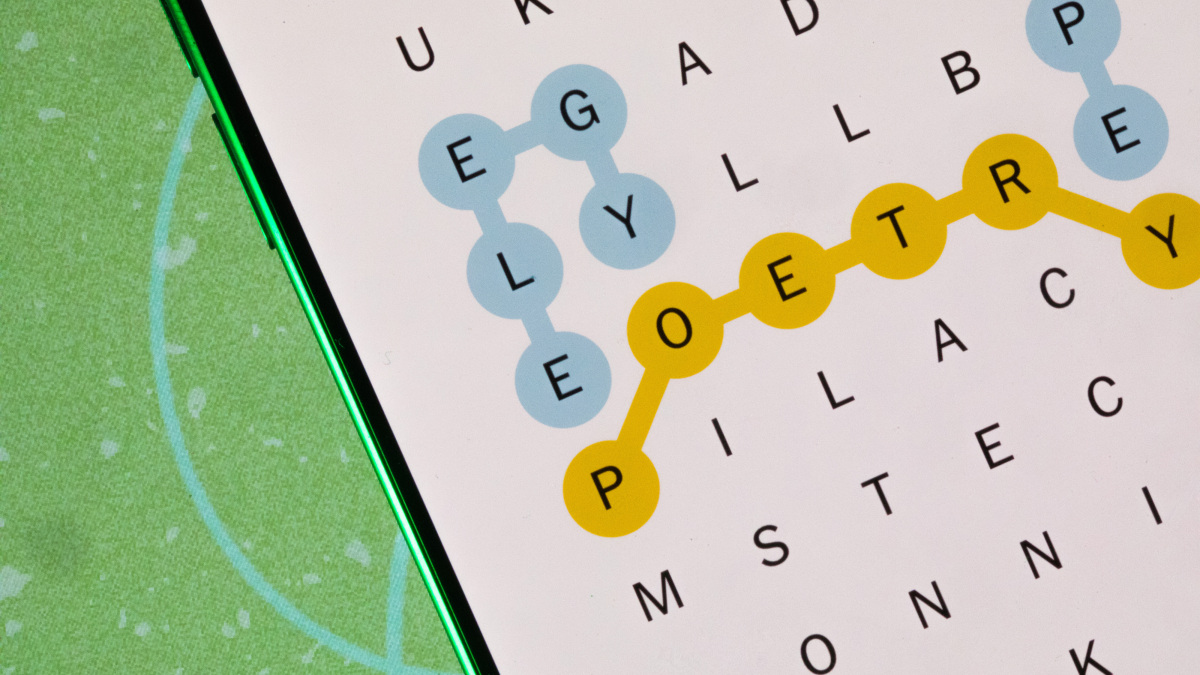
Note: This article contains full spoilers for NYT Connections puzzle #800 for Tuesday, August 19, 2025. If you still want to solve the puzzle yourself, tiptoe away like a cartoon burglar and come back when your brain has finished its heroic wrestling match with the grid.
The NYT Connections answer for today, August 19, 2025, is a satisfying mix of chatty vocabulary, beverage terminology, phrase-building, and sneaky word beginnings. In other words, it is exactly the kind of puzzle that makes you feel brilliant for three seconds, then immediately suspicious of every tile on the board. Puzzle #800 looks harmless at first, but it hides several clever traps. Words like Plymouth, Dartmouth, and Rushmore may tempt you into thinking about places, schools, or American landmarks. Then The sits there like a tiny chaos goblin, refusing to explain itself until the “___ Rock” category clicks.
For players who want the direct answer, the four groups are: Quite the Talker, Fortified Wines, ___ Rock, and Starting With Ways to Move Quickly. The puzzle is not impossible, but it is a classic Connections brain teaser: easy words, not-so-easy relationships. Below, you will find the complete solution, category explanations, solving strategy, and a longer reflection on the experience of playing this particular puzzle.
NYT Connections Answer for August 19, 2025
| Color | Category | Words |
|---|---|---|
| Yellow | Quite the Talker | Blabbermouth, Chatterbox, Prattler, Windbag |
| Green | Fortified Wines | Marsala, Port, Sherry, Vermouth |
| Blue | ___ Rock | Classic, Little, Plymouth, The |
| Purple | Starting With Ways to Move Quickly | Dartmouth, Dashboard, Flywheel, Rushmore |
Today’s NYT Connections Hints Before the Full Breakdown
If you prefer a gentler push rather than a full shove into spoiler country, here are the category clues in plain English:
Yellow Hint: Someone Who Talks Too Much
The yellow group is built around words for a person who talks constantly. These words are playful, mildly insulting, and perfect for describing someone who can turn “I’ll keep this quick” into a 47-minute podcast episode.
Green Hint: Wines With Extra Strength
The green group contains fortified wines. These are beverage names, not random fancy words that escaped from a restaurant menu. The trick is recognizing them as a set instead of treating them as unrelated proper nouns or cooking ingredients.
Blue Hint: Add One Word After Each Tile
The blue category requires adding the same word after each answer. In this case, the missing word is “rock.” Once you see classic rock, the others begin to fall into place.
Purple Hint: Look at the Beginning
The purple group is pure Connections mischief. Each answer starts with a word that can mean moving quickly: dart, dash, fly, and rush. That means the solution is hiding at the front of each word, not in the meaning of the whole word.
Yellow Group Explained: Quite the Talker
The yellow group is the friendliest entry point in today’s puzzle. The answers are Blabbermouth, Chatterbox, Prattler, and Windbag. All four describe someone who talks a lot, often more than the room requested. This is the kind of category many solvers spot early because the words share a loud personality. They practically wave from the grid wearing tiny microphones.
Blabbermouth suggests someone who spills information or talks too freely. Chatterbox is softer and more playful, often used for someone who is simply very talkative. Prattler has an old-fashioned flavor and means someone who talks at length, sometimes about small or silly things. Windbag is sharper and usually implies long-winded speech with more air than substance.
The main solving lesson here is to look for emotional tone. All four words have a similar attitude. Connections often uses synonyms, near-synonyms, and words from the same social situation. When a cluster feels like it belongs in the same insult drawer, you may be on the right track.
Green Group Explained: Fortified Wines
The green group is Marsala, Port, Sherry, and Vermouth. These are all fortified wines. For some players, this category may have been obvious. For others, it may have felt like the puzzle suddenly became a sommelier exam, which is rude behavior from a word game before breakfast.
The challenge is that these words can live in different mental folders. Marsala may remind many people of chicken Marsala. Port can mean a harbor or a computer connection. Sherry may look like a person’s name. Vermouth may bring cocktails to mind. The trick is noticing that all four also belong to the same beverage category.
This is a great example of how NYT Connections uses multiple meanings as camouflage. A word is rarely just one thing. It can be a place, a drink, a name, a food reference, or part of a phrase. Strong solvers learn to pause before submitting a group and ask, “Could these words be connected in a more specific way?” In today’s puzzle, the answer is yes, and it wears a very tiny dinner jacket.
Blue Group Explained: ___ Rock
The blue group is Classic, Little, Plymouth, and The. The category is ___ Rock, meaning each word can appear before “rock” to create a phrase or name: classic rock, Little Rock, Plymouth Rock, and The Rock.
This category is clever because the words do not look related by definition. Classic is an adjective, Little is also an adjective, Plymouth is a place name, and The is just sitting there, being the most suspicious three-letter word in the English language. But Connections loves these “add a word” categories. When a set seems impossible, try placing a common word before or after the tiles.
The hardest part may be accepting The as a real answer. In isolation, “The” feels incomplete. It is not a person, place, object, emotion, or satisfying snack. But paired with “Rock,” it becomes The Rock, a widely recognized phrase associated with Dwayne Johnson or, depending on context, a landmark or nickname. That single tile is the puzzle’s wink. Once you understand why it is there, the whole blue group makes sense.
Purple Group Explained: Starting With Ways to Move Quickly
The purple group is Dartmouth, Dashboard, Flywheel, and Rushmore. The category is Starting With Ways to Move Quickly. Each word begins with a speed-related verb: dart, dash, fly, and rush.
This is the kind of purple category that makes Connections both delightful and mildly diabolical. The full words do not form a normal category. Dartmouth is commonly recognized as a college name or place name. Dashboard belongs in a car or software interface. Flywheel sounds mechanical. Rushmore points many players toward Mount Rushmore. But the relationship is not about the whole word. It is about the beginning.
That is the key purple-group habit: inspect the parts of each word. Look at prefixes, suffixes, hidden words, sounds, spellings, and phrases. When the obvious meaning fails, the puzzle may be asking you to zoom in. Here, the opening chunks do the work. Dart, dash, fly, and rush all suggest fast movement. The remaining parts of the words are there to distract you, and frankly, they do an excellent job.
Why Today’s Puzzle Was Tricky
NYT Connections for August 19, 2025 was tricky because several words pulled double duty as red herrings. Plymouth, Dartmouth, and Rushmore all have place-name energy. A player could easily start building a geography or American history group. Add Port and the puzzle gets even more slippery because “port” can also suggest a place. That is how Connections catches confident solvers: it offers a group that feels almost right, but not quite complete.
The puzzle also mixes everyday vocabulary with specialized knowledge. The “talker” group is accessible, while the fortified wine group rewards players who recognize beverage terms. The “___ Rock” group depends on phrase association, and the purple group depends on word-part analysis. That variety is what makes the game satisfying. You are not just matching synonyms; you are switching mental tools every few minutes.
Best Strategy for Solving This Puzzle
A smart approach would begin with the most obvious cluster: Blabbermouth, Chatterbox, Prattler, and Windbag. After removing those, the board becomes less noisy. Next, a solver might notice Marsala, Port, Sherry, and Vermouth as beverage terms. That leaves eight words, including some strange leftovers. At that point, The becomes an important clue because it practically demands a phrase. Pair it with “Rock,” and Classic, Little, Plymouth, and The lock into place.
The remaining four words then reveal the purple category by elimination, but the real “aha” moment comes from seeing dart, dash, fly, and rush at the start of each word. If you solved purple without elimination, give yourself a small trophy. It can be imaginary. It still counts.
Common Mistakes Players May Have Made
The most tempting mistake was probably grouping place-like words. Plymouth, Dartmouth, and Rushmore seem to belong together, but the fourth word is hard to justify. Another trap was treating Port as a location clue instead of a fortified wine. A third mistake was ignoring short or odd words like The. In Connections, strange tiles are often the key. If a word looks too plain to be useful, it may be holding the entire category together with duct tape and smug confidence.
Players may also have over-focused on nouns. Today’s purple category depends on verbs hidden at the start of longer words. That means the puzzle rewards flexible thinking. You have to stop asking only “What is this word?” and start asking “What is inside this word?”
What Today’s Puzzle Teaches About NYT Connections
The August 19, 2025 puzzle is a strong reminder that NYT Connections is not just a vocabulary game. It is a pattern-recognition game. Sometimes the connection is meaning. Sometimes it is grammar. Sometimes it is pop culture. Sometimes it is the word that comes before or after. And sometimes the connection is hiding in the first four letters, giggling quietly while you accuse the puzzle of being unfair.
To improve, players should practice sorting the board in layers. First, look for direct synonyms. Second, scan for categories like foods, places, animals, colors, titles, or objects. Third, test phrase patterns such as “___ rock” or “hot ___.” Fourth, examine word parts. Prefixes and suffixes are frequent troublemakers, especially in blue and purple groups.
Experience: Playing NYT Connections for August 19, 2025
Playing this puzzle feels like walking into a room where every word is pretending not to know the others. At first, the talkative group practically introduces itself. Blabbermouth and Chatterbox are so clearly related that they might as well be sitting together at a noisy dinner table. Add Prattler and Windbag, and the yellow group becomes a comfortable first win. It gives the player confidence, which is exactly when Connections likes to roll a banana peel under your chair.
The next phase is where the puzzle becomes more interesting. Marsala, Port, Sherry, and Vermouth form a clean group if you recognize fortified wines. But if your brain files Marsala under “chicken dinner” and Port under “boats,” you may wander into the wrong neighborhood. That is part of the fun. Connections often rewards general knowledge, but it also rewards patience. Even if you do not know the category name immediately, the shared flavor of the words can still point you in the right direction.
The blue group is the most charming part of the puzzle. The is such a strange tile that it becomes almost funny. Most players do not want to build a category around an article. It feels too small, too slippery, too grammatically boring. But once “The Rock” appears in your mind, the puzzle opens. Classic rock, Little Rock, and Plymouth Rock complete the pattern. This is the moment when the puzzle stops looking random and starts looking carefully engineered.
The purple group is the final little magic trick. Dartmouth, Dashboard, Flywheel, and Rushmore do not seem related as complete words. Their connection exists at the starting line: dart, dash, fly, rush. That discovery creates the best kind of Connections satisfaction. It is not just “I knew that.” It is “I saw what the puzzle was doing.” That distinction matters because the game is not only testing what you know; it is testing how you look.
My favorite lesson from this puzzle is to respect the weird words. When a tile looks useless, awkward, or too basic, it may be the hinge. In this case, The is the clue that unlocks an entire category. The same is true of long compound-like words in purple. They invite you to stop reading them normally and start slicing them into pieces. Once you develop that habit, Connections becomes less frustrating and more playful. You begin to see the board as a set of disguises rather than a list of definitions.
This puzzle also shows why daily word games remain popular. They are quick, but they create a real emotional arc. You begin with confusion. You find a group. You feel smart. You get stuck. You question your education, your eyesight, and possibly your breakfast choices. Then one connection clicks, and the whole grid changes. The August 19, 2025 Connections puzzle delivers that arc beautifully. It is fair, funny, slightly sneaky, and memorable enough to make players say, “Okay, one more puzzle,” even when there is no more puzzle to play until tomorrow.
Conclusion
The NYT Connections answer for today, August 19, 2025, gives players a balanced puzzle with accessible synonyms, specialized terms, phrase logic, and hidden word beginnings. The complete solution is: Blabbermouth, Chatterbox, Prattler, Windbag for “Quite the Talker”; Marsala, Port, Sherry, Vermouth for “Fortified Wines”; Classic, Little, Plymouth, The for “___ Rock”; and Dartmouth, Dashboard, Flywheel, Rushmore for “Starting With Ways to Move Quickly.”
If today’s puzzle tripped you up, do not worry. That is the point. Connections is designed to make you second-guess obvious groupings and search for deeper patterns. The best way to improve is to slow down, test multiple meanings, watch for phrase blanks, and inspect the beginnings and endings of words. Also, never underestimate a tiny word like “The.” It may look harmless, but in this puzzle, it carried a whole rock concert on its back.