
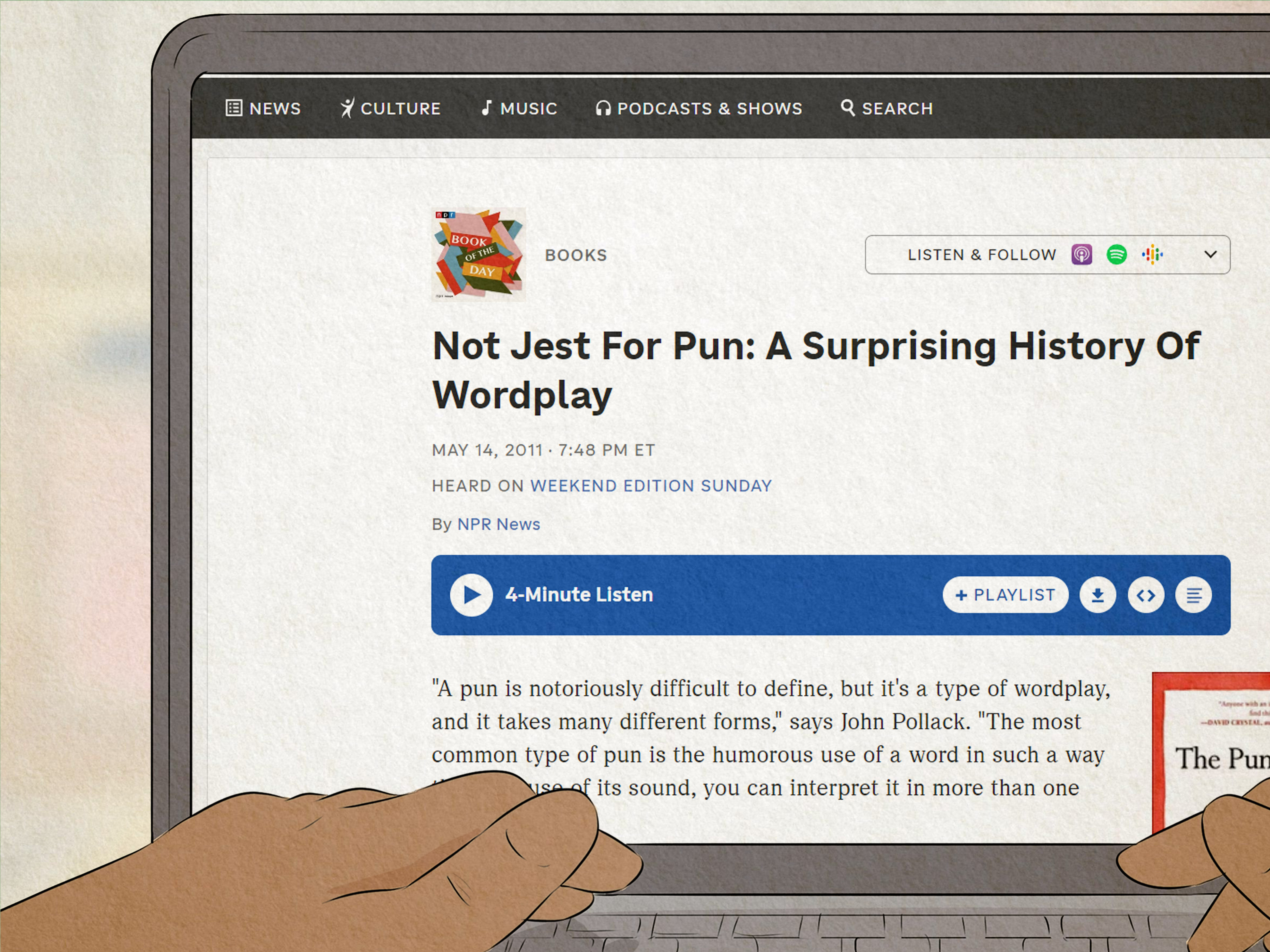
English has a special talent for making the same sentence do two jobs at once. One job is “communicate a normal idea.”
The other job is “sneak in a tiny joke and watch everyone either laugh… or groan like you just told a dad joke in a board meeting.”
That second job is usually called a puna kind of wordplay where a word or phrase suggests more than one meaning.
And when your sentence accidentally (or accidentally on purpose) becomes a pun, English gives you two handy little disclaimers:
“no pun intended” and “pun intended.”
They’re short, they’re common, and they’re basically traffic signals for your listener:
“I’m being serious” vs. “Yes, I did that on purpose.”
Quick definitions
What does “no pun intended” mean?
“No pun intended” is a phrase you say right after (or sometimes right before) a sentence that could be heard as a pun.
On the surface, you’re saying you didn’t mean to make a pun. In real life, it usually does one of two things:
it either (1) sincerely clarifies you’re not trying to be clever, or (2) jokingly highlights the pun while pretending it was an accident.
What does “pun intended” mean?
“Pun intended” means the opposite: you’re admitting the wordplay was deliberate.
It’s a wink to the audience that says, “Yes, I heard what I just saidand I stand by it.”
You’ll also see variations like “pun absolutely intended,” “pun very much intended,” or “pun fully intended.”
First, what exactly is a pun?
A pun is a humorous play on words that leans on multiple meanings, similar sounds, or familiar phrases that can be “flipped.”
For example, homophones (words that sound alike) are pun gold: foul and fowl, time and thyme, their and there.
Puns can be quick jokes, or they can be subtle enough that the reader misses themuntil someone announces, “no pun intended,” and now everyone is forced to notice.
Puns also overlap with broader wordplaythe umbrella category for clever language tricks. Some wordplay is clearly meant to be funny.
Some is used to be memorable, persuasive, or dramatic. (English is multitasking again.)
In writing and literature, puns can be used for humor, themes, character voice, or even hidden “Easter egg” moments for attentive readers.
“No pun intended”: sincere, sarcastic, or sneakily proud?
1) The sincere version: “Please don’t read into it”
Sometimes a pun happens by accident. You’re talking, your brain picks a normal word, andoopsit has a second meaning that fits the situation.
In more serious or formal contexts, that accidental pun can create confusion or make the tone feel weirdly jokey.
Saying “no pun intended” can be a quick way to remove ambiguity and keep the conversation on track.
Example (sincere): “We need to address the root cause of this problemno pun intended.”
Here, the speaker is trying to stay serious. The “root” pun exists because the topic could involve plants, foundations, or origins,
but the speaker is saying, “I’m not trying to be cute right now.”
2) The playful version: “I’m pretending this was an accident so you’ll laugh harder”
Let’s be honest: a lot of the time, “no pun intended” is used with a grin.
It’s a comedic technique: deny responsibility while shining a spotlight on the joke.
The denial becomes part of the humorlike saying, “I’m not bragging,” right after you brag.
Example (playful): “That new bakery really raised the barno pun intended.”
The pun is obvious (raised dough, raised expectations). Saying “no pun intended” makes it even more obviousand that’s the point.
You’re basically handing the audience a flashlight and saying, “Look over here at my wordplay.”
3) The “social softener”: “Please don’t judge me for this corniness”
There’s also a social function: puns can feel cheesy, and not everyone enjoys them equally.
“No pun intended” can act as a politeness cushionan acknowledgment that you know you might get an eye-roll.
It’s a way to keep the mood light without forcing the room to commit to “Was that a joke or not?”
“Pun intended”: owning the joke like a responsible adult
“Pun intended” is the straightforward confession. You’re telling the audience your word choice was a deliberate design.
This can be useful when your pun is subtle and you want to make sure it landsor when you want to make it clear you’re being playful.
Example: “We’ve got a lot to unpack today. Pun intended.”
If you’re literally talking about moving boxes, the pun is clear. If you’re talking about ideas, it’s a metaphor.
“Pun intended” tells the listener you meant the double meaning and you’d like credit for it. (Fair.)
The real difference: intent, tone, and whether you want attention
- “No pun intended” = “I didn’t plan that double meaning” or “I’m jokingly pretending I didn’t.”
- “Pun intended” = “Yes, I planned the double meaningplease clap (or groan).”
The key variable is intent: what you meant to do. But the key practical variable is tone:
what you want your audience to feel. If you want to sound serious, “no pun intended” can dial down the joke.
If you want to sound playful, either phrase can dial the joke upespecially if the pun was subtle.
How to use them in everyday speech and writing
Where they usually go in a sentence
Most often, these phrases appear right after the pun as a quick tag:
“That idea really took offno pun intended.” Sometimes they appear before the pun as a warning:
“No pun intended, but that’s a hard problem.” In writing, they’re typically set off as an aside.
Punctuation tips (so your disclaimer doesn’t look like a math equation)
Since “no pun intended” and “pun intended” are parenthetical asides, you can punctuate them like other asides.
In American English, the three most common options are:
- Em dashes: “That plan is boldno pun intendedbut it might work.”
- Parentheses: “That plan is bold (no pun intended), but it might work.”
- Commas: “That plan is bold, no pun intended, but it might work.”
Em dashes add drama and emphasis. Parentheses feel quieter and more “side-note.”
Commas are fine, but can get cluttered if your sentence already has many pauses.
Choose the punctuation that matches your toneand the readability of the sentence.
Examples that show the difference clearly
Example set #1: accidental vs deliberate
Accidental: “We’re going to address the issueno pun intended.”
Deliberate: “We’re going to address the issue. Pun intended.”
Example set #2: serious context vs playful context
Serious: “This topic is heavyno pun intended.”
Playful: “This topic is heavypun intended.”
Example set #3: making a subtle pun land
“I’m reading a book on anti-gravity. It’s impossible to put down. Pun intended.”
(Here, the tag helps the reader notice the double meaning.)
Are these phrases cliché? Sometimes. Are they still useful? Also yes.
“No pun intended” is popular enough that it can feel like a stock phrase. But clichés become clichés because they work.
These tags quickly manage tone, signal humor, and prevent misinterpretationespecially in writing, where your reader can’t hear your voice.
Used sparingly, they’re helpful. Used every other sentence, they start to feel like an apology tour for your vocabulary.
FAQ
Is “no pun intended” always honest?
Not always. It’s often used ironically to emphasize a pun the speaker clearly noticed.
The phrase can be sincere or tongue-in-cheek; context and delivery do the heavy lifting.
Can I use “pun intended” in formal writing?
You can, but it depends on your audience. In academic, legal, or highly formal business writing, it may feel too casual.
In blogs, speeches, marketing copy, and conversational writing, it’s perfectly at home.
What if I want to avoid the cliché?
Alternatives include: “forgive the pun,” “pardon the pun,” “yes, I went there,” or “wordplay intended.”
Just remember: if you swap a familiar phrase for a clever one, you may need extra context so the reader gets it.
A short, nerdy origin note (because language history is fun)
“No pun intended” has been used as a parenthetical aside for a long time. One widely repeated early example involves the phrase
“fowl play” (playing on “foul play”) followed by “no pun intended,” and the expression became more broadly popular over time.
Whether speakers use it sincerely or ironically today, the phrase has long been associated with acknowledging wordplay in the moment.
Writer’s toolkit: choosing the right phrase in two seconds
- Ask yourself: Did I mean to make the pun?
- If no: Use “no pun intended” to clarify and move on.
- If yes: Use “pun intended” when you want to own itor when the pun might be missed.
- If you’re being playful: Either phrase can work; your tone decides whether it reads sincere or cheeky.
- If you’re writing: Use em dashes or parentheses to keep the aside clean and readable.
of real-world “been there” experiences (because puns happen to all of us)
If you’ve ever typed a sentence, hit send, and only then noticed you accidentally made a pun, welcome to the club.
It’s the same club where people walk into a room, say something completely normal, and immediately regret having a language brain.
Like the time a student tells a teacher, “I’m struggling with this chapter,” and the teacher replies, “Let’s unpack it,”
only to realize the whole unit is literally about moving and packing in a novel. Cue the awkward half-smile: “No pun intended.”
Everyone laughs, not because the pun was genius, but because the human moment was.
Group chats are basically pun laboratories. Someone posts a picture of a cat sprawled across a keyboard.
Another person says, “Looks like she’s really pawsitive she owns your laptop.” That’s when “pun intended” becomes a badge of honor.
You’re not just admitting the punyou’re planting a flag on it. In friend groups, this can turn into a playful escalation:
one pun leads to three more, and suddenly the chat is a full pun-off. (Pun very much intended.)
Workplaces are where these phrases earn their paycheck. Maybe you’re in a meeting about a “pipeline,” and you say,
“We need to keep things flowing,” then immediately remember the pipeline metaphor and panic because you sound like you’re auditioning for stand-up.
A quick “no pun intended” can be a professional escape hatch: it tells the room you’re still serious, while also acknowledging the obvious wordplay
so nobody gets distracted whisper-laughing about it.
Social media is different. Online, “no pun intended” often works like a highlighter. People add it precisely because it makes the pun pop.
It’s a little performance: “Oops! I didn’t mean to be clever!” (They meant to be clever.)
In captions, it’s also a tone signal: it tells readers you’re joking without needing emojis or extra explanation.
Then there’s the “family gathering” scenario, where a pun lands in that special way that makes everyone groan in unison.
Someone says, “I’m on a seafood dietI see food and I eat it.” If they follow it with “pun intended,” they’re embracing the groan.
If they follow it with “no pun intended,” they’re pretending innocencelike the pun just tripped and fell into the conversation.
Either way, the phrase becomes part of the joke, and the moment becomes more memorable than the pun itself.
That’s the real power here: these little tags don’t just explain languagethey manage the room.
Conclusion
“No pun intended” and “pun intended” are tiny phrases with big social power. They help you steer tone, clarify meaning, and control whether your
wordplay is a quiet side-note or a spotlight moment. Use “no pun intended” when you truly want to keep things straightor when you want to pretend
you didn’t just make a pun. Use “pun intended” when you want to proudly own the joke. And if someone groans? Congratulations:
your pun worked exactly as intended.














