
Finding a house you love is a little like spotting the last good avocado at the grocery store: exciting, stressful, and suddenly everyone else seems to want it too. In a competitive real estate market, buyers often look for ways to stand out beyond price. One popular method is writing a letter of interest for a house, sometimes called a buyer letter, house offer letter, letter to the seller, or real estate love letter.
But here is the catch: a great letter can add warmth to your offer, while a careless one can create awkwardness, weaken your position, or raise fair housing concerns. So the goal is not to write a dramatic novel about destiny, porch swings, and how the breakfast nook “spoke to your soul.” The goal is to write a short, respectful, property-focused letter that supports a strong offer.
This guide explains how to write a letter of interest for a house the smart way: what to include, what to avoid, how to structure it, and how to make it sincere without accidentally turning your home search into a legal headache wearing a welcome mat.
What Is a Letter of Interest for a House?
A letter of interest for a house is a written message from a potential buyer to a seller expressing serious interest in purchasing the property. It may be included with a formal offer, sent before an offer on an off-market home, or used to introduce the buyer’s intent in a professional and personal way.
It is important to understand what this letter is not. It is not the same as a purchase agreement. It does not replace your official offer, mortgage preapproval, earnest money deposit, inspection contingency, appraisal contingency, or closing timeline. Those details belong in the formal offer prepared with your real estate agent or attorney.
Think of the letter as the polite handshake that walks in beside the paperwork. The offer says, “Here are the terms.” The letter says, “Here is why this home matters to me, and here is why I am a serious buyer.”
Should You Write a Letter to a Home Seller?
Sometimes, yes. Sometimes, absolutely not. The answer depends on your market, your agent’s advice, the seller’s preference, and local fair housing practices. Some listing agents discourage or refuse buyer letters because they can reveal personal information that should not influence a housing decision.
The safest approach is to ask your real estate agent before writing one. A professional agent can tell you whether letters are commonly accepted in your area and whether the seller has requested offers only, with no personal notes attached.
When a Letter May Help
A letter of interest may help when your offer is close to another buyer’s offer, the seller has an emotional attachment to the property, or the home has unique features that you genuinely appreciate. For example, if the seller restored the original hardwood floors, maintained a historic garden, or preserved vintage details, a thoughtful note recognizing that care can feel meaningful.
When a Letter May Hurt
A letter can hurt if it overshares personal details, sounds manipulative, criticizes the home, promises things you cannot prove, or tries to pressure the seller emotionally. It can also be risky if it mentions protected characteristics such as religion, race, national origin, disability, sex, or familial status. Even innocent phrases can create complications if they suggest the seller chose one buyer over another for reasons unrelated to the offer terms.
Fair Housing Warning: Keep the Letter Property-Focused
The biggest modern concern with home buyer letters is fair housing. In the United States, housing decisions should be based on objective factors such as price, financing, contingencies, closing timeline, and ability to complete the purchase. A seller should not choose a buyer because of personal characteristics protected under fair housing laws.
That means your letter should avoid details about your family structure, religion, ethnicity, disability, age, pregnancy, children, or other personal traits. You do not need to say, “My kids would love the backyard,” even if it is true. You can say, “The backyard is beautifully maintained and one of the features that makes the home stand out.” See the difference? One sentence introduces personal information; the other compliments the property.
Also avoid sending photos or videos of yourself. They may feel friendly, but they can reveal protected characteristics. Your letter should help the seller understand your appreciation for the house, not your entire life story in high-resolution color.
How to Write a Letter of Interest for a House Step by Step
1. Start With a Professional Greeting
Open simply and respectfully. If you know the seller’s name, use it. If not, “Dear Homeowner” or “Dear Seller” works perfectly well. This is not the time to get overly familiar. “Dear Future Former Owner of My Dream Kitchen” may be memorable, but not necessarily in the way you want.
2. State Your Interest Clearly
In the first few lines, explain that you are interested in purchasing the home. Keep it direct. Sellers do not need a mystery novel where the buyer’s intention is revealed on page seven.
Example:
Thank you for the opportunity to view your home. I am writing to express my sincere interest in purchasing the property at 123 Maple Street. After touring the house, I was impressed by the care, maintenance, and thoughtful details throughout the home.
3. Compliment Specific Features of the Property
Specific compliments are stronger than generic praise. Instead of saying, “Your house is beautiful,” mention the natural light in the living room, the preserved trim, the landscaping, the updated kitchen layout, or the way the home has been maintained.
Good example:
The original woodwork, bright front room, and well-designed outdoor space make the home feel both welcoming and carefully cared for.
Weak example:
This is the perfect house for my whole family, and we can already imagine our holiday traditions here.
The first example focuses on the home. The second may sound warm, but it introduces personal and potentially protected information.
4. Show That You Are a Serious Buyer
A seller is not only choosing a buyer; they are choosing a transaction they hope will close smoothly. Your letter can briefly reinforce your readiness. Mention that your formal offer includes strong terms, preapproval, proof of funds if applicable, earnest money, and a realistic closing timeline. Do not exaggerate. If your financing is not fully ready, do not pretend it is wearing a tuxedo and carrying a briefcase.
Example:
My offer is supported by mortgage preapproval, and I am prepared to work within a reasonable closing timeline that aligns with your needs.
5. Keep the Tone Warm but Not Dramatic
A sincere tone works better than emotional pressure. Avoid phrases like “Please make our dream come true,” “We were meant to live here,” or “You would break our hearts if you chose another offer.” Sellers already have enough pressure. Do not add a violin soundtrack.
Instead, sound appreciative, calm, and confident. Let your offer carry the weight, and let your letter add a human touch.
6. Avoid Criticizing the Home
Never use your letter to list what you plan to change. Even if you intend to renovate the kitchen, remove wallpaper, or replace the carpet that looks like it survived three decades and one suspicious fondue party, keep that to yourself.
Many sellers are emotionally attached to their homes. Telling them you cannot wait to demolish their beloved sunroom is not a winning strategy. Focus on what you appreciate, not what you plan to improve.
7. Keep It Short
The ideal house interest letter is usually between 200 and 400 words. Long enough to feel thoughtful, short enough that the seller can read it without brewing a second pot of coffee.
A strong structure looks like this:
- Greeting
- One short paragraph expressing interest
- One paragraph complimenting specific property features
- One paragraph confirming buyer readiness
- Brief thank-you and closing
What to Include in a Letter of Interest for a House
Your letter should include only the details that support your offer and respect the seller’s decision-making process.
Include These Elements
- The property address
- A clear statement of interest
- Specific appreciation for the home’s features
- A brief mention of financial readiness
- Flexibility on closing, if true
- A polite thank-you
Avoid These Elements
- Photos or videos of yourself
- Details about children, family status, religion, or personal background
- Statements about race, ethnicity, disability, age, or national origin
- Criticism of the home
- Overly emotional pleas
- Promises not included in the official offer
Sample Letter of Interest for a House
Here is a clean, professional sample you can adapt. Remember to have your agent review it before sending.
Dear Seller,
Thank you for the opportunity to view your home at 123 Maple Street. I am writing to express my sincere interest in purchasing the property and to share my appreciation for the care that is evident throughout the home.
The natural light in the main living area, the well-maintained hardwood floors, and the thoughtful landscaping make the property stand out. The home feels warm, functional, and carefully maintained, and those qualities made a strong impression during the showing.
My offer is supported by mortgage preapproval, and I am prepared to move forward with a clear and timely process. I also understand the importance of a smooth closing and will work with my agent to remain responsive throughout each step.
Thank you for considering my offer. I appreciate the time and care you have put into the home and the opportunity to be considered as its next owner.
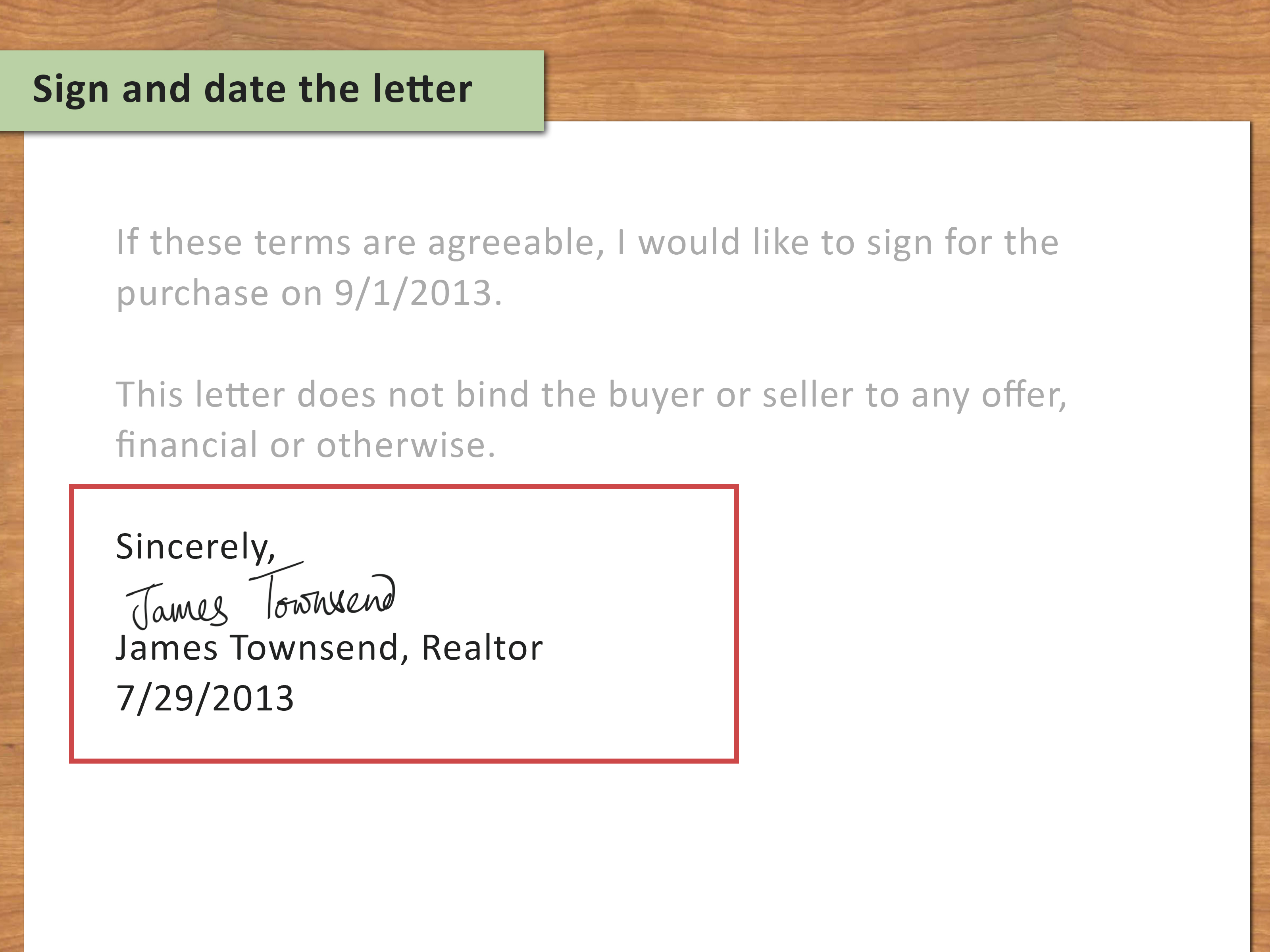
Sincerely,
Buyer Name
Letter of Interest for an Off-Market House
Sometimes the house you want is not listed for sale. In that case, a letter of interest can be used to contact the homeowner and ask whether they would consider selling. This type of letter should be even more respectful because the owner did not invite offers.
For an off-market house, keep your message brief. Do not sound pushy. Do not imply that you have been watching the home too closely. “I admire the property” is fine. “I have memorized your porch light schedule” is not fine.
Off-Market Letter Example
Dear Homeowner,
I hope this note finds you well. I am writing to ask whether you would ever consider selling your property at 456 Oak Avenue. I understand the home is not currently listed, and I respect that you may have no plans to move.
The property has several features that stand out, including its architecture, location, and well-maintained exterior. If you are open to a conversation, I would be grateful for the opportunity to discuss your interest and timeline.
Thank you for your time and consideration.
Sincerely,
Your Name
How to Make Your Letter Stronger Without Overdoing It
The best letter supports a strong offer. It does not compensate for a weak one. If another buyer offers significantly more money, fewer contingencies, and a faster closing timeline, your poetic paragraph about the fireplace probably will not win the day. The fireplace may be charming, but it does not write checks.
To make your letter more effective, pair it with solid offer terms. Work with your agent to understand local market conditions, comparable sales, seller priorities, inspection options, appraisal risk, earnest money expectations, and closing flexibility.
Strengthen the Offer Behind the Letter
Here are practical ways buyers often make offers more attractive:
- Submit a mortgage preapproval letter
- Offer an appropriate earnest money deposit
- Choose a realistic closing date
- Limit unnecessary contingencies while protecting yourself
- Respond quickly to seller questions
- Make clean, complete paperwork part of the package
Do not waive important protections just to look competitive without understanding the risk. Inspection, financing, and appraisal contingencies can matter a lot. A house may look perfect during a showing, but so does a cake before you discover someone used salt instead of sugar.
Common Mistakes to Avoid
Mistake 1: Writing Too Much
A seller does not need your autobiography. Keep it focused on the home, the offer, and your readiness to close.
Mistake 2: Mentioning Protected Personal Details
Even positive, innocent details can create problems. Avoid personal descriptions that are unrelated to the transaction.
Mistake 3: Sounding Desperate
Desperation rarely improves negotiation power. Confidence and courtesy are better.
Mistake 4: Making Promises Outside the Contract
If it matters, it belongs in the official offer. Do not casually promise things in the letter that are not reflected in the legal documents.
Mistake 5: Forgetting the Seller’s Perspective
Sellers usually care about price, certainty, timing, and ease. Your letter should show respect for those priorities.
Practical Experience: What Actually Works When Writing a House Letter
In real home-buying situations, the letters that tend to work best are rarely the most emotional. They are the clearest, shortest, and most respectful. Buyers often assume they need to “win the seller’s heart,” but sellers are usually balancing emotion with practical concerns. They want to know: Will this buyer close? Will the deal fall apart after inspection? Is the financing solid? Will the buyer be difficult? A good letter quietly answers those questions without sounding like a sales pitch.
One useful experience-based lesson is that details matter, but only the right details. A buyer who says, “I appreciate the care shown in the garden and the preserved woodwork” sounds observant and sincere. A buyer who says, “My children are already picking bedrooms” may sound sweet, but it adds information the seller does not need and may create fair housing concerns. The safer letter stays attached to the house itself: condition, design, maintenance, layout, craftsmanship, light, landscaping, and neighborhood convenience.
Another practical lesson is that the letter should match the offer. If your offer has a long list of contingencies, a low deposit, and a slow closing timeline, a beautiful letter cannot magically turn it into a strong offer. Sellers notice the numbers first. The letter is the ribbon, not the gift. Before writing, buyers should work with their agent to make sure the formal offer is competitive for the local market. Then the letter can add warmth and professionalism.
Buyers should also remember that sellers may be tired. They may be sorting through multiple offers, moving under pressure, dealing with estate issues, relocating for work, or trying to coordinate their next purchase. A long emotional letter may feel like one more task. A concise letter can be a relief. It says, “I respect your home and your time.” That tone can matter more than fancy language.
A final real-world tip: always revise the letter before sending. Remove anything that identifies personal characteristics, sounds dramatic, criticizes the home, or repeats what is already in the offer documents. Read it out loud. If it sounds like a movie speech, trim it. If it sounds like a respectful note from a prepared buyer, you are much closer.
The best house letter feels human but disciplined. It shows appreciation without oversharing. It shows seriousness without bragging. It shows flexibility without making vague promises. In a competitive market, that balance can help your offer feel organized, respectful, and memorable for the right reasons.
Conclusion
Learning how to write a letter of interest for a house is really about learning how to communicate with care. A strong letter should be short, sincere, property-focused, and paired with a serious offer. Compliment the home, confirm your readiness, respect the seller’s time, and avoid personal details that could create fair housing concerns.
Most importantly, remember that a letter is not a magic key. It is one small part of a larger offer strategy. Your financing, contingencies, price, earnest money, and closing timeline still matter most. But when written well, a thoughtful letter can add a professional human touchand in real estate, sometimes the little things help open the right door.














