
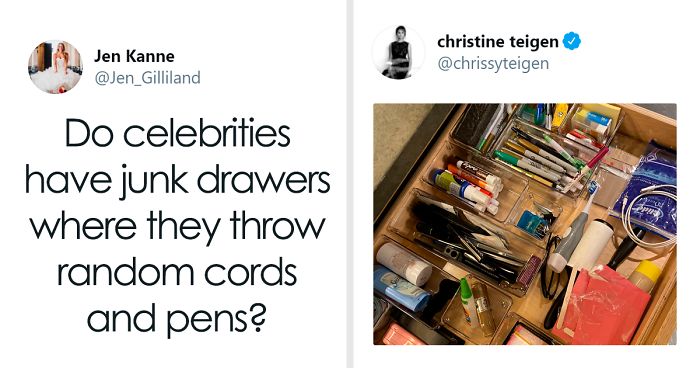
Note: This article is written in an original, publish-ready style and is based on real public information about Chrissy Teigen, her career, social media Q&A moments, family life, food brand, and public reputation.
Introduction: Fame Looks Shiny Until Someone Asks Practical Questions
Most people imagine celebrity life as a glittery buffet of red carpets, designer gowns, luxury vacations, and restaurant tables that magically appear with a single eyebrow raise. Then Chrissy Teigen jumps online, answers people’s oddly specific questions about fame, and suddenly the fantasy gets a little more complicated. Yes, there are gift bags. Yes, celebrities know other celebrities. And yes, apparently, fame can involve sneaky restaurant reservations, awkward introductions, paparazzi math, and the eternal mystery of whether famous babies know they are famous.
The title “Chrissy Teigen Answers People’s Questions About What It’s Like Being A Celeb, And It’s Eye-Opening” perfectly captures why her candid celebrity Q&A moments became so addictive. Teigen has long occupied a rare corner of pop culture: famous enough to attend elite events, funny enough to roast the room, and online enough to answer questions regular people are too politeor too nosynot to ask.
Chrissy Teigen is not only John Legend’s wife, although that detail has certainly become part of her public identity. She is a model, television personality, cookbook author, entrepreneur, mother, and one of the most recognizable social media voices of the last decade. Her fame grew through Sports Illustrated Swimsuit, Lip Sync Battle, bestselling cookbooks, her Cravings food brand, and a habit of speaking in a tone that feels less like a press release and more like your funniest friend texting from inside a celebrity event.
That is what made her answers about celebrity life so fascinating. Instead of presenting fame as a flawless dream, she described it as a strange job with perks, pressure, performance, and plenty of logistical weirdness. In other words, Hollywood may have better lighting, but it still has awkward small talk.
Who Is Chrissy Teigen?
Chrissy Teigen, born Christine Diane Teigen on November 30, 1985, in Delta, Utah, became widely known as a model after appearing in the Sports Illustrated Swimsuit Issue. Her 2010 debut helped launch her into mainstream recognition, and her later appearance on the 2014 50th anniversary cover alongside Nina Agdal and Lily Aldridge raised her profile even further.
But Teigen’s career did not stop at modeling. She co-hosted Lip Sync Battle with LL Cool J, appeared on television shows, built a major food and lifestyle brand, and published cookbooks under the Cravings name. Her first cookbook, Cravings: Recipes for All the Food You Want to Eat, became a major bestseller because it matched her online personality: bold, funny, hungry, and proudly uninterested in pretending that dinner should always include a delicate sprig of something nobody can pronounce.
Her marriage to musician John Legend also placed her in a highly visible celebrity family. Together, they have four children: Luna, Miles, Esti, and Wren. Teigen and Legend have also spoken publicly about pregnancy loss, parenting, grief, fertility, and the messy emotional reality behind the polished family photos people see online.
That background matters because Teigen’s celebrity Q&A answers were not coming from an outsider peeking through the velvet rope. They came from someone who has stood on red carpets, attended award shows, dealt with paparazzi, launched products, made mistakes publicly, apologized publicly, and learned what it means to live with millions of strangers watching.
The Viral Q&A: Why People Couldn’t Stop Reading
Chrissy Teigen’s celebrity-life Q&A moments gained attention because she answered the kinds of questions that normally stay trapped in group chats. Do celebrities introduce themselves to one another? Do they call paparazzi? What happens to the expensive-looking swag bags? Do celebrities have secret group texts? Do famous parents arrange playdates with other famous kids? Do celebrity babies understand that they were born into a different tax bracket than the rest of us?
These questions are funny because they are small. They are not about fame in the grand, dramatic sense. They are about the mechanics of fame. People are fascinated by celebrity culture not only because stars wear couture, but because we want to know how the system actually works. How do you get a dinner reservation when everyone recognizes your name? Is a red carpet glamorous or just a very well-lit traffic jam? What do you do when a camera catches your “I smelled something weird” face?
Teigen’s appeal was that she did not answer like a media-trained statue. She answered like someone who understood that celebrity life is both absurd and human. Her humor made the curtain lift without turning the whole thing into a lecture. She made fame sound less like Olympus and more like a luxury hotel with confusing elevator buttons.
What Her Answers Revealed About Celebrity Life
1. Fame Is Full of Small Strategies
One of the most interesting themes from Teigen’s answers is that celebrity life requires strategy in ordinary situations. Something as simple as making a restaurant reservation can become complicated when a famous name attracts attention. Stars may use alternate names or rely on assistants because privacy has to be planned like a military operation, except with more appetizers.
This is eye-opening because it shows how fame changes daily life. A regular person books a table and worries about parking. A celebrity books a table and wonders whether the reservation itself will become a tiny news item. Even convenience becomes a performance when the public is watching.
2. Celebrity Friendships Are Not Always Magical
People love imagining celebrities living inside one giant, glamorous group chat where everyone from Oprah to Beyoncé is sending memes. Teigen’s Q&A responses played with that fantasy while also making it feel more ordinary. Famous people do meet, text, and socialize, but the dynamic can still be awkward. Introductions can be strange because everyone knows everyone’s face, but nobody knows whether they are supposed to act surprised.
Her comments about celebrities introducing themselves hit a universal nerve. Even in Hollywood, status exists. Someone is always more famous. Someone is always pretending not to be nervous. Someone is always saying, “Of course I know who you are,” while internally turning into a screensaver.
3. Paparazzi Culture Is More Complicated Than It Looks
Teigen’s answers also touched on paparazzi, one of the strangest parts of celebrity life. The public often assumes all celebrity photos are either totally spontaneous or totally staged. The reality is usually messier. Some sightings are organic. Some are predictable because photographers know where celebrities go. Some are encouraged. Some are avoided. Some are tolerated because fighting the camera every day would require the emotional stamina of a caffeinated superhero.
The eye-opening part is not simply that paparazzi exist. Everyone knows that. The surprise is how much calculation can surround an image. A celebrity walking out of a restaurant may look casual, but that moment sits inside a larger ecosystem of publicity, privacy, branding, fashion credits, and online commentary. The photo lasts two seconds; the internet discussion lasts until everyone gets bored and finds a new ankle boot to analyze.
4. Gift Bags Are Real, But They Are Not the Whole Story
Swag bags are one of the funniest celebrity traditions because they seem designed to annoy normal people. A person who can already afford expensive things gets free expensive things. The math feels illegal. Teigen’s Q&A helped demystify this world by treating it with humor instead of pretending it is noble humanitarian work.
Gift bags exist because brands want visibility. Celebrities become walking billboards, even when they are simply receiving skincare, snacks, gadgets, or luxury items they may or may not use. The glamorous freebie is not really free; it is part of an attention economy. In Hollywood, even lip balm can have a marketing strategy.
5. Celebrity Kids Are Still Kids
One of the most charming parts of Teigen’s fame commentary is the reminder that children born into celebrity families do not automatically understand celebrity culture. They know their parents as parents first. A child does not care that Mom has millions of followers if Mom is also the person saying no to cookies before dinner.
This point matters because the public often treats celebrity children like extensions of a brand. Teigen and Legend’s children have appeared in public family updates, but Teigen has also spoken about ordinary parenting concerns: making sure older children feel loved, managing the chaos of a growing family, and learning through new challenges. Fame may change the setting, but it does not remove the hard parts of parenting.
Why Chrissy Teigen Became the Perfect Celebrity to Answer These Questions
Not every famous person could make this kind of Q&A work. Some celebrities are too guarded. Others are too mysterious. Some speak only in polished sentences that sound like they were approved by six publicists and a scented candle. Teigen became the right person for the job because her public brand has always mixed glamour with informality.
She can appear on a red carpet in a dramatic gown, then joke online like someone fighting with a kitchen drawer. She can publish a cookbook, run a lifestyle brand, host a show, and still make the internet feel like it is sitting beside her while she explains the weird rules of fame. That combinationaccess plus honestyis powerful.
Her food career also reinforces this relatability. Cravings is not built around icy perfection. It is built around comfort, flavor, family, and the idea that food should be enjoyable rather than intimidating. That same personality shows up in her celebrity commentary. She does not explain fame like a museum guide whispering beside a priceless vase. She explains it like someone who has seen the vase, tripped near the vase, and has thoughts about the vase.
The Other Side of Being Extremely Online
Any honest article about Chrissy Teigen’s public life must also acknowledge that her internet presence has not been all charm and jokes. In 2021, she faced serious criticism after Courtney Stodden accused her of past online bullying. Teigen publicly apologized and described deep shame over her earlier behavior. The controversy became a major turning point in how people discussed her reputation, accountability, and the darker side of a sharp social media persona.
This matters because Teigen’s fame is a case study in the risks of being constantly visible. The same directness that can make a celebrity feel refreshing can also become harmful when used carelessly. The internet rewards quick jokes, savage replies, and viral confidencebut it does not always reward empathy until after damage is done.
Teigen’s public arc shows both the appeal and danger of online celebrity. Fans loved that she seemed unfiltered. Critics argued that unfiltered behavior could cross lines. The lesson is not that celebrities should become silent robots. The lesson is that visibility magnifies everything: the warmth, the wit, the mistakes, and the consequences.
Celebrity Life Is a Job, Not a Vacation
One of the biggest misconceptions about celebrity life is that it is simply a permanent vacation with better shoes. Teigen’s answers helped show that fame is also labor. There is emotional labor, image management, travel, public scrutiny, brand maintenance, and the pressure to be interesting on demand.
Imagine having a bad day and knowing a photo of your face could become a headline. Imagine wearing something uncomfortable because fashion is part of the job. Imagine trying to enjoy dinner while someone nearby pretends not to photograph your table. Imagine making a joke that lands badly and watching it become a national personality assessment.
For celebrities, privacy is not automatic. It must be protected, negotiated, and sometimes surrendered. That does not mean fame is tragic. It means it is not simple. The perks are real, but so are the costs. Teigen’s Q&A worked because it held both ideas at once: celebrity life is ridiculous, privileged, funny, stressful, and deeply weird.
Why Fans Love Behind-the-Scenes Celebrity Details
There is a reason articles about celebrity secrets perform well online. People are curious about hidden systems. We know what fame looks like from the outside: premieres, interviews, magazine covers, Instagram posts, luxury kitchens, and smiling family portraits. What we do not know is how it functions minute by minute.
Chrissy Teigen’s answers gave fans access to the backstage version of fame. The details were not earth-shattering, but that was the point. The small facts made celebrity life feel more real. A-list culture became less like a distant kingdom and more like an office with unusual policies. The coworkers are famous, the snacks are sponsored, and someone may be wearing diamonds at 10 a.m., but awkwardness survives.
What We Can Learn From Chrissy Teigen’s Answers
The biggest lesson from Teigen’s celebrity Q&A is that fame does not erase human behavior. People still feel insecure. They still navigate status. They still worry about how they look. They still use humor to survive uncomfortable rooms. They still make mistakes. They still want to be liked.
Her answers also remind us that celebrity culture is built on distance. Stars seem fascinating because they are close enough to watch but far enough to misunderstand. When someone like Teigen explains the ordinary mechanics behind extraordinary visibility, the illusion changes. It does not disappear, but it becomes more textured.
That texture is what makes the topic eye-opening. Fame is not one thing. It is a package deal: access and anxiety, privilege and pressure, admiration and criticism, free products and zero anonymity. It can open doors, but it can also turn every door into a photo opportunity.
Additional Experience: What This Topic Says About Modern Celebrity Culture
Looking at Chrissy Teigen’s Q&A through the lens of modern internet culture, the most interesting experience is not just what she revealed about celebrities. It is what the public’s reaction revealed about us. People did not click because they needed survival instructions for a red carpet. Most readers are not trying to decide whether to use a fake name for a reservation at a restaurant where the bread basket costs more than a phone bill. They clicked because celebrity life represents a fantasy, and Teigen made that fantasy feel touchable.
In the past, stars were managed through glossy magazine interviews, late-night talk show appearances, and carefully posed photos. The public saw the finished product. Social media changed that. It gave celebrities a way to speak directly, casually, and constantly. Chrissy Teigen became one of the best-known examples of that shift. Her online persona made people feel as if they were getting the “real” version, not the polished Hollywood packaging.
That kind of access can create a powerful bond. Fans feel included when a celebrity answers strange questions honestly. It feels like being let into a private room. When Teigen jokes about celebrity introductions or the absurdity of famous-life logistics, she turns fame into a shared comedy routine. The audience laughs not only because the answers are funny, but because they feel like insider information.
However, that same access creates a complicated relationship. When celebrities become too familiar, audiences start expecting constant honesty, constant humor, and constant emotional availability. A famous person becomes both entertainer and imaginary friend. That is a heavy role. The public wants celebrities to be authentic, but not too messy; funny, but not cruel; glamorous, but relatable; successful, but humble; open, but not oversharing. Basically, we want them to be perfect at being imperfect. No pressure, right?
Teigen’s public journey shows how quickly the internet can shift from affection to criticism. Her funny, outspoken style helped build her brand, but past harmful comments also became part of the public record. That is one of the defining experiences of celebrity in the digital age: nothing truly disappears. A joke, a reply, a screenshot, or a bad decision can return years later with fresh consequences.
For content creators, influencers, writers, and anyone building a public presence, there is a useful lesson here. Personality is powerful, but accountability is stronger. Humor can make people listen, but empathy determines whether they keep trusting you. The internet may reward sharpness in the short term, but a long career requires self-awareness.
There is also a lesson for readers. Celebrity Q&As are fun, but they should not trick us into thinking we fully know the person answering. We see fragments: the jokes, the photos, the apologies, the interviews, the brand launches, the family updates. Those fragments can be meaningful, but they are not the whole life. Teigen’s answers about fame are eye-opening because they make celebrity culture feel more human, not because they solve every mystery.
In the end, the best part of Chrissy Teigen answering people’s questions about being a celebrity is that the answers lower the temperature of fame. They remind us that even behind the velvet rope, people are still navigating awkward greetings, family routines, professional pressure, public mistakes, and the occasional deeply ridiculous gift bag. Fame may come with better seats, but it does not come with an instruction manual. And if it does, someone should absolutely ask Chrissy Teigen to review it.
Conclusion: The Curtain Lifted, But the Mystery Remains
Chrissy Teigen’s candid answers about celebrity life became popular because they gave people exactly what they wanted: a peek behind the curtain without turning the whole thing into a boring industry seminar. Her responses showed that fame is glamorous, awkward, strategic, funny, and sometimes exhausting. It can bring opportunity, influence, and luxury, but it also brings scrutiny, pressure, and consequences.
What makes Teigen such a compelling figure is not perfection. It is the combination of humor, openness, ambition, vulnerability, and controversy that has shaped her public image. Her celebrity Q&A moments are eye-opening because they reveal the everyday machinery behind fame: the reservations, the introductions, the paparazzi choices, the parenting realities, and the weird social rules nobody teaches in school.
Celebrity culture will always sparkle from a distance. But thanks to voices like Chrissy Teigen’s, we can see a little more clearly that the sparkle is made of camera flashes, hard work, brand deals, awkward encounters, public accountability, andbecause this is Hollywoodprobably a free moisturizer in a gift bag.














