
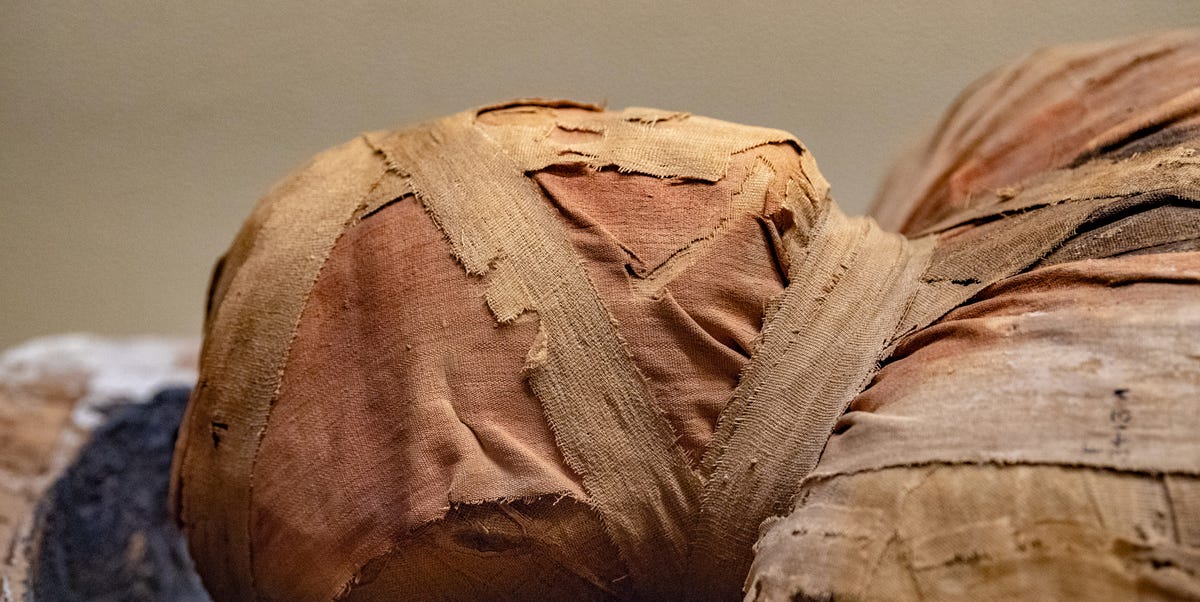
Every so often, archaeology gives the internet exactly what it wants: an ancient tomb, a sealed sarcophagus, a mysterious mummy, and just enough drama to make everyone forget they were supposed to be answering emails. That is what happened in Giugliano, near Naples, Italy, where archaeologists investigating the now-famous Tomb of Cerberus opened a 2,000-year-old sarcophagus and found a remarkably preserved body wrapped in a shroud.
No, this was not a movie scene where someone coughs dramatically and a torch flickers out. The real story is better. Instead of jump scares, researchers found rare evidence of ancient Roman burial rituals, plant-based preservation materials, grave goods, mythological frescoes, and a tomb that seems to have held onto its secrets for two millennia with the patience of a very committed librarian.
The discovery has fascinated historians because it offers more than a spectacular headline. It gives scholars a chance to study how elite families in the Roman world treated death, memory, status, and the afterlife. The sarcophagus did not simply contain remains; it contained a carefully arranged message from the ancient past.
The Tomb of Cerberus: A Roman Time Capsule Near Naples
The Tomb of Cerberus was discovered in 2023 during archaeological work connected to a public water infrastructure project in Giugliano in Campania, northwest of Naples. The region sits close to ancient Liternum and belongs to a landscape rich with Roman-era cemeteries, roads, villas, and settlements. In other words, if you dig carefully in this part of Italy, history has a habit of tapping you on the shoulder.
The tomb quickly earned its nickname because of a vivid fresco showing Cerberus, the three-headed dog from Greek and Roman mythology who guarded the entrance to the underworld. That is quite a choice for tomb decor. Some families hang landscapes in the hallway; this Roman family went with “mythological guard dog of the dead.” Bold, memorable, and definitely not something you pick up at a home goods store.
Inside, the tomb contained colorful wall and ceiling paintings, funerary beds, painted altars, vessels for offerings, and other objects that suggest the burial space belonged to a wealthy or influential family. The chamber had remained sealed and unusually well preserved, giving archaeologists a rare look at a funerary environment that had not been heavily disturbed by looting or modern damage.
How Archaeologists Opened the Ancient Sarcophagus
Researchers did not simply grab a crowbar and hope for the best. Modern archaeology is far more careful, and thankfully much less chaotic. Before opening the sarcophagus, the team used a microcamera to inspect the interior through a narrow opening. This allowed them to see what was inside without immediately exposing the delicate contents to air, light, and temperature changes.
That small camera changed everything. What the team saw encouraged them to proceed with a fuller investigation. When the sarcophagus was opened, archaeologists found a body lying face-up, covered with a shroud. The remains were described as being in an excellent state of preservation, especially considering their age.
The shroud itself may have been mineralized by the specific climatic conditions inside the burial chamber. That detail matters because textiles from antiquity are fragile and often disappear over time. A preserved or mineralized textile can reveal information about weaving techniques, material quality, trade, social rank, and funerary customs. Ancient fabric is not just old laundry; it is historical data with threads.
What Was Found Inside the Sarcophagus?
The sarcophagus contained more than the preserved body. Around the deceased, archaeologists found grave goods including unguentaria, or small containers used for ointments, perfumes, or ritual liquids. They also found strigils, curved tools used in Greek and Roman bathing culture to scrape oil, sweat, and dirt from the skin.
These objects suggest that the burial was carefully prepared. The presence of grooming and body-care tools points to cultural ideas about cleanliness, dignity, social identity, and the transition into the afterlife. The person inside the sarcophagus may have been an important family member, possibly the individual for whom the mausoleum was originally built.
That theory is supported by the care shown in the burial, the quality of the tomb, and the broader arrangement of the funerary space. Ancient burials often acted like biographies in stone, paint, fabric, and pottery. Even when no written name survives, the objects can tell us what a community valued and how it wanted the dead to be remembered.
Why the “Mummy” Is So Mind-Blowing
When most people hear the word “mummy,” they immediately picture Egypt, golden masks, dramatic curses, and museum gift shops selling suspiciously cheerful mummy keychains. But mummification and body preservation were not limited to Egypt. In the Roman world, burial customs varied widely depending on time period, location, family tradition, wealth, and cultural influence.
The Tomb of Cerberus mummy is fascinating because it appears to preserve evidence of a local Roman funerary practice in southern Italy. Researchers studying pollen and organic residues have identified plant-based substances that may have been used in treating the body. Reports have noted substances associated with plants such as wormwood and goosefoot, which may have played a role in preservation.
This does not mean the Romans of Giugliano were copying Egyptian mummification exactly. Instead, the find suggests a regional practice shaped by Roman beliefs, family status, available materials, and local environmental conditions. The “mind-blowing” part is not just that the body survived. It is that the body, the shroud, the jars, the tools, and the tomb all survived together as one archaeological context.
The Frescoes: Ancient Art With Afterlife Energy
The tomb’s paintings are another reason this discovery has captured attention. Along with Cerberus, the chamber includes mythological imagery such as marine centaurs, often described as ichthyocentaurs. These figures combine human, horse, and fish-like features, creating a strange and elegant visual language connected to myth, transition, and the journey beyond ordinary life.
To modern eyes, the imagery can feel almost cinematic. Cerberus guards the underworld. Sea-centaurs suggest movement across boundaries. Altars and vessels point to offerings. Funeral beds present the deceased as honored members of a household. The whole chamber seems designed to say: this person mattered, this family had status, and death was not treated as an ending without ceremony.
Roman funerary art often blended Greek myth with local identity. A family could use familiar mythological symbols to express prestige, education, hope, protection, or continuity. In that sense, the Tomb of Cerberus was not just a grave. It was a private memorial room decorated with the ancient equivalent of highly curated visual storytelling.
What This Discovery Tells Us About Roman Society
The 2,000-year-old sarcophagus helps researchers explore how Roman communities in Campania handled death and remembrance. The surrounding necropolis shows long-term use from the Republican period into the Imperial era, meaning the area served as a burial landscape across generations. That continuity can reveal patterns in family wealth, social change, religious practice, and local identity.
The grave goods are especially useful. Unguentaria may help identify the oils, balms, or perfumes used during burial. Strigils connect the deceased to bathing culture, athletic life, or elite habits of personal care. Textiles can reveal craftsmanship and trade. DNA testing, if successful, may help clarify family relationships, ancestry, biological profile, or connections among individuals buried in the same area.
Archaeology works best when many fields cooperate. In this case, experts in excavation, anthropology, chemistry, textile analysis, paleobotany, conservation, and genetics all have a role to play. One sarcophagus becomes a research team’s group project, except the deadline is measured in centuries and nobody can complain that the ancient Romans did not upload the assignment properly.
Why Preservation Conditions Matter
The preservation inside the Tomb of Cerberus was not accidental in the simple sense. It likely resulted from a combination of intentional funerary treatment and environmental conditions inside the sealed chamber. A stable microclimate can slow decay. Mineralization can help preserve traces of fabric. Organic substances placed with or on the body can sometimes leave chemical signatures for scientists to identify.
This is why archaeologists get excited about sealed contexts. Once a tomb has been opened repeatedly, robbed, flooded, or damaged, the original relationships between objects can be lost. But when a chamber remains protected, even small details become meaningful. A jar’s location, the position of a tool, the presence of pollen, or the structure of a textile can help reconstruct a ritual step by step.
The Tomb of Cerberus is valuable because it preserves relationships. The body, shroud, sarcophagus, paintings, grave goods, and chamber architecture all speak to one another. Taken together, they create a fuller picture than any single artifact could provide alone.
Not a Curse, Not a Monster, Just Better Science
Ancient tomb stories often attract wild rumors. The moment someone says “sealed sarcophagus,” the internet starts stretching like it is preparing for Olympic-level conspiracy gymnastics. But the real wonder here is not supernatural. It is scientific.
The Tomb of Cerberus shows how patient excavation and modern analysis can turn a dramatic discovery into reliable knowledge. Microcameras reduce risk. Conservation planning protects fragile materials. Chemical analysis identifies organic compounds. Textile studies reveal manufacturing details. DNA work may answer questions that older generations of archaeologists could only guess at.
The best archaeological stories do not need curses. They have evidence, mystery, art, and human emotion. That is more than enough. A sealed sarcophagus opened after 2,000 years is already impressive. Adding a fictional ghost would just be over-seasoning the pasta.
Why This Discovery Went Viral
The story became popular because it has every ingredient readers love: an ancient tomb, a named mythological creature, a sealed sarcophagus, a preserved mummy, and scientists carefully decoding the past. It feels mysterious but remains grounded in real research. That balance makes it perfect for public fascination.
There is also something deeply human about the discovery. The person inside the sarcophagus was not placed there randomly. Someone prepared the body, arranged objects, sealed the chamber, and expected memory to continue in some form. Two thousand years later, strangers are still paying attention. That is not immortality in the magical sense, but it is a powerful kind of survival.
For readers, the Tomb of Cerberus is a reminder that ancient people were not abstract textbook figures. They had families, rituals, fears, hopes, symbols, and status anxieties. They also had excellent taste in dramatic wall art.
Experiences Related to the Tomb of Cerberus Discovery
Visiting archaeological sites, museums, or ancient ruins after reading about a discovery like this can completely change the experience. Before, a sarcophagus might look like a heavy stone box with a label beside it. After learning about the Tomb of Cerberus, it becomes easier to imagine the invisible layers around it: the family that commissioned it, the artisans who decorated the chamber, the rituals performed before sealing it, and the centuries of silence that followed.
One of the most powerful experiences connected to stories like this is walking through a museum gallery and slowing down. Many visitors rush past funerary objects because they seem small compared with statues or gold treasures. But a tiny perfume jar can be just as revealing as a marble emperor. It may have held scented oil used in a farewell ritual. A simple grooming tool may show how the living wanted the deceased to remain dignified. A piece of textile may preserve evidence of craft, trade, and personal identity.
The Tomb of Cerberus also changes how people think about preservation. At first, the headline makes the mummy sound like the main event, and naturally, that grabs attention. But the deeper experience comes from realizing how fragile the entire scene is. Opening a sealed burial is not just discovery; it is responsibility. Once air, light, and human presence enter a protected space, conditions begin to change. That is why careful documentation matters so much. Archaeologists are not treasure hunters racing toward a prize. They are interpreters trying not to damage the sentence while reading it.
For anyone fascinated by ancient history, this discovery is also a reminder to look beyond the most famous places. Egypt, Pompeii, and Rome get plenty of attention, and they deserve it. Still, smaller cities and lesser-known sites often hold extraordinary stories. Giugliano may not be the first destination most travelers name when planning an archaeology-themed trip, but the Tomb of Cerberus proves that history does not care about tourist rankings. It hides wherever people once lived, loved, worshiped, worked, and buried their dead.
Teachers, writers, and content creators can learn from this discovery as well. The story works because it combines mystery with evidence. The title pulls readers in, but the facts keep them there. A preserved mummy is exciting; a preserved mummy inside a frescoed Roman tomb with plant residues, grave goods, and possible family significance is far richer. The lesson is simple: strong storytelling does not mean exaggerating reality. Sometimes reality is already wearing a dramatic cape.
On a personal level, discoveries like this make ancient time feel strangely close. Two thousand years sounds enormous until you see a shroud, a jar, or a painted creature that still communicates across the gap. Someone made those choices. Someone stood in that chamber. Someone sealed the space and walked away. Modern researchers opened it not to disturb a spectacle, but to understand a life and a culture. That is why the Tomb of Cerberus matters. It is not only about death; it is about memory, care, craftsmanship, and the human desire to be remembered after the door closes.
Conclusion
The unsealing of the 2,000-year-old sarcophagus in Italy’s Tomb of Cerberus is more than a viral archaeology headline. It is a rare window into Roman funerary life, elite family identity, ancient preservation practices, and the symbolic power of myth. The remarkably preserved shrouded body, the surrounding grave goods, the painted chamber, and the ongoing scientific tests all help researchers reconstruct a story that was sealed away for centuries.
What makes the discovery truly mind-blowing is not just the mummy itself. It is the complete setting: a protected tomb, vivid frescoes, ritual objects, plant traces, textile evidence, and the possibility of learning more through DNA and chemical analysis. The Tomb of Cerberus reminds us that archaeology is not only about finding old things. It is about restoring context, meaning, and humanity to people whose names may be lost but whose stories are still waiting patiently in the earth.












