
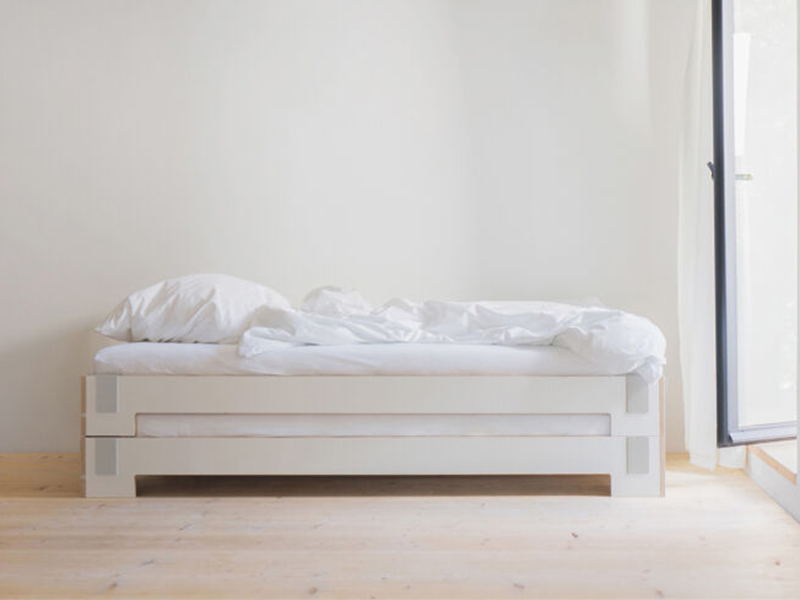
If you have ever looked at a guest room, kids’ room, studio apartment, or “this room does everything except file my taxes” flex space and thought, this bed situation is not helping, the Tagedieb Stackable starts to make a lot of sense. It is one of those rare pieces of furniture that manages to be practical, architectural, and just smugly handsome enough to make ordinary bed frames look like they gave up too early.
The Tagedieb Stackable is not a gimmick bed. It is a minimalist stackable bed system from Nils Holger Moormann, designed by Carmen Buttjer, and it was clearly created for people who want furniture to work hard without shouting about it. In plain English, it is a low-profile, cleverly engineered bed that can function as a sleek single sleeping setup, then adapt when you need more flexibility. That makes it especially appealing in small homes, design-forward interiors, vacation properties, and guest rooms that need to earn their keep.
In this guide, we will break down what the Tagedieb Stackable is, why it stands out in the world of stackable beds, how it performs as a space-saving solution, and whether its premium design language actually translates into everyday comfort. Spoiler: it does a lot more than simply sit there and look pretty, though it definitely does that too.
What Is the Tagedieb Stackable?
The Tagedieb Stackable is a minimalist stackable bed designed around flexibility, portability, and visual simplicity. Instead of relying on bulky construction, oversized headboards, or fussy hardware, it uses a stripped-down form with clean lines and exposed character. The bed frame is typically made from birch plywood and held together with distinctive powder-coated steel brackets. Those brackets are not just decorative little flexes of industrial style. They are central to how the bed is assembled and how the stackable version works.
The overall look is low, calm, and highly architectural. It reads as modern without becoming cold, and simple without becoming boring. That is harder to pull off than most flat-pack furniture would like you to believe. The Tagedieb family is known for its straightforward construction and adaptable design, and the stackable variation takes that practicality a step further by making it possible to save floor space when both beds are not in use.
In other words, this is the kind of bed made for people who want to host guests without dedicating an entire room to occasional overnight visits. It is also great for shared rooms, flexible family living, and anyone who appreciates furniture that behaves like a smart tool instead of a diva.
Why Stackable Beds Matter More Than Ever
Stackable beds are having a quiet moment, and honestly, it is about time. As homes get more expensive and square footage gets more precious, furniture has to do more with less. That is why space-saving sleep solutions keep showing up in guest rooms, hybrid offices, children’s rooms, and vacation rentals. People want rooms that can transform based on the day, not rooms frozen in one use forever.
This is where the Tagedieb Stackable feels especially relevant. Unlike a traditional guest bed that claims half a room for a person who visits twice a year, a stackable bed system gives you options. Two beds can be stored in a compact footprint, separated when needed, and styled in a way that still feels intentional. It solves a real problem without making the room feel like a temporary camp setup.
There is also a lifestyle argument here. A lot of people want homes that feel lighter, more organized, and easier to move through. Low-profile beds, modular sleeping arrangements, and furniture that can be reconfigured all support that goal. The Tagedieb Stackable works because it respects space. It does not gobble it up like an overfed sectional.
Design Details That Make It Stand Out
Minimalist Form With a Purpose
The first thing most people notice about the Tagedieb Stackable is how simple it looks. But good design is rarely about removing things just to seem clever. Here, the minimal form supports the function. The low frame helps the bed feel visually lighter, which is great in smaller rooms. The straightforward geometry also makes stacking and reconfiguration feel natural rather than awkward.
This is the type of furniture that works beautifully in Scandinavian-inspired interiors, modern apartments, pared-back guest suites, or any room where visual clutter already has enough employees. Because the design is disciplined, it leaves room for bedding, rugs, wall lighting, and other elements to shape the mood of the room.
Birch Plywood Construction
Birch plywood is one of the reasons the Tagedieb Stackable feels refined instead of disposable. Quality plywood has stability, strength, and a layered edge that many modern furniture lovers actively appreciate. It brings warmth without heaviness and helps the bed feel substantial without turning it into a bulky monster.
That material choice also supports the bed’s clean modern profile. The frame looks crisp and intentional, and when finished in light or dark tones, it can shift from airy and soft to dramatic and graphic. That is useful if you want the bed to either blend quietly into the room or serve as a design anchor.
Signature Steel Brackets
The steel brackets are one of the most distinctive features of the Tagedieb range. They hold the side elements together and help define the identity of the piece. Functionally, they contribute to quick assembly and a flat-pack-friendly concept. Aesthetically, they create a subtle industrial accent that keeps the design from feeling too polite.
On the stackable version, the bracket logic becomes even more interesting because the engineering supports the bed’s ability to sit securely in stacked formation. That is the kind of detail design enthusiasts love: the structure is not hidden away in embarrassment. It is part of the visual language.
Adjustable and Adaptable Comfort
Another strong point is the bed’s adaptability. The Tagedieb line is known for accommodating different mattress setups, and the stackable version is designed with practical flexibility in mind. That matters more than people realize. A beautiful bed that only works with one exact arrangement can be a headache. A bed that allows thoughtful adjustment is easier to live with for years.
The headboard configuration on the broader Tagedieb concept also adds personality. It gives the design a slightly more relaxed, customizable feel, which helps it move beyond pure minimalism into something more livable. That is good news if you enjoy reading in bed, working with layered pillows, or generally behaving like a human being instead of a furniture catalog mannequin.
Best Uses for the Tagedieb Stackable
Guest Rooms
This is probably the most obvious use, and for good reason. If you host friends or family but do not want a full-time bed dominating the room, the Tagedieb Stackable is a smart solution. When guests arrive, you can separate the beds. When they leave, the room gets its breathing room back.
Because the design is stylish and understated, the room does not have to scream “emergency guest quarters.” It can still function as an office, reading room, studio, or secondary lounge without the bed setup feeling like a compromise.
Children’s Rooms and Sleepover Spaces
For shared rooms or homes where sleepovers are common, stackable beds are wonderfully practical. The Tagedieb Stackable offers the flexibility of two sleep surfaces without the constant visual weight of two fully spread-out beds. It is a great fit for families who want a room to feel open during the day and useful at night.
Studios and Small Apartments
In a studio apartment, every square foot has an opinion. A stackable bed system can make the difference between a room that feels workable and one that feels like you are camping in your own rent payment. The Tagedieb Stackable is especially appealing here because it keeps a low visual profile and offers flexibility for visitors without requiring a second permanent bed.
Vacation Homes and Design-Led Rentals
If you are furnishing a cabin, guest cottage, or short-term rental, this bed can be a strong choice. It looks elevated, photographs well, and supports different sleeping arrangements. That is a useful combination if you want the space to feel carefully designed while still serving real people with real luggage and real opinions about mattress comfort.
Pros of the Tagedieb Stackable
- Excellent space efficiency: ideal for rooms that need to switch functions.
- Strong visual design: minimalist, modern, and quietly distinctive.
- Quality materials: birch plywood and steel create a more premium feel.
- Flexible sleeping arrangement: useful for guests, siblings, and multipurpose spaces.
- Low-profile silhouette: helps a room feel more open and less crowded.
- Flat-pack intelligence: easier to understand, transport, and assemble than many high-design beds.
Potential Drawbacks to Consider
No honest furniture review should behave like it is being held hostage by a marketing team, so let us talk trade-offs. First, the Tagedieb Stackable is a premium design product. If you are comparing it to bargain twin frames, the price difference may raise an eyebrow, possibly both eyebrows. You are paying for design, engineering, materials, and brand identity, not just a place to put a mattress.
Second, the look is intentionally minimal. If you prefer plush upholstered frames, tall dramatic headboards, or a traditional cozy-cottage feel, this bed may read as too restrained. It shines best in interiors that appreciate clean lines and subtle craftsmanship.
Third, because it is purposefully designed, it is not the kind of bed you buy and then ignore the details. Mattress height, slatted support, and room layout matter. That is not a flaw, exactly, but it does mean the Tagedieb Stackable rewards thoughtful buyers more than impulsive ones.
How to Style a Tagedieb Stackable Bed
The good news is that this bed does not need much styling help. The bad news is that once you style it well, the rest of the room may feel underdressed. To make the most of the Tagedieb Stackable, focus on texture, restraint, and proportion.
Use crisp bedding in linen, washed cotton, or other natural-feeling fabrics. Add one or two pillows with subtle contrast instead of building a decorative mountain range. Choose a bedside table with a simple profile, or use a wall-mounted shelf to keep the room airy. If the room is small, a slim reading lamp and a soft rug can do more than a dozen decorative objects ever could.
Because the frame itself has such strong lines, it pairs beautifully with wood floors, matte wall finishes, floating storage, and quiet color palettes. White, sand, charcoal, muted green, warm gray, and dusty blue all play nicely with it. This is not a bed that needs drama. It is the calm in the room.
Is the Tagedieb Stackable Worth It?
If your priority is pure affordability, you can find cheaper stackable beds. No question. But if you care about design quality, material integrity, and the ability to make a flexible room feel genuinely sophisticated, the Tagedieb Stackable earns its reputation. It offers more than utility. It offers a smarter way to think about sleeping space.
That is what separates it from a lot of space-saving furniture. Some pieces solve a practical problem while creating a visual one. The Tagedieb Stackable manages to solve both. It saves space, supports flexible living, and still looks like an intentional design choice rather than a backup plan.
For modern households, that is a real advantage. Today’s homes are asked to do a lot. They are workplaces, guest suites, family hubs, sometimes even workout rooms populated by one dumbbell and lots of optimism. Furniture that can adapt gracefully is worth attention. And the Tagedieb Stackable does exactly that.
Experience: What Living With a Tagedieb Stackable Feels Like
To understand the Tagedieb Stackable, it helps to imagine the kind of room it usually lives in. It is often not a giant main bedroom with room for a chaise lounge, a bench, and three decorative baskets whose purpose nobody can explain. It is more likely a hardworking room: a guest room that doubles as an office, a studio apartment where every object needs to justify itself, or a family home where extra sleep space matters but open floor area matters too.
In that context, the Tagedieb Stackable feels incredibly sensible from day one. During the day, the room looks light and composed. The low frame does not block sightlines, and the stackable arrangement helps the space stay useful instead of bed-dominated. You can walk through the room without feeling like the furniture is trying to body-check you. The effect is calm, almost architectural, and it makes even a smaller room feel better organized.
Then guests arrive, or the kids have a sleepover, or family visits for the weekend, and the whole point of the design suddenly becomes obvious. Instead of dragging out an awkward air mattress that makes people feel like temporary houseplants, you have a real sleeping setup ready to go. The transformation feels practical but also oddly elegant. There is satisfaction in furniture that adapts without drama.
Another nice part of the experience is the visual mood. Some flexible furniture looks like it was designed by engineers who had never once met a living room. The Tagedieb Stackable is different. It still feels like a real design piece. Made with good bedding, a simple lamp, and maybe a textured throw, it looks welcoming rather than improvised. That means the room can stay beautiful even when it is doing something practical.
Over time, you also start to appreciate the smaller details. The low height makes the room feel more open. The plywood brings warmth without heaviness. The steel brackets give it personality without making it fussy. If you like interiors that feel collected, edited, and functional, the bed fits naturally into that rhythm. It does not ask for attention every second, but it rewards you whenever you notice how intelligently it is put together.
Perhaps the biggest experience-related advantage is psychological. A flexible room can either feel like a compromise or like freedom. With the Tagedieb Stackable, it leans toward freedom. You are not sacrificing style for utility or utility for style. You are getting both in one system. That makes a difference in daily life. A room can be restful one day, social the next, and practical the day after that without needing a furniture intervention.
So yes, the Tagedieb Stackable is about sleeping. But it is also about adaptability, visual peace, and the pleasure of owning something that has clearly been thought through. In real-life use, that thoughtful quality shows up again and again. And that is usually the mark of good design: it keeps making sense long after the unboxing is over.
Conclusion
The Tagedieb Stackable is more than a minimalist bed with a clever trick. It is a smart, design-led answer to one of the most common problems in modern homes: how to create comfortable sleeping space without letting a room lose its flexibility. With its birch plywood construction, signature steel brackets, low profile, and elegant stackable logic, it offers a rare blend of beauty and usefulness.
For homeowners, renters, hosts, parents, and design enthusiasts, that blend is compelling. The bed feels refined enough for a curated interior and practical enough for everyday life. If you want a space-saving bed that does not look like a compromise, the Tagedieb Stackable deserves a serious look.














