
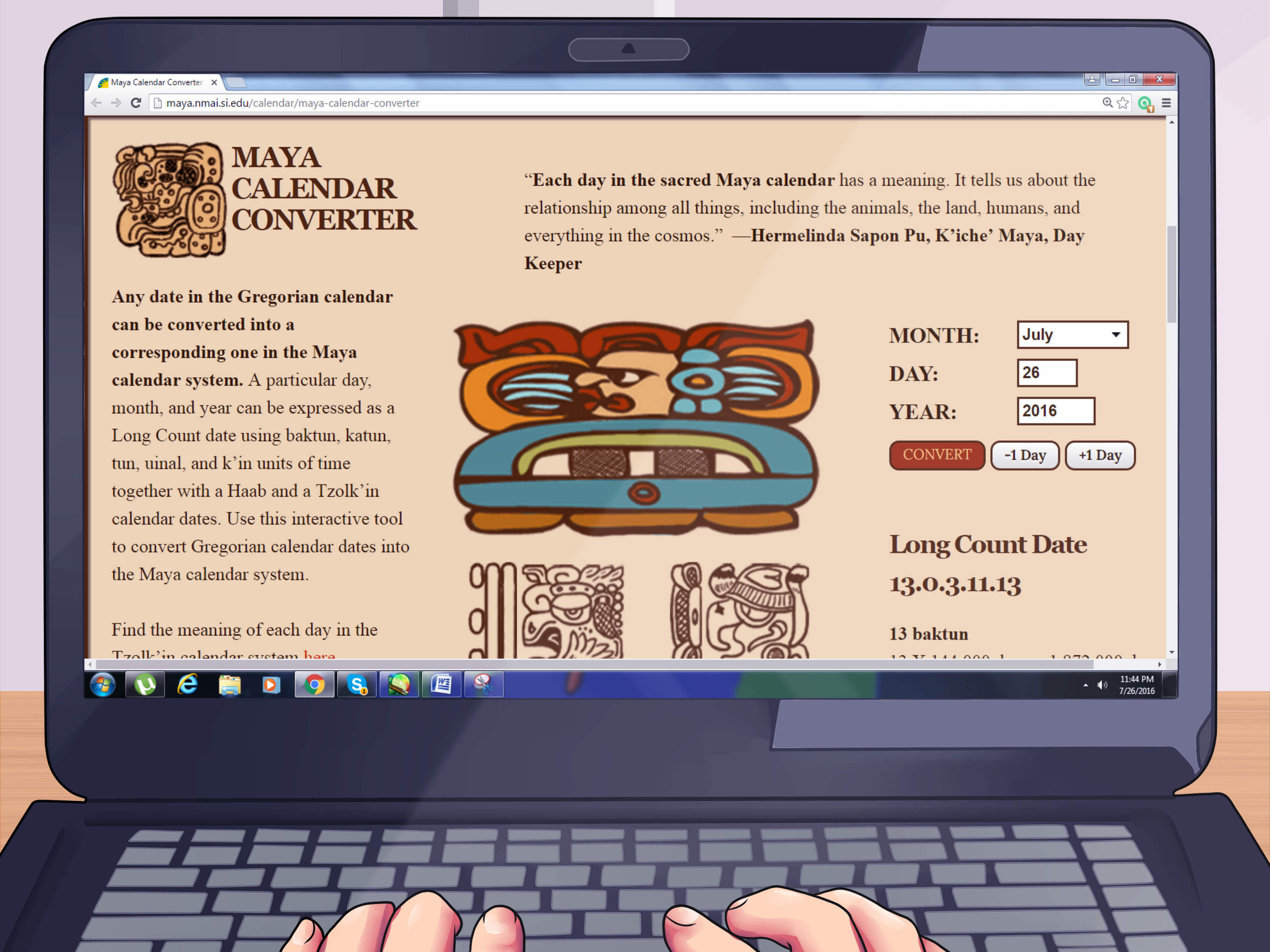
Note: This article is written for educational publishing and synthesizes established information from reputable museum, academic, archaeology, astronomy, and history resources.
Reading the Maya calendar can feel a little like opening a beautifully carved puzzle box: dots, bars, day names, month names, and numbers that look as if they were designed by someone who loved both astronomy and brain teasers. The good news? You do not need to be an archaeologist in hiking boots to understand the basics. You only need to know that the Maya calendar is not one calendar but a brilliant system of interlocking cycles.
The ancient Maya tracked time with extraordinary care. Their calendar system helped organize ceremonies, agriculture, royal events, historical records, and mythological cycles. It was connected to mathematics, astronomy, religion, and daily life. Unlike the modern Gregorian calendar, which marches forward like a tired office worker heading to Monday, the Maya calendar moves in repeating cyclesmore like gears turning together inside a cosmic clock.
In this guide, you will learn how to read the Maya calendar in 11 practical steps. We will cover the Tzolk’in, the Haab’, the Calendar Round, and the Long Count. You will also learn how bar-and-dot numbers work, how dates are structured, and why the famous 2012 “end of the world” idea was more pop-culture popcorn than Maya scholarship.
What Is the Maya Calendar?
The Maya calendar is a timekeeping system used by the ancient Maya civilization of Mesoamerica. It combines several calendars that run at the same time. The most important ones for beginners are the 260-day Tzolk’in, the 365-day Haab’, and the Long Count, which records longer historical periods.
Think of it like using three clocks at once. One tracks sacred days, one tracks the solar-style year, and one tracks big historical dates. When these systems are written together, they give a full picture of a day’s ritual identity, seasonal position, and place in a long historical timeline.
How to Read the Maya Calendar: 11 Steps
Step 1: Understand That the Maya Calendar Is a System, Not a Single Calendar
The first mistake many beginners make is looking for “the” Maya calendar as if it were a wall calendar with twelve glossy pictures of pyramids. In reality, the Maya calendar is made of several linked counts. The three you should learn first are:
- Tzolk’in: a sacred 260-day cycle.
- Haab’: a 365-day civil or solar-style cycle.
- Long Count: a continuous day count used for historical and mythological dates.
Each count answers a different question. The Tzolk’in tells you the sacred day name and number. The Haab’ tells you the month and day within the 365-day year. The Long Count tells you where the date sits in a much larger sequence of time.
Step 2: Learn the Maya Number System
Before reading calendar dates, learn the numbers. Maya numbers are wonderfully visual. A dot equals one. A bar equals five. A shell-like symbol represents zero. Yes, zeroone of the great mathematical concepts that Mesoamerican cultures used with impressive sophistication.
For example:
- One dot = 1
- Two dots = 2
- One bar = 5
- One bar and three dots = 8
- Two bars and four dots = 14
- A shell symbol = 0
Most Maya numbers are based on a vigesimal, or base-20, system. That means the system often groups by twenties rather than tens. For modern readers trained by grocery receipts, tax forms, and calculator apps, base-20 may feel strange at first. But once you see the pattern, it becomes surprisingly elegant.
Step 3: Start with the Tzolk’in Calendar
The Tzolk’in calendar is a 260-day ritual cycle made by combining 13 numbers with 20 day names. The numbers run from 1 to 13, while the day names run through a separate list of 20. Each day advances both the number and the name.
For example, a sequence might move like this:
- 1 Imix’
- 2 Ik’
- 3 Ak’b’al
- 4 K’an
When the number reaches 13, it starts again at 1, but the day names continue moving forward. Because 13 and 20 do not reset at the same time, it takes 260 days for the same number-name combination to return.
The Tzolk’in was associated with ritual meaning, divination, ceremony, and the character of particular days. In many communities, daykeepers interpreted the energy or significance of days. Reading the Tzolk’in is not just about counting; it is about understanding time as meaningful, patterned, and alive with cultural significance.
Step 4: Recognize the 20 Tzolk’in Day Names
To read a Tzolk’in date, you need the number and the day name. Spellings vary because Maya languages and scholarly conventions vary, but common versions include:
- Imix’
- Ik’
- Ak’b’al
- K’an
- Chikchan
- Kimi
- Manik’
- Lamat
- Muluk
- Ok
- Chuwen
- Eb’
- B’en
- Ix
- Men
- K’ib’
- Kab’an
- Etz’nab’
- Kawak
- Ajaw
A Tzolk’in date might be written as 4 Ajaw. This means the sacred day number is 4 and the day name is Ajaw. Do not read it like a month and day. It is not “April Ajaw” or “the fourth of Ajaw.” It is a rotating combination in a 260-day ritual cycle.
Step 5: Learn the Haab’ Calendar
The Haab’ calendar is a 365-day cycle. It has 18 months of 20 days each, plus a short final period of 5 days known as Wayeb’. If you are doing the math in your head, congratulations: 18 × 20 = 360, and 360 + 5 = 365. No calculator needed, though your phone was probably already reaching for attention.
The Haab’ was closer to a civil or seasonal calendar, although it did not include a leap-day correction like the Gregorian calendar. Because of that, it gradually shifted in relation to the solar year over long periods.
Haab’ dates are written with a day number followed by a month name, such as 8 Kumk’u. The day numbers usually run from 0 to 19 for the regular months, with Wayeb’ having only five days.
Step 6: Memorize the Haab’ Month Names
Common Haab’ month names include:
- Pop
- Wo’
- Sip
- Sotz’
- Sek
- Xul
- Yaxk’in
- Mol
- Ch’en
- Yax
- Sak’
- Keh
- Mak
- K’ank’in
- Muwan’
- Pax
- K’ayab’
- Kumk’u
- Wayeb’
When you see a Haab’ date like 8 Kumk’u, read it as the eighth position in the month Kumk’u. The Haab’ gives the date a place in the 365-day yearly cycle.
Step 7: Combine Tzolk’in and Haab’ to Read the Calendar Round
The Calendar Round combines the Tzolk’in and Haab’. Since the Tzolk’in is 260 days and the Haab’ is 365 days, the same combination repeats every 18,980 days. That equals 52 Haab’ years.
A Calendar Round date looks like this:
4 Ajaw 8 Kumk’u
This means the day is 4 Ajaw in the Tzolk’in and 8 Kumk’u in the Haab’. Together, they identify a specific day within a 52-year cycle. That is useful for many purposes, but it has one limitation: the same Calendar Round date returns every 52 years. If you need to know which 4 Ajaw 8 Kumk’u you are talking about across centuries, you need the Long Count.
Step 8: Understand the Long Count Calendar
The Long Count calendar is the system that lets Maya dates stretch across vast periods of time. Instead of repeating every 52 years, it counts days from a mythological creation date. A Long Count date is usually written as five numbers separated by dots, like this:
13.0.0.0.0
The five main positions represent:
- B’ak’tun: 144,000 days
- K’atun: 7,200 days
- Tun: 360 days
- Winal or Uinal: 20 days
- K’in: 1 day
Read the date from left to right, from the largest unit to the smallest. A date such as 9.12.2.0.16 means 9 b’ak’tuns, 12 k’atuns, 2 tuns, 0 winals, and 16 k’ins have passed since the starting point of the current era.
Step 9: Convert a Long Count Date into Total Days
To understand a Long Count date, multiply each position by its unit value and add the results. Let’s use a simple example:
9.0.0.0.0
- 9 b’ak’tuns × 144,000 = 1,296,000 days
- 0 k’atuns × 7,200 = 0 days
- 0 tuns × 360 = 0 days
- 0 winals × 20 = 0 days
- 0 k’ins × 1 = 0 days
Total: 1,296,000 days from the Maya creation base date.
Here is another example:
9.12.2.0.16
- 9 × 144,000 = 1,296,000
- 12 × 7,200 = 86,400
- 2 × 360 = 720
- 0 × 20 = 0
- 16 × 1 = 16
Total: 1,383,136 days.
This step is where the calendar stops looking mystical and starts looking like extremely disciplined arithmetic wearing ceremonial clothing.
Step 10: Read a Full Maya Date in Order
A complete Maya date may include the Long Count, the Tzolk’in date, and the Haab’ date. One famous example is:
13.0.0.0.0 4 Ajaw 8 Kumk’u
Read it like this:
- 13.0.0.0.0 is the Long Count position.
- 4 Ajaw is the Tzolk’in date.
- 8 Kumk’u is the Haab’ date.
This date is associated with the creation date of the current era in Maya cosmology. In widely used scholarly correlation, it corresponds to August 11, 3114 BCE in the proleptic Gregorian calendar. However, readers should know that calendar correlation is a specialized scholarly topic, and different correlations have been debated. For practical beginner reading, the key skill is understanding the structure of the date.
Step 11: Avoid the 2012 Misunderstanding
No guide to the Maya calendar would be complete without gently escorting the 2012 apocalypse myth out the door. In 2012, many people claimed the Maya calendar predicted the end of the world. It did not. What happened was the completion of a major Long Count cycle: the 13th b’ak’tun.
That is more like an odometer rolling over than a cosmic eviction notice. A major cycle ended, and another began. Ancient Maya timekeeping was deeply cyclical. Endings were transitions, not necessarily disasters. The idea that the Maya predicted global destruction says more about modern anxiety and movie marketing than it does about Maya calendar science.
Example: How to Read a Maya Calendar Date
Let’s practice with the full date:
12.19.19.17.19 3 Kawak 2 K’ank’in
First, read the Long Count:
- 12 b’ak’tuns
- 19 k’atuns
- 19 tuns
- 17 winals
- 19 k’ins
Next, read the Tzolk’in:
3 Kawak means the sacred day number is 3 and the day name is Kawak.
Finally, read the Haab’:
2 K’ank’in means the date falls on day 2 of the Haab’ month K’ank’in.
Now you have three layers of meaning: the historical count, the sacred day identity, and the yearly calendar position. That is the Maya calendar’s genius. It compresses arithmetic, ritual meaning, and historical memory into one compact date.
Why the Maya Calendar Matters
The Maya calendar matters because it reveals how a civilization understood time, history, astronomy, and sacred order. It was not merely a tool for counting days until the next market trip. It was a framework for understanding human life within cosmic cycles.
Maya scribes used calendar dates on monuments, ceramics, codices, and architectural inscriptions. Kings recorded accessions, births, deaths, battles, rituals, and period endings. Astronomical observations, especially of the sun, moon, and Venus, were also connected to Maya timekeeping. The calendar was both practical and profound, which is a rare combination. Most modern planners can barely handle a dentist appointment and a grocery list on the same Tuesday.
Common Mistakes When Reading the Maya Calendar
Mistake 1: Calling Everything “Mayan”
In modern scholarly usage, “Maya” is generally preferred as the adjective for the civilization, people, art, calendar, and culture. “Mayan” is usually used for the language family. So, “Maya calendar” is the better phrase for SEO and accuracy.
Mistake 2: Thinking the Haab’ Is Exactly the Same as the Solar Year
The Haab’ has 365 days, but it does not correct with leap years. Over time, it shifts relative to the true solar year. That does not make it primitive. It simply means it functioned differently from the Gregorian calendar.
Mistake 3: Reading Tzolk’in Dates Like Gregorian Dates
A date such as 4 Ajaw is not like April 4. The number and day name are part of a rotating 260-day cycle. You must read them as a pair.
Mistake 4: Ignoring the Long Count
The Calendar Round repeats every 52 years, so it cannot always identify a unique historical date by itself. The Long Count provides the broader chronological anchor.
Mistake 5: Treating the Calendar as a Fortune-Telling Toy
The Maya calendar has sacred and interpretive dimensions, but reducing it to vague personality memes misses its mathematical, historical, and cultural depth. Respect the system before turning it into refrigerator-magnet wisdom.
Practical Tips for Beginners
If you are just starting, do not try to memorize everything in one sitting. Begin with the three main systems: Tzolk’in, Haab’, and Long Count. Practice identifying which part of a date belongs to which system. Then learn the Maya numbers. After that, work through a few example dates slowly.
A helpful practice method is to write a Maya date on paper and label each part. For example:
9.16.4.10.8 12 Lamat 1 Muwan’
- Long Count: 9.16.4.10.8
- Tzolk’in: 12 Lamat
- Haab’: 1 Muwan’
Once you can separate the parts, the date becomes much less intimidating. It stops being a mysterious code and becomes a structured sentence about time.
Experiences and Reflections: Learning to Read the Maya Calendar
One of the best experiences related to learning the Maya calendar is the moment when the system finally “clicks.” At first, the calendar may look like a tangle of numbers and unfamiliar names. You see something like 13.0.0.0.0 4 Ajaw 8 Kumk’u and wonder whether you are reading a date, a password, or the serial number on an ancient spaceship. But after a little practice, the structure becomes clear. The Long Count gives the large historical placement. The Tzolk’in gives the ritual day. The Haab’ gives the yearly position. Suddenly, the mystery becomes readable.
A useful way to experience the calendar is to compare it with modern habits. Today, a person may say, “It’s Friday, June 12, 2026.” That sentence contains layers: weekday, month, day, and year. The Maya calendar also layers information, but the layers come from different cycles. Instead of one linear date, it gives a multidimensional identity to a day. This can change the way you think about time. A day is not only a number on a page. It has rhythm, repetition, memory, and meaning.
Another rewarding experience is practicing with inscriptions from Maya monuments. Even if you are not reading the full hieroglyphic text, identifying the calendar structure helps you appreciate the work of ancient scribes. These were not random decorations. Maya inscriptions often began with dates because time anchored the event. A ruler’s accession, a dedication ceremony, or a major period ending was placed within a carefully ordered universe. Reading even a small part of that date gives you a doorway into the historical record.
For students, teachers, travelers, and history lovers, the Maya calendar can also make visits to museums or archaeological sites more meaningful. When you see a stela, lintel, vessel, or codex reproduction, you may notice dots, bars, and calendar glyphs. Instead of walking past them as pretty ancient symbols, you can pause and ask: Is this a number? Is this a Long Count? Is there a Tzolk’in day sign nearby? That curiosity turns passive viewing into active discovery.
There is also a humbling experience in realizing how advanced Maya timekeeping was. Modern people often underestimate ancient civilizations, usually while failing to remember where they left their car keys. The Maya developed complex mathematical and calendrical systems without modern computers, telescopes, or spreadsheet software. Their achievements remind us that intelligence appears in many forms across human history.
Finally, learning the Maya calendar encourages cultural respect. The Maya are not simply an “ancient vanished people.” Millions of Maya people live today, and calendar traditions continue in various forms among some communities. When writing, teaching, or discussing the Maya calendar, it is important to avoid sensational claims and lazy stereotypes. The real system is already fascinating. It does not need fake apocalypse seasoning sprinkled on top.
Conclusion
Learning how to read the Maya calendar is much easier when you break it into steps. First, understand that the Maya used several calendar systems together. Then learn the bar-and-dot numbers, the 260-day Tzolk’in, the 365-day Haab’, the 52-year Calendar Round, and the Long Count. Once you can identify each part of a full date, you can begin to read Maya calendar expressions with confidence.
The Maya calendar is not a doomsday machine, a novelty horoscope, or a dusty mathematical curiosity. It is a sophisticated cultural achievement that connects astronomy, ritual, history, and number theory. It shows how the Maya organized time into meaningful cycles and recorded human events within a cosmic framework. In other words, it is a calendar with a brain, a memory, and a sense of drama.
If you are a beginner, start small. Read one date. Identify the Long Count. Find the Tzolk’in. Find the Haab’. Do the math slowly. The first date may feel difficult, but the second will feel friendlier. By the eleventh, you may catch yourself admiring the elegance of a system that has been turning its gears for centuries.














