
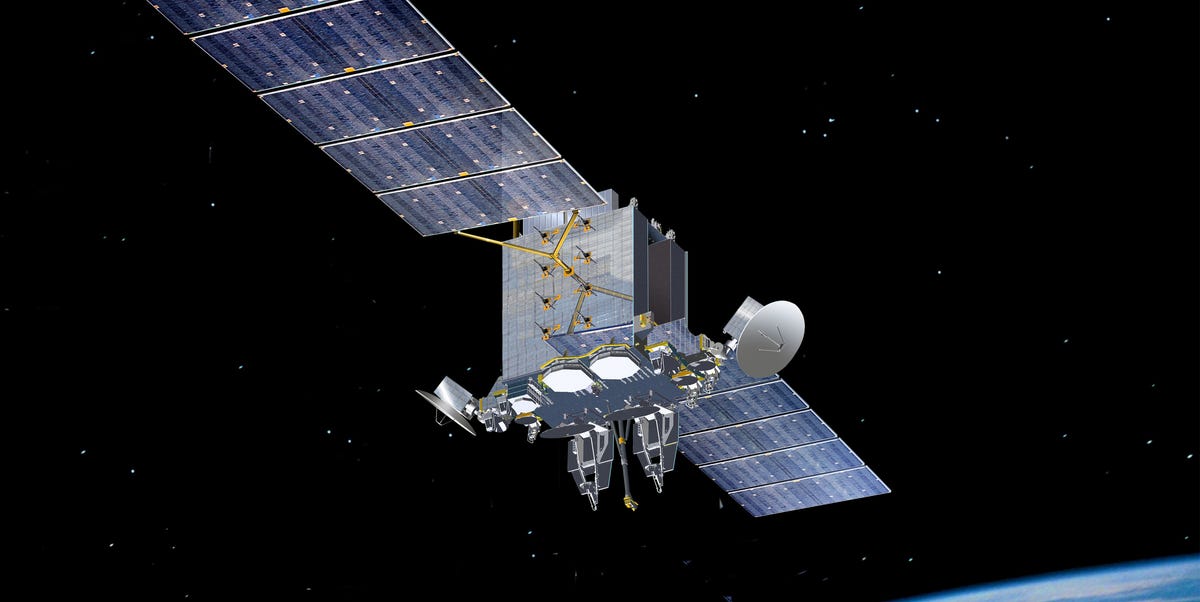
For most people, satellites are invisible helpers. They guide road trips, route credit-card transactions, forecast hurricanes, connect soldiers, stream television, and occasionally help someone find a taco truck at 1:13 a.m. But in national security circles, satellites are no longer just peaceful machines politely circling Earth. They are targets, shields, scouts, weapons-support systems, and, in the scariest scenarios, possible doomsday triggers.
The phrase doomsday satellites sounds like something a movie villain would announce from a rotating chair. In reality, the danger is less theatrical and more complicated. A doomsday satellite may not shoot lasers or unfold like a mechanical dragon. It might be a nuclear command-and-control relay, a missile-warning satellite, a co-orbital inspector with suspicious behavior, a cyber-vulnerable communications platform, or a theoretical space-based nuclear anti-satellite system capable of damaging large portions of low Earth orbit.
The next major conflict may not begin with tanks crossing a border. It could begin with blinking GPS signals, jammed satellite communications, blinded sensors, corrupted timing data, and military commanders asking why their billion-dollar orbital hardware has suddenly become very expensive furniture. Welcome to the strange, serious, and slightly terrifying future of space warfare.
What Are Doomsday Satellites?
A doomsday satellite is not a formal technical category. It is a useful shorthand for satellites or space-based systems that could shape a civilization-level crisis. Some are defensive, some are offensive, and some are dangerous simply because modern society depends on them too much.
The most obvious examples are satellites tied to nuclear deterrence. Missile-warning satellites watch for launches. Communications satellites help national leaders maintain command and control during a crisis. Navigation satellites support military movement, precision weapons, and emergency response. If these systems fail at the wrong moment, confusion can become escalation. In nuclear strategy, confusion is not a cute little inconvenience; it is the gremlin in the control room.
Other doomsday satellites may be anti-satellite systems. These include spacecraft designed to approach, inspect, disable, jam, dazzle, or potentially destroy other satellites. Some can look innocent, especially if described as inspection or servicing spacecraft. The trouble is that a satellite capable of approaching and repairing another satellite may also be capable of approaching and ruining its day.
Then there is the nightmare category: a space-based nuclear anti-satellite weapon. The 1967 Outer Space Treaty prohibits placing nuclear weapons or other weapons of mass destruction in orbit, yet recent public concerns about possible Russian development of a nuclear anti-satellite capability have reminded policymakers that treaties are only as strong as verification, enforcement, and political will.
Why Space Became the New High Ground
Military leaders love high ground because it improves visibility, communication, and control. Space is the ultimate high ground, although it is less “hill with a flag” and more “orbital infrastructure layer holding modern civilization together with math, antennas, and duct-tape-level optimism.”
Satellites support intelligence, surveillance, reconnaissance, missile warning, environmental monitoring, global communications, financial timing, weather forecasting, and positioning, navigation, and timing services. The U.S. military depends on them. So do airlines, banks, farmers, shipping companies, energy grids, emergency responders, and ordinary people trying to get to brunch without making three wrong turns.
This dependence creates a strategic temptation. If a rival can degrade satellites, it may disrupt the ability to see, move, shoot, communicate, and coordinate. That does not mean every space conflict would involve explosions. In fact, the first wave of space warfare would likely be quieter: jamming, spoofing, cyber intrusions, data poisoning, ground-station attacks, laser dazzling, and legal gray-zone harassment.
The Anti-Satellite Arsenal: More Than Space Lasers
Hollywood has trained us to expect space battles full of glowing beams and dramatic orchestras. Real anti-satellite warfare is often less cinematic and much more annoying. Think fewer laser swords and more “your navigation system now believes the airport is in the ocean.”
Direct-Ascent Anti-Satellite Missiles
A direct-ascent anti-satellite missile is launched from Earth to strike a satellite in orbit. These systems are dramatic because they can physically destroy a target, but they are also dangerous because they create debris. Every fragment becomes a bullet traveling at orbital speed. A successful hit may solve one military problem while creating thousands of new problems for everyone else.
Past destructive anti-satellite tests by major space powers have shown how quickly orbital debris can become a shared hazard. That is why the United States announced a commitment not to conduct destructive direct-ascent anti-satellite missile tests and encouraged others to treat that restraint as a norm of responsible behavior.
Co-Orbital Systems
Co-orbital systems are satellites that can maneuver near other satellites. They may inspect, shadow, interfere with, or potentially attack spacecraft. Some may release smaller objects. Others may use robotic arms, proximity operations, or electronic payloads. The difficult part is intent. A satellite approaching another satellite might be a mechanic, a spy, a bodyguard, or a mugger with solar panels.
Electronic Warfare
Jamming blocks signals. Spoofing sends false signals. Both can be used against satellite communications and navigation systems. In conflict zones, GNSS interference can affect drones, aircraft, ships, artillery, and civilian transportation. Unlike debris-producing attacks, electronic warfare can be reversible, deniable, and repeatable. That makes it attractive in gray-zone conflict.
Cyberattacks
Satellites are not only spacecraft; they are networks. They depend on software, ground stations, supply chains, user terminals, cloud systems, and command links. Cyberattacks may target any of these layers. A satellite does not have to be blown up if an attacker can corrupt its commands, disable its ground infrastructure, or compromise the systems that distribute its data.
Nuclear Anti-Satellite Concepts
A nuclear detonation in space would be a blunt, reckless tool. It would not politely target one satellite and then send a thank-you note. Depending on altitude, yield, and environment, it could create electromagnetic effects, radiation belts, and widespread satellite damage. The historical Starfish Prime test in 1962 showed that nuclear explosions in space can have broad and unpredictable consequences. Today, with far more satellites in orbit, the stakes would be much higher.
Ukraine Showed the Future Arrived Early
The war in Ukraine has become a harsh classroom for modern space warfare. Commercial satellite imagery, satellite communications, drone coordination, GPS, and battlefield data links all became part of daily military operations. Starlink terminals, commercial remote sensing, and open-source intelligence helped demonstrate that space power is no longer limited to super-secret government satellites with names that sound like rejected superhero projects.
Russia’s attempts to jam communications and navigation signals also showed the other side of the equation. Space services are powerful, but they are not magical. They can be disrupted. They require resilience, rapid software updates, backup channels, disciplined operations, and partnerships between governments and commercial providers.
One lesson is clear: future wars will not separate land, sea, air, cyber, and space into neat boxes. They will be blended. A drone may depend on satellite navigation, a soldier may depend on commercial satellite internet, a missile-defense system may depend on overhead sensors, and a commander may depend on data moving through a space-based network. Take away the satellites, and the battlefield becomes darker, slower, and more chaotic.
The Debris Doomsday: When Space Fights Back
There is a reason space experts worry so much about debris. In orbit, even small objects travel fast enough to damage or destroy spacecraft. A bolt, paint fleck, or shattered panel fragment can behave like a tiny hypersonic villain.
The nightmare scenario is often called the Kessler Syndrome: a chain reaction in which collisions create debris, debris causes more collisions, and certain orbital regions become increasingly dangerous or even unusable. This is not an instant Hollywood apocalypse. It is more like turning a highway into a permanent storm of invisible shrapnel.
Debris lifetime depends heavily on altitude. Objects in lower orbits may eventually reenter the atmosphere. Higher debris can remain for decades, centuries, or even longer. That matters because many valuable satellites operate in crowded orbital zones. The more satellites humanity launches, the more careful it must be about disposal, tracking, maneuvering, and collision avoidance.
A space war that creates large debris fields would not stay neatly inside the war. It could threaten neutral satellites, commercial constellations, scientific missions, human spaceflight, weather monitoring, and emergency communications. In other words, space debris is the international relations equivalent of glitter: once released, it gets everywhere and nobody is happy.
Commercial Satellites Are Now Strategic Assets
The old model of military space relied heavily on a small number of exquisite, expensive, highly capable satellites. These systems remain important, but the trend is moving toward resilient satellite constellations: many smaller satellites, faster refresh cycles, commercial partnerships, and distributed architectures.
This shift is partly practical. If an adversary can disable one big satellite and cause a huge strategic loss, that satellite becomes a tempting target. If capability is spread across hundreds of satellites, the network becomes harder to kill. The military buzzword is resilience. The kitchen-table translation is: do not keep all your orbital eggs in one very shiny basket.
The U.S. Department of Defense has emphasized commercial space integration because private companies now provide launch services, communications, imagery, data processing, and proliferated low Earth orbit capabilities at a speed governments often struggle to match. This creates opportunities and risks. Commercial systems can add resilience, but they also become targets in crisis. A future adversary may not distinguish cleanly between a government satellite and a commercial satellite supporting military operations.
What Would the First Hours of a Space War Look Like?
A space war might not begin with a visible explosion. It might begin with interference that looks like a technical glitch. Military units may notice poor GPS accuracy. Ships may report strange navigation readings. Drone feeds may lag. Satellite phones may drop. Weather data may arrive late. Cybersecurity teams may detect unusual activity near ground stations. Analysts may see suspicious satellite maneuvers in geostationary orbit.
Then the pressure would build. A laser could temporarily dazzle an imaging satellite. A cyberattack could target a satellite control network. A co-orbital spacecraft could move close enough to intimidate or interfere. Electronic warfare systems could jam communications over a theater of conflict. Ground stations could be attacked physically or digitally.
The hard question is escalation. If a satellite is disabled, is that an act of war? What if it is a commercial satellite? What if the attack is reversible? What if attribution is uncertain? What if a cyberattack causes a satellite to lose control and create debris? The rules are still underdeveloped, and ambiguity is dangerous when nuclear-armed states are involved.
Can Treaties and Norms Keep Space Peaceful?
The Outer Space Treaty remains the foundation of space law. It bans placing nuclear weapons or other weapons of mass destruction in orbit and establishes that states are responsible for national space activities. But the treaty was written in the 1960s, before mega-constellations, commercial battlefield internet, advanced cyber operations, reusable rockets, and satellites capable of close-proximity maneuvers.
Modern space security requires more than one treaty. It needs norms against debris-producing tests, clearer rules for proximity operations, better communication during satellite incidents, improved verification methods, cyber standards for space systems, and channels for crisis de-escalation. Space is too important to govern with a shrug and a telescope.
The good news is that restraint can be rational. No major space power benefits from making key orbits unusable. No serious military planner wants a debris cascade that damages their own satellites. The bad news is that deterrence can fail when leaders believe they can gain advantage quickly, hide responsibility, or keep escalation below the threshold of open war.
How Nations Are Preparing for the Space Wars To Come
Preparation is already underway. The U.S. Space Force focuses on space domain awareness, resilient architectures, threat tracking, and protection of national security space assets. The Pentagon is investing in commercial integration, proliferated constellations, missile-tracking networks, and faster data transport. Allies are developing space commands, sharing tracking data, and building joint approaches to orbital security.
Future resilience will likely depend on several ideas working together. First, satellites must be harder to jam, hack, spoof, or blind. Second, constellations must be distributed enough to survive losses. Third, operators need better awareness of what is moving near their spacecraft. Fourth, civilian and military systems need backup options when satellite services degrade. Finally, diplomacy must reduce the chance that one reckless test turns low Earth orbit into a cosmic junk drawer.
Everyday Experiences in a Satellite Crisis
To understand the real meaning of doomsday satellites, imagine an ordinary Tuesday during a major satellite disruption. The first sign might not be a government alert. It might be your phone map spinning in confusion like it has just discovered philosophy. Delivery drivers lose route accuracy. Ride-share prices jump because positioning is unreliable. A farmer using precision agriculture equipment finds that automated guidance is drifting. A cargo ship receives conflicting navigation data. Airline dispatchers move to backup procedures. Emergency responders check whether their timing and communications systems are stable.
For most people, the experience would feel less like a space battle and more like modern life suddenly becoming clumsy. Payments may still work, but some systems could slow down because financial networks rely on precise timing. Weather forecasting may degrade if satellite observations are interrupted. News reports would be full of phrases like “temporary outage,” “suspected jamming,” and “officials are investigating,” which is public-relations language for “someone important is sweating through a suit.”
On the military side, the experience would be sharper. Units that depend on satellite communications would shift to backup radios, fiber links, line-of-sight systems, or preplanned mission tactics. Drone operators might lose stable command links. Precision weapons might become less precise. Commanders would need to decide whether satellite interference is local harassment, strategic preparation, or the opening move of a wider conflict. The hardest part would be uncertainty. In a crisis, not knowing whether a failure is accidental or hostile can be more dangerous than the failure itself.
Civilians would also discover how invisible space infrastructure usually is. People rarely thank satellites when ATMs work, storms are forecast, ships avoid collisions, and rescue teams find lost hikers. Satellites are like plumbing: unnoticed until something goes horribly wrong. A satellite crisis would make the public realize that space is not far away in the practical sense. It is woven into grocery logistics, banking, traffic, television, aviation, agriculture, defense, disaster response, and the clock synchronization behind digital life.
Businesses would learn painful lessons about resilience. Companies with backup communication plans, offline procedures, redundant timing sources, and flexible logistics would perform better. Organizations that treat satellite services as magic background utilities would have a rougher day. The experience would reward boring preparedness: backup maps, alternate networks, tested emergency plans, diversified suppliers, and staff who know what to do when dashboards turn red.
For the average person, the best response would not be panic. It would be awareness. Keep offline copies of essential information. Know basic navigation without total dependence on apps. Expect disruptions during geopolitical crises. Support policies that reduce debris, improve cybersecurity, and protect peaceful space use. The future of space war may be decided by generals and engineers, but its consequences will land in ordinary pockets, homes, hospitals, airports, and bank accounts. That is why doomsday satellites are not just a defense topic. They are a civilization topic.
Conclusion: The Future Is Orbital, Fragile, and Still Fixable
Doomsday satellites are not science fiction anymore. They are a warning label on the modern world. Satellites make life safer, faster, richer, and more connected, but they also create strategic dependencies that adversaries can exploit. The space wars to come may involve missiles, but they may also involve jamming, spoofing, cyberattacks, dazzling, close approaches, commercial networks, legal ambiguity, and debris that outlives the conflict that created it.
The smartest path forward is not to militarize space recklessly or pretend conflict will never reach orbit. The smartest path is resilience: distributed satellite networks, stronger cybersecurity, better tracking, commercial-government coordination, serious diplomacy, debris reduction, and clear norms that make destructive behavior politically costly. Space is no longer just the final frontier. It is the infrastructure above all infrastructure. Protecting it may be one of the defining security challenges of the 21st century.














