
Note: HTML body only for web publishing; unnecessary source-code artifacts removed.
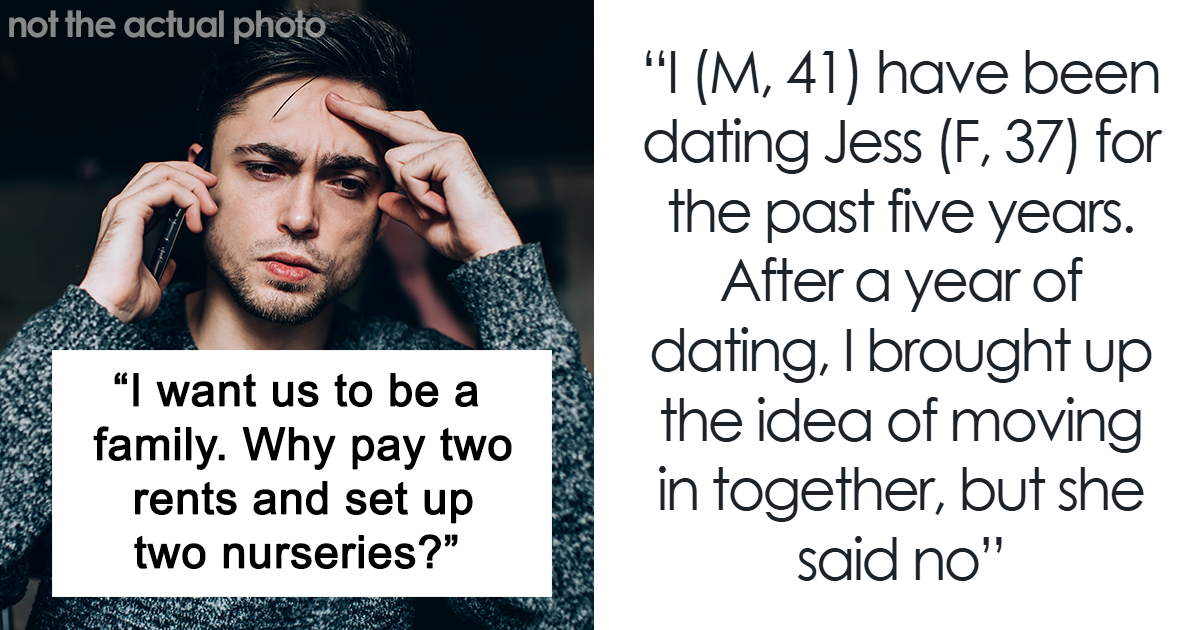
Some relationship stories arrive with violins. Others arrive with a siren and a Reddit tab. This one landed somewhere in the middle: a man said his pregnant girlfriend still refused to move in with him after years together, and what started as a confusing disagreement about living arrangements spiraled into a much uglier discovery. According to the viral post and follow-up, her refusal was not really about needing space, preserving independence, or keeping a perfectly color-coded bathroom cabinet untouched by male deodorant. It was about secrecy. And once that secrecy cracked, he said he learned she had been seeing other men.
That is why this story hooked so many readers. On the surface, it looked like a modern relationship question: do couples have to live together to raise a child? But underneath, it was really about mismatched expectations, blurred boundaries, and the difference between privacy and concealment. Those are the kinds of details that turn a domestic disagreement into a trust collapse.
The viral headline may sound dramatic, but the reason people kept reading is simple: a lot of adults have lived some version of this exact emotional whiplash. They did not necessarily discover multiple affairs. They did not all have a baby on the way. But many know what it feels like to realize they were building a future with one set of assumptions while their partner was quietly operating from another.
The Story That Sent Comment Sections Into Orbit
In the online account, the man described a long-term relationship in which he expected the next obvious step would be moving in together, especially after a pregnancy entered the picture. To him, that meant stability, shared responsibility, and one household preparing for a baby. To her, at least according to the post, that was never the plan. She still wanted separate homes, separate routines, and time apart that remained largely unquestioned.
Then came the update. He said he finally pushed harder for a real answer and discovered the “alone time” she fiercely protected was, in practice, time with other men. In his telling, she even framed that arrangement as something he had supposedly agreed to by respecting her “me days.” That detail is what turned readers from mildly puzzled into fully alarmed. One thing is crystal clear in most healthy relationships: “please respect my personal space” is not normally interpreted as “please bankroll my mystery life.”
To be fair, viral relationship stories are only ever one side of the picture. Nobody should treat a forum post like sworn testimony delivered under fluorescent courthouse lighting. But even allowing for missing context, the story resonated because the core conflict felt real. One partner treated pregnancy as a call to deepen commitment. The other, as described, treated pregnancy as something that could fit around an already compartmentalized life.
Why Her Refusal Felt Bigger Than a Housing Decision
Living apart is not automatically a red flag
Let’s start with the part the internet often mangles: living apart does not automatically mean a relationship is doomed. Plenty of couples choose separate homes for practical reasons. One partner may have children from a previous relationship and want to protect routines. Another may own a home and feel financially stuck. Some couples genuinely function better with a little breathing room. Separate addresses, by themselves, are not evidence of betrayal.
But that is not what made this story feel shaky. The real issue was that the couple seemed to be using the same relationship vocabulary while speaking totally different emotional languages. He heard “we’re having a baby” and understood “we are becoming a team.” She reportedly heard “we’re having a baby” and still wanted the relationship structure to remain mostly unchanged. That gap matters.
Experts who write about cohabitation often make the same point in less dramatic language: couples get into trouble when they slide into life-changing arrangements instead of deciding them through explicit conversations. In other words, assumptions are cozy until they explode. A baby does not magically resolve disagreement about exclusivity, money, privacy, chores, emotional closeness, or future plans. It just adds diapers, sleep deprivation, and a stroller bill.
Privacy and secrecy are not the same thing
Healthy couples usually allow each other some independence. A night alone, a hobby, solo time with friends, or an afternoon that does not require GPS-level tracking can all be completely normal. Adults are allowed to remain adults, not parolees.
But privacy becomes secrecy when the rules are designed to prevent reasonable questions. That distinction is what gave this story its sting. The idea that certain days were fully off-limits, with no questions and no communication, might sound quirky in a rom-com for about eight minutes. In real life, especially during pregnancy, it can create a giant blind spot where trust goes to die.
And once a relationship starts leaning on rigid blind spots, every refusal suddenly feels louder. “I don’t want to move in” may not only mean “I value independence.” It may also mean “I need distance to preserve separate realities.” That possibility is exactly what the man in the story seems to have uncovered, and it is why readers reacted so strongly.
Pregnancy Raises the Stakes Fast
Pregnancy has a way of exposing weak joints in a relationship. Issues that once felt theoretical become immediate: Where will the baby sleep? Who pays for what? Who comes to prenatal visits? What happens during recovery? Who takes nights? What about work schedules, childcare, and support from family? These are not tiny details to be sorted out during a casual sandwich run. They are the framework of daily life.
That pressure matters because stress during pregnancy is not just an abstract mood problem. It can affect sleep, eating, emotional stability, and overall well-being. It can also make conflicts feel sharper and more urgent. So when a relationship is already full of uncertainty, secrecy, or emotional distance, pregnancy does not politely wait for everyone to find their communication style. It kicks the door open and demands a plan.
This is also why so many readers sided with the man’s instinct that the situation “made no sense.” Even people who strongly support nontraditional family structures can usually agree on one thing: there still has to be a structure. Two loving, honest adults can absolutely co-parent from separate homes. But two adults running on confusion, resentment, and selective disclosure are not pioneering a modern arrangement. They are improvising on a tightrope.
The Affair Reveal Changed the Entire Story
Up until the update, the debate was about compatibility. After the update, it became a betrayal story. That shift is important. Relationship therapists have long described infidelity as one of the most destabilizing crises a couple can face, because it does not just create hurt feelings. It attacks the basic sense of reality inside the relationship. The betrayed partner often replays everything and wonders which memories were genuine, which explanations were manipulative, and which instincts should have been trusted sooner.
That is why the headline phrase, “I didn’t see this coming,” hit so hard. People say that after betrayal because they are not merely shocked by the act itself. They are stunned by the realization that they were standing inside a story different from the one they thought they were in. In this case, the man thought he was trying to build a home for a family. Instead, he felt he was being managed as one compartment in a broader setup.
And no, moving in would not have solved that. A joint lease cannot perform couples therapy. A shared nursery cannot patch a broken definition of fidelity. Sometimes the internet acts as if the right floor plan can rescue the wrong relationship. It cannot. Granite countertops remain notoriously bad at emotional repair.
What the Internet Got Right
The most sensible responses to the story focused on reality, not revenge. First, they recognized that this was no longer about persuading a reluctant partner to cohabitate. Once trust is damaged at that level, the urgent task is clarity. That means understanding the relationship status, the parental plan, the medical and emotional needs surrounding the pregnancy, and the legal landscape of parenthood where applicable.
Second, many readers correctly pointed out that a person can be excited about becoming a parent and still be unprepared for what co-parenting actually requires. Loving the idea of family is not the same as practicing teamwork. You need conversations about schedules, boundaries, money, child care, conflict, and support systems. If those talks are impossible before the baby arrives, they do not get easier when nobody has slept longer than 94 minutes.
Third, the better takes resisted glamorizing chaos. There is a strange online habit of treating relationship disasters as if they are plot twists to admire for their audacity. But in real life, betrayal during pregnancy lands on top of fear, physical strain, and huge logistical decisions. It is not entertaining when you are the one buying prenatal vitamins on Tuesday and questioning the entire relationship by Thursday.
What the Internet Usually Gets Wrong
Comment sections love instant verdicts. They also love turning every complicated human mess into a one-line slogan. “Just leave.” “Get proof.” “She was always trash.” “He should have known.” That kind of talk may feel satisfying, but it rarely helps people navigate the next 12 months of their real lives.
The truth is messier. If a baby is involved, the romantic relationship may end while the practical relationship continues. That means hurt people still have to think about health care, safety, communication, and the child’s needs. It also means that being betrayed does not automatically turn someone into a perfect decision-maker. Anger can be justified and still produce bad choices.
Children, meanwhile, do best when parents reduce conflict, maintain consistency, and stay positively involved in safe, stable ways. That does not require the parents to remain a couple. It does require them to stop using the child as a stage prop in the world’s saddest competition for moral victory. The relationship may be over. Parenthood, unfortunately for dramatic exits, tends to stick around.
The Bigger Lesson Hidden Inside the Drama
This story blew up because the affair reveal was sensational, but the more useful takeaway is quieter: relationship definitions should never be left to vibes. Couples need explicit agreements about exclusivity, living arrangements, communication, finances, family goals, and personal space. “I assumed” is one of the most expensive phrases in adult life.
That matters even more when children are already in the picture or a pregnancy changes the timeline. If one partner sees cohabitation as a sign of commitment and the other sees it as an avoidable inconvenience, that mismatch deserves a serious conversation before anybody starts shopping for cribs. If one partner thinks “me time” means recharging and the other secretly uses that phrase as camouflage, the relationship is already operating on borrowed time.
There is also a lesson here about support. Pregnancy and the postpartum period can strain mental health for mothers, fathers, and partners. Stress, depression, distance, resentment, and loneliness can all intensify when the relationship is unstable. That is exactly why support systems matter so much. Family, trusted friends, counselors, prenatal education, and honest planning are not backup accessories. They are part of the foundation.
In short, the biggest shock in this viral story was not merely that a man uncovered affairs after pressing his pregnant girlfriend to move in. It was that two people were apparently preparing for a child without sharing the same basic understanding of what their relationship even was. That is not a twist. That is a structural failure.
Experiences People Commonly Describe in Similar Situations
One experience that comes up again and again in stories like this is the slow build of confusion before the blowup. People say they noticed little things that did not add up: oddly protected routines, unexplained absences, emotional distance, a strange resistance to ordinary questions, or a version of “don’t overthink it” used so often it became a full-time job description. Nothing looked dramatic enough on its own. But taken together, the pattern created that awful feeling that something in the relationship was off, even if they could not prove it yet.
Another common experience is how pregnancy changes the emotional math. A partner who might have tolerated ambiguity before suddenly feels urgency. The questions become immediate: Are we solid? Are we exclusive? Are we actually building a home together? What happens after the birth? That urgency is not irrational. It is often the moment when abstract concerns become concrete responsibilities. Many people describe this stage as the point where they stopped being able to “just go with the flow” because the flow was headed straight toward a car seat and pediatric appointments.
Then there is the experience of discovering that two partners have been narrating the same relationship differently. One person thinks they are in a committed, future-oriented bond. The other seems to be preserving exit ramps, side arrangements, or emotional loopholes. That discovery can feel humiliating, not because the betrayed person was foolish, but because trust naturally involves interpretation. Most adults do not want to investigate the person they love like a detective in a budget crime series. They want to believe what has been implied, promised, or emotionally reinforced.
Many people also describe the bizarre practical whiplash that follows. One day they are discussing strollers, baby names, mortgage payments, or maternity leave. The next, they are wondering whether the relationship is even intact. That split between domestic planning and emotional disaster is one reason these stories feel so intense. Real life does not pause the logistics while the heartbreak catches up. Bills still arrive. Appointments still happen. The dog still wants to be walked, and the refrigerator still contains a highly judgmental carton of eggs.
Finally, a lot of people who go through relationship breakdown during pregnancy talk about learning an uncomfortable but valuable truth: a romantic relationship and a parenting relationship are not always the same thing. Some eventually separate and build a workable co-parenting structure. Others attempt counseling and rebuild. Others discover that stability matters more than appearances, and that living apart peacefully can be healthier than living together in constant suspicion. What they often share, though, is a wish that the hard conversations had happened earlier, before crisis forced honesty onto the table like an uninvited guest.
Conclusion
What made this story so compelling was not just the affair reveal. It was the uncomfortable reminder that major life transitions expose whatever a relationship has been avoiding. The man in the viral post thought pregnancy would pull the relationship closer. Instead, it exposed just how far apart the two of them already were. Her refusal to move in was not the problem by itself. The real problem, at least according to the account, was that the refusal pointed to a hidden structure he had not been allowed to see.
For readers, that is the lasting lesson. You do not need matching timelines, a cookie-cutter household, or a movie-script romance to build a family. But you do need honesty, direct agreements, and the courage to ask blunt questions before life asks them for you. Because once trust is broken, the issue is no longer where the boxes go. It is whether there is still a relationship worth moving into at all.














