
Note: This article is written for web publication and synthesizes publicly available information about SaaStr Podcast #131, Jens Nylander, Automile, SaaS sales strategy, SMB onboarding, fleet management software, and small-business buying behavior. Source links are intentionally omitted per the publishing brief.
Introduction: Why Selling to SMBs Looks Easy Until You Actually Try It
Selling software to small and medium-sized businesses sounds wonderfully simple on paper. SMBs need practical tools. They move faster than giant enterprises. They do not usually require a 14-person procurement committee, three legal reviews, and a spreadsheet titled “Vendor Evaluation Final FINAL v9.” So why do so many SaaS companies struggle to sell to them?
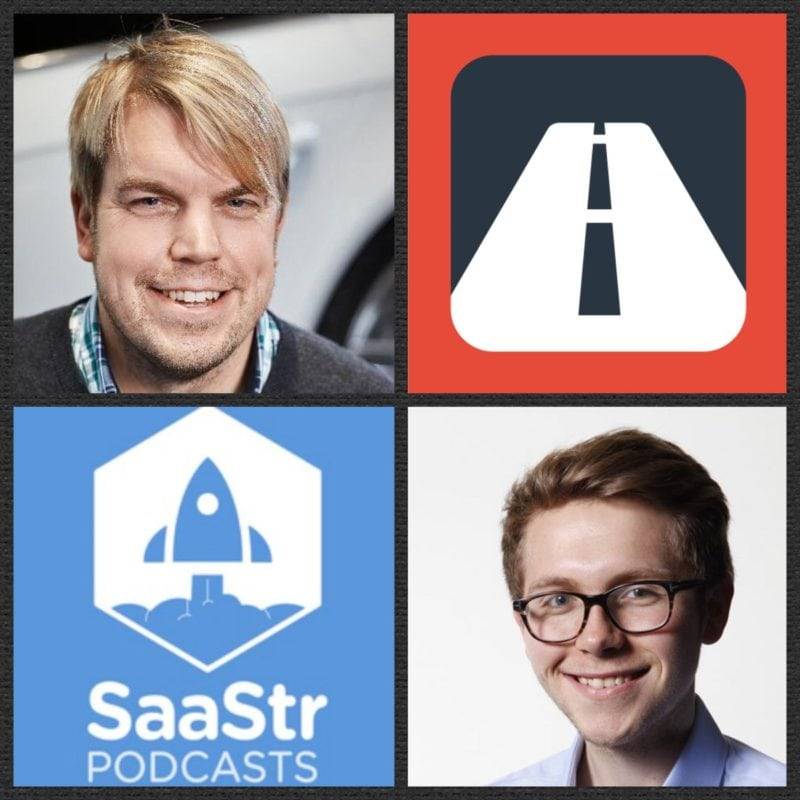
That is the question sitting at the heart of SaaStr Podcast #131: Jens Nylander, Founder and CEO @ Automile Shares The Secret To Selling To SMBs. In the episode, hosted by Harry Stebbings, Jens Nylander discusses how Automile approached one of the most attractive yet difficult markets in SaaS: small and medium-sized businesses that want value quickly, hate complexity, and have no patience for software that requires a PhD in dashboard archaeology.
Automile, founded in Stockholm and later operating across Europe and the United States, built a fleet and asset management platform designed to make mileage logging, GPS tracking, vehicle visibility, and reporting easier for businesses. Its product was especially relevant to companies managing vehicles, drivers, tools, equipment, or mobile teams. In other words, Automile did not sell “digital transformation.” It sold fewer headaches on Monday morning.
That distinction matters. SMB buyers are not typically shopping for abstract innovation. They want a solution that solves a painful problem, works quickly, and does not drain the week. Nylander’s approach reveals a broader lesson for SaaS founders: selling to SMBs is not about making a smaller version of an enterprise sales motion. It is about building a completely different machine.
Who Is Jens Nylander?
Jens Nylander is a Swedish serial entrepreneur known for building companies at the intersection of hardware, software, design, and practical customer needs. Before Automile, he was associated with consumer technology ventures, including music players and audio products. That background is important because Automile was not a classic spreadsheet-first SaaS company. It combined hardware, mobile software, data, and subscription-based fleet management into a product that needed to feel simple from the first interaction.
Nylander’s entrepreneurial style appears to favor speed, transparency, product usability, and operational discipline. Those themes show up clearly in the SaaStr conversation. He was not simply asking, “How do we close more SMB accounts?” The deeper question was, “How do we create a repeatable sales process that lets thousands of smaller customers buy, onboard, and succeed without the company collapsing under support costs?”
That is the real secret to SMB SaaS: the product, sales process, onboarding, pricing, support, and customer success model must all fit together. If one piece is too heavy, the whole machine starts wheezing like a delivery van that skipped maintenance.
What Automile Soldand Why It Worked for SMBs
Automile focused on fleet management, mileage logging, GPS tracking, driver visibility, vehicle reporting, and asset tracking. For many small businesses, these are not “nice-to-have” features. They affect taxes, reimbursements, productivity, fuel costs, safety, customer service, compliance, and time management.
A plumbing company, delivery service, construction firm, repair business, field sales team, or regional service provider may not have a large operations department. The owner or manager might be handling dispatch, payroll, customer calls, vehicle maintenance, and invoicing before lunch. If a SaaS product can remove manual mileage logs, automate trip records, help locate vehicles, flag idling, or produce reports without drama, the value is obvious.
Automile’s appeal came from turning a traditionally clunky operational problem into a cleaner experience. The company emphasized plug-and-play setup, mobile access, automated logging, and easy reporting. That is exactly the kind of promise SMBs respond to: “Use this and get your time back.” Not “schedule a six-week implementation workshop.” Not “contact professional services.” Just plug in, drive, and let the system do the boring work.
The Secret to Selling to SMBs: Reduce Friction Everywhere
The biggest lesson from the Automile story is that SMB sales success depends on friction reduction. Friction is anything that slows down a buyer, confuses a user, or forces your team to spend more time than the customer’s contract value can support.
For enterprise SaaS, a long sales cycle can still make financial sense if the annual contract value is large enough. For SMB SaaS, that same process can quietly destroy margins. You cannot assign five salespeople, two solution engineers, and one customer success manager to close a tiny monthly subscription. Well, you can, but your finance team may start making direct eye contact in meetings, which is never a good sign.
Automile’s model suggests a better path: make the product understandable, make the setup fast, make the sales conversation practical, and make onboarding as automated as possible. SMB buyers need confidence without complexity. They want to know what the product does, how much it costs, how soon it works, and whether it will create more work than it removes.
1. Build a Sales Process That Can Repeat
A repeatable SaaS sales process is not just a CRM pipeline with colorful stages. It is a system where the same type of buyer can be reached, educated, converted, onboarded, supported, retained, and expanded again and again.
For Automile, the repeatable process had to account for different types of fleet customers while keeping the buying journey simple. A small business owner does not want a philosophical debate about telematics. They want to know: Can I see where my vehicles are? Can I track trips automatically? Can I get reports? Will my drivers understand it? How quickly can we start?
The best SMB sales teams answer those questions early. They do not hide the practical stuff behind buzzwords. A strong SMB sales process usually includes a clear ideal customer profile, simple pricing logic, a focused demo, quick follow-up, easy activation, and measurable first value. If the buyer has to “circle back after internal alignment,” something has probably gone wrong. In many SMBs, internal alignment is one person named Dave who is also fixing the printer.
2. Optimize Onboarding Like Revenue Depends on ItBecause It Does
SMB churn is one of the toughest problems in SaaS. Smaller customers may close faster, but they can also cancel faster. Their budgets shift. Their teams change. Their needs evolve. Sometimes the business itself changes direction, gets acquired, downsizes, or simply forgets to update the credit card.
That is why onboarding is not an administrative detail. It is a revenue function. If customers do not see value quickly, they are more likely to disappear. For a product like Automile, onboarding had to make the first successful experience almost unavoidable: install the device, connect the account, see vehicle data, review trips, generate reports, and understand the value.
Strong SMB onboarding should be short, guided, and outcome-based. Instead of saying, “Here are 47 features,” the product should guide the user toward one or two meaningful wins. For Automile, that could mean logging the first trip automatically, seeing live vehicle movement, or creating a mileage report. Once the user sees the product working, belief increases. And belief is a very underrated SaaS metric.
3. Use Technology-Minded Sales Teams
One of the interesting themes in the podcast is Nylander’s preference for technology-minded sales teams. This does not mean every salesperson needs to be a software engineer who dreams in API documentation. It means the sales team should understand systems, process, automation, data, and product behavior.
In SMB SaaS, salespeople cannot rely only on charm. Charm is lovely, but it does not scale cleanly. A technology-minded sales team can identify patterns in objections, automate repetitive outreach, improve demo flows, report product friction, and work closely with engineering and marketing. They are not just closers. They are feedback sensors.
This is especially powerful for products that combine hardware and software. If a buyer asks whether the device works with different vehicle types, how data refreshes, what reports are available, or how alerts are configured, the salesperson must give clear, confident answers. SMB buyers may not be technical, but they can smell confusion. It smells like churn.
Why SMB Buyers Are Different From Enterprise Buyers
SMB buyers often make decisions faster because the buying committee is smaller. However, that does not mean they are easier. They are under pressure, short on time, and intensely practical. They may not care about your category narrative, your analyst ranking, or your 84-slide investor deck. They care about whether your product saves money, saves time, reduces risk, or helps them serve customers better.
The sales conversation should reflect that reality. Instead of leading with platform language, lead with pain. Instead of selling “fleet intelligence,” explain how automated mileage logs reduce manual admin. Instead of selling “operational visibility,” show how a manager can see where vehicles and assets are. Instead of selling “behavior analytics,” explain how speeding and idling alerts can support safety and cost control.
SMB sales messaging works best when it is specific. “Save time on mileage reports” beats “unlock productivity.” “Know where your vehicles are” beats “enable real-time mobility transformation.” The second version sounds like it was assembled in a conference room with too many sparkling waters.
Automile’s Broader SaaS Lesson: Product-Led Simplicity With Sales-Led Precision
Automile’s story sits in an interesting middle ground. It was not purely self-serve consumer software, but it also was not old-school enterprise software. The company needed a sales model that could educate and convert businesses while keeping acquisition and support costs under control.
That is one of the hardest motions in SaaS: sales-assisted SMB. The product has to be easy enough that customers can onboard quickly, but important enough that a human sales conversation may improve conversion. The salesperson’s job is not to drag the buyer through complexity. It is to remove uncertainty.
A great sales-assisted SMB motion usually has three layers. First, marketing explains the problem and attracts qualified buyers. Second, sales helps buyers understand the value and choose the right plan or configuration. Third, product and onboarding deliver the first win quickly. If those layers are aligned, the business can grow efficiently. If they are misaligned, everyone blames “lead quality,” which is the SaaS equivalent of blaming the weather.
Transparency as a Growth Tool
The SaaStr episode also touches on Nylander’s interest in transparency, including sharing figures publicly. Transparency can be powerful because it creates focus. When a founder openly communicates goals, metrics, progress, and challenges, the team often gets a clearer sense of what matters.
For a fast-growing SaaS company, transparency can also build trust with investors, employees, and customers. It signals confidence and accountability. However, transparency must be used carefully. Public numbers can attract attention, but they can also create pressure, invite comparison, or complicate fundraising and acquisition conversations.
The practical lesson is not “share everything all the time.” The lesson is to build a company where metrics matter, progress is visible, and teams understand how their work connects to the larger goal. In SMB SaaS, that might mean tracking activation rates, onboarding completion, time to first value, churn by customer segment, expansion revenue, support tickets per account, and sales cycle length.
How to Minimize Churn in SMB SaaS
Churn is the villain in the SMB SaaS movie. It wears a cape made of failed onboarding, weak product adoption, unclear ROI, and “we are not using it enough.” The best way to fight churn is not to send a desperate retention email after the customer has mentally canceled. It is to design the entire customer journey so cancellation feels unnecessary.
For SMB-focused SaaS companies, churn reduction starts before the sale. Sell to the right customers. Avoid overpromising. Make sure the buyer understands what the product does and what it does not do. A poor-fit customer may become revenue today, but tomorrow they become a support burden, then a cancellation, then a sad chart in the monthly board deck.
After the sale, the product must deliver value fast. Automile’s category is a good example because first value can be tangible: a logged trip, a location update, a report, an alert, or an automated record. The more visible the value, the easier it is for the customer to keep paying.
Customer success should also be scaled intelligently. SMBs usually cannot support a high-touch success model for every account, so companies need automated education, helpful product prompts, strong help centers, email sequences, usage alerts, and simple upgrade paths. The goal is not to ignore customers. The goal is to help them efficiently.
What Modern SaaS Founders Can Learn From SaaStr Podcast #131
Although the episode was recorded years ago, its lessons remain highly relevant. In fact, they may matter even more now. SaaS markets are more competitive. Buyers expect better user experiences. Small businesses have more software choices and less patience. AI tools, automation, and integrated workflows have raised expectations for speed and convenience.
Founders selling to SMBs should take away several core principles from Nylander’s Automile journey. First, simplicity is not a design preference; it is a business model. Second, onboarding is part of sales, not something that happens after the “real” work is done. Third, sales teams must understand product and process deeply. Fourth, churn is managed by delivering value quickly and repeatedly. Fifth, a scalable SMB sales motion depends on disciplined unit economics.
In other words, do not build a yacht and try to sell it like a bicycle. SMB SaaS requires its own go-to-market architecture.
Practical Examples: How the Automile Approach Applies Beyond Fleet Management
The Automile playbook applies to many SaaS categories beyond telematics. Consider payroll software for small restaurants. The buyer does not want “human capital optimization.” They want employees paid correctly and tax forms handled without panic. Consider scheduling software for local clinics. The buyer does not want a “patient engagement ecosystem.” They want fewer no-shows and fewer phone calls. Consider accounting automation for contractors. The buyer wants invoices sent, expenses tracked, and weekends returned to their rightful owner.
The pattern is the same: identify a painful recurring workflow, remove manual work, make setup easy, and prove value quickly. When selling to SMBs, the best product often feels less like software and more like a reliable assistant that never asks for a lunch break.
A SaaS company selling inventory management to small retailers might copy this approach by making the first product import simple, offering templates by industry, and showing low-stock alerts immediately. A field service platform might focus on dispatching the first job, sending the first customer notification, and generating the first invoice. A CRM for small agencies might guide users to add contacts, create a deal pipeline, and send a follow-up email within minutes.
In every case, the formula is similar: reduce friction, show value, automate the boring parts, and never make the customer feel like they accidentally enrolled in software boot camp.
Additional Experience-Based Insights: Selling to SMBs the Smart Way
From practical experience observing SaaS businesses, the biggest mistake companies make when selling to SMBs is assuming that “small business” means “simple business.” Many SMBs have messy workflows, urgent customer needs, thin margins, and deeply personal decision-making. The owner’s business may also be their family income, personal identity, and daily stress machine all rolled into one. That makes trust extremely important.
When selling to SMBs, your first job is to sound useful, not impressive. A small business buyer usually does not wake up thinking, “I need a scalable cloud-native platform.” They wake up thinking, “Why is this report wrong?” or “Where is truck number seven?” or “Why did payroll take three hours again?” The closer your message gets to that lived reality, the better your sales results become.
Another experience-based lesson is that SMB buyers reward clarity. Pricing should be understandable. Packages should be easy to compare. The next step should be obvious. If the buyer has to decode your pricing page like an ancient tablet, they may simply leave. Transparent pricing is not always possible in every category, but transparent value always is. Tell the buyer what problem you solve, what outcome they should expect, and how quickly they can get started.
Speed also matters. SMB sales teams should respond quickly, follow up clearly, and avoid dragging prospects into unnecessary steps. A delayed response can kill momentum because small business owners are constantly interrupted. If they are interested today, help them today. Tomorrow they may be dealing with a broken vehicle, a sick employee, a late customer payment, or a mysterious Wi-Fi outage that somehow becomes your competitor.
Onboarding should be treated like a guided first success, not a feature tour. The question should be: What is the first meaningful action the customer must complete to believe this product is worth paying for? For Automile-style fleet software, that could be seeing the first trip logged or the first vehicle appear on a live map. For other SaaS products, it might be sending the first invoice, launching the first campaign, creating the first schedule, or automating the first report.
Sales and product teams should also share feedback constantly. SMB prospects are excellent at revealing friction because they do not politely tolerate confusion for long. If five prospects ask the same setup question, that is not just a sales objection. It is a product opportunity. If customers keep canceling after failing to complete onboarding, that is not just a customer success problem. It is a funnel design problem.
Finally, SMB SaaS companies need emotional intelligence. Many small business owners are skeptical because they have been burned by tools that promised simplicity and delivered admin confetti. A good salesperson acknowledges that reality. Instead of pushing harder, they make the next step safer. Offer a simple demo, a clear implementation path, proof from similar customers, and a fast route to value. The best SMB sales motion feels less like being sold to and more like being helped by someone who actually understands the job.
Conclusion: The Real Secret Is Designing the Whole Company Around the SMB Buyer
SaaStr Podcast #131 with Jens Nylander is not just a conversation about Automile. It is a useful case study in how SaaS companies can win SMB customers without drowning in complexity. The secret is not one magic email template, one heroic salesperson, or one clever pricing trick. The secret is alignment.
Your product must be simple enough to adopt. Your sales process must be efficient enough to scale. Your onboarding must prove value fast. Your customer success model must reduce churn without requiring enterprise-level hand-holding. Your messaging must speak to real business pain, not abstract software poetry.
Automile’s rise in fleet management shows how powerful that approach can be. By focusing on practical value, automation, usability, and repeatable sales infrastructure, the company built a model that appealed to businesses needing visibility and control without unnecessary complexity.
For SaaS founders, marketers, and sales leaders, the lesson is clear: if you want to sell to SMBs, respect their time, solve a real problem, make the product easy, and show value quickly. Do that well, and your customers may not just buy. They may actually stick aroundwhich, in SaaS, is where the real fun begins.














