
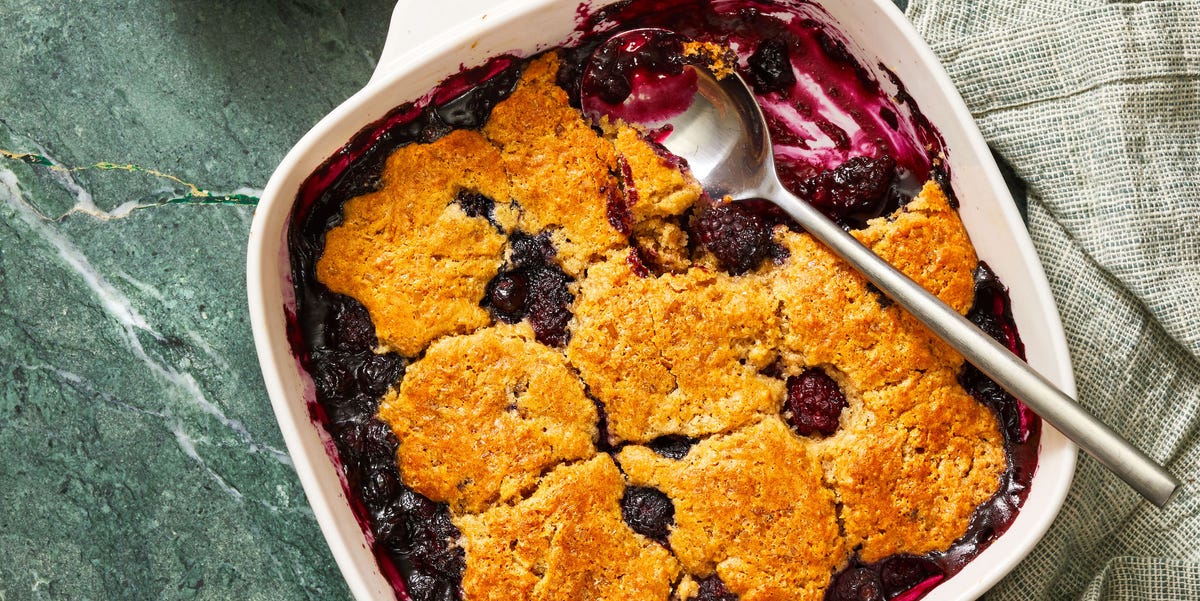
A bubbling pan of mixed berry cobbler is what happens when a fruit pie decides it no longer has the patience for rolling pins, crimped edges, or perfection. Juicy blueberries, blackberries, raspberries, and strawberries bake beneath tender buttermilk biscuits until the filling becomes glossy, jammy, and dramatically purple. Add vanilla ice cream, and suddenly everyone has room for dessert.
This easy mixed berry cobbler recipe balances sweet fruit, bright lemon, and a golden biscuit topping that is crisp around the edges and fluffy inside. It works with fresh or frozen berries, requires no fancy equipment, and looks charming even when the topping is gloriously uneven. In fact, uneven is encouraged. Cobbler is rustic dessert wearing its messiness like a medal.
Why This Is the Best Mixed Berry Cobbler Recipe
A good berry cobbler should taste primarily of berries, not sugar or uncooked starch. The filling should be thick enough to spoon but loose enough to mingle with melting ice cream. Its topping should be browned on top, tender underneath, and sturdy enough to absorb berry juice without becoming a damp kitchen sponge.
This recipe achieves that balance with a few simple decisions:
- Six generous cups of mixed berries create a fruit-forward dessert.
- Cornstarch thickens the juices without making the filling heavy.
- Lemon juice and zest sharpen the natural berry flavors.
- Cold butter and buttermilk produce a tender biscuit topping.
- Small gaps between the biscuits allow steam to escape and reveal when the filling is bubbling.
- Coarse sugar gives the top a delicate crunch and bakery-style sparkle.
The result is an old-fashioned mixed berry cobbler that feels familiar without being bland, sweet without being cloying, and impressive without requiring an emergency call to a pastry chef.
Mixed Berry Cobbler Recipe at a Glance
- Prep time: 25 minutes
- Baking time: 40 to 50 minutes
- Cooling time: 20 to 30 minutes
- Total time: About 1 hour 40 minutes
- Yield: 8 generous servings
- Baking dish: 9-by-13-inch or 3-quart baking dish
- Oven temperature: 375°F
Ingredients for Mixed Berry Cobbler
“`
For the Mixed Berry Filling
- 2 cups blueberries
- 1 1/2 cups blackberries
- 1 1/2 cups raspberries
- 1 cup hulled and quartered strawberries
- 1/2 cup granulated sugar, plus more if the berries are especially tart
- 3 tablespoons cornstarch
- 1 tablespoon fresh lemon juice
- 1 teaspoon finely grated lemon zest
- 1 teaspoon pure vanilla extract
- 1/4 teaspoon fine salt
For the Buttermilk Biscuit Topping
- 2 cups all-purpose flour
- 1/3 cup granulated sugar
- 2 teaspoons baking powder
- 1/2 teaspoon baking soda
- 1/2 teaspoon fine salt
- 8 tablespoons unsalted butter, very cold and cut into small cubes
- 3/4 cup cold buttermilk, plus 1 to 2 tablespoons if needed
- 1 teaspoon pure vanilla extract
- 1 tablespoon heavy cream or buttermilk, for brushing
- 1 tablespoon coarse or turbinado sugar, for sprinkling
For Serving
- Vanilla ice cream, lightly sweetened whipped cream, or crème fraîche
“`
How to Make Mixed Berry Cobbler
“`
Step 1: Prepare the Oven and Baking Dish
Preheat the oven to 375°F. Lightly butter a 9-by-13-inch baking dish or another shallow 3-quart baking dish. Place it on a rimmed baking sheet lined with foil or parchment paper. Berry filling has a talent for bubbling over precisely when you have recently cleaned the oven.
Step 2: Mix the Berry Filling
Place the blueberries, blackberries, raspberries, and strawberries in a large bowl. In a separate small bowl, whisk the sugar and cornstarch together. Mixing these two dry ingredients first helps prevent the cornstarch from forming small white clumps in the filling.
Sprinkle the sugar mixture over the berries. Add the lemon juice, lemon zest, vanilla, and salt. Fold gently until the fruit is evenly coated. Avoid aggressive stirring, particularly with raspberries, unless your goal is berry soup before the baking has even begun.
Let the mixture stand for about 10 minutes while you prepare the topping. Transfer the berries and all accumulated juices to the prepared baking dish.
Step 3: Make the Biscuit Topping
Whisk the flour, sugar, baking powder, baking soda, and salt in a medium bowl. Add the cold butter. Use a pastry cutter, two forks, or your fingertips to work it into the flour until the mixture contains mostly pea-size pieces with a few slightly larger flakes.
Pour in the cold buttermilk and vanilla. Stir gently with a fork just until a shaggy dough forms. Stop as soon as the dry flour is mostly incorporated. The dough should be soft and slightly sticky, not smooth or elastic.
If the mixture seems unusually dry, add another tablespoon of buttermilk. Flour absorbs liquid differently depending on the brand, humidity, and whether someone enthusiastically packed it into the measuring cup.
Step 4: Top the Cobbler
Drop approximately 10 to 12 spoonfuls of biscuit dough over the berry filling. Leave small openings between the portions so heat can circulate and steam can escape. Those gaps will also give you a clear view of the bubbling filling later.
Lightly brush the biscuits with cream or buttermilk. Sprinkle the coarse sugar evenly over the top.
Step 5: Bake Until Golden and Bubbling
Bake for 40 to 50 minutes. The biscuits should be deeply golden, and the berry filling should bubble actively around the edges and through the openings near the center.
If the biscuits brown too quickly before the center bubbles, loosely cover the dish with foil and continue baking. Do not remove the cobbler simply because the top looks finished. The filling needs enough oven time for the cornstarch to thicken the fruit juices properly.
Step 6: Let the Cobbler Rest
Transfer the dish to a wire rack and cool for at least 20 to 30 minutes. Fresh-from-the-oven berry filling has roughly the temperature and temperament of lava. Resting also allows the juices to thicken, producing neat spoonfuls rather than a berry flood.
Serve the cobbler warm with vanilla ice cream, whipped cream, or a spoonful of tangy crème fraîche.
“`
Can You Use Frozen Berries?
Yes. Frozen fruit makes this an easy year-round mixed berry cobbler rather than a dessert limited to a few summer weekends. Use six cups of frozen mixed berries in the same general proportions as the fresh fruit.
For the most predictable texture, place the frozen berries in a colander and let them thaw until they are still cold but no longer icy. Drain excess liquid without pressing on the fruit. Then prepare the filling as directed.
You may also bake the berries from frozen. Increase the cornstarch to 4 tablespoons and expect the cobbler to need approximately 10 additional minutes in the oven. Watch for bubbling in the center instead of relying entirely on the clock.
Frozen strawberries are often much larger than the other fruit. Cut or break them into smaller pieces so they cook at the same rate as the blueberries and raspberries.
How to Choose the Best Berry Combination
The ideal mix combines berries that hold their shape with berries that collapse into a flavorful sauce.
- Blueberries remain relatively plump and add deep sweetness.
- Blackberries provide bold flavor and a wine-colored juice.
- Raspberries soften quickly and create a fragrant, jammy filling.
- Strawberries bring familiar sweetness and a softer texture.
The exact proportions are flexible. Replace one berry with another as long as the total remains close to six cups. If using mostly strawberries, cut them into small pieces and add an extra teaspoon of cornstarch because they can release considerable juice.
Taste the fruit before adding the sugar. Very ripe summer berries may need only one-third cup. Tart off-season fruit may need closer to two-thirds cup. The filling should taste slightly sweeter than you ultimately want because the unsweetened portions of the biscuit topping will balance it.
Tips for a Golden, Tender Cobbler Topping
“`
Keep the Butter Cold
Cold butter leaves small pockets in the dough. As those pieces melt in the oven, they contribute to a lighter, more tender biscuit. If the kitchen is hot or the dough feels greasy, refrigerate it for 10 minutes before topping the fruit.
Do Not Overmix the Dough
Stirring biscuit dough vigorously develops gluten and can produce a tough topping. Mix only until the ingredients come together. A shaggy dough is not a problem; it is a promising sign.
Use Small Portions
Very large mounds of dough may brown outside while remaining underbaked near the fruit. Ten to twelve smaller biscuits cook more evenly and create extra crisp edges, which are the pieces people casually hover near while pretending to help serve.
Brush and Sprinkle Before Baking
A light coating of cream or buttermilk encourages browning. Coarse sugar creates a crisp finish that contrasts beautifully with the soft fruit beneath it.
“`
Common Mixed Berry Cobbler Problems
“`
Why Is My Cobbler Runny?
The most common causes are insufficient thickener, extremely juicy fruit, removing the cobbler before the center bubbles, or serving it immediately. Use the full amount of cornstarch, bake until the middle is visibly active, and allow at least 20 minutes of cooling.
Why Is the Topping Doughy?
The biscuit portions may have been too large or packed too closely together. Leave gaps and use modest spoonfuls. A ceramic dish may also take slightly longer to heat than a metal pan.
Why Did the Filling Taste Too Sweet?
Berry sweetness varies dramatically. Taste before measuring the sugar, and remember that ice cream adds another layer of sweetness. Lemon juice and a small pinch of salt help balance the filling but cannot entirely rescue berries buried beneath a sugar avalanche.
Why Did the Cobbler Overflow?
The dish may have been too shallow or filled too close to the rim. Use a 3-quart dish and place it on a rimmed sheet pan. This will not prevent enthusiastic bubbling, but it will prevent an oven-cleaning subplot.
“`
Flavor Variations
- Orange berry cobbler: Replace the lemon zest with orange zest.
- Almond berry cobbler: Replace half the vanilla in the filling with almond extract.
- Spiced cobbler: Add 1/2 teaspoon cinnamon and a small pinch of cardamom.
- Peach and berry cobbler: Replace two cups of berries with peeled, sliced peaches.
- Whole-grain topping: Replace 1/2 cup of the all-purpose flour with white whole-wheat flour.
- Extra-crunchy topping: Sprinkle sliced almonds over the biscuits with the coarse sugar.
How to Store and Reheat Mixed Berry Cobbler
Allow the cobbler to cool completely before covering it. Refrigerate leftovers in the baking dish or an airtight container for up to four days.
For the best topping texture, reheat individual servings in a 350°F oven or toaster oven for approximately 10 minutes. A microwave is faster, but it softens the biscuits. That may be perfectly acceptable at 11:30 p.m., when culinary dignity is no longer the main objective.
To freeze the baked cobbler, cool it completely, wrap it securely, and freeze for up to two months. Thaw overnight in the refrigerator and reheat, uncovered, at 350°F until warm. The fruit will remain delicious, although the topping may be slightly softer than it was on baking day.
Make-Ahead Instructions
The berry filling can be mixed and refrigerated for up to four hours. The dry ingredients for the biscuit topping can also be combined in advance. Keep the butter and buttermilk refrigerated, then finish and assemble the topping immediately before baking.
Do not place unbaked biscuit dough over the berries and refrigerate the assembled cobbler for hours. The topping can absorb fruit juice and lose some of its lift. Cobbler is relaxed, but even relaxed desserts have boundaries.
My Experience Making Mixed Berry Cobbler
The first time I made a mixed berry cobbler, I treated the ingredient list as an overly cautious suggestion. I added extra berries, reduced the cornstarch, and pulled the dish from the oven as soon as the biscuits looked brown. The result tasted wonderful but had the structural integrity of berry-scented soup. Vanilla ice cream covered many sins, but it could not turn the serving spoon into a flotation device.
That attempt taught me that the bubbling center is the real signal of doneness. The edges begin boiling well before the center becomes hot enough to thicken. Now I look through the gaps in the topping and wait for slow, glossy bubbles near the middle. Once those appear, I know the filling will settle into a sauce rather than remain a brightly colored beverage.
I also learned not to chase perfectly shaped biscuits. Early versions involved rolling the dough, cutting identical rounds, and arranging them with the intensity of someone setting gemstones. They looked impressive before baking, but the extra handling made them firmer than I wanted. Rough spoonfuls produced a lighter texture, more browned ridges, and far less flour on the counter. The cobbler also looked more inviting, as if it had been baked for dessert rather than submitted for architectural review.
Fresh berries deliver the most distinct textures. Blueberries stay plump, blackberries become juicy, and raspberries almost disappear into the sauce. However, frozen mixed berries have saved this recipe many times, especially when dessert was requested after dinner had already started. Frozen fruit is economical, consistently available, and already washed. The only trick is managing the extra liquid and accepting a slightly longer baking time.
My favorite mixture contains plenty of blueberries and blackberries, with smaller amounts of raspberries and strawberries. Too many raspberries can make the filling seedier and softer, while too many strawberries can produce more liquid than expected. The four-berry combination gives every spoonful a slightly different personality.
Serving temperature matters more than I initially expected. Straight from the oven, the cobbler is dangerously hot and frustratingly loose. After about 25 minutes, the juices thicken, the biscuit topping remains warm, and the ice cream melts slowly instead of vanishing instantly into a dairy puddle. This waiting period is difficult because the kitchen smells like butter, berries, and excellent decision-making.
I have served this mixed berry cobbler at summer cookouts, casual family dinners, and one gathering where I confidently claimed it would feed ten people. It technically did, assuming “feeding” means everyone received three emotional spoonfuls. For eight dessert-loving adults, the stated yield is far more realistic.
The biggest lesson is that cobbler rewards restraint. Do not oversweeten ripe fruit. Do not overwork the dough. Do not cover every inch of the filling. Do not remove the dish before the center bubbles. Follow those four rules, and the recipe is remarkably forgiving. Even imperfect cobbler is still warm fruit beneath buttery biscuits, which places it comfortably above many supposedly perfect desserts.
Final Thoughts
The best mixed berry cobbler does not require pie dough, complicated decorating, or a collection of specialty tools. It needs flavorful fruit, enough thickener to manage the juices, a gently mixed biscuit topping, and enough baking time for everything to become golden and bubbling.
Use ripe fresh berries in summer or frozen fruit when the weather refuses to cooperate. Adjust the sugar to the fruit, keep the butter cold, and let the finished cobbler rest before serving. Then add a scoop of vanilla ice cream and enjoy the small miracle of a dessert that looks rustic, tastes luxurious, and leaves only one serious question: who gets the last corner biscuit?














