
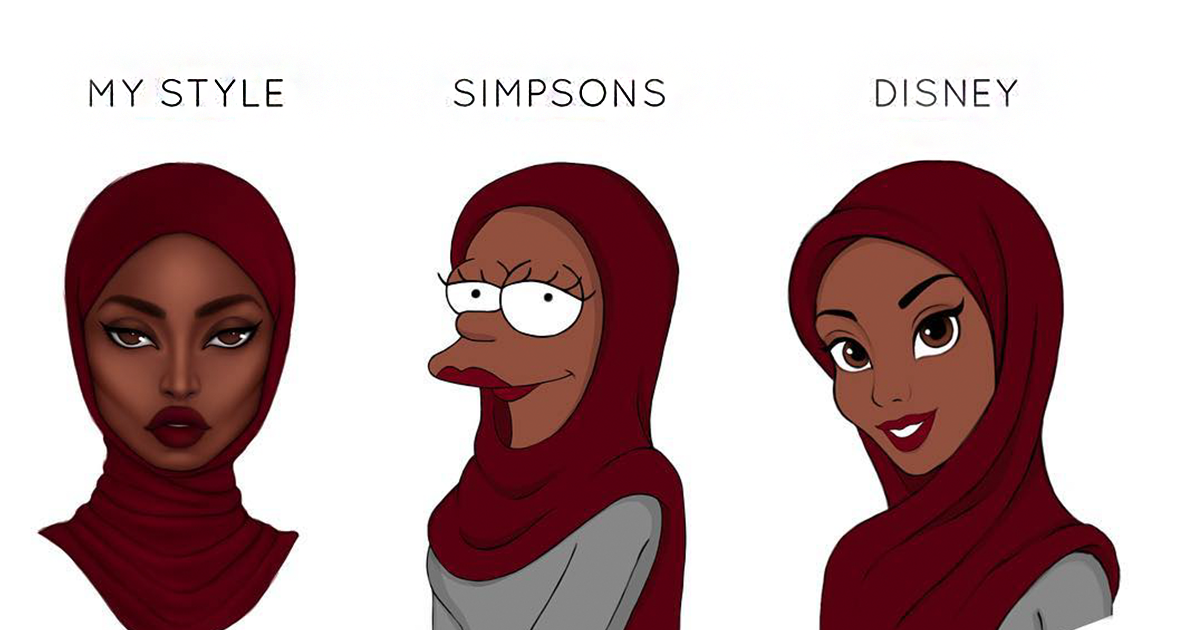
There are internet challenges that ask people to dump ice water on their heads, balance household objects on pets, or dance in hallways where somebody is guaranteed to collide with a laundry basket. Then there is the cartoon style challenge: one character, several visual universes, and no emergency room paperwork.
The concept is wonderfully simple. An artist draws the same person or original character in a series of recognizable cartoon styles. The hairstyle, clothing, attitude, and identity remain familiar, while the proportions, line work, facial features, color choices, and overall design language change from panel to panel. One moment the character has the clean geometric simplicity of a television comedy; the next, enormous anime eyes; after that, a dramatic gothic silhouette that appears to have survived three thunderstorms and a poetry recital.
What looks like a playful social media trend is also a compact master class in character design. The challenge reveals how visual style works, why some animated worlds are recognizable in seconds, and how much skill it takes to translate a character without losing the person underneath.
How the Cartoon Style Challenge Began
The viral #StyleChallenge gained momentum on Instagram in 2016 after a 17-year-old artist named Autumn Massaquoi, known online at the time as beautifulness87, shared a grid of herself reimagined through several popular animation styles. Other illustrators quickly joined in, posting self-portraits and original characters interpreted through the visual languages of familiar shows, movies, comics, and games.
The timing was perfect. Instagram favored square images, and the challenge naturally produced a tidy comparison grid. Viewers did not need a long explanation. They could scan the panels and immediately understand the joke, the skill, and the transformation. It was artistic fluency displayed like a contact sheet.
One Subject, Many Visual Grammars
The rules were loose, which helped the trend spread. Artists could choose any subject and any number of styles. Common inspirations included the flat shapes of South Park, the yellow-skinned world of The Simpsons, the rounded minimalism of Adventure Time, the tiny bodies and giant eyes associated with The Powerpuff Girls, polished feature-animation aesthetics, manga-inspired designs, and the elongated gothic look popularly associated with Tim Burton productions.
The strongest entries did more than add a famous hairstyle or change the eye shape. They rebuilt the character according to the rules of each visual universe. That distinction separates a clever costume change from genuine style analysis.
Why the Results Are So Satisfying
The Character Remains Recognizable
The central pleasure comes from continuity. Even when the nose disappears, the head becomes a circle, or the body shrinks to the approximate dimensions of a decorative spoon, the character still feels like the same individual. Artists preserve identifying anchors such as hair texture, glasses, clothing colors, posture, accessories, or a signature expression.
This creates a visual puzzle for the viewer: What can change before identity breaks? A successful drawing answers by changing almost everything except the most meaningful traits.
Audiences Recognize Style Faster Than They Realize
Most people cannot deliver a lecture on shape language before breakfast. Yet they can identify many cartoon worlds almost instantly. They recognize the thick outlines, simplified hands, eye placement, color palette, facial construction, and typical expressions associated with a particular production.
The challenge turns that unconscious knowledge into a game. Viewers experience the tiny thrill of recognition: “That is definitely a Saturday-morning cartoon face,” or, “Those eyes have seen at least six seasons of supernatural drama.” The comparison format makes subtle design systems obvious.
What Artists Learn From Drawing One Character in Different Styles
Recreating a character across multiple cartoon styles is not merely copying. Done thoughtfully, it is analytical drawing. The artist must reverse-engineer the choices that make an established style coherent and then apply those choices to new subject matter.
Shape Language Becomes Visible
Cartoon design often begins with basic shapes. Circles can suggest friendliness or softness. Squares may feel sturdy, dependable, or rigid. Triangles can introduce speed, danger, elegance, or tension. Professional animation programs and design courses emphasize color, shape, silhouette, storytelling, and character performance because these elements communicate before dialogue begins.
During the challenge, an artist may discover that one show builds faces from soft ovals while another favors boxy jaws and angular torsos. Repeating the same subject makes those differences impossible to ignore.
Line Weight Changes the Mood
A thick, even outline creates a different emotional effect from a nervous pencil line or a tapered ink stroke. Some styles use nearly uniform contours, while others rely on varied line weight to suggest depth, energy, or shadow. A character can appear playful, elegant, chaotic, or ominous before color is added.
Proportion Is Storytelling
Cartoons do not distort anatomy randomly. Large eyes can emphasize innocence or emotional readability. A broad chest and tiny legs can communicate confidence or comic absurdity. An oversized head may make a character feel youthful, while long limbs can suggest awkwardness, grace, or menace.
The style challenge teaches artists to ask a useful question: “What is this design trying to communicate?” That is more valuable than simply asking, “How do I make it look similar?”
Simplification Is Harder Than It Looks
Detailed rendering can hide weak design. Minimal cartoons offer no such mercy. When a style uses only a few lines and flat colors, every mark must work. Remove too much and the character becomes generic. Keep too much and the drawing no longer belongs in the chosen visual world.
This is why a deceptively simple panel can take longer than a polished illustration. The artist is editing, not merely drawing. As every writer eventually learns, deleting the wrong thing is easy; deleting exactly the right thing is craft.
How to Try the Different Cartoon Styles Challenge
1. Choose a Subject With Recognizable Anchors
Use a self-portrait, an original character, or a friend who has given permission. Pick three to five features that must survive every transformation. These could include a curly hairstyle, round glasses, a red jacket, freckles, a hearing aid, a favorite necklace, or a permanently skeptical eyebrow.
2. Study the Style as a Complete System
Collect several references from the same production rather than copying one famous character. Examine adults, children, heroes, background characters, and different body types. Notice how the style handles noses, ears, hair, hands, clothing folds, shadows, and expressions.
This prevents a common mistake: drawing your subject as one existing character wearing a new wig. A visual universe usually contains more design variety than its mascot suggests.
3. Start With Tiny Silhouettes
Before drawing eyelashes or jacket zippers, reduce the design to a small black shape. Is the pose readable? Does the head-to-body ratio fit the target style? Would the character be identifiable without facial details? Animation designers frequently stress the storytelling power of silhouette because clear shapes communicate quickly.
4. Rebuild Instead of Tracing
Tracing may produce a close outline, but it skips the learning. Construct the head, place the features, and make decisions from observation. The goal is to understand the visual logic well enough to create a new image, not to perform digital archaeology over somebody else’s drawing.
5. Keep the Presentation Consistent
Use the same pose, crop, or background across panels when possible. Consistency makes the stylistic differences easier to compare. A grid also gives the final artwork the pleasing “collect them all” quality that made the original challenge so shareable.
Why the Challenge Became More Than a Trend
The cartoon style challenge provided a rare combination of accessibility and difficulty. Beginners could participate with three panels and a pencil. Experienced illustrators could turn the prompt into a 20-style marathon involving animation history, comic art, games, and international influences.
It also gave underrepresented artists an opportunity to place themselves inside visual worlds that had not always reflected them. Many popular entries featured Black artists preserving natural hair, skin tone, facial identity, and personal fashion while moving through familiar cartoon aesthetics. The result was not only technical practice; it was a form of imaginative visibility. The message was simple and powerful: This character belongs in every universe.
Later participants pushed the idea further. Artist Sam Skinner, for example, became widely known for an ambitious collection that reimagined herself in 50 cartoon styles. Other creators adapted the format into “draw this in your style,” redraw challenges, fan-art grids, and character-design exercises. The original trend became part of a larger online culture in which artists learn publicly and audiences watch the process.
Homage, Originality, and Respect
Style studies work best when they are clearly presented as educational homage. Artists should name the productions that inspired each panel, credit original creators when appropriate, and avoid presenting derivative experiments as official artwork. Using an original character also reduces confusion and keeps the focus on translation rather than duplication.
In the United States, copyright protects original artistic expression, while abstract ideas, concepts, and methods are treated differently. That does not mean every use of a recognizable cartoon character or copied image is automatically safe. Specific characters, drawings, logos, and commercial uses can raise separate legal concerns.
For a casual challenge, the sensible approach is straightforward: create new drawings, do not trace or repost another artist’s work, label the piece as a study or tribute, and avoid selling images that lean heavily on protected characters or branding without permission.
A Studio Experience: What the Challenge Actually Feels Like
A realistic attempt usually begins with unreasonable confidence. The artist opens a fresh canvas, draws a neat grid, and thinks, “Eight styles? That is basically eight small drawings.” This optimism survives for approximately eleven minutes.
The first panel, drawn in the artist’s natural style, feels comfortable. The familiar shortcuts work. The eyes land where expected, the hair behaves, and the hand holding the stylus does not question its life choices. Then the second panel begins.
Suddenly, every habit becomes visible. An artist who always draws pointed chins notices the target show uses round jaws. Someone who loves detailed irises discovers the chosen cartoon represents eyes with two dots and the emotional range of a pair of very judgmental blueberries. The temptation is to keep personal habits and add a few surface decorations, but the result looks less like a style translation and more like the original character attending a themed birthday party.
The breakthrough comes from slowing down. Instead of asking how to copy the finished image, the artist studies how that visual world solves problems. How are curls simplified? Does the nose exist from the front? Are shoulders narrow or broad? Do characters have five fingers, four fingers, mitten hands, or mysterious noodle appendages that should not be examined by medical science?
By the third or fourth panel, the exercise becomes strangely liberating. A style that first seemed restrictive offers new solutions. The artist may discover that flat color creates stronger clarity than elaborate shading, or that an exaggerated silhouette carries more personality than carefully rendered anatomy. A character who felt ordinary in one panel becomes hilarious in another and unexpectedly heroic in the next.
There is also a humbling stage. Certain styles look easy because professionals have already solved thousands of design decisions. Reproducing that simplicity exposes every weak choice. A minimal face with misplaced eyes can feel more wrong than a complex portrait with imperfect shading. The artist learns that “simple” is not the opposite of sophisticated. Often, it is sophistication after the clutter has been removed.
Fatigue arrives near the final row. File layers multiply. Naming conventions collapse from “Panel_Anime_Final” to “Panel_Anime_Final2_REAL.” The artist briefly considers declaring three nearly identical sketches to be separate movements in contemporary animation. Yet the grid begins to generate momentum. Each completed panel makes the next one more interesting because comparison is the real artwork.
When the challenge is finished, the most valuable result may not be the image that receives the most likes. It is the list of discoveries left behind. Perhaps the artist learns to vary facial proportions, simplify textured hair without erasing its identity, design clearer silhouettes, or use color more intentionally. Perhaps one borrowed technique becomes part of a new personal vocabulary.
That is the quiet magic of the exercise. Trying on other visual languages does not have to erase an artist’s voice. It can reveal which choices were genuine preferences and which were merely habits. After visiting several cartoon universes, the artist returns home with better luggage.
Conclusion: One Character, Countless Possibilities
The cartoon style challenge became popular because it is immediately fun to view, but it endures because it teaches serious lessons. It shows that style is not a decorative filter placed on top of a drawing. Style is a network of decisions involving shape, proportion, line, color, movement, expression, and storytelling.
For viewers, the finished grids are delightful tours through animation culture. For artists, they are laboratories. Each panel asks how identity can remain stable while visual rules change completely. The best answers are funny, technically impressive, personal, and sometimes unexpectedly moving.
So choose a character, divide the canvas, and begin. The first version may look polished. The second may look like it escaped from an off-brand cereal box. Keep going. Somewhere between the giant eyes, geometric heads, noodle arms, and dramatic shadows, a stronger artistic voice is waiting to introduce itself.
Note: This article discusses style studies as creative practice and educational homage. Artists should use original drawings, credit inspirations, respect creators’ rights, and seek professional legal guidance for commercial projects involving protected characters or branding.














