
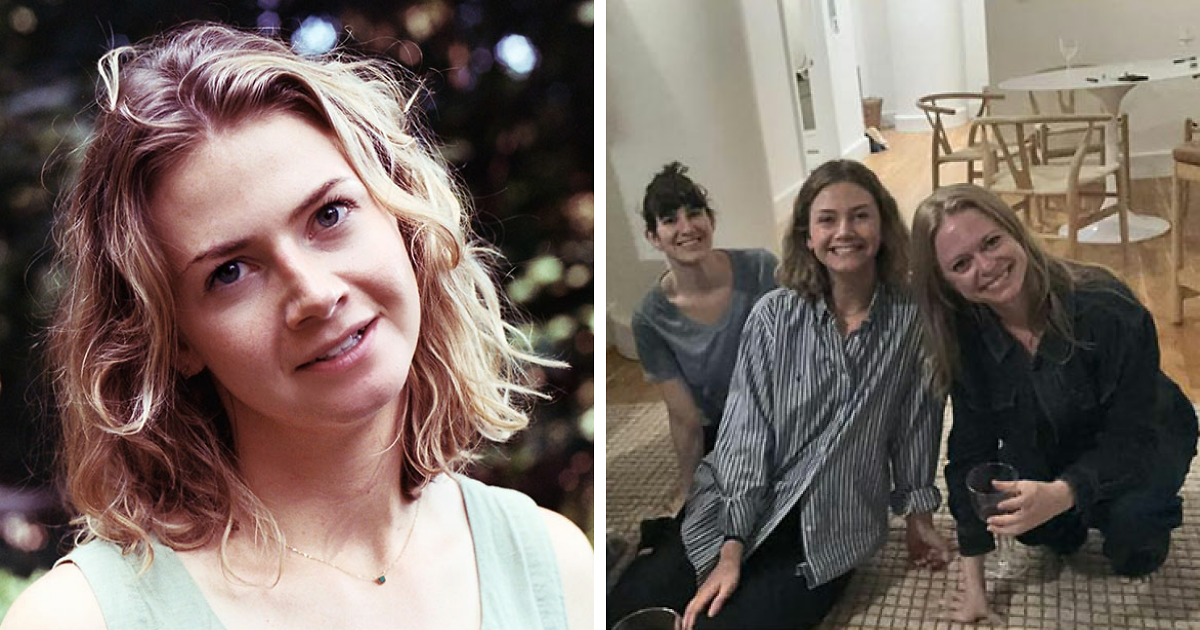
A neighborhood dice game is not supposed to require a United Nations briefing, a sociology seminar, and a bag of emotional-support pretzels. Yet a Brooklyn Bunco Club invitation did exactly that when it triggered an online debate about race, belonging, gentrification, and whether women of color would feel welcome in a mostly white social space.
The controversy began after a Brooklyn midwife reportedly invited local women to join a monthly Bunco game night in Bedford-Stuyvesant. The invitation included a photo of previous attendees who appeared to be white, and some community members reacted strongly. Critics argued that the image and wording felt out of touch in a historically Black neighborhood. Others thought the response turned a harmless dice game into a wildly overcooked internet casserole.
How a Bunco Club Became a Bigger Conversation
Bunco is a low-stakes dice game built for snacks, laughter, score sheets, and the occasional accusation that someone has suspiciously lucky wrists. It is generally played as a social activity, not as a political statement. But social gatherings do not float above their surroundings like balloons at a toddler’s birthday party. They carry context.
In this case, the context was Bed-Stuy, a neighborhood with deep Black cultural, political, and family roots. A social invitation featuring a visibly homogeneous group can land differently there than it might in a newly built suburban development where every third house has the same gray siding and a “Live, Laugh, Lease” sign in the window.
Online critics focused on what the image communicated. They did not see a simple invitation to roll dice. They saw a private gathering led by a newcomer, promoted in a historically Black neighborhood, with no visible evidence that Black, Latina, Asian, Indigenous, or other women of color were already part of the group.
That does not automatically make the event discriminatory. A photograph captures one moment, not a complete social history. Still, perception matters because people decide whether to enter a room before they ever hear the host say, “Everyone is welcome.”
What “Safety” Means in a Social Setting
When people said that nonwhite women might not feel safe attending the club, they were not necessarily claiming that the organizer posed a physical threat. In everyday community conversations, safety can also mean social safety: the sense that you will not be mocked, tokenized, ignored, treated as an outsider, or expected to explain your identity over cheese cubes and boxed rosé.
For many women of color, that instinct is shaped by experience. Being the only Black woman, Asian woman, Latina woman, Native woman, or immigrant in a private gathering can create pressure that other guests may not notice. Who will understand a joke? Who will question a biased comment? Who will assume you are the nanny, the coworker, or the person who “must know someone here”?
None of those outcomes were proven to be likely at this specific Bunco night. But community members were responding to a familiar pattern: a supposedly open space that looks welcoming only to people who already resemble the host’s existing circle.
That distinction matters. Calling every uncomfortable room “dangerous” can flatten serious conversations about real harm. At the same time, dismissing discomfort as oversensitivity ignores how exclusion often works in practice. It rarely arrives wearing a villain cape. More often, it shows up as a room where everyone already knows the rules except you.
Why Bed-Stuy’s History Changed the Reading of the Invitation
Bedford-Stuyvesant has long been identified with Black New York life, including generations of homeowners, tenants, artists, entrepreneurs, churches, activists, and families. In recent decades, rising rents, redevelopment, and demographic change have made gentrification a constant topic of local debate.
That backdrop helps explain why a casual social post received such intense scrutiny. To some residents, a new all-white friend group seeking members in Bed-Stuy can symbolize more than a game night. It can feel like another small sign that the neighborhood is changing around them without their voice, culture, or history being treated as central.
To others, the backlash seemed unfair because newcomers are allowed to make friends, host events, and become part of a neighborhood. That is also true. A city cannot function if every block becomes a social border checkpoint guarded by a clipboard and a suspicious auntie.
The difficult part is holding both truths at once: newcomers deserve opportunities to build community, and longtime residents deserve not to feel erased in the community they built.
Why the Midwife Detail Made the Debate More Intense
The organizer’s reported profession added another layer to the reaction. Midwives work in a field where trust, listening, consent, communication, and cultural awareness are not optional accessories. They are closer to the engine than the cup holders.
That matters because maternal health inequities are not abstract. In 2024, the U.S. maternal mortality rate for Black women was 44.8 deaths per 100,000 live births, compared with 14.2 for white women. Those differences are linked to many factors, including unequal access to care, chronic stress, bias, discrimination, economic barriers, and differences in how symptoms and concerns are heard or dismissed.
Professional organizations and public-health agencies increasingly emphasize respectful maternity care, anti-bias work, community-based doulas, and stronger partnerships with Black-led birth organizations. The goal is not to suggest that every individual clinician is personally responsible for structural inequality. It is to recognize that people working in maternity care hold a special responsibility to understand why trust may be fragile.
So when commenters saw a midwife promoting a social group that appeared racially narrow, some interpreted the optics through the lens of medical mistrust. That may be uncomfortable for the organizer, but it is not irrational for communities that have spent generations asking to be believed, heard, and treated with dignity.
What Critics Got Right and Where the Internet Went Too Far
The critics had a fair question: would women of color realistically feel welcome at a private gathering where the promotional image showed only white participants? That is a reasonable conversation about inclusion, especially in a neighborhood with Bed-Stuy’s history.
But the internet has a bad habit of treating every awkward social situation like a courtroom drama, a reality-show reunion, and a hostage negotiation all at once. The available facts do not prove malicious intent. They do not prove a discriminatory membership policy. They do not prove that the organizer wanted to exclude Black residents.
A better response would have focused on impact rather than assigning a full psychological profile to a stranger. Instead of declaring that a Bunco Club was proof of colonial behavior, critics could have said: “Your post may be read as exclusionary. Here is why. Here is how you could make it more welcoming.”
That approach leaves room for accountability without turning a community conversation into a digital bonfire. It also gives people a route forward. Most social mistakes are not corrected by humiliation. They are corrected by listening, learning, and changing the next invitation.
How a Neighborhood Club Can Feel More Welcoming
Start With Shared Ownership
A club feels less like a personal brand launch when multiple neighbors help shape it. Instead of presenting an existing friend group and asking others to join, a host can invite local residents to co-create the event: choose the game, pick the venue, suggest rotating hosts, and help decide what makes the gathering comfortable.
Use Language That Opens the Door
“Looking for women to join my club” can sound innocent, but it may also imply that the club is already formed and outsiders are being evaluated for entry. A more inviting approach is: “I’m hoping to start a neighborhood game night and would love to build it with women from different parts of the community.”
Make the Logistics Less Intimidating
Private apartments can feel awkward for first-time guests, especially when they do not know anyone. Holding the first meeting in a café, community room, library space, park, or restaurant can lower the social stakes. No one should need a secret decoder ring just to find out whether the vibe is friendly.
Invite Feedback Without Becoming Defensive
When someone says an event does not feel welcoming, the best first answer is not “But I have good intentions.” Intent matters, but it does not erase impact. A stronger response is: “Thank you for telling me. What would make this feel more open to more neighbors?”
What This Moment Says About Community Care
The Bunco debate was never really about dice. Dice were simply the tiny plastic messengers that rolled into a much larger conversation. The real issue was whether inclusion can be claimed by a host or whether it must be felt by guests.
For people working in health care, social services, education, or any role built on public trust, that question carries extra weight. Communities do not separate a professional’s social behavior from the values that professional represents. Fair or not, people notice patterns. They notice who is in the room, who is missing, and who seems expected to adapt.
There is also a practical lesson. New York City’s community-based doula efforts show why relationships matter. People are more likely to seek support, ask questions, and speak honestly when care feels familiar, respectful, and connected to the community rather than imposed from outside it.
That does not mean every social gathering must become a policy summit. Friends should be allowed to play games and eat chips without drafting a five-year equity plan. But the most successful neighborhood spaces understand something simple: inclusion is not a slogan printed at the bottom of a flyer. It is a feeling built through who is invited, who helps lead, and who believes they can show up without shrinking themselves first.
Related Experiences: When an Invitation Feels Like a Test
The following scenarios are fictional composites designed to illustrate common social dynamics related to belonging, trust, and community inclusion. They are not accounts from the reported Brooklyn event.
The New Neighbor Who Reads the Room
Imagine a woman named Maya who has lived in a neighborhood for six months. She sees a post for a book club hosted in someone’s apartment. The photo shows eight smiling people, all from the same social circle, all noticeably different from her. She likes books. She likes wine. She even owns a cardigan that could survive a book-club emergency. But she pauses before signing up.
Her hesitation is not proof that anyone in the group is hostile. It is a calculation. Will she be welcomed, or will she spend the evening answering questions about where she is “really from”? Will the conversation assume everyone has the same neighborhood memories, income level, family structure, or political shorthand? She does not know. So she scrolls past the invitation.
A small change could alter everything: a public first meeting, a note welcoming newcomers, a rotating host list, or an invitation that clearly says the group is still being built. Inclusion often begins before anyone arrives.
The Patient Who Notices What Is Not Said
Consider a pregnant patient named Alana meeting a new provider. The clinician is polite, efficient, and technically prepared. But the room feels rushed. Alana asks a question about pain, and the answer is brief. She asks about postpartum support, and the conversation moves on before she can explain what worries her.
Nothing dramatic happens. No one raises their voice. No obvious insult is spoken. Yet Alana leaves feeling less confident about sharing concerns later. The problem is not always a single cruel moment. Sometimes it is the accumulation of small signals that say, “Your experience is not the main thing happening here.”
That is why respectful care is so important. Listening is not a decorative extra in maternal health. It can shape whether a patient returns, asks for help, reports symptoms, or feels empowered enough to speak up.
The Host Who Learns Without Melting Down
Now imagine a host named Claire who posts an invitation for a neighborhood game night. A commenter says the image makes the gathering look exclusive. Claire’s first instinct is to panic. She wants to explain that she is not racist, that the photo was only from one night, and that she genuinely hoped to make friends.
Then she pauses. Instead of arguing, she responds: “I can see why the photo gave that impression. I want this to be a community event, not just my existing friend group. I’m going to move the first gathering to a public location and ask neighbors to help plan it.”
That response does not require her to confess to intentions she did not have. It simply acknowledges impact and changes the design. The internet may still complain, because the internet considers calm growth deeply suspicious. But real-world trust has a better chance to grow.
The Community Member Who Wants More Than a Call-Out
Finally, picture a longtime resident named Denise. She is tired of watching familiar stores disappear, rents rise, and new events arrive with no connection to the people who were already there. When she sees an invitation that looks exclusionary, she feels angry for reasons larger than that one post.
Her frustration deserves respect. But she also has choices about what comes next. She can call out the problem, explain the history, invite collaboration, and help create a better version of the event. The goal is not to make every newcomer feel permanently unwelcome. The goal is to make sure the neighborhood’s existing residents are not treated as background scenery in their own story.
That is the real lesson behind the Bunco Club controversy: belonging should not depend on whether someone can read an unspoken social code. The best community spaces make room before people have to ask for it.
Conclusion
A Brooklyn dice-game invitation became controversial because it touched a much deeper nerve: who gets to define community, who feels welcome in changing neighborhoods, and why trust matters so much in spaces connected to care.
The reported Bunco Club should not be treated as proof that its organizer intended harm or discrimination. But the reaction should not be dismissed as nonsense, either. For many women of color, social comfort and cultural safety are shaped by repeated experiences of being overlooked, isolated, or expected to fit into spaces that were not designed with them in mind.
The better takeaway is not “never host a game night.” Please host the game night. Roll the dice. Bring the snacks. Just build the table wide enough that more people can see themselves sitting around it.














