
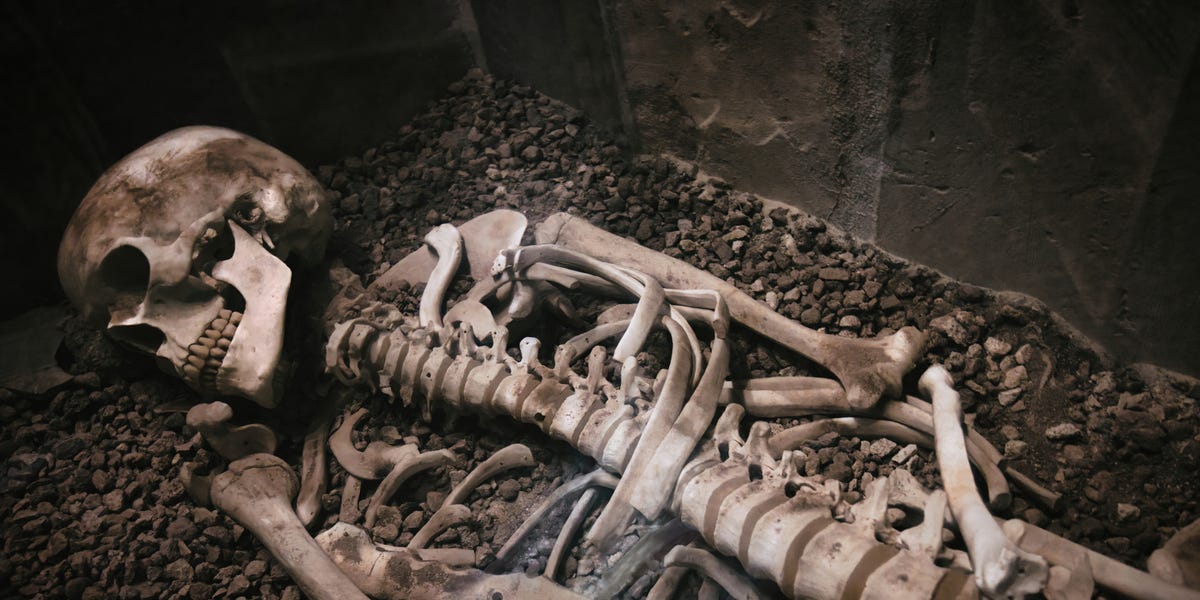
Old churches are supposed to keep secrets. They hold whispers in the rafters, candle smoke in the stone, and the sort of history that makes modern drywall look embarrassingly temporary. But sometimes a building decides it has kept quiet long enough. That is essentially what happened in Portimão, Portugal, where damage to a centuries-old church wall led to a discovery that felt less like routine restoration and more like history kicking the door open: hidden human skeletons, at least a dozen of them, emerging from the area around a collapsed wall.
Yes, it sounds like the setup for a gothic thriller. No, archaeologists did not scream and run into the night. Instead, they did what archaeologists do best: they got methodical. The result is a fascinating story about old church walls, forgotten burial grounds, sacred space, and the eerie way the past can suddenly become very, very physical.
This discovery is gripping because it is not just about bones. It is about how communities once treated death, why churches often doubled as cemeteries, and how restoration work can reveal layers of human life that were never truly gone. If anything, the story reminds us that historic buildings are not frozen museum pieces. They are archives made of stone, mortar, dust, and occasionally, skeletons with terrible timing.
What Actually Happened at the Church?
The headline-making discovery happened at the Igreja Matriz de Portimão, a 15th-century church in southern Portugal. After severe weather damaged part of the structure, crews began work to replace the collapsed wall. That is when bones appeared and archaeologists were called in. Initial analysis pointed to the remains of at least 12 people, with evidence suggesting the burials likely date from the 16th through the 19th centuries.
That timeline matters. It tells us this was not one single dramatic event, not a medieval disaster movie preserved in stone. Instead, the site appears to reflect repeated use over generations. Archaeologists associated with the investigation have described overlapping chronologies, which is a polite academic way of saying the same sacred ground was used again and again over a very long period of time.
In other words, the collapsed wall did not magically cough up random skeletons from nowhere. It exposed part of a burial landscape that had long been folded into the life of the church. The churchyard, courtyard, and surrounding built environment likely held the memory of those burials even after everyday people forgot it was there.
And that is what makes the story so compelling. It was not a treasure hunt. It was a repair job. One minute you are dealing with masonry, drainage, and stabilization. The next minute, history is staring back at you through eye sockets. Renovation crews everywhere just developed a brand-new respect for “unexpected site conditions.”
Why Would Skeletons Be Hidden Near Church Walls?
Churches were once prime burial real estate
To modern readers, the idea of skeletons turning up in or around an old church can sound shocking. Historically, though, it was not unusual at all. For centuries in Christian Europe, burial close to a church was desirable because the ground was considered sacred. Wealthier or higher-status individuals might be buried inside the church itself, while others were laid to rest in the churchyard outside.
That broader pattern shows up across many archaeological discoveries. Early Christian cemeteries, abbey graveyards, cathedral precincts, and parish churchyards have all yielded large numbers of human remains. Archaeologists have repeatedly found that churches were not just places for worship. They were also places where communities organized memory, grief, status, and hope for the afterlife.
Even the orientation of burials can reveal religious meaning. In several Christian cemetery excavations, skeletons have been found placed with heads to the west and feet to the east, reflecting beliefs tied to resurrection and the direction of the rising sun. Burial was never just disposal. It was theology, social order, family identity, and geography rolled into one.
Overcrowding changed what happened to old bones
Another reason finds like this happen is simple: churchyards filled up. In crowded towns, especially in earlier centuries, there was only so much consecrated ground to go around. That often led to reused graves, rearranged bones, ossuaries, or secondary deposits where earlier remains were moved to make room for later burials.
That is not speculation pulled from a spooky hat. Archaeologists have documented overcrowded burial grounds and bone reuse across Europe. Some churches ended up with charnel houses or ossuaries. Others incorporated stored bones into specific spaces. In Belgium, archaeologists even uncovered walls made largely from human bones beneath a church, likely created when an overcrowded cemetery had to be cleared. In Austria’s famous bone house tradition, exhumed skulls and bones were carefully preserved after graves were reopened and reused. Human remains were not always forgotten; sometimes they were reorganized.
So when people picture the Portimão discovery as skeletons “inside the walls,” it helps to think more broadly. The remains were not necessarily hidden there like contraband in a smuggler’s compartment. They were part of an older burial environment absorbed into later building phases, repairs, boundary lines, and layers of church use. The wall collapse revealed a truth old cemeteries know all too well: the dead do not disappear just because the architecture changes.
What Archaeologists Can Learn From the Skeletons
Human remains are not just dramatic visuals for headlines. In archaeology, they are data-rich records of real lives. From skeletons like the ones found at this church, specialists may be able to estimate age at death, biological sex, physical stress, injury, signs of disease, nutritional deficiencies, and sometimes broader patterns of community health.
That is why the Portimão skeletons matter beyond the initial shock factor. A burial site used over centuries can reveal how a local population changed over time. Were the dead mostly adults, or were children present too? Do the bones show arthritis from hard labor, dental disease, trauma, or infection? Do burial positions or grave construction styles shift from one period to another? Questions like these can transform a sensational discovery into a serious historical record.
Archaeologists can also study the surrounding layers of debris and construction to understand chronology. One especially intriguing possibility is whether some deposits relate to major episodes of damage and rebuilding. Old churches often lived through storms, earthquakes, renovations, expansions, and repairs. Each intervention could disturb, cover, or preserve earlier burials in different ways.
Just as important is what researchers cannot say right away. Bones do not come with name tags, dramatic confessions, or a handy plaque reading “Hello, I was buried here in 1724.” Careful excavation, context recording, osteological analysis, and sometimes radiocarbon dating are what turn fragments into evidence. The slow part is the real part.
Why This Story Hits People So Hard
Part of the reason this story spread so quickly is that it combines two things humans never stop finding irresistible: collapsing walls and hidden bodies. The first screams danger. The second screams mystery. Put them together inside a historic church and the whole thing practically markets itself.
But the deeper reason it lands is emotional. Churches are places people associate with continuity, ritual, and reverence. When human remains suddenly appear during repair work, the past stops feeling abstract. It becomes immediate. You are no longer talking about “people from the 16th to 19th centuries” in a textbook way. You are talking about individuals whose bodies remained physically present beneath a living community’s feet.
There is also a strange democratic quality to discoveries like this. Grand kings may get marble tombs and polished biographies, but ordinary people often survive only in their bones. Archaeology gives them a voice, even if it is a quiet one. A church wall falls, and suddenly people who left no social media, no memoir, and no press release are back in the conversation.
Other excavations have shown the same pattern. Burials uncovered at Jamestown revealed high-status graves within a church. Colonial-era graves in Philadelphia emerged during construction work. Burial vaults with coffins were found near Washington Square Park in New York. In each case, modern development collided with older sacred or funerary landscapes. The lesson is not that the dead are “everywhere,” though honestly that is not wrong. The lesson is that cities and communities are built on deep layers of human presence.
Old Churches Are More Than Buildings
They are architectural time capsules
Historic churches are often treated as landmarks because of their age, art, or religious significance. All of that matters. But archaeology keeps reminding us that they are also stratified historical sites. Floors, crypts, courtyards, boundary walls, and adjoining spaces may preserve evidence from many different eras at once.
That is especially true in places where churches stood for centuries while towns changed around them. A church might begin as the dominant building in a settlement, accumulate generations of burials, survive weather damage, get rebuilt after disaster, and then sit inside a thoroughly modern city. On the surface, it looks like one building. Underneath, it is a stacked record of devotion, mortality, construction, and adaptation.
Preservation work can uncover the unexpected
One of the least glamorous but most important truths in archaeology is that discoveries often happen during boring-sounding work. Repairs. Drainage improvements. Foundation checks. Utility upgrades. The romance comes later, after the paperwork and soil analysis.
That is why preservation matters. Without careful archaeological oversight, sites like this could be disturbed without documentation, stripping away context that makes the remains meaningful. Bones alone tell part of the story. Their precise location, surrounding materials, burial arrangement, and relationship to architecture tell the rest.
There is an ethical dimension, too. Human remains are not curiosities. Responsible excavation treats them with respect, studies them carefully, and often plans for reburial or long-term stewardship once analysis is complete. That balance between science and dignity is central to modern bioarchaeology, especially in religious contexts.
So, What Does This Discovery Really Mean?
The skeletons found after the church wall collapse are significant not because they are creepy, though to be fair they do have exceptional headline energy. They matter because they expose how older communities used sacred space, how burial customs evolved, and how much history can survive inside seemingly ordinary structures.
They also remind us that the past is rarely neat. It does not stay in one layer. It shifts, sinks, gets built over, gets reused, and then reappears when a storm, a shovel, or a restoration crew opens the wrong wall in exactly the right place. The dead at Portimão were not “hidden” in the Hollywood sense. They were hidden in the everyday historical sense: folded into a site so completely that living people stopped noticing them.
And perhaps that is the most powerful part of the story. An old church did not just lose a wall. It regained a memory.
Experience and Reflection: What It Feels Like When History Literally Falls Out of a Wall
There is a special kind of jolt that comes from a discovery like this, and it is not the same as reading about ancient bones in a museum label. It is closer to the feeling of time misbehaving. Imagine standing near a repair site expecting dust, cracked stone, and the usual complaints about budgets and weather. Then, instead of just rubble, you realize the ground is giving back people.
For the workers, the experience must have been immediate and physical. One moment, the job is practical. Measure the damage. Clear the debris. Stabilize the area. The next, the work slows to a near stop because the site is no longer just a construction zone. It becomes a place of encounter. That shift matters. The air changes. The language changes. Nobody says “material” in quite the same way once bones are visible.
For archaeologists, the feeling is probably more layered. There is excitement, of course, because discoveries like this can answer real historical questions. But there is also discipline. You do not get to be dramatic for long. You document. You map. You photograph. You record context. In many ways, the professionalism is what makes the moment so powerful. The bones are startling, but the real emotion lives in the care taken with them.
For local residents or visitors, a find like this can make a familiar building suddenly feel unfamiliar. A church that seemed like part of the background becomes charged with a new kind of presence. People begin to ask different questions. Who was buried there? How many more remain? Did earlier generations know? Was this always part of the place, hiding in plain sight? Historic sites often become more meaningful once they stop feeling tidy.
There is also a personal side to these discoveries that is hard to ignore. Skeletons collapse the distance between “us” and “the past.” A roof tile, a coin, or a fragment of pottery can be fascinating, but bones are different. They are unmistakably human. They remind you that the people who built, worshipped, repaired, mourned, and walked through that church were not abstractions. They had sore joints, bad teeth, hopes for salvation, family ties, and funerals attended by people who thought they were placing loved ones in sacred ground forever.
That emotional weight is why stories like this stick. They are spooky, yes, but not in a cheap haunted-house way. They are moving because they expose continuity. Buildings age. Communities change. Customs fade. Yet human traces remain. Sometimes they remain so stubbornly that all it takes is one failed wall to bring centuries rushing back into view.
And maybe that is the real experience at the heart of this story: humility. We like to think we fully understand the places we inherit. Then history drops a skeleton at our feet and gently suggests otherwise.
Conclusion
The story of an old church wall collapsing and revealing hidden skeletons is unforgettable because it combines drama with substance. The Portimão discovery is not just an eerie archaeological headline. It is a case study in how sacred spaces once functioned as burial grounds, how centuries of reuse and rebuilding can obscure human remains, and how restoration work can suddenly reopen conversations between the living and the dead.
In the end, the skeletons found at this old church do more than surprise us. They deepen the meaning of the building itself. What looked like a damaged wall turned out to be a doorway into community memory, burial traditions, and the long afterlife of historical space. Not bad for a repair project that probably started with someone saying, “Let’s just fix the wall.”














