
Ants in the garden are a little like relatives at a barbecue: a few are perfectly fine, sometimes even helpful, but when they start organizing traffic lanes across your tomatoes and protecting aphids like tiny livestock, it is time to intervene. The good news? You do not need to blast your garden with harsh chemicals or turn your flower beds into a science experiment gone sideways.
Learning how to naturally get rid of ants in your garden starts with understanding why they are there. Ants are not always villains. Many species help aerate soil, recycle organic matter, and clean up insect debris. But ants can also protect aphids, scale insects, mealybugs, and whiteflies because those pests produce honeydew, a sugary liquid ants love. In other words, if ants are marching up your plants, they may not be the main problem. They may be the bodyguards.
This guide covers six natural, plant-friendly ways to reduce ant activity, protect beneficial insects, and keep your garden healthy. No scorched leaves. No mystery kitchen potions. No dramatic “boiling water volcano” moment next to your basil. Just practical, garden-smart steps that work with nature instead of starting a backyard war.
Why Ants Show Up in Gardens
Before you evict ants, take a moment to identify what attracted them. Ants usually enter garden beds for food, water, shelter, or honeydew-producing insects. If you remove the attraction, the ant problem often shrinks without much drama.
Common reasons ants visit plants
Ants may appear around vegetables, roses, fruit trees, herbs, raised beds, or container plants because they are feeding on sweet honeydew from aphids or scale. They may also be nesting in loose, dry soil, searching for moisture during hot weather, or feeding on fallen fruit and plant debris. A busy trail up a plant stem is a clue worth investigating. Flip leaves, inspect new shoots, and look along stems for clusters of soft-bodied pests.
If the plant looks healthy and ants are simply moving through the soil, you may not need to do anything. If the leaves are curling, yellowing, sticky, or covered in black sooty mold, ants are likely connected to a larger pest issue.
1. Follow the Ant Trail and Find the Real Problem
The first natural ant control method is not a product. It is detective work. Put on your garden inspector hat, preferably one that makes you feel very official, and follow the ant trail. Where are the ants going? Are they climbing one rose cane? Gathering under a pot? Disappearing into mulch? Visiting the underside of pepper leaves?
Ant trails often lead to one of three things: a nest, a food source, or honeydew-producing pests. If ants are concentrated around a tree trunk, shrub stem, or vegetable plant, inspect for aphids, mealybugs, scale insects, or whiteflies. These pests feed on plant sap and excrete honeydew. Ants protect them from predators, which can make the infestation worse.
What to look for
Look for sticky leaves, curled new growth, clusters of small insects, white cottony patches, raised scale bumps on stems, or black sooty mold. These signs suggest the ant problem is really a plant pest problem wearing a tiny ant-shaped hat.
If the ants are nesting directly in a container or raised bed and disturbing roots, gently lift the pot or disturb the soil surface to see how extensive the activity is. Ants prefer dry, protected spaces, so adjusting water and habitat conditions can make the area less inviting.
2. Remove Aphids and Other Honeydew Pests First
If ants are farming aphids, the smartest move is to stop the buffet. Reducing aphids, scale, mealybugs, and whiteflies cuts off the sweet reward that keeps ants patrolling your plants.
Start with the simplest method: a strong spray of plain water. Use a garden hose to knock aphids off tender shoots, leaf undersides, rosebuds, bean plants, broccoli, cabbage, peppers, and other affected plants. Spray both sides of leaves and repeat every few days as needed. Many soft-bodied pests do not climb back successfully once knocked down, especially when beneficial insects are present.
Use pruning when pests are clustered
If aphids or scale insects are packed onto a few stems, prune out the worst sections and dispose of them. Do not compost heavily infested material unless your compost pile heats properly. You do not want to create a pest hotel with complimentary breakfast.
Consider insecticidal soap or horticultural oil
When water and pruning are not enough, commercial insecticidal soap or horticultural oil can be useful low-impact options. These products work by direct contact, so thorough coverage matters. Spray the insects, not just the general idea of the insects. Follow the label closely, avoid spraying during heat stress, and do not apply to drought-stressed plants. Some plants can be sensitive, so test a small area first.
Avoid homemade dish soap sprays. They sound harmless, but household soaps are not designed for plants and can damage leaves. Your lettuce deserves better than sink-side chemistry.
3. Block Ants With Sticky Barriers
For trees, shrubs, and sturdy-stemmed plants, sticky barriers can stop ants from climbing up to protect aphids and scale insects. This is especially useful on fruit trees, citrus, roses, magnolias, and ornamentals where ants repeatedly move up and down the trunk.
Use a commercial sticky barrier product according to the label. For trees, wrap the trunk first with tree wrap, masking tape, or another recommended protective layer, then apply the sticky material on top of that layer. Do not smear sticky products directly on bark unless the label specifically allows it. Direct contact can injure some trees.
Why barriers work
Sticky barriers do not kill the ant colony. Instead, they interrupt the ant highway. Once ants can no longer reach aphids or scale, natural enemies like lady beetles, lacewing larvae, hoverfly larvae, and parasitic wasps can do their job. It is like removing the bouncers from a very exclusive aphid nightclub.
Check barriers regularly. Dust, leaves, and dead insects can create bridges across sticky bands. Trim any branches touching fences, walls, stakes, or nearby plants, because ants will happily use those as alternate routes. Ants are tiny, but they are not tiny fools.
4. Make the Garden Less Ant-Friendly
Natural ant control works best when the garden stops offering ants everything they want. That means reducing easy food, excess moisture in the wrong places, dense hiding spots, and protected nesting areas.
Clean up fallen fruit and sticky debris
Pick up overripe fruit, damaged tomatoes, melon scraps, and other sugary plant material. Fallen fruit can attract ants quickly, especially in warm weather. If fruit trees are involved, harvest ripe fruit promptly and remove spoiled fruit from the ground.
Adjust mulch and irrigation
Mulch is wonderful for soil moisture and weed suppression, but thick, wet mulch piled against stems, trunks, or foundations can create pest-friendly habitat. Keep mulch a few inches away from plant crowns and tree trunks. Water deeply but avoid constantly soggy surface conditions. Ants often prefer protected, undisturbed soil, while many plant pests thrive on stressed plants, so consistent watering is your friend.
Reduce plant bridges
Prune shrubs and branches away from walls, fences, and other plants when they create ant highways. In container gardens, move pots slightly apart so ants cannot commute from plant to plant like they are using a leafy subway system.
This method is not flashy, but it works because it targets ant behavior. Fewer food sources, fewer shortcuts, and fewer protected nesting sites mean fewer reasons for ants to settle in.
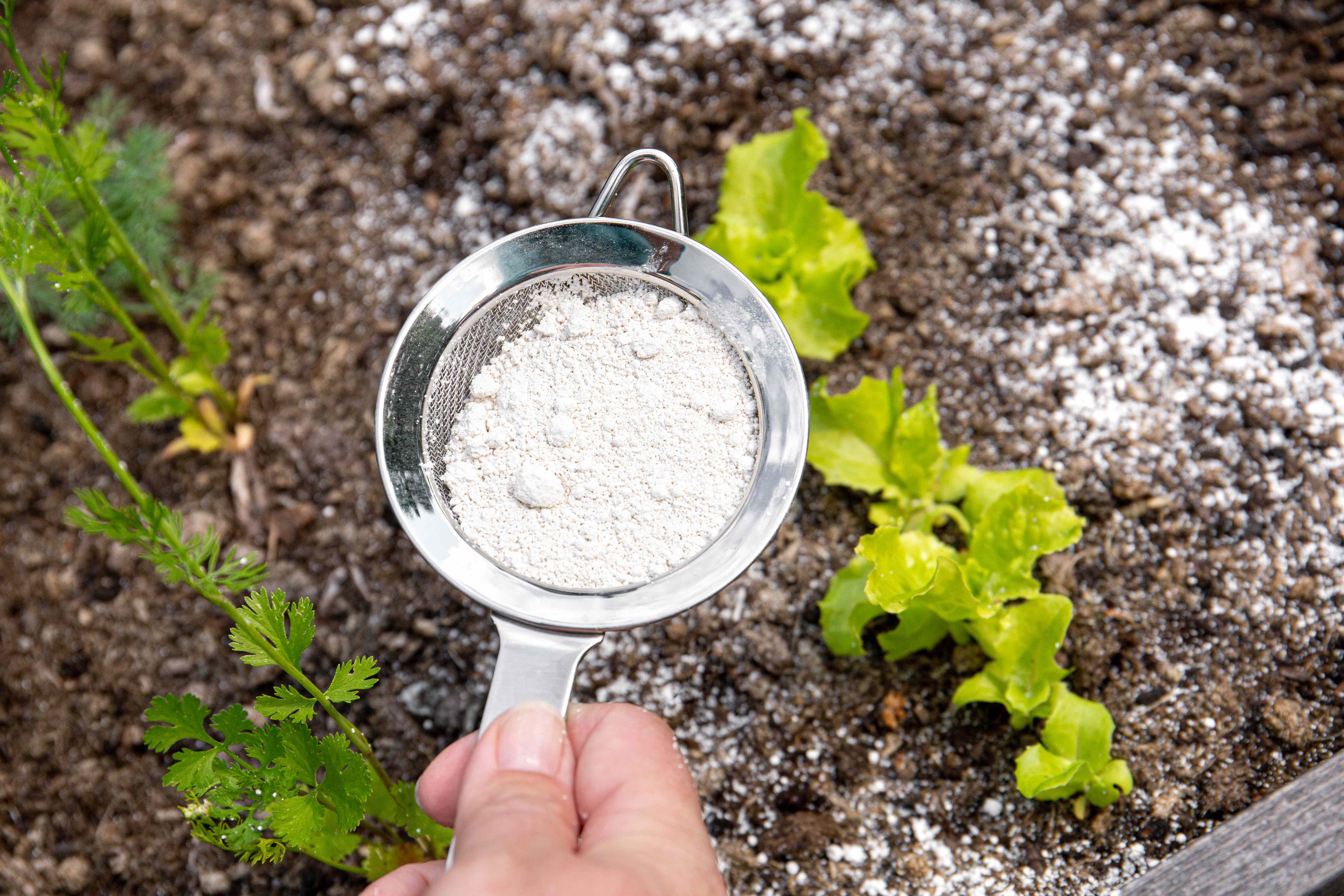
5. Use Diatomaceous Earth Carefully and Only Where It Makes Sense
Diatomaceous earth, often called DE, is a powder made from fossilized microscopic algae. It works physically, not like a traditional poison. When crawling insects contact it, the abrasive particles can damage their outer coating and dry them out. That makes it a popular natural ant control option around garden edges, pot rims, and dry pathways.
However, DE is not magic dust. It must stay dry to remain effective, and it can irritate eyes, skin, and lungs during application. Use only a product labeled for pest control, follow the label, wear protection if directed, and keep children and pets away during application.
Where to apply DE
Apply a thin, dry line around ant entry points, the outside edge of raised beds, around pots, or along ant trails on dry soil. Do not pile it onto flowers, open blooms, or areas where pollinators are active. DE is not selective. If a beneficial crawling insect crosses it, that insect may also be affected.
When to reapply
Reapply after rain, irrigation, or heavy dew. If your garden is humid or frequently watered, DE may be less useful. Think of it as a dry-zone tool, not an all-weather solution.
Used carefully, DE can help reduce ant movement without harming plants. Used carelessly, it becomes messy, ineffective, and rude to beneficial bugs. Be precise.
6. Invite Beneficial Insects and Grow Stronger Plants
The best long-term way to keep ants from becoming a garden problem is to build a garden where pest outbreaks are less likely to explode. That means supporting beneficial insects and growing plants that are not stressed into becoming pest magnets.
Plant flowers that feed natural enemies
Many beneficial insects need nectar and pollen as adults, even if their larvae eat pests. Add flowers such as sweet alyssum, dill, fennel, yarrow, cosmos, buckwheat, sunflowers, marigolds, zinnias, and native flowering plants suited to your region. These plants can attract hoverflies, lacewings, lady beetles, parasitic wasps, and other helpful insects.
Avoid broad-spectrum insecticides
Broad-spectrum sprays often kill the very insects that would naturally control aphids and scale. When beneficial insects disappear, aphids can rebound quickly, and ants return to collect honeydew. It is the garden version of firing the security team and wondering why chaos moved in.
Do not overfertilize
Too much nitrogen can produce soft, lush growth that aphids love. Use compost, slow-release fertilizers, or organic fertilizer carefully, and match feeding to the plant’s actual needs. Healthy growth is good. Overly tender, aphid-attracting growth is less good.
Strong plants tolerate minor pest pressure better. Give plants the right light, soil, spacing, water, and nutrients. A happy plant is not invincible, but it is much less likely to wave a tiny white flag when aphids arrive.
Natural Ant Remedies to Avoid Near Plants
Some popular ant remedies sound natural but can harm plants, soil life, pets, pollinators, or people. Natural does not automatically mean gentle. Poison ivy is natural. So are lightning strikes. Let us not get carried away.
Do not pour boiling water near roots
Boiling water can kill ants in pavement cracks, but near garden plants it can cook roots, damage soil organisms, and leave you with a very dramatic dead spot. Use it only where no desirable plants are growing.
Skip vinegar sprays on plants
Vinegar can burn foliage and acts as a contact herbicide. Spraying it around vegetables, herbs, flowers, or ornamentals can injure the very plants you are trying to protect.
Avoid random dish soap mixtures
Dish soaps vary widely and may strip protective plant surfaces. If you need soap-based pest control, use a commercial insecticidal soap labeled for plants and follow directions.
Quick Troubleshooting Guide
If ants are on roses
Check new buds and tender stems for aphids. Spray aphids off with water, prune heavily infested tips, and consider a sticky barrier if ants climb from the base. Add flowering herbs nearby to attract hoverflies and lacewings.
If ants are in raised beds
Look for dry soil pockets, buried food scraps, or aphids on vegetables. Water consistently, remove debris, disturb small nests with cultivation, and use DE only in dry perimeter areas if needed.
If ants are in potted plants
Ants may be nesting in dry potting mix. Water thoroughly and let excess drain. If activity continues, unpot the plant, inspect roots, replace part of the potting mix, and wash the container before repotting.
If ants keep returning
You probably still have honeydew pests, fallen fruit, plant bridges, or a nearby nest. Repeat the detective step. Ant control is less about one heroic treatment and more about removing the reason ants keep coming back.
Experience Notes: What Gardeners Often Learn the Hard Way
One of the most common experiences with garden ants is realizing the ants were not the original troublemakers. A gardener may notice a parade of ants climbing a tomato stake or rose cane and assume the ants are eating the plant. Then, after a closer look, the real culprits appear: aphids clustered on tender new growth, quietly sipping plant sap like they have reserved patio seating. The ants are there for honeydew, not salad.
A practical first lesson is that water is underrated. A firm hose spray can look almost too simple, but it often makes a visible difference within minutes. Gardeners who repeat the spray every few days usually see fewer aphids, less sticky residue, and less ant traffic. The trick is consistency. One spray is a polite suggestion. Several sprays become a management plan.
Another useful lesson is that barriers work best when gardeners think like ants. If you add a sticky band to a tree trunk but leave one low branch touching a fence, ants will use the fence. If a tomato cage touches an infested pepper plant, ants may cross over. If a pot sits against a wall, ants may skip your carefully applied perimeter treatment and stroll in from behind. Ants are excellent at finding loopholes, which is annoying but honestly impressive.
Gardeners also learn quickly that “natural” remedies can still be rough on plants. Vinegar may seem harmless because it lives in the kitchen, but plants do not appreciate being dressed like a salad. Boiling water may work in sidewalk cracks, but in a vegetable bed it can damage roots and soil life. Homemade soap sprays can leave leaves spotted, curled, or sunburned. The gentlest garden solutions are usually physical and cultural: rinse pests off, prune damaged parts, remove attractants, block trails, and improve plant health.
Container gardens bring their own ant adventures. Ants often move into pots when the soil stays dry and protected. A pot of herbs on a warm patio can become prime real estate. Deep watering, refreshing the potting mix, and keeping containers slightly spaced apart can help. If ants have built a serious nest inside a pot, repotting may be the cleanest solution. It is not glamorous, but neither is watching ants rent out your basil.
The biggest long-term lesson is patience. A garden with flowers, healthy soil, and fewer broad-spectrum sprays becomes more balanced over time. Lady beetles, lacewings, hoverflies, spiders, and tiny parasitic wasps often show up when there is food and habitat. They do not arrive with tiny suitcases the moment you plant dill, but they do respond to a garden that welcomes them. Once beneficial insects are active and ants are blocked from protecting honeydew pests, the garden often starts doing some of the work for you.
Natural ant control is not about eliminating every ant. That goal is unrealistic and unnecessary. The better goal is to stop ants from protecting plant pests, nesting where they damage roots, or invading spaces where they are not welcome. When you manage the cause instead of chasing every ant you see, your garden becomes healthier, calmer, and much less sticky.
Conclusion
To naturally get rid of ants in your garden, start by asking why they are there. If they are simply moving through soil, they may be helping more than hurting. If they are climbing plants, protecting aphids, spreading across sticky leaves, or nesting in containers, it is time for action.
The best plant-friendly approach combines observation, honeydew pest control, sticky barriers, habitat cleanup, careful use of diatomaceous earth, and beneficial insect support. These methods work together because they reduce ant rewards while protecting the ecosystem that keeps your garden resilient.
In short: do not panic, do not pour vinegar on your petunias, and do not declare war on every ant with six legs and a schedule. Follow the trail, fix the cause, and your plants will thank you by growing instead of sulking.














