
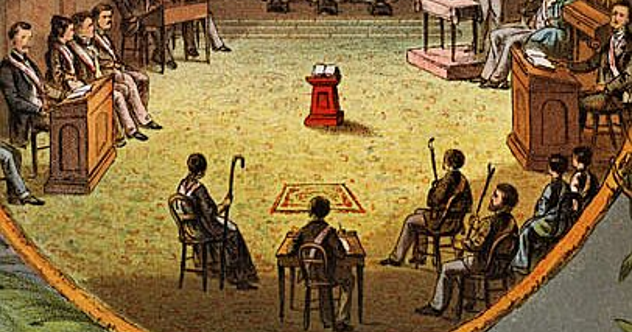
Say the words secret society, and most people picture candlelit basements, dramatic capes, coded knocks, and one guy named Edgar who absolutely loves explaining symbols. Fair enough. But history is a little less theatrical and a lot more interesting. Some secret societies really were shady. Others were basically early social networks with better costumes. And a surprising number of them helped build hospitals, fund scholarships, preserve history, support widows and orphans, encourage scientific research, or push major political change.
So this article is not about the groups that made the world weirder, louder, or more paranoid. It is about the secret societies that helped the world in visible, practical ways. A few were underground political movements. Others were fraternal orders with rituals, passwords, and closed meetings, but very public missions. Not every group on this list was “secret” in the same way, but each had some combination of privacy, ceremony, selective membership, and real-world impact.
In other words: yes, there were handshakes. But there were also hospitals, libraries, relief funds, scholarships, and revolutions. History contains multitudes.
What Counts as a Secret Society Here?
For this list, the phrase includes oath-bound fraternities, closed academic orders, and clandestine political groups. Some of these organizations later became more public. Some still keep rituals private. Some are only “secret” in the sense that outsiders do not fully understand how they operate. The key idea is simple: these were not fully open public clubs, and their privacy helped shape their identity.
The Top 10
10. The Rosicrucian Order (AMORC)
The Rosicrucians have long been wrapped in mystery, symbolism, and enough esoteric vocabulary to make a dictionary ask for a coffee break. But one of their clearest public contributions is educational and cultural rather than mystical. Through the Rosicrucian Egyptian Museum in San Jose, the organization has helped preserve and share a major collection of ancient Egyptian artifacts with the public.
That matters more than it might sound at first glance. Secretive or not, organizations earn public credit when they create institutions that outlive fashion. Museums, archives, and research partnerships do exactly that. The Rosicrucian world has often attracted curiosity because of its occult reputation, but its more grounded legacy is in historical preservation, public education, and giving ordinary visitors access to ancient history without needing a Ph.D. in hieroglyphics or a treasure map.
So while this entry may not scream “world-saving superheroes in robes,” it does represent something valuable: a private order creating a public cultural resource. Not bad for a group people usually assume spends all day whispering in Latin.
9. The Benevolent and Protective Order of Elks
The Elks are best known as a fraternal order with ritual, hierarchy, tradition, and a long lodge-centered culture. That private structure gave them a public advantage: discipline, local organization, and a built-in volunteer network. Over time, that translated into scholarships, veterans’ services, youth programs, and community support.
What makes the Elks important is not secrecy for secrecy’s sake. It is how ceremony and belonging helped create a durable civic machine. In American life, plenty of people joined fraternal orders because they wanted brotherhood, status, or a reason to wear a good jacket on a Tuesday night. But these groups also became engines of giving. The Elks, in particular, turned organized fellowship into real aid for students, military families, and local communities.
That is a pattern worth noticing throughout this list: private ritual often worked as social glue. Once people felt bonded to the group, they were more likely to raise money, volunteer consistently, and keep institutions alive for generations.
8. The Society of the Cincinnati
Founded by officers who served in the American Revolution, the Society of the Cincinnati has always been exclusive and a little elite. No point pretending otherwise. But it also helped preserve one of the most important political transformations in modern history: the successful struggle for American independence and the ideas attached to it.
Its modern impact comes less from secrecy than from stewardship. Through education, publications, artifacts, and the American Revolution Institute, the society has worked to preserve and explain the revolutionary era. That makes it more than a heritage club for descendants with excellent filing cabinets. It helps keep alive a public memory of constitutional government, civic sacrifice, and the long argument over liberty.
History preservation may sound less flashy than storming a fortress, but it matters. Societies that save documents, sponsor teaching, and support serious public history can shape how future generations understand freedom. That is world-helping work, even if it arrives wearing polished shoes and eighteenth-century seriousness.
7. Sigma Xi
Originally a selective scientific honor society, Sigma Xi brought a semi-private, ritualized structure to the world of research. And honestly, science could use all the organized enthusiasm it can get. Since its founding, Sigma Xi has supported scientific investigation, promoted ethics in research, and encouraged collaboration across disciplines.
Its biggest contribution is beautifully unglamorous: it helps the people doing the work. Grants, recognition, mentorship, and a culture that values rigorous inquiry may not make dramatic movie trailers, but they help science move forward. Many researchers remember early grants and society recognition as crucial stepping stones in their careers.
In that sense, Sigma Xi helped the world by strengthening the research ecosystem. Better science does not arrive by magic. It arrives through institutions that reward good methods, connect researchers, and support early-career talent before the world learns how to pronounce their last names. A secretive scholarly order that pushes science in a healthier direction is a pretty solid use of mystery.
6. Phi Beta Kappa
Today, Phi Beta Kappa is associated with academic excellence, liberal arts prestige, and the kind of student who somehow enjoys seminar discussions before 9 a.m. But it began as a secret society. Its founders met privately so they could discuss ideas more freely than the rigid college environment of the time allowed.
That origin story matters. The society’s secrecy was not primarily about power; it was about freedom of inquiry. In early America, colleges often left little room for open intellectual exploration. Phi Beta Kappa created one. Later, it evolved into the most famous academic honor society in the United States, promoting scholarship, debate, and a broad humanistic education.
Its impact on the world comes through culture rather than conquest. By elevating scholarship and rewarding serious study across the humanities, social sciences, and natural sciences, Phi Beta Kappa helped normalize the idea that intellectual achievement deserves public honor. That is a quieter form of progress, but still real. Civilizations do not run on muscle alone. They also run on people who ask hard questions and keep reading after everybody else has given up.
5. The Sons of Liberty
Now we move from ritual to rebellion. The Sons of Liberty were a clandestine political network in colonial America, organized to resist British taxation and imperial control. They were not always gentle, tidy, or especially calm. This was not a knitting circle. But they played a major role in mobilizing resistance, spreading information, and transforming scattered frustration into coordinated action.
Their importance lies in momentum. Political change often begins with small, semi-secret groups willing to organize before mass public support fully exists. The Sons of Liberty helped create that momentum. Their protests, networks, and symbolic actions helped push the colonies toward a stronger shared resistance and eventually toward independence.
No, they were not perfect saints. Secret groups rarely are. But if you are looking for a secretive society that genuinely changed the course of history, this one belongs near the top. The modern language of citizenship, protest, and self-government in the American tradition owes them a serious historical nod.
4. The Independent Order of Odd Fellows
The Odd Fellows may have one of the most unintentionally charming names in institutional history. It sounds like a group founded because someone forgot to label a box. In reality, the Odd Fellows became one of the most important mutual aid societies in the English-speaking world.
Before modern welfare systems matured, organizations like this filled painful gaps. The Odd Fellows built a culture around visiting the sick, helping the distressed, burying the dead, and educating orphans. That mission may sound old-fashioned, but it addressed brutally practical needs. Illness, death, widowhood, and poverty could destroy a family in an era with few safety nets.
This is what made the Odd Fellows genuinely world-helpful: they institutionalized compassion. They turned brotherhood into a support system. They gave members and communities forms of insurance, belonging, and care before governments did much of that work at scale. In social history, that is huge. Mutual aid was not just kindness. It was survival with an organizational chart.
3. The Knights of Columbus
The Knights of Columbus are a Catholic fraternal order with private ceremonies, a strong internal structure, and one of the most visible modern charitable footprints on this list. Founded in the nineteenth century, the organization originally aimed to support Catholic men and protect families, especially widows and children facing economic hardship.
That founding purpose still explains their broader impact. Over time, the order became a major force in charitable giving, volunteer service, disaster relief, and support for vulnerable communities. In recent years, the Knights have reported enormous totals in volunteer hours and donations, showing how a fraternal order can scale private commitment into public action.
The key lesson here is that not all “secretive” organizations are about exclusion for the sake of ego. Some use ritual and shared identity to create discipline, loyalty, and long-term service. The Knights of Columbus turned fraternity into infrastructure. And infrastructure that feeds people, supports families, and mobilizes aid is never trivial.
2. Shriners International
If the Shriners are the group most people recognize by their fez hats, they are also one of the clearest examples of a private fraternal order producing enormous public good. Emerging from the Masonic world, the Shriners combined ritual, pageantry, fellowship, and, eventually, a major philanthropic mission.
That mission became Shriners Children’s, a pediatric specialty care system that has served generations of families. This is where any lazy joke about costumes has to sit down and be quiet. The public impact is undeniable. A group with secret ceremonies and theatrical flair built serious medical institutions. That is not just charmingly ironic; it is profoundly useful.
The Shriners deserve a top ranking because they show how symbolic culture can power practical compassion. Behind the private rites came hospital care, treatment, and a legacy of helping children who needed specialized medical support. If you want a case study in how “mysterious brotherhood” can turn into “actual healing,” this is it.
1. The Freemasons
Love them, mock them, suspect them, write thrillers about them, or get lost in a three-hour internet rabbit hole about them: the Freemasons are probably the most famous secret society in the modern imagination. And unlike many groups that attract conspiracy theories, their real historical significance is substantial enough without any dramatic nonsense added on top.
Freemasonry helped shape civic culture in the Atlantic world and early United States. It created networks of trust, ritualized ideals of moral improvement, and a framework for voluntary association that influenced public life. A number of major figures in early American history were Masons, and Masonic lodges became places where leadership, fraternity, and civic identity mixed.
Just as important, Masonry cultivated a philanthropic tradition that would echo through related bodies and local institutions for generations. Lodges and affiliated groups supported charity, education, community projects, and benevolent works. Freemasonry’s global image may be all squares, compasses, and coded greetings, but its practical legacy is much more grounded: it helped normalize the idea that organized private association could serve the public good.
That is why it lands at number one. Not because it was the most mysterious, but because it had the broadest and most durable historical influence. The world did not become better because a few people knew the password. It got better because those people often built institutions, funded causes, and treated civic duty as something worth practicing, not just preaching.
What These Secret Societies Got Right
The biggest shared lesson from these organizations is simple: belonging can be productive. People are more likely to give, build, preserve, and serve when they feel connected to a mission larger than themselves. Secret societies and fraternal orders understood that long before modern nonprofits mastered branding and newsletters.
They offered ritual, identity, duty, and memory. Sometimes that produced elitism. Sometimes it produced exclusion. History should not ignore that. But in their best forms, these groups translated private loyalty into public benefit. They created hospitals, mutual aid networks, research grants, scholarship systems, museums, educational institutions, and political energy.
In other words, the trick was not secrecy alone. The trick was structure. Mystery got people in the door. Shared purpose kept them working.
Experiences Related to “Top 10 Secret Societies That Helped The World”
One of the strangest experiences people have with this topic is realizing how different real secret societies feel from the cartoon version. You expect thunder, candles, and maybe a dramatic owl statue glaring at your soul. Instead, you often find old brick buildings, community halls, museum archives, framed photographs, scholarship plaques, and volunteers carrying folding chairs. It is a wonderfully human disappointment, which is to say a wonderful education.
Walk into a historic lodge building, and the first surprise is not fear. It is age. The wood creaks. The portraits stare. The room feels built for ceremony, but also for dinners, speeches, fundraisers, and long meetings where someone probably argued about budgets in 1938 and again in 1952. You start to understand that these groups were not magical engines hidden outside society. They were woven right into society. Their secrecy gave them identity, but their buildings, charities, and local habits tied them to everyday life.
There is also a particular experience that comes from reading the records of these organizations. At first, the titles and formal language can sound grand enough to frighten a chandelier. But then the documents turn practical: funds for widows, aid for sick members, school support, relief after disaster, expenses for a community event, preservation of a historical collection. The mystery slowly gives way to administration. And that is not boring at all. It is revealing. It shows how idealism survives only when somebody writes the check, keeps the minutes, and opens the door on time.
Another experience tied to this topic is the odd emotional shift from suspicion to respect. Many people approach secret societies expecting manipulation. Sometimes history supports that suspicion. But sometimes the real story is that humans created private circles because they wanted trust, seriousness, and commitment in a noisy world. The more you study the groups that genuinely helped people, the more you see a recurring pattern: ritual was often a tool for building loyalty, and loyalty became service.
There is even a personal feeling many readers get when exploring this subject deeply: a mix of amusement and admiration. Amusement, because some of the symbols, titles, and costumes are undeniably dramatic. Admiration, because beneath the pageantry, many members did very ordinary, necessary good. They visited hospitals. They raised scholarship money. They preserved history. They funded research. They organized communities. They turned belonging into action.
That may be the most memorable experience of all. You begin with the idea of “secret societies” as hidden powers and end with a more useful truth: people help the world not only through public institutions, but also through tightly bonded communities that take duty seriously. The world is often improved not by mystery itself, but by what people do after the mysterious meeting ends and the chairs have to be stacked.
Conclusion
The best secret societies were not the ones that made the boldest claims. They were the ones that produced visible results. Whether through revolutionary organizing, mutual aid, scientific advancement, scholarship, children’s healthcare, historical preservation, or large-scale charity, these groups prove that private institutions can leave a very public legacy.
So the next time someone mentions a secret society, do not immediately imagine a global puppet master stroking a cat in a candlelit vault. Sometimes the truth is much less dramatic and much more impressive. Sometimes the secret society helped build a hospital, fund a student, preserve a museum collection, or keep a struggling family afloat.
And honestly, that is a much better plot twist.












