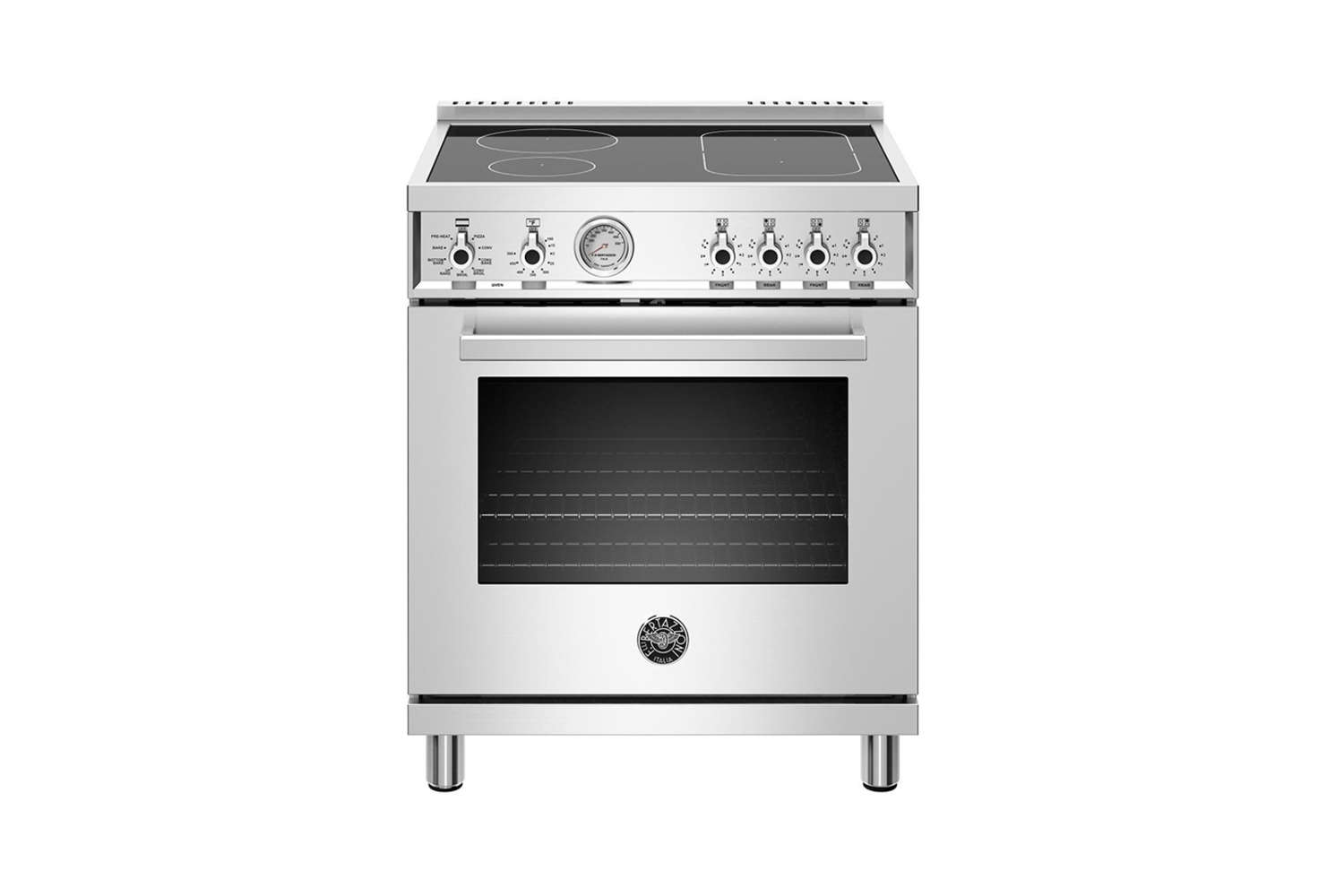
Induction ranges are having a very good kitchen moment, and no, it is not just because they look sleek enough to make your old stove feel like it belongs in a museum exhibit titled Things That Boiled Pasta Slowly. An induction range combines an induction cooktop with an electric oven, giving home cooks fast heat, precise control, easier cleanup, and a cooking surface that behaves more like a smart assistant than a stubborn appliance.
The big idea is simple: induction cooking uses electromagnetic energy to heat compatible cookware directly. Instead of heating a burner and then transferring that heat to a pan, the range makes the pan itself the heat source. That is why water can boil quickly, sauces respond almost instantly when you lower the setting, and the glass surface usually stays cooler than a traditional electric cooktop. It is not magic, though it may feel like it the first time a pot of water goes from “nothing is happening” to “pasta emergency” in record time.
For shoppers, the market has become much better than it was a few years ago. There are now affordable 30-inch induction ranges, smart slide-in models, double-oven designs, luxury pro-style options, and compact choices for smaller kitchens. This guide breaks down 10 easy pieces: practical categories and standout examples to consider when choosing the best induction range for your home.
Why Induction Ranges Are Suddenly Everywhere
Induction cooking has been popular in parts of Europe for years, but U.S. buyers are catching up fast. The appeal is obvious once you understand the benefits. Induction is fast, energy efficient, responsive, and easier to clean than gas grates or old coil burners. ENERGY STAR notes that induction transfers much more heating energy into the cookware than gas, while the U.S. Department of Energy has described induction appliances as significantly more efficient than gas and somewhat more efficient than conventional smooth-top electric ranges.
There is also the comfort factor. A gas stove releases heat into the room; an induction range focuses heat in the pan. That means the kitchen can feel less like a sauna when you are cooking soup in July. The smooth glass top is also wonderfully wipeable. When oatmeal bubbles over, it does not weld itself to a glowing red burner with the emotional intensity of a bad breakup.
Still, induction is not perfect for everyone. You need magnetic cookware, usually stainless steel or cast iron. Many full-size induction ranges also require a dedicated 240-volt electrical connection. Before buying, check your electrical panel, measure your space, and test your pans with a magnet. If the magnet sticks firmly to the bottom, the pan is likely induction-ready. If not, it may be time to retire that beloved aluminum skillet to decorative duty.
What to Look for in an Induction Range
1. A Cooktop Layout That Matches Your Real Cooking
Do not shop only by wattage. Think about how you cook on a normal Tuesday. If you often use a stockpot, skillet, and small saucepan at once, you want well-spaced cooking zones. If you use griddles or long roasting pans on the cooktop, look for bridge elements or flexible zones. Some premium induction ranges allow two zones to work together, which is helpful for pancakes, grilled sandwiches, or that ambitious brunch you swear will be relaxing.
2. A Reliable Oven, Not Just a Fancy Cooktop
An induction range is still a range. The cooktop may get the applause, but the oven has to roast chicken, bake cookies, broil vegetables, and survive Thanksgiving. Look for convection, accurate temperature control, multiple rack positions, and cleaning features you will actually use. Air fry modes are common now, but true convection performance matters more than a marketing badge.
3. Controls You Can Understand Before Coffee
Touch controls look elegant, but some people prefer knobs. Smart screens are impressive, but only if they make cooking easier. The best induction range controls are responsive, readable, and simple enough that you can reduce heat quickly when your tomato sauce starts auditioning for a volcano documentary.
4. Service and Warranty Support
Induction ranges use more electronics than basic gas or electric ranges. That does not mean they are fragile, but it does mean service access matters. Before buying, check whether local technicians service the brand. A gorgeous range is less gorgeous when the nearest authorized repair person is three states away and communicates only by carrier pigeon.
10 Easy Pieces: Induction Ranges Worth Considering
1. The Everyday Value Pick: Frigidaire 30-Inch Induction Range
Frigidaire has become one of the easiest entry points into full-size induction cooking. Its 30-inch induction ranges often include practical features like convection baking, air fry modes, no-preheat cooking, and bridge elements at a price that feels less terrifying than many premium brands. For homeowners replacing a standard 30-inch electric range, this category is attractive because it keeps the footprint familiar while upgrading the cooking experience dramatically.
This type of range is best for busy households that want speed, simple controls, and strong everyday performance without paying luxury-appliance money. It is the induction equivalent of a reliable friend who shows up on time, brings snacks, and does not insist on explaining wine pairings.
2. The Smart Midrange Choice: GE Profile 30-Inch Slide-In Induction Range
GE Profile induction ranges are popular because they blend modern features with broad availability. Many models include convection ovens, no-preheat air fry, smart app connectivity, glide-style touch controls, and a polished slide-in look. GE Profile also offers ENERGY STAR-certified induction options, which can matter for shoppers looking at efficiency programs or rebates.
This is a strong category for families that want a good-looking range with useful technology, but not a control panel that feels like launching a spacecraft. The better GE Profile models are especially appealing for kitchens where the range is visible from the dining or living area, because the slide-in design looks built-in without a full remodel.
3. The Cook’s Clean-Lined Option: Bosch 800 Series Induction Range
Bosch has a reputation for understated design, and its induction slide-in ranges fit that personality. Expect a clean European look, precise electric oven performance, and a cooktop designed for steady control. Bosch induction cooking products often emphasize quick heat-up, consistent heat settings, and smooth surfaces that are easy to wipe down.
This category is ideal for cooks who like quiet competence. Bosch is not usually the flashiest brand in the aisle, but that is part of the appeal. It is for the person who wants the range to perform beautifully while the kitchen itself gets the compliments.
4. The Design Lover’s Range: Café 30-Inch Induction Range
Café induction ranges are made for people who care about performance and aesthetics. Customizable hardware, matte finishes, double-oven configurations, warming drawers, Wi-Fi features, and polished styling make Café a favorite for design-forward kitchens. Some models include a double oven, which can be extremely useful if you regularly cook dishes at different temperatures.
The tradeoff is price. Café ranges generally cost more than mainstream models, but they also look less like an appliance and more like a kitchen centerpiece. If your backsplash has a mood board, Café probably understands you.
5. The Big-Family Oven Pick: LG Smart Induction Slide-In Range
LG induction ranges often appeal to families because of generous oven capacity, ProBake-style convection features, air fry functionality, and smart connectivity through the ThinQ app. Some models include cookware compatibility indicators, which are useful when half your cookware collection is mysterious and the other half came from a relative who “thinks it is stainless steel.”
This is a good fit for households that bake, roast, reheat, and batch-cook often. The roomy oven can handle sheet pans and larger meals, while the induction cooktop gives you fast weeknight control. It is a practical choice for people who want modern features without stepping fully into luxury pricing.
6. The Tech-Forward Pick: Samsung Bespoke Induction Range
Samsung’s Bespoke induction ranges lean into smart features, modern finishes, Wi-Fi connectivity, air fry, air sous vide, and large-capacity ovens. Some models include anti-scratch matte glass cooktops and upgraded oven technology. The Bespoke line is especially attractive if you want appliances that coordinate visually across the kitchen.
This range category is best for tech-friendly cooks who enjoy connected features and sleek design. It is also a good choice for people who like experimenting with newer cooking modes. Just make sure the controls feel intuitive to you in person; smart features should save time, not turn dinner into a software update.
7. The Luxury Precision Pick: Miele Generation 7000 Induction Range
Miele’s induction ranges sit firmly in premium territory. They are known for refined controls, powerful induction performance, high-end ovens, and features like Moisture Plus on select models. The price is substantial, but so is the cooking experience. Miele is for the serious home cook who wants a range that feels engineered rather than merely assembled.
If you bake bread, roast meats, entertain frequently, or simply enjoy appliances that behave with crisp precision, a Miele induction range may be worth considering. It is not the budget choice. It is the “I have strong opinions about crust texture” choice.
8. The Pro-Style Statement: Thermador Pro Harmony Liberty Induction Range
Thermador’s Pro Harmony Liberty induction ranges combine professional styling with flexible induction zones. Features such as extra-large flexible cooking zones, HeatShift, MoveMode, PowerBoost, and telescopic racks are designed for cooks who want both power and control. The 30-inch and 36-inch options give remodelers more flexibility depending on space and budget.
This category works best in serious kitchens where the range is a focal point. It is also a smart option for cooks who use large cookware and want flexible zone management. In other words, if your skillet has its own gravitational field, Thermador is speaking your language.
9. The Practical Slide-In Upgrade: Midpriced 30-Inch Induction Ranges
Not every great induction range needs to be attached to a luxury brand. The midpriced 30-inch slide-in category is where many homeowners will find the sweet spot. Look for four cooking zones, at least one high-power burner, convection baking, self-clean or steam-clean options, a storage or warming drawer, and controls that are easy to use.
This is the best category for replacing an older electric range. You may already have the right electrical service, the dimensions are familiar, and you can often get a dramatic improvement in speed and control without moving cabinets. Measure carefully, though. Slide-in ranges can vary in depth, trim, and countertop overlap.
10. The Try-Before-You-Commit Piece: Portable Induction Burner
Strictly speaking, a portable induction burner is not a range, but it deserves a place on this list because it is the easiest way to test induction cooking before buying a full-size appliance. A single portable unit lets you boil water, sear vegetables, simmer sauces, and check your cookware. It is also useful after you buy a full range, especially during holidays when every burner is occupied and someone suddenly needs gravy.
For renters, cautious buyers, or gas loyalists with trust issues, a portable induction cooktop is a low-risk introduction. It can prove that induction is not cold, weak, or weird. It is just different, and often delightfully fast.
Induction Range Pros and Cons
Pros
The biggest advantages are speed, precision, efficiency, and cleanup. Induction responds quickly when you change settings, which helps prevent scorching and boil-overs. The surface is smooth, so spills are easier to wipe. Because the pan heats directly, less heat escapes into the kitchen. Safety is another plus: many induction elements will not activate unless compatible cookware is detected.
Cons
The main drawbacks are electrical requirements, cookware compatibility, repair complexity, and price. If your kitchen only has a gas line and a standard 120-volt outlet, adding a dedicated 240-volt circuit may increase project costs. Some cookware will not work. And although prices have improved, induction ranges still often cost more than basic electric or gas models.
How to Choose the Right Induction Range for Your Kitchen
Start with your space. Most American kitchens use a 30-inch range, but 36-inch pro-style induction ranges are available for larger remodels. Measure width, depth, height, rear clearance, countertop edges, and nearby cabinet doors. Then check your electrical setup. Many induction ranges require a 40- or 50-amp circuit, but requirements vary by model, so always follow the installation manual.
Next, evaluate cookware. Cast iron and many stainless steel pans work well. Copper, glass, pure aluminum, and some nonstick pans may not. The magnet test is quick: if a magnet sticks strongly to the bottom, the pan is probably compatible. Flat bottoms are also important because induction performs best when cookware makes steady contact with the glass surface.
Finally, be honest about your cooking style. A casual cook may love a value Frigidaire or GE Profile. A frequent baker may prioritize LG, Bosch, Miele, or Café oven performance. A design-focused remodel may justify Café or Thermador. A tech-heavy kitchen may lean Samsung. The best induction range is not the one with the longest feature list; it is the one that makes your actual meals easier.
Experience Notes: Living With an Induction Range Day to Day
The first week with an induction range can feel like switching from a bicycle to an electric scooter. The basic idea is familiar, but the response time is different enough that your old habits need a tiny software update. The biggest surprise is speed. On a gas stove, you may start boiling water, wander away, answer a message, remember your laundry, and return to a pot that is politely thinking about simmering. On induction, that same pot may already be bubbling with the confidence of a Broadway understudy getting the lead role.
That speed changes how you prep. With induction, it helps to chop onions, measure spices, and open cans before turning on the heat. A powerful induction burner can take a pan from cold to searing quickly, which is wonderful for stir-fries and steaks but less wonderful if your garlic is still sitting unpeeled on the cutting board. Once you adjust, the control becomes addictive. Lower the setting and the pan responds quickly. Raise it and the heat comes back fast. Simmering soup, melting chocolate, and keeping a delicate sauce warm feel less like negotiation and more like command.
Cleaning is another daily joy. Because the glass surface does not get as fiercely hot as a radiant electric burner, many spills do not bake on as aggressively. You still need to clean properly, and sugar spills should be handled carefully, but the routine is usually simple: let the surface cool, wipe with a damp cloth, use cooktop cleaner when needed, and admire the shine for approximately 11 seconds before someone makes eggs.
There are a few quirks. Some pans make a faint buzz or hum at high power. Lightweight cookware may heat unevenly compared with heavier pans. Cast iron works beautifully but should be lifted rather than dragged to avoid scratching the glass. Touch controls can become annoying if wet fingers, splattered sauce, or curious pets get involved. And if you are emotionally attached to cooking over a visible flame, induction may feel strangely quiet at first, like cooking with a very efficient ghost.
But the practical benefits tend to win people over. Parents appreciate that there is no open flame. Apartment dwellers and small-kitchen owners like the reduced ambient heat. Meal preppers love how quickly large pots come to temperature. Bakers benefit from the electric convection oven below. Entertainers appreciate bridge zones, warming drawers, double ovens, and smart alerts that say, in effect, “Your roast is done; stop pretending you remembered.”
The best experience comes from treating induction as its own cooking method, not as gas without flames. Use flat-bottomed pans. Preheat more carefully. Start lower than you think until you learn the power levels. Keep a microfiber cloth nearby. Read the manual, even if only to prove you are the kind of adult who reads manuals. Within a month, most cooks stop thinking about the technology and simply enjoy the rhythm: fast boil, steady simmer, easy wipe, repeat.
Conclusion: Is an Induction Range Worth It?
For many homes, yes. An induction range is one of the most meaningful kitchen upgrades because it improves the task you do every day: getting food hot, controlled, and on the table. It can boil faster, simmer more precisely, clean more easily, and reduce wasted heat compared with older cooking technologies. The best models now range from approachable 30-inch options to luxury pro-style showpieces, so shoppers have more choices than ever.
The key is to buy thoughtfully. Confirm your electrical setup, test your cookware, measure carefully, and choose features that match your real cooking habits. Do not pay extra for smart settings you will ignore or a double oven you will use twice a year. Do invest in good oven performance, reliable service, clear controls, and a cooktop layout that fits your pots and pans.
In the end, induction ranges are not just trendy. They are practical, efficient, and surprisingly fun. They make cooking feel quicker and cleaner, which is exactly what a modern kitchen appliance should do. After all, dinner already comes with enough drama. Your range does not need to add a subplot.
Note: Prices, rebates, model availability, and installation requirements can change by location and retailer. Before purchase, confirm the latest specifications with the manufacturer, verify electrical requirements with a licensed electrician, and check local rebate programs.