
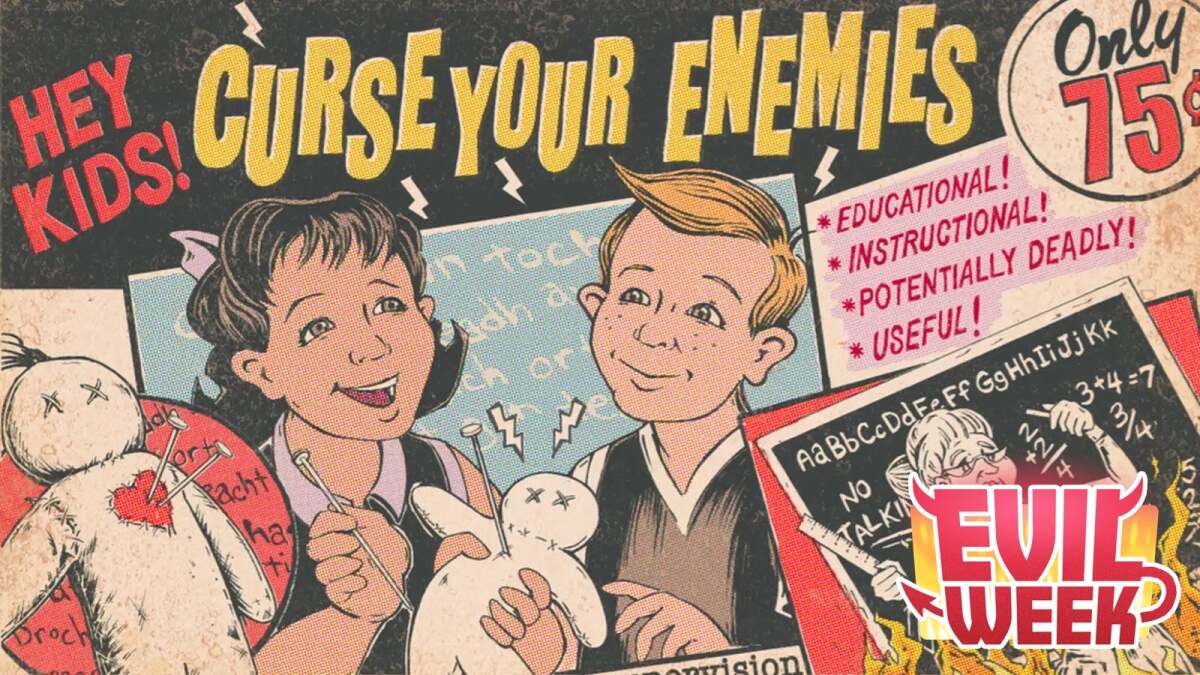
Subtitle: A funny, practical, and surprisingly healthy guide to turning anger into boundaries, confidence, and the kind of “revenge” that does not require candles, chaos, or a lawyer.
Introduction: Before You Grab the Black Cloak
At some point, almost everyone has wanted to curse an enemy. Maybe someone betrayed your trust, stole your idea, spread gossip, ghosted you, or behaved like a walking Wi-Fi outage in human form. The phrase “how to curse your enemies” sounds dramatic, mysterious, and just a little theatrical. But in real life, the most powerful curse is not a spooky ritual. It is refusing to let someone else rent a luxury apartment inside your head for free.
This guide explores the idea of cursing enemies through folklore, psychology, humor, and emotional self-defense. Instead of teaching harmful actions, it shows how to transform anger into clarity, boundaries, confidence, and better choices. Think of it as a modern “curse” that says: “May my enemy become irrelevant to my peace.” Honestly, that is scarier than a thunderstorm soundtrack.
People have believed in curses, the evil eye, charms, and protective rituals for thousands of years. Across cultures, curses often expressed fear, envy, injustice, or a desire for control when life felt unfair. Today, many people use the word “curse” casually to describe frustration: “I hope their phone battery dies at 1%.” But when anger becomes obsession, it can hurt the person carrying it more than the person it is aimed at.
So, how do you curse your enemies in a way that is safe, legal, emotionally intelligent, and still satisfying? You turn the curse inward in the best possible way: into growth, self-respect, distance, and a life so solid that their nonsense cannot knock it over.
What Does It Mean to “Curse” an Enemy?
In folklore, a curse is often imagined as a spoken wish, supernatural punishment, or bad luck sent toward another person. Ancient communities used magical language, charms, and protective symbols to explain misfortune, defend against envy, or create a sense of order in a world that felt unpredictable. The evil eye, for example, appears in many traditions as a harmful glance linked to jealousy or ill will.
In modern everyday language, though, “curse your enemies” usually means something less supernatural and more emotional. It means, “I am hurt, and I want justice.” It means, “I want them to understand what they did.” It might even mean, “I want the universe to issue a customer service ticket on my behalf.”
That feeling is understandable. Anger is not automatically bad. Anger can signal that a boundary has been crossed, a value has been violated, or a relationship is unsafe. The problem begins when anger becomes a full-time hobby. If your enemy gets your morning thoughts, your afternoon energy, and your midnight imagination, congratulations: they have become your unpaid life coach, and they are terrible at the job.
The Better Definition
A healthy “curse” is not about harming someone. It is about breaking their emotional power over you. It is a symbolic way to say: “You do not get to control my mood, choices, confidence, or future.” That kind of curse is not dark magic. It is self-respect with better lighting.
The Safest Curse: Become Unavailable for Drama
If your enemy thrives on attention, the most devastating curse is silence. Not the dramatic silence where you stare out a rainy window like the lead in a mystery movie, but the practical kind: no arguing in circles, no stalking their social media, no feeding the conflict with fresh emotional snacks.
Drama needs fuel. Attention is fuel. Reaction is fuel. Explaining yourself to someone committed to misunderstanding you is fuel with premium pricing. When you stop supplying it, the fire loses oxygen.
Try the “No Free Rent” Rule
The “No Free Rent” rule is simple: if someone is not helping you grow, stay safe, or solve the problem, they do not get unlimited space in your mind. When their name pops up in your thoughts, pause and ask, “Is thinking about this helping me take a useful next step?” If the answer is no, redirect your attention to something that does.
That might mean going for a walk, finishing a project, cleaning your room, texting a supportive friend, or writing down what happened so you can see it clearly. This is not pretending nothing happened. It is choosing not to turn your pain into a daily subscription service.
Curse Method #1: Write the Letter You Will Not Send
One of the best emotional release tools is the unsent letter. It gives your anger a place to go without turning it into a message you might regret. Open a document or grab paper and write everything you wish you could say. Be honest. Be dramatic. Use punctuation like a thunder god if necessary.
Then do not send it. The point is not to perform your pain for the enemy. The point is to understand it. After writing, look for the real message under the anger. Maybe it says, “I felt disrespected.” Maybe it says, “I ignored red flags.” Maybe it says, “I need stronger boundaries next time.”
Example
Instead of sending, “You are the worst person alive and I hope your cereal is forever soggy,” translate the deeper message into something useful: “I felt hurt when you shared private information. I will not trust you with personal details again.” See the difference? One creates more chaos. The other creates a boundary.
Curse Method #2: Use Humor Without Becoming Cruel
Humor is a surprisingly powerful tool when anger starts acting like it owns the place. A silly “curse” can help you release pressure without escalating conflict. For example: “May their fitted sheet never fold correctly,” or “May every pen they borrow be out of ink.” These are harmless, ridiculous, and oddly satisfying.
The key is to keep humor aimed at your own emotional release, not public humiliation. Jokes become unhealthy when they turn into bullying, harassment, or a campaign to make someone suffer. That is not healing. That is letting your enemy write your character arc.
Funny, Harmless “Curses” for Emotional Venting
- May their phone charger only work at one very specific angle.
- May they always step on a tiny puddle while wearing socks.
- May their favorite streaming app buffer during the best scene.
- May their autocorrect develop a personal vendetta.
- May their grocery cart have one wheel with jazz ambitions.
These little jokes work because they give your frustration a playful exit. You are not wishing real harm. You are letting your brain say, “I am angry,” without handing it the steering wheel.
Curse Method #3: Set a Boundary So Strong It Echoes
Boundaries are the adult version of protective magic. They are invisible, powerful, and occasionally make toxic people hiss like vampires near garlic. A boundary tells people what behavior you will accept, what behavior you will not accept, and what you will do if the line is crossed.
A weak boundary sounds like, “Please stop being mean, maybe, if you feel like it.” A strong boundary sounds like, “If you insult me during this conversation, I will end the call.” Calm. Clear. No thunder required.
Boundary Scripts You Can Use
“I am not discussing this while we are both angry. We can talk later.”
“Do not contact me through my friends. If you need to say something important, message me directly and respectfully.”
“I am not available for jokes about my appearance, family, work, or personal life.”
“I will be polite, but I am not rebuilding trust without changed behavior.”
Notice the pattern. Boundaries are not speeches. They are not courtroom dramas. They are simple statements followed by consistent action.
Curse Method #4: Let Consequences Do the Talking
Many people want to curse an enemy because they want the enemy to “learn a lesson.” The problem is that you cannot force someone into self-awareness. Some people can walk through a field of red flags and call it a parade.
Instead of trying to teach them, let consequences teach them. If someone lies, you trust them less. If someone gossips, you share less. If someone repeatedly disrespects you, you reduce access. That is not revenge. That is pattern recognition.
The Access Ladder
Imagine your life has an access ladder. At the top are the people who have earned deep trust. In the middle are friendly but limited relationships. At the bottom are people who get politeness, distance, and absolutely no backstage pass to your emotions. When someone shows you they cannot handle closeness responsibly, move them down the ladder.
This is one of the most effective ways to “curse” an enemy: remove their access to your time, secrets, reactions, and future.
Curse Method #5: Turn the Energy Into a Win
Anger is energy. Used poorly, it becomes rumination, revenge fantasies, passive-aggressive posts, and conversations that begin with “I am totally over it” while clearly not being over it. Used well, anger becomes momentum.
Put the energy somewhere useful. Study harder. Build the website. Apply for the job. Improve your health. Clean your space. Learn the skill. Finish the thing. Nothing annoys a committed hater more than watching you become harder to reach and harder to defeat.
Specific Examples
If a coworker mocked your idea, turn the idea into a polished proposal. If a friend betrayed you, invest in friendships that feel safe and mutual. If someone underestimated you, improve quietly and let results speak in full sentences. If an online troll tried to ruin your day, log off and do something that makes your real life better.
This is not about proving your worth to them. It is about proving your commitment to yourself.
Why Revenge Usually Fails as a Curse
Revenge promises relief, but it often keeps the original wound open. When you focus on punishing someone, you repeatedly revisit the story of how they hurt you. Your mind rehearses the offense, sharpens the anger, and keeps your nervous system on alert. That can make you feel powerful for a moment but drained over time.
Healthy anger says, “This mattered.” Revenge says, “I will keep living inside what happened.” The first can lead to action. The second can become a cage with dramatic wallpaper.
Choose Justice Over Revenge
Sometimes the right response is formal action: documenting harassment, reporting bullying, talking to a trusted adult, contacting school staff, using workplace procedures, or saving evidence of online abuse. Justice is structured. Revenge is impulsive. Justice aims to stop harm. Revenge aims to spread it.
If someone is threatening you, harassing you, bullying you, or making you feel unsafe, do not handle it alone. Get support from a trusted person and use proper reporting channels. The strongest “curse” in that situation is protection, documentation, and help.
Folklore, the Evil Eye, and Why Curses Still Fascinate Us
Curses fascinate people because they give language to helplessness. When ancient people faced illness, betrayal, crop failure, jealousy, or sudden misfortune, supernatural explanations offered a sense of meaning. Charms, protective symbols, and ritual words could make people feel less exposed to chaos.
The evil eye is one famous example. In many cultures, it represents the fear that envy or hostile attention can bring harm. Whether someone believes in it literally or sees it as symbolic, the idea captures a very human concern: other people’s negative energy can feel invasive.
Modern life has its own version. Instead of village gossip, we have group chats. Instead of a glare across the marketplace, we have social media comments. Instead of a protective charm, we have privacy settings, block buttons, therapy, journaling, and the life-changing phrase: “I am not available for this.”
How to Curse Your Enemies Without Losing Yourself
If you want a simple step-by-step approach, make it this:
- Name the wound. What actually hurt you?
- Separate feeling from action. You can feel furious without doing something destructive.
- Write the unsent version. Get the raw emotion out privately.
- Create a boundary. Decide what access this person gets from now on.
- Choose one useful next step. Report, block, rest, talk, document, or move forward.
- Turn the leftover energy into growth. Let the situation sharpen your standards.
That is the curse: clarity. The person who hurt you no longer gets confusion, obsession, or unlimited emotional access. They get consequences. You get your peace back.
500-Word Experience Section: What “Cursing Your Enemies” Feels Like in Real Life
In real life, the desire to curse an enemy usually does not arrive wearing a velvet cape. It shows up after a bad conversation, a betrayal, a humiliating moment, or a long stretch of being patient with someone who treats patience like a free buffet. The first feeling is often heat: tight chest, fast thoughts, imaginary arguments, and the sudden belief that you could deliver the perfect speech if only a spotlight appeared.
One common experience is replaying the moment again and again. You think of what they said, then what you should have said, then what you would say if the universe allowed a dramatic courtroom scene in the middle of lunch. This mental replay can feel productive because your brain is trying to protect you from being hurt again. But after a while, it becomes exhausting. The enemy is not even in the room, yet somehow they are still taking up the best chair.
A healthier experience begins when you stop asking, “How do I make them suffer?” and start asking, “What did this teach me?” Maybe it taught you not to overshare with people who use secrets as social currency. Maybe it taught you to trust actions more than apologies. Maybe it showed you that someone can be charming and still unsafe for your peace. These realizations can sting, but they are useful. They turn the situation from pure pain into information.
Another real-life experience is the relief of not reacting immediately. At first, silence can feel like losing. You may worry they “got away with it.” But later, when the emotional smoke clears, silence often feels like power. You did not hand them a screenshot-worthy meltdown. You did not create a bigger mess. You kept your dignity, which is basically emotional royalty.
The most satisfying “curse” is often improvement. You start sleeping better because you are not checking their updates. You laugh more because your conversations are not built around what they did. You become pickier about who gets your time. Your standards rise. Your boundaries get stronger. Then one day, their name comes up and you feel almost nothing. Not rage. Not panic. Not the need to explain your side to an imaginary jury. Just distance.
That is when you know the curse worked. Not because something bad happened to them, but because something good happened to you. You became free.
Conclusion: The Best Curse Is a Better Life
Learning how to curse your enemies is really learning how to stop giving your enemies power. Folklore may frame curses as mysterious forces, but modern life offers a stronger version: emotional discipline, humor, boundaries, documentation, support, and growth. You do not need to become cruel to become protected. You do not need revenge to reclaim peace.
The next time someone hurts you, pause before you react. Write the letter you will not send. Say the harmless joke that makes you laugh. Set the boundary that protects your energy. Let consequences do their job. Then turn your attention back to your own life, where it belongs.
May your enemies become background noise. May your peace be annoyingly durable. May your future be so bright that their opinions need sunglasses.














