Note: A design cleanse is not a command to turn your home into a silent beige laboratory. It is a thoughtful reset that makes space for better living, clearer thinking, and the objects you genuinely love.
There comes a moment in every home when the room stops feeling “collected” and starts feeling like it has quietly opened an unauthorized branch of a storage unit. The coffee table is hosting receipts, charging cords, three mugs, and a candle that has never been lit because it is apparently too emotionally important. The kitchen counter has become a landing strip for mail. The bedroom chair is no longer a chair; it is a garment ecosystem.
That is where the current obsession with the design cleanse comes in. A design cleanse is not simply decluttering, nor is it a race to own the fewest possessions possible. It is a visual and functional reset: removing what distracts, reorganizing what supports daily life, and making room for the details that give a home character. Think less “minimalist monastery” and more “my space can finally breathe again.”
The concept has gained traction as homeowners and renters look for interiors that feel calmer, more intentional, and easier to maintain. Visual clutter does not always mean dirt or disorganization; even neatly arranged objects can feel overwhelming when too many colors, shapes, labels, cables, and tiny accessories compete for attention.
What Is a Design Cleanse?
A design cleanse is a strategic edit of your home. It asks a few simple but surprisingly powerful questions:
- Does this object serve a real function?
- Does it add beauty, comfort, or meaning?
- Does it belong in this room?
- Would I notice if it disappeared for a month?
- Is it helping the room feel more like me, or just taking up rent-free visual space?
Unlike a full renovation, a design cleanse does not require demolition dust, a contractor who says “we found something behind the wall,” or a budget that makes your credit card develop a stress rash. It is mostly about editing. You remove the excess, refine what remains, improve flow, and create a more deliberate relationship between your belongings and your space.
The goal is not emptiness. The goal is visual clarity. A home can still have books, art, patterned textiles, plants, family photographs, vintage finds, and the occasional ceramic chicken with suspiciously strong emotional pull. The difference is that each item gets room to exist.
Why the Design Cleanse Feels So Good Right Now
Interior design has been moving away from the idea that a polished room must look untouched by human life. The strongest spaces now tend to mix comfort, personality, texture, and utility. At the same time, designers are encouraging more intentional layering rather than endlessly adding décor for the sake of filling every blank surface.
That distinction matters. A cozy room can include plenty of objects, but it needs rhythm. A shelf filled with meaningful ceramics, books, and a framed photo can feel soulful. A shelf filled with seventeen tiny objects purchased because they were “kind of cute at Target” may feel more like a retail hostage situation.
The design cleanse also reflects a broader shift in how people think about home. Many of us work, relax, eat, scroll, exercise, and attempt to become organized adults in the same rooms. When every surface is crowded, every room starts asking for attention. A calmer interior can create clearer transitions between work, rest, and everyday routines.
Research on visual attention supports the basic idea that busy environments demand more from the brain. When several visual stimuli appear at once, they compete for processing resources, making it harder to focus on a single target. Yale researchers have also found that visual clutter can alter how information moves through the visual system.
In other words, your pile of unopened packages is not necessarily plotting against you. But it may be asking your brain to process more than it needs to every time you walk past it.
The Difference Between Decluttering and a True Design Cleanse
Decluttering is about reducing excess. A design cleanse goes further. It considers how the room works, how it feels, and what it communicates.
You can declutter a living room by removing old magazines, broken electronics, and random objects from the coffee table. A design cleanse asks whether the coffee table is too small for the room, whether the cord situation needs a better solution, whether the rug anchors the seating area, and whether the shelves are displaying too many competing objects.
It is less about throwing things away and more about creating an environment with purpose. Organizing comes after the edit. Storage bins cannot solve a volume problem if the real issue is that you own seven waffle makers for reasons no one can explain.
Professional organizers often recommend starting with a limited, high-impact area instead of attempting to reorganize an entire home in one dramatic weekend. Small wins build momentum and make the process less emotionally exhausting.
Six Rules for a Successful Design Cleanse
1. Edit Before You Organize
Do not buy containers before you know what deserves container space. This is one of the biggest traps in home organization: purchasing beautiful baskets, bins, drawer dividers, and labeled jars before you have removed what no longer belongs.
Start by taking everything off a surface, out of a drawer, or away from a shelf. Sort items into keep, relocate, donate, recycle, repair, and toss. The four-box method is useful because it forces decisions instead of allowing belongings to migrate from one pile to another like tiny, expensive nomads.
2. Give Every Room a Clear Job
A room feels chaotic when it is trying to perform too many unrelated functions at once. Your entryway should welcome you home, not function as a sneaker warehouse, mail depot, and emergency umbrella museum. Your bedroom should support sleep, dressing, and decompression, not become the official headquarters of unfinished laundry.
Define the room’s main purpose, then remove or relocate anything that repeatedly interferes with it. A reading corner needs good light, a comfortable chair, and perhaps a small table. It does not need three unopened Amazon boxes and a treadmill used exclusively as a coat rack.
3. Protect Negative Space
Negative space is the quiet area around objects. It is the blank wall around a framed print, the empty stretch of countertop beside a tray, and the open shelf between two curated groupings. It gives your eye a place to rest.
Many homes feel visually heavy not because they contain ugly objects, but because every available surface has been filled. Leave breathing room. A console table does not need six decorative items. A kitchen counter does not need to display every appliance you own. Experts often recommend keeping only a few intentional items on frequently used surfaces to reduce visual noise.
4. Create a Landing Zone for Everyday Clutter
Most clutter begins with small objects that do not have a designated home: keys, mail, sunglasses, earbuds, chargers, school papers, and the mysterious one glove that appears every winter. Create a contained landing zone near the entrance with hooks, a tray, a basket, or a compact cabinet.
This is one of the least glamorous design upgrades, but it may be the most effective. When daily items have a predictable destination, they are less likely to migrate across the kitchen counter, dining table, sofa, and eventually into another dimension.
5. Use Closed Storage Without Erasing Your Personality
Open shelves can look beautiful, but they demand discipline. They work best when the visible items are edited, grouped, and useful. Closed storage is ideal for practical necessities that create visual noise: cables, remote controls, paperwork, cleaning supplies, toys, seasonal décor, and the collection of mystery chargers that somehow reproduce overnight.
Use drawers, cabinets, lidded baskets, storage benches, and attractive boxes for the things you need but do not need to see every hour. At the same time, do not hide everything. Keep a few meaningful objects visible: a favorite vase, a stack of art books, handmade pottery, or a framed photograph that makes you smile.
6. Let Materials, Lighting, and Color Do Some of the Work
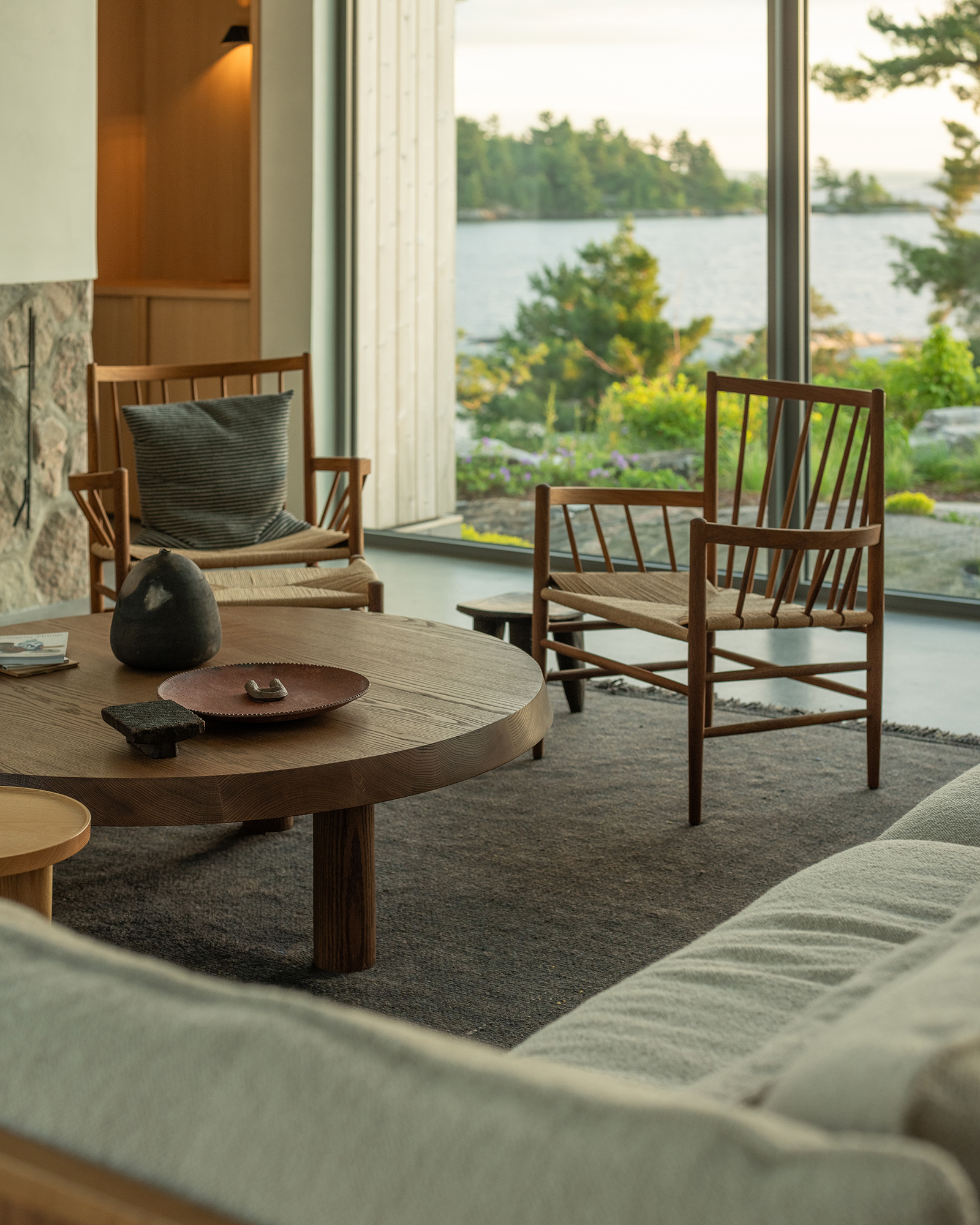
A design cleanse is not only about subtraction. It is also about strengthening the visual foundation of a room. Natural wood, linen, wool, stone, warm metal finishes, and soft layered lighting can create warmth without adding clutter.
Color should feel connected rather than chaotic. You do not need a home full of beige to achieve calm. You simply need a palette with some relationship between the rooms. A deep green chair can work beautifully with warm ivory walls. A striped pillow can coexist with a patterned rug. The trick is repetition: allow certain tones, materials, or shapes to echo through the space.
Room-by-Room Design Cleanse Ideas
The Living Room
Begin with the coffee table, media console, and shelves. Remove anything that does not belong there. Use a tray to group remotes, candles, or a small decorative object. Keep one or two stacks of books instead of a vertical tower that looks ready to file a workers’ compensation claim.
Look at the furniture layout, too. Too many small tables and chairs can make a room feel more fragmented than cozy. A few properly scaled pieces often create a calmer visual field than several tiny furniture items scattered around the room.
The Kitchen
The kitchen is a clutter magnet because it hosts actual life: cooking, eating, homework, mail, snacks, hydration attempts, and the emotional consequences of owning too many reusable water bottles. Clear the counters first. Keep only the appliances used most often, then group the essentials on a tray or in a dedicated zone.
Limit duplicate tools, create categories inside drawers, and move rarely used serving pieces out of prime kitchen real estate. A calmer kitchen is not one without personality; it is one where the cutting board is easier to find than the instruction manual for a blender you used in 2018.
The Bedroom
A bedroom design cleanse should prioritize rest. Clear nightstands, reduce paper clutter, simplify the chair situation, and consider whether your storage actually supports your routine. Wall-mounted reading lights and nightstands with drawers can free up valuable surface area while reducing visual clutter.
Keep visible objects soothing and functional: a lamp, a book, a small dish, perhaps one sentimental item. Your bedroom does not need to look like a luxury hotel, but it should not look like you lost a bet with a clothing store.
The Home Office
Focus is easier when your desk has a job beyond collecting documents. Keep current work visible, store everything else, and manage cords aggressively. Use closed storage for paperwork, a vertical file for active projects, and one or two personal objects that make the space feel human.
Architectural Digest notes that a restrained color palette, texture, and thoughtful composition can help create a more focused home-office environment. The goal is not an empty desk; it is a desk where the important thing is obvious.
How to Avoid Turning a Design Cleanse Into Sterile Minimalism
The biggest misconception about editing a home is that it requires removing every sign of joy. It does not. A design cleanse should make personality more visible, not less visible.
Keep the art that tells a story. Keep the books you truly read or love to revisit. Keep the weird flea-market lamp if it makes you happy. Keep the ceramic bowl your grandmother gave you, even if it is technically too small to hold anything useful except possibly one grape.
The test is not whether something fits a trend. The test is whether it contributes to the room emotionally, visually, or functionally. A meaningful home has objects. A cluttered home has objects without a clear relationship to the space or the people living in it.
A Seven-Day Design Cleanse Plan
- Day One: Clear the entryway and create a landing zone.
- Day Two: Reset kitchen counters and remove duplicate tools.
- Day Three: Edit the living-room coffee table and media console.
- Day Four: Sort one shelf, bookcase, or display cabinet.
- Day Five: Simplify bedroom surfaces and laundry overflow.
- Day Six: Clear your desk, cords, and active paperwork.
- Day Seven: Walk through the home as if you are seeing it for the first time.
For the final walk-through, look at your home from the doorway of each room. Notice what your eye lands on first. Is it something beautiful, useful, or meaningful? Or is it a stack of mail giving off the energy of a small administrative crisis?
What a Design Cleanse Experience Really Feels Like
A design cleanse rarely begins with a cinematic montage. There is usually no sunbeam, no perfectly folded linen shirt, and no soundtrack featuring a woman whispering about “intentional living” over soft piano music. More often, it starts with annoyance.
You notice that the kitchen counter never looks clean, even after you wipe it. You realize the dining table has not been used for dinner in three weeks because it is hosting paperwork, chargers, unopened packages, and a bag of reusable grocery bags that somehow weighs more than a small dog. You begin to feel like your home is always one unexpected visitor away from exposing your entire life story.
Then you choose one small area. Maybe it is a nightstand. Maybe it is the coffee table. Maybe it is the chair in the bedroom that has spent six months auditioning for the role of “laundry mountain.” You remove everything. Suddenly, the surface underneath looks larger than expected. It is a tiny revelation: the room was not too small. It was just too crowded.
The first few decisions can feel strange. You may pick up a decorative object and realize you do not even like it anymore. You may discover that you have been storing something only because you paid for it, not because you use it. You may find three nearly identical candles, two expired coupons, and a charger that belongs to a device you no longer own. This is the emotional archaeology portion of the project.
As the cleanse continues, the experience shifts. You stop seeing decluttering as punishment and start seeing it as editing. The room begins to feel more coherent. The art looks stronger because it has space around it. The sofa looks better because it is no longer surrounded by six objects that were never meant to live there. The coffee table becomes useful again, which is thrilling in a way that makes you question how low your standards had become.
There is also a practical relief. You know where the keys are. You can find a pen. You stop moving the same pile of mail from one location to another like it is part of a ceremonial household tradition. Cleaning becomes faster because there are fewer things to move before you can wipe a surface. Getting dressed becomes easier because the closet contains clothes you can actually see.
Most importantly, the design cleanse changes your relationship with future purchases. You begin asking better questions before bringing something home. Where will it live? What will it replace? Does it solve a problem? Will I still enjoy it when the novelty wears off? This does not mean never buying décor again. It means buying with enough intention that your home does not become an accidental museum of temporary impulses.
The best part is that the result does not feel like deprivation. It feels like recognition. Your home begins to reflect the version of your life you actually want to live: less frantic, more functional, more personal, and much easier to enjoy on an ordinary Tuesday evening.
Conclusion: Make Space for What Matters
A design cleanse is ultimately about making your home work harder for your well-being. It creates breathing room without stripping away personality. It helps meaningful pieces stand out, makes routines easier, and turns everyday spaces into calmer places to live.
You do not need to become a minimalist, buy twenty matching storage bins, or throw away every object that fails to look good on social media. Start with one surface, one drawer, or one room. Edit thoughtfully. Keep what supports your life. Let go of what keeps adding noise. Then enjoy the rare and wonderful experience of finding your keys without beginning a full-scale search-and-rescue operation.