
There are few household tests more revealing than flat-pack furniture. Forget personality quizzes. Forget astrology. Hand two adults an Allen wrench, a bag of screws labeled with letters that somehow skip from B to F, and a manual drawn entirely by someone who fears words. Within an hour, you will know who reads instructions, who “just eyeballs it,” who loses the dowels, and who quietly becomes the project manager of the entire home.
That is why the story of a wife building and setting up furniture all by herself, only for her husband to object when she takes credit, struck such a loud chord online. At first glance, it sounds like a simple domestic disagreement: one person did the work, another person felt embarrassed. But the deeper issue is not really about a crib, a dresser, or a bookshelf. It is about recognition, gender expectations, invisible labor, and the awkward way some people confuse praise for their partner with criticism of themselves.
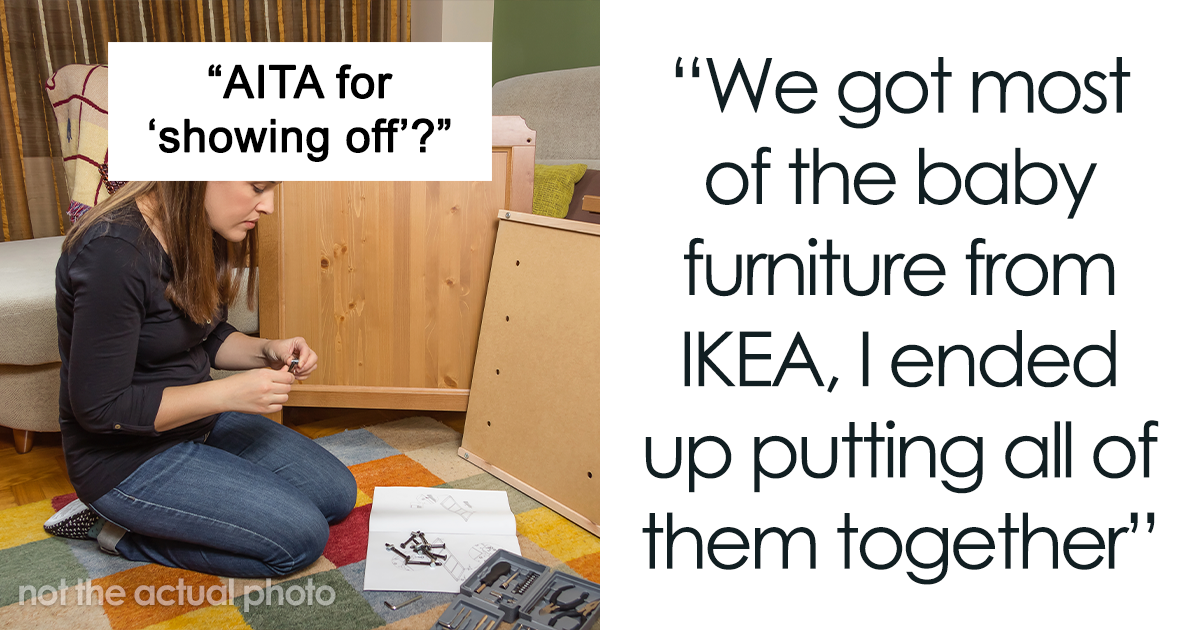
In the viral story, the wife had grown up learning hands-on skills from her father. She knew how to fix things, assemble furniture, work with tools, and handle practical home projects that are still too often treated as “men’s work.” When baby furniture arrived, she assembled it herself. Later, when someone complimented the home setup, she acknowledged that she had done it. Her husband, instead of saying, “Yes, she crushed it,” became upset that she had made him look bad.
And that is where the internet collectively leaned forward, adjusted its glasses, and said, “Sir, the problem is not the furniture.”
Why This Furniture Assembly Story Went Viral
The headline has all the ingredients of a modern relationship debate: a capable wife, a defensive husband, a family witness, and a household task wrapped in gender stereotypes. It is not shocking that people reacted strongly. Furniture assembly seems small, but small tasks often become symbols of bigger patterns.
When someone builds a piece of furniture, the result is visible. You can point at it. You can say, “That crib is standing because I followed seventeen confusing steps and did not cry into the hardware bag.” Unlike laundry, grocery lists, appointment scheduling, or remembering that the baby needs more wipes, a finished piece of furniture has the satisfying presence of a trophy. It is functional, physical proof of effort.
So when the wife took credit, she was not bragging wildly. She was stating a fact. She did the work. She handled the setup. She contributed a useful skill to the household. That should have been a proud moment for both spouses, especially with a baby on the way. Instead, her husband seemed to interpret her competence as an accusation.
The Real Issue: Taking Credit For Work You Actually Did
There is a huge difference between “showing off” and accepting credit. If a person cooks dinner and someone says, “This is delicious,” nobody expects their spouse to leap in and say, “Actually, the entire household should be praised because I emotionally supported the chicken.” Credit belongs where effort happened.
In healthy relationships, partners do not need to compete for applause. A win for one partner can be a win for the couple. If one spouse is great with tools and the other is great with budgeting, childcare logistics, cooking, planning, cleaning, earning, organizing, or emotional support, the partnership benefits. The goal is not to make both people identical. The goal is to respect what each person brings.
The husband’s discomfort appears to come from the idea that if his wife built the furniture, then outsiders might assume he failed at a “husband job.” But that assumption only has power if he believes furniture assembly belongs to him by default. His wife did not make him look bad. The outdated expectation did.
Gender Roles Still Sneak Into Everyday Home Life
Even in modern households, old ideas about who “should” do what can linger like that one mystery screw left over after assembling a dresser. Many people say they believe in equality, but when a woman uses a drill confidently or a man takes charge of diapers, cooking, or school forms, someone still acts like the furniture has started speaking Latin.
DIY skills are practical skills, not gendered magic. Reading a manual, measuring twice, lifting safely, using basic tools, anchoring furniture, and organizing parts are learned behaviors. No one is born knowing how to install a shelf. Babies do not enter the world holding stud finders. People learn because someone teaches them, because they practice, or because necessity knocks on the door carrying a box from IKEA.
In this case, the wife’s father taught her skills that gave her confidence. That detail matters. Instead of raising her to wait for someone else to solve practical problems, he equipped her to participate fully in maintaining a home. That is not an insult to her husband. That is good parenting.
Why Recognition Matters In A Marriage
Recognition is emotional glue. It tells a partner, “I see what you did. I know it took effort. I do not take it for granted.” Without recognition, even small chores can become resentment factories. One person folds laundry, remembers birthdays, handles repairs, orders supplies, schedules appointments, builds furniture, cleans the high chair, or researches car seats, while the other person acts as if the home runs on fairy dust and free shipping.
In relationships, people rarely fight only about the visible task. They fight about what the task represents. The furniture becomes a stand-in for respect. The crib becomes a stand-in for competence. The screwdriver becomes a tiny metal witness to a bigger emotional trial.
When the wife said she assembled the furniture, she was asking for nothing more than reality to be acknowledged. A supportive spouse could have turned that moment into affection: “She did, and it looks amazing. I married someone who can build a nursery and probably survive the apocalypse.” That response would have made him look secure, proud, and charming. Instead, defensiveness made the situation worse.
Competence Is Not A Threat
One of the strangest relationship habits is treating a partner’s ability as a personal attack. If your spouse is good at something, that is not a scoreboard against you. It is an asset. Marrying someone capable is like discovering your home came with bonus storage: useful, delightful, and not something to complain about.
A wife who can build furniture is not humiliating her husband. A husband who can cook dinner is not humiliating his wife. A spouse who earns more, fixes more, cleans more, plans better, drives better, negotiates better, or organizes better is not automatically diminishing the other person. Mature partnership turns individual strengths into shared stability.
The healthier question is not “How does this make me look?” It is “How can I appreciate this and contribute in my own way?” Maybe he did not build the furniture. Fine. Did he unpack boxes, recycle packaging, make dinner, watch the baby, clean the room, bring water, read safety instructions, or say thank you? There are many ways to be useful. Sulking is not usually one of them.
The Furniture Was Built, But Was The Teamwork?
A household is not only built with tools. It is built with agreements, gratitude, flexibility, and emotional maturity. The wife’s work created a physical result. The husband’s reaction created an emotional one. That emotional result is the part couples need to examine.
If one partner feels embarrassed because the other is praised, the couple may need to talk about insecurity rather than the task itself. Was he raised to believe men must handle tools? Does he feel judged by family? Does he worry he is not contributing enough before the baby arrives? Those feelings may be real, but they do not justify rewriting who did the work.
There is room for compassion without erasing accountability. A person can feel insecure and still say, “I reacted badly. You deserved credit. I am proud of you.” In fact, that kind of repair is often what separates a normal disagreement from a relationship pattern that keeps repeating.
What The Husband Could Have Done Instead
1. Celebrate Her Skill Publicly
The easiest move was also the best one: praise her. A simple “She put all this together herself” would have turned the moment into admiration rather than conflict. Public support matters because it signals that a spouse is not threatened by their partner’s strengths.
2. Be Honest About His Feelings Privately
If he felt embarrassed, he could have brought it up later without accusing her. For example: “I realized I felt awkward when my sister heard you assembled everything. I think I have some old ideas about what I should be doing, and I need to work on that.” That is a vulnerable conversation. It is also much more attractive than pouting near a perfectly assembled changing table.
3. Contribute In Another Area
Not every spouse needs to do every task. But everyone should contribute somewhere. If one partner assembles the nursery, the other can wash baby clothes, install outlet covers, cook dinner, schedule pediatrician visits, compare car seats, or clean up the packaging. A household works best when both people are active participants, not when one person works and the other audits the applause.
4. Drop The Myth Of “Men’s Work”
The idea that tools belong to men and caregiving belongs to women is not just outdated; it is inefficient. Homes need capable adults, not role-play from 1954. If a task needs doing and someone can do it safely, that person should be allowed to do it without turning the moment into a referendum on masculinity or femininity.
DIY Furniture Assembly: Practical Pride With Real Safety Rules
There is another reason the wife deserves credit: assembling furniture correctly matters. Baby furniture, dressers, bookshelves, and storage pieces should not merely look nice in photos. They should be stable, secure, and safe for daily use. Anyone who has assembled furniture knows the final product depends on patience, accuracy, and the humility to admit that Step 7 cannot happen before Step 4 no matter how confident you feel.
For families with children, safety becomes even more important. Tall or heavy furniture should be anchored properly, and parents should follow manufacturer instructions closely. The best DIY attitude is not “I am invincible with a hex key.” It is “I will read the manual, use the right hardware, secure what needs securing, and avoid creating a very stylish hazard.”
That is another reason dismissing the wife’s contribution is unfair. She was not merely decorating. She was preparing a home for a child. That kind of work has practical, emotional, and safety value.
Why Online Readers Took The Wife’s Side
Many readers supported the wife because the situation felt familiar. People recognize the frustration of doing the work and then being told to soften the truth so someone else can feel comfortable. That dynamic appears in homes, offices, friend groups, and families. A person completes the task, but someone else wants equal credit, protected credit, or no public acknowledgment because reality bruises their ego.
Online audiences can be harsh, but in this case, the core response was fairly simple: she did the work, so she can say she did the work. Marriage does not require pretending your spouse built something they did not build. Partnership is not a public relations campaign for fragile pride.
People also reacted because the wife’s backstory made her competence meaningful. Her father taught her to be self-reliant. She carried those lessons into adulthood. Her skill was part of her identity, not a random attempt to embarrass anyone. Asking her to hide that skill would be asking her to shrink.
How Couples Can Avoid Turning Chores Into Courtroom Drama
Give Credit Clearly
When one person does a task, name it. “You handled the nursery furniture. Thank you.” “You researched the safest crib mattress. Thank you.” “You cleaned the garage. Thank you.” Specific appreciation is better than vague praise because it proves you noticed the effort.
Discuss Expectations Before Big Projects
Before a project begins, couples should ask: Who is doing what? What needs to be done? What does “finished” mean? Does anything need professional help? Are there safety steps? Clear expectations prevent one person from assuming and the other from resenting.
Stop Treating Help As Heroism
If a husband changes a diaper, he is parenting. If a wife assembles a crib, she is preparing the home. These are not shocking acts of supernatural generosity. They are normal contributions. Praise is wonderful, but adults should not need a parade for participating in the household they live in.
Repair Quickly After A Bad Reaction
Everyone gets defensive sometimes. The key is repair. A good apology does not sound like, “I am sorry you made me feel bad by telling the truth.” It sounds like, “I am sorry I reacted poorly. You did the work, and you deserved credit.” Short, honest, and free of emotional gymnastics.
The Bigger Lesson: A Strong Marriage Makes Room For Two Capable People
The best marriages are not built on one partner being impressive while the other stays small. They are built on mutual expansion. Both people get to learn, grow, fail, improve, and be recognized. Sometimes the wife builds the furniture. Sometimes the husband does. Sometimes both of them stare at the instructions together and wonder whether Part G has left the country.
A spouse’s competence should feel reassuring. It means the household has more tools, more resilience, and more ways to solve problems. When a partner succeeds, the right response is not jealousy. It is pride.
In this story, the wife did something useful and deserved acknowledgment. The husband had an opportunity to celebrate her and show confidence in himself. Instead, he made her credit about his image. That is the lesson readers picked up immediately: the furniture may have been assembled correctly, but the relationship communication needed tightening.
Real-Life Experiences Related To This Topic
Many couples have their own version of the furniture story. It may not involve a crib or nursery setup. It might be a woman replacing a faucet while her partner jokes that she is “too handy.” It might be a husband meal-prepping for the week while relatives act like he deserves a trophy for discovering vegetables. It might be one spouse organizing a move, building shelves, painting rooms, comparing insurance plans, or repairing a leaky toilet, only for someone else to minimize the effort because it does not match their idea of who should do what.
One common experience is the “instruction manual standoff.” A box arrives. One partner wants to sort every screw into small piles and read the booklet from beginning to end. The other partner wants to start immediately because “it looks obvious.” Forty minutes later, the obvious approach has produced a backward drawer, a missing bracket, and a silence so thick it could be used as packing foam. The couple eventually learns that the person with patience for details should lead, regardless of gender. The furniture does not care who is masculine. It cares whether the cam locks face the correct direction.
Another familiar experience is the public-credit problem. Imagine a wife spends a weekend assembling storage units for the garage. At a family cookout, someone says, “Wow, the garage looks great!” She says, “Thank you, I put those cabinets together yesterday.” Her husband suddenly feels exposed, even though nobody accused him of anything. The better response would be, “She did an amazing job, and now I can finally find the socket wrench.” That line costs nothing. It protects the relationship, gives accurate credit, and makes him look supportive instead of insecure.
Some couples learn this lesson after becoming parents. Baby preparation is full of tasks that look simple until you are actually doing them: assembling a crib, washing tiny clothes, installing monitors, anchoring furniture, organizing diapers, sanitizing bottles, choosing a pediatrician, and figuring out why every baby product has twelve safety warnings and one mysterious strap. When one partner takes initiative, the other should not compete with that effort. They should ask, “What else needs doing?” New parenthood is hard enough without turning a changing table into a courtroom exhibit.
There are also positive experiences worth noting. Many households become stronger when partners swap traditional roles. A wife learns to use power tools and discovers she loves building. A husband becomes the family laundry expert and develops passionate opinions about stain remover. One partner handles spreadsheets, the other handles repairs. One cooks, the other cleans. One builds, the other designs. Over time, the couple stops asking, “Is this my role?” and starts asking, “What works for us?” That shift is where real teamwork begins.
The most practical advice from these experiences is simple: let competence be attractive, not threatening. When your partner does something well, admire it. Ask them to teach you if you are curious. Offer help without taking over. Give credit without making it weird. And if they assemble an entire room of furniture while you are busy elsewhere, say thank you loudly enough for the relatives in the back to hear.
Conclusion
The story of a wife building and setting up furniture by herself is not just about DIY furniture assembly. It is about whether a relationship can handle a woman being visibly capable. The answer should be yes. Taking credit for work you actually did is not arrogance. It is honesty. A supportive spouse does not need to be the hero of every household task; sometimes the most admirable thing is knowing how to cheer from the sidelines, grab the next box, and help clean up the cardboard.
In the end, the wife built more than furniture. She built a reminder that skill has no gender, credit should follow effort, and marriage works best when both people are allowed to stand tallpreferably next to a properly anchored dresser.














