Note: This original article synthesizes public information from environmental science, renewable-energy research, climate communication, and solarpunk culture. Meme examples are paraphrased for commentary and are not copied from the original posts.
Some people cope with the climate crisis by buying a reusable water bottle. Others plant tomatoes, join a community garden, or become the person at dinner who says, “Actually, lawns are ecological deserts.” And then there are the solarpunks: the internet’s hopeful rebels with compost bins, solar panels, anti-capitalist jokes, and enough environmental memes to power a small off-grid cabin.
The “Solarpunk” online community has become a bright green corner of the internet where climate anxiety meets imagination. Instead of simply doom-scrolling through wildfires, plastic waste, oil spills, and billionaires building escape rockets, members share memes that ask a bigger question: what if the future did not have to look like a corporate parking lot with better branding?
That is why these 30 environmental memes hit so hard. They are funny, yes, but the laughter has teeth. The jokes are about greenwashing, overconsumption, fossil fuels, corporate greed, public transit, community care, and the absurdity of asking ordinary people to save the planet with paper straws while giant industries keep treating Earth like an all-you-can-dump buffet.
What Is Solarpunk, and Why Does It Meme So Well?
Solarpunk is part aesthetic, part social movement, part speculative dream, and part “please stop paving everything” group project. It imagines a sustainable future where renewable energy, community resilience, ecological design, repair culture, public transit, local food systems, and social justice are not side quests. They are the main storyline.
Unlike cyberpunk, which often says, “The future is neon, corporate, and emotionally humid,” solarpunk asks, “What if technology served people and nature instead of quarterly earnings?” Picture solar rooftops, walkable neighborhoods, native plants, free libraries, bike lanes, cooperative housing, clean energy, and buildings covered in greenery that is not just decorative corporate moss.
The “punk” part matters. Solarpunk is not just about pretty architecture with vines. It is a critique of systems that turn forests into products, workers into disposable tools, and climate solutions into luxury upgrades. In solarpunk spaces, people talk about energy democracy, mutual aid, community gardens, degrowth, repair cafés, and the radical idea that a livable planet should not require a premium subscription.
Why Environmental Memes Feel So Relatable Right Now
Environmental memes work because they compress a whole policy lecture into one painful little laugh. A meme about a CEO telling consumers to recycle harder can say what a 40-page climate report says, but with more raccoons and emotional damage.
The humor lands because many people feel the contradiction every day. We are told to make responsible choices: bring a tote bag, skip plastic cutlery, turn off lights, eat less meat, shop sustainably, drive less, and stop buying things we do not need. Those actions matter, but people also know the climate crisis is driven by massive systems: fossil-fuel infrastructure, car-dependent cities, industrial agriculture, overproduction, planned obsolescence, and economic models that treat endless growth like a sacred law of physics.
That tension is meme fuel. One classic theme is the “individual responsibility” joke: a person rinsing a yogurt cup while a multinational company emits more pollution before breakfast than the rest of us could produce in a month of chaotic living. Another favorite target is greenwashing: brands slapping a leaf icon on disposable products and calling it a revolution. Congratulations, your plastic bottle is now emotionally supportive.
The Best Themes Behind the 30 Solarpunk Environmental Memes
1. Capitalism Versus the Planet
Many solarpunk memes are not subtle, and honestly, subtlety left the building sometime around the third “once-in-a-century” flood of the decade. The core joke is that capitalism often rewards extraction, speed, cheapness, and expansion, while ecological health requires limits, care, patience, and regeneration.
The meme version is usually simple: Earth says, “I am literally dying,” and a corporation replies, “Have you considered increasing shareholder value?” The joke is exaggerated, but the frustration is real. People see companies marketing sustainability while lobbying against stronger climate policies, producing disposable goods, or shifting blame onto consumers.
2. The Paper Straw Problem
Few symbols have become as meme-able as the paper straw. It melts, it bends, it tastes like wet homework, and it somehow became the poster child for consumer-level environmental sacrifice. Solarpunk memes use the paper straw to point out a bigger issue: small personal changes are useful, but they cannot substitute for systemic reform.
The joke is not “doing small things is pointless.” The joke is “why are ordinary people asked to carry the moral weight of planetary survival while powerful industries continue business as usual?” A solarpunk approach says: yes, reduce waste; also redesign the systems that create mountains of waste in the first place.
3. Greenwashing: Now With 40% More Leaf Graphics
Greenwashing memes practically write themselves. A fast-fashion brand announces a “conscious collection.” An oil company posts a photo of a smiling child near a wind turbine. A product arrives wrapped in five layers of plastic but uses a beige label, so apparently nature is healed.
Solarpunk communities are especially sharp at spotting this nonsense. They understand that sustainability is not an aesthetic filter. A truly sustainable product or system considers materials, labor, emissions, repairability, end-of-life disposal, and whether the thing needed to exist in the first place. Beige packaging is not a climate plan. It is just capitalism wearing linen.
4. Lawns, Parking Lots, and the War on Useful Land
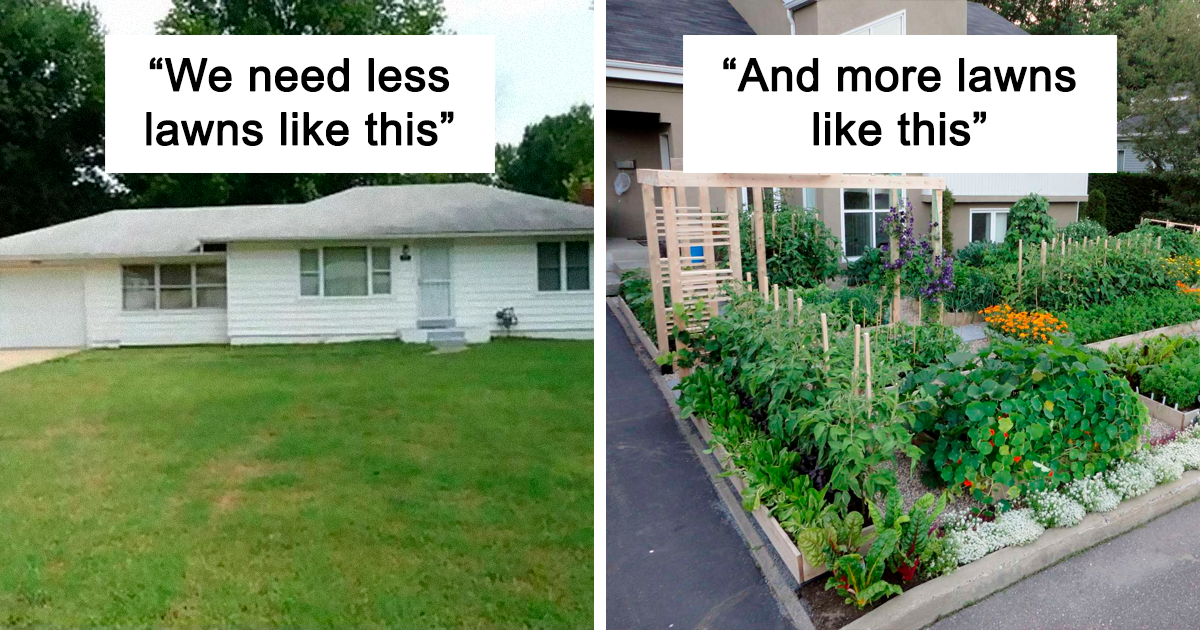
Another beloved meme category attacks the American obsession with empty lawns and giant parking lots. Solarpunks look at a manicured grass lawn and see wasted water, chemical fertilizers, low biodiversity, and a missed opportunity for native plants, pollinator gardens, edible landscapes, shade trees, or community growing spaces.
Parking lots get roasted even harder. They are hot, ugly, car-centric heat islands that often occupy land that could support housing, gardens, parks, markets, trees, or public gathering spaces. In meme language: “We destroyed the meadow so twelve SUVs could nap in the sun.” Painful? Yes. Accurate enough to sting? Also yes.
5. Public Transit as a Love Language
Solarpunk memes love trains, buses, bikes, and walkable cities with the intensity usually reserved for celebrity gossip. This makes sense. Transportation is one of the largest sources of greenhouse gas emissions in the United States, and car dependency also shapes land use, household budgets, air quality, and daily stress.
The meme format often contrasts two futures. In one, everyone sits alone in traffic inside expensive metal boxes, honking at existence. In the other, people ride clean public transit, read books, arrive calmly, and maybe still have enough money left for a pastry. Radical? Apparently.
6. Billionaires Escaping Earth Instead of Fixing It
No environmental meme collection is complete without a jab at billionaires and space fantasies. The punchline is usually that some of the richest people alive appear more excited about colonizing Mars than making Earth livable for everyone.
Solarpunk humor flips that script. Instead of escaping a damaged planet, it imagines repairing watersheds, cooling cities with trees, building resilient local food systems, and making clean energy accessible. Mars may be cool, but have you tried breathable air, oceans, and peaches?
Why Solarpunk Is More Than Pretty Futurism
Solarpunk can look dreamy online: golden light, rooftop gardens, stained glass, wind turbines, bicycles, solar panels, handmade clothes, and buildings that appear to be hugged by plants. But beneath the beauty is a serious political and ecological argument.
The movement insists that climate solutions must be equitable. A sustainable future that only wealthy people can afford is not solarpunk; it is luxury survivalism with better landscaping. Community solar, weatherized homes, affordable public transit, shared tools, local repair networks, and accessible green spaces are closer to the heart of the idea.
That is why the memes often punch upward. They are not mocking people who forgot their tote bag. They are mocking systems that make waste normal, extraction profitable, and repair inconvenient. They are also mocking the exhausting feeling of living in a world where every problem is turned into a shopping decision.
The Real-World Ideas Hiding Behind the Jokes
Behind the memes, solarpunk points toward practical ideas already being tested in the real world. Community solar programs can help renters, apartment dwellers, nonprofits, and households without suitable rooftops access renewable energy benefits. Agrivoltaics combines solar energy with agriculture, allowing land to produce food, power, pollinator habitat, or grazing space at the same time. Urban tree planting, cool roofs, heat-resilient design, and native landscaping can help cities adapt to rising temperatures.
Repair culture is another major solarpunk theme. Instead of throwing away a toaster because one tiny part failed, repair cafés and tool libraries help people fix, share, and learn. This challenges planned obsolescence, reduces waste, and rebuilds skills that consumer culture quietly tried to bury under next-day shipping.
Local food systems also matter. Community gardens, food forests, composting programs, farmers markets, and urban agriculture do not replace global agriculture, but they reconnect people to land, seasons, soil, and neighbors. They turn “the environment” from an abstract cause into the basil growing outside the library.
Why People Who Are Sick of Capitalism Relate So Deeply
The phrase “sick of capitalism destroying the planet” is blunt, but it captures a widely felt exhaustion. Many people are tired of being told that the market will magically solve problems the market helped create. They are tired of “eco-friendly” products that cost three times more. They are tired of climate pledges with distant deadlines and suspiciously tiny fine print. They are tired of seeing environmental responsibility packaged as personal virtue while structural change is treated like an unreasonable fantasy.
Solarpunk memes give that frustration a shared language. They say, “You are not crazy for noticing this.” They turn private climate grief into public recognition. They remind people that anger can be useful when it points toward care, imagination, and action instead of despair.
The Comedy of Climate Anxiety
Climate anxiety is not a punchline, but humor can be a pressure valve. A good meme does not erase fear; it makes fear easier to hold. When people joke about bringing a tote bag to the apocalypse, they are not saying the crisis is funny. They are saying the situation is absurd, and absurdity is sometimes the only honest emotional setting.
This is one reason solarpunk stands apart from pure doom content. It acknowledges ecological crisis without worshiping collapse. It says the future is not guaranteed, but it is still buildable. That hopeful defiance is powerful. Doom says, “Nothing matters.” Solarpunk says, “Bring snacks. We are fixing the neighborhood.”
What the 30 Memes Reveal About Online Environmental Culture
The popularity of environmental memes shows that people want climate conversations that are emotionally honest. Not everyone wants a technical chart every time they open their phone. Sometimes people need a joke about compost. Sometimes they need a cartoon frog screaming at a fossil-fuel executive. Sometimes they need to see that thousands of strangers are also furious about plastic packaging inside plastic packaging inside a box large enough to ship a violin.
Memes also lower the barrier to entry. A person may not read a full policy report on regenerative urban planning, but they might laugh at a meme about replacing golf courses with food forests. That laugh can become curiosity. Curiosity can become reading. Reading can become action. Action can become a community meeting where someone inevitably brings hummus.
of Real-Life Experience: Living the Solarpunk Feeling Without Moving Into a Treehouse
The most relatable part of solarpunk is that it does not begin with a perfect life. Most people do not wake up in a solar-powered cottage surrounded by lavender, rain barrels, and neighbors who all know how to mend socks. Most people wake up in apartments, suburbs, rentals, dorms, or cities designed around cars and convenience stores. Solarpunk begins there, in the imperfect places.
One common experience is the grocery store moment. You walk in with good intentions and immediately face thirty kinds of packaging. The organic cucumber is wrapped in plastic. The “natural” snack bar has three wrappers and a marketing department. The cheap option is often the wasteful one. The sustainable option costs more. You stand there holding a reusable bag like a tiny flag of moral confusion. This is exactly the kind of everyday contradiction environmental memes capture so well.
Another familiar experience is trying to reduce consumption while living in a culture that treats shopping as therapy, identity, entertainment, and social participation. Solarpunk does not shame people for needing things. Instead, it asks why so many things are designed to break, why repair is expensive, why sharing is rare, and why advertisements follow us around the internet like raccoons with MBAs.
Then there is the neighborhood experience. Maybe you notice a vacant lot that could become a garden. Maybe your street has no shade, and summer sidewalks feel like stovetops. Maybe the bus comes once an hour, so everyone drives even when they would rather not. Maybe your city plants ornamental shrubs while ignoring native trees. Solarpunk thinking turns these frustrations into questions: Who controls public space? What would make daily life healthier? What can neighbors do together?
Small actions can become surprisingly meaningful. Growing herbs on a windowsill will not overthrow fossil capitalism, but it can change your relationship with food. Fixing a chair will not decarbonize the grid, but it resists throwaway culture. Sharing tools with neighbors will not redesign the economy overnight, but it builds trust. Joining a local clean-energy campaign, supporting transit funding, attending zoning meetings, or helping plant native species can connect personal values to structural change.
The best solarpunk experience is realizing that sustainability does not have to feel like punishment. It can feel like abundance: more shade, cleaner air, quieter streets, better food, stronger communities, useful skills, less waste, more beauty, and fewer hours spent buying objects that immediately become clutter. It is not about becoming the perfect eco-saint. Nobody needs that pressure, and frankly, eco-saints sound exhausting at parties.
Solarpunk is more practical and more generous. It says: start where you are, find other people, make things better, and keep your sense of humor sharpened. Laugh at the absurdity, but do not stop at laughing. The meme is the doorway. The garden, meeting, repair table, bike lane, solar co-op, mutual aid shelf, and public pressure campaign are what come next.
Conclusion: The Meme Is Funny Because the Problem Is Real
The “Solarpunk” online group’s environmental memes are relatable because they speak to a generation tired of being sold climate guilt while corporations sell climate damage. They make fun of greenwashing, consumer blame, car dependency, billionaire escape fantasies, and the strange belief that endless growth can happen on a finite planet without consequences.
But the deeper message is not despair. Solarpunk is funny because it still believes something better can be built. Its memes are little acts of resistance: jokes wrapped around grief, anger wrapped around hope, and hope wrapped around a practical question. What would the world look like if we designed it for life instead of profit?
That question is why solarpunk keeps growing online. It gives people permission to imagine a future with clean energy, shared resources, ecological repair, and communities that are more resilient than any luxury bunker. And if the revolution includes compost memes, native flowers, and a really good train system, even better.