Some rooms whisper. A stylish library with open shelving does not. It casually clears its throat, adjusts its picture light, and announces, “Yes, I do own books, baskets, and one suspiciously elegant ceramic bowl.” That is the magic of this look. It feels collected, airy, personal, and a little bit cinematiclike the homeowner drinks coffee out of real mugs and always remembers where the scissors are.
If you want a home library that feels polished without becoming precious, open shelving is one of the smartest ways to get there. It turns storage into part of the decor, gives books room to shine, and makes a wall feel architectural instead of bulky. The trick, of course, is avoiding the two classic disasters: shelves that look like a furniture showroom and shelves that look like you panic-cleaned by moving everything upward.
This guide breaks down how to create a stylish library of open shelving that feels timeless, practical, and deeply personal. From layout and color to styling, lighting, and maintenance, here is how to get the look without turning your shelves into a dust museum.
Why Open Shelving Works So Well in a Home Library
Open shelving succeeds because it does two jobs at once: it stores what you love and displays what defines you. In a library setting, that matters more than almost anywhere else in the house. Books are naturally visual. Their spines, sizes, colors, and textures bring rhythm to a room before you even add art or objects.
Unlike fully closed cabinets, open shelving keeps a library feeling lighter and more connected to the rest of the home. That makes it especially useful in offices, living rooms, stair landings, reading nooks, and small corners that need personality without visual heaviness. Floor-to-ceiling shelving can make a room feel grand, while a shorter wall of shelves can still create a strong focal point without swallowing the space.
There is also an emotional reason this style works. Open shelves feel lived in. They suggest that books are meant to be reached for, not preserved like museum artifacts under dramatic invisible lasers. A stylish open library tells people something simple and charming: this room is used.
The vibe, in plain English
Think classic library warmth meets modern breathing room. You want substance, but not stuffiness. You want beauty, but not clutter. You want a room that says “reader” rather than “I bought twelve beige books by the yard.”
Start With the Right Shelf Structure
Before styling comes structure. If the bones are wrong, even the prettiest objects will look like they are trying to help and failing. The best open-shelf libraries usually start with one of these approaches:
Built-ins for a custom, architectural feel
Built-ins are the gold standard because they make the room feel intentionally designed. Add trim, crown molding, or a painted finish that matches the walls, and suddenly the shelving looks less like furniture and more like part of the house itself. This is the route to take if you want a tailored, high-end library look.
Floating shelves for a lighter, more modern look
Floating shelves are ideal if your room is small or you want the library to feel less formal. They keep the footprint visually open and work beautifully in home offices, hallway libraries, or compact reading nooks. Just be selective with styling. Floating shelves look best when they are curated, not crammed.
Modular bookcases for flexibility
If custom millwork is not in the budget, modular bookcases can still create a built-in effect when grouped together and finished thoughtfully. Paint, trim, and consistent spacing go a long way. This is proof that “custom-looking” and “financially responsible” can absolutely be friends.
Don’t forget practicality
A stylish library still needs to hold real books. That means sturdy materials, properly anchored shelving, and enough support for heavier sections. If you are planning wide shelves, build in reinforcement. Beautiful sagging is still sagging.
Choose a Design Direction Before You Style a Single Shelf
One reason open shelving goes off the rails is that people start decorating before they decide what story the room is telling. A good library has a point of view. It does not have to be dramatic, but it should be clear.
Classic and moody
Go for darker paint, warm woods, brass accents, framed art, and a reading lamp or sconce. This look feels cozy, collected, and a little scholarly in the best way.
Fresh and modern
Use lighter woods, white or soft taupe shelves, simple objects, negative space, and fewer but larger decor pieces. Let the books add color while the structure stays calm.
Eclectic and personal
Mix vintage finds, framed photos, ceramics, baskets, and a wider range of book colors. The key here is cohesion. Eclectic should feel intentional, not accidental. Think “curated life,” not “attic with Wi-Fi.”
Library-office hybrid
If your shelving will share space with work materials, blend display with function. Use attractive bins, document boxes, and lower concealed storage where possible. The prettiest library in the world loses some sparkle when tax paperwork starts peeking out like a nosy neighbor.
How to Style Open Shelves Like a Designer
This is where the transformation happens. The most stylish libraries do not rely on more decor. They rely on better editing.
1. Mix books with objects
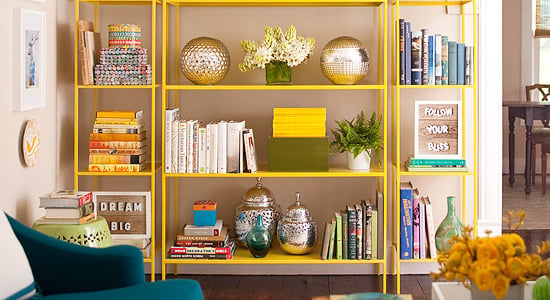
Books should be the hero, but they should not work alone. Pair them with framed art, ceramics, small trays, sculptural bookends, boxes, or greenery. This creates rhythm and keeps the shelves from looking flat.
2. Vary direction and height
Stand some books vertically. Stack others horizontally. Use a horizontal stack as a pedestal for a small bowl, candle, or object. This simple move adds shape and prevents the “every shelf, same sentence” problem.
3. Use odd-number groupings
Groups of three or five often feel more natural than perfectly matched pairs. A tall vase, a medium frame, and a small decorative object create movement without forcing symmetry. That said, not every shelf needs a tiny design lecture. One bold piece can sometimes say enough.
4. Leave breathing room
This might be the most important rule of all. Open shelving needs negative space the way good outfits need hems and excellent sandwiches need crusts. If every inch is filled, nothing stands out. Empty space is not wasted space. It is what makes the shelves feel elevated.
5. Create visual triangles
When placing objects, think in gentle diagonal lines and triangular compositions rather than rigid rows. This keeps the eye moving naturally across the shelving wall and prevents everything from feeling too flat or repetitive.
6. Add art to break up the grid
Small framed art placed on a shelf, leaned against the back panel, or even hung across part of the bookcase can soften the boxy look of repeated rectangles. Art brings warmth and a layer of personality that pure storage cannot.
7. Introduce texture, not chaos
Wood, paper, linen, ceramic, glass, and metal all have a place here. Texture makes shelves feel rich. Random clutter does not. There is a difference, and your bookshelf knows it.
The Color Palette That Makes Everything Look Better
A stylish library of open shelving usually feels cohesive because the palette is doing quiet, heroic work in the background. You do not need everything to match, but you do need the shelves to feel visually related.
Let books lead, then support them
If your collection is colorful, keep decor more restrained. If your books are mostly neutral, you can introduce more contrast through pottery, art, and painted shelving. The goal is balance, not competition.
Try one of these easy approaches
Tonal: Similar shades, soft contrast, calm and polished.
Moody contrast: Dark shelves with warm woods, brass, and rich art.
Natural and airy: Oak, white, olive, stone, black accents.
Collected color story: Repeating blues, greens, rust, or neutrals throughout books and accessories.
One smart trick is to paint the back of the shelves or the whole unit in a color that supports your collection. This can make even a basic bookshelf look custom and deeply considered.
Lighting Is What Turns Shelves Into a Library
Without good lighting, shelves are storage. With good lighting, they become atmosphere.
Picture lights and sconces
These instantly add a tailored, library-like feel. Even a simple bookcase looks more expensive when lit with intention. Brass finishes, matte black fixtures, or understated contemporary sconces all work depending on your style.
Integrated LED lighting
For a more custom look, subtle LED strips can highlight shelves without making the room feel theatrical. You want glow, not interrogation-room energy.
Layer nearby lighting
A reading chair, floor lamp, side table, and soft rug turn shelving into an actual destination. The best libraries are not just pretty backgrounds. They invite you to stay.
How to Keep Open Shelving Looking Chic, Not Chaotic
Here is the truth nobody loves but everyone needs: open shelving only looks effortless when somebody is, in fact, making an effort. Fortunately, it does not have to be exhausting.
Edit seasonally
Every few months, remove a handful of items and restyle. Shelves benefit from fresh eyes. What once looked charming can quietly become visual wallpaper.
Use baskets and boxes
Open shelves do not mean everything must be exposed. Decorative boxes and baskets are excellent for hiding cords, notebooks, chargers, and miscellaneous objects that are necessary but not attractive.
Keep the “daily-life clutter” elsewhere
Receipts, random mail, extra remote controls, mystery keys, and things you are “setting down for a minute” should not live on your library shelves. That minute turns into six months with shocking speed.
Accept that all-open is not always the answer
For many homes, the best setup is mixed storage: open shelves above, closed cabinets below. That gives you display space where it counts and hidden storage where life gets real.
Easy Ways to Recreate the Look on Any Budget
Budget-friendly
Use grouped bookcases, paint them in one color, add peel-and-stick wallpaper to the back panels, and style with thrifted frames, secondhand ceramics, and baskets.
Mid-range
Install floating shelves in a niche or along one accent wall, add a reading chair, layer in sconces, and include a mix of books, art, and lidded boxes.
Higher-end
Go for floor-to-ceiling built-ins with trim, integrated lighting, a coordinated paint finish, and some concealed lower cabinets. If space allows, add a ladder, a window seat, or a deep armchair to complete the room.
No matter the budget, the real luxury is restraint. Stylish shelves are not built by spending more. They are built by choosing better.
Final Thoughts
A stylish library of open shelving is about more than arranging books attractively. It is about building a room that reflects how you live, what you love, and what you want the atmosphere of your home to feel like. The best versions of this look combine order and warmth, display and utility, personality and restraint.
So yes, buy the lovely bookends. Add the framed print. Paint the shelves if they need drama. Leave space for your collection to grow. And above all, remember that beautiful shelving should still feel human. A library is not supposed to look untouched. It is supposed to look inviting.
That is the real secret to getting this look: style the shelves, but keep the life in them.
Real-Life Experience: What It Feels Like to Live With a Stylish Library of Open Shelving
Once you actually live with open shelving, you realize the experience is part design, part ritual, and part very low-stakes emotional support. A good shelf wall changes the way a room behaves. People walk in and slow down. They scan titles. They notice a framed sketch, a ceramic piece from a trip, a stack of novels, a plant trying its best. The room starts conversations for you.
In daily life, open shelving also makes reading feel easier and more natural. Books are visible, which means they get picked up more often. Instead of being packed behind doors or scattered in piles around the house, they become part of your everyday landscape. That changes the mood of a room. Even ten quiet minutes with coffee and one chapter can feel more intentional when the space around you supports it.
There is also a strange but wonderful satisfaction in styling shelves over time. At first, it may feel like decorating. Later, it feels more like editing a personal story. You swap in a new framed photo, move a stack of art books, add a bowl from a flea market, take away something that suddenly feels too busy. The room evolves with you. Open shelving is never entirely finished, and that is part of the charm.
Of course, there are practical realities. Dust exists. Objects drift. Someone eventually puts a receipt on a shelf “just for now.” But many people find that open shelving encourages better habits because everything is visible. When the shelves look good, you are less tempted to toss random junk into the mix. The display gently trains the room to behave itself. Not perfectly, but noticeably.
Another experience people love is the balance between beauty and memory. A stylish library does not have to be filled with expensive decor. Often, the most effective shelves include deeply ordinary things used well: old paperbacks, a brass lamp, a wooden box, a framed postcard, a thrifted vase, a favorite candle. Together, they create a room that feels layered instead of purchased in one afternoon.
Guests respond to that authenticity. They may compliment the shelves, but what they are really noticing is atmosphere. Open shelving can make a space feel thoughtful, welcoming, and a little more intimate. It suggests that the homeowner values not just design, but ideas, objects with stories, and rooms that are meant to be lived in.
Perhaps the best part is this: a stylish library of open shelving gives you a backdrop for ordinary life that still feels special. You answer emails there. You read there. You rearrange one stack while pretending you are not procrastinating. You sit nearby on rainy evenings and feel absurdly pleased that your wall looks like it belongs in a magazine, even though one shelf still contains a stapler and three unmatched candles. That mix of elegance and real life is exactly why the look works. It is beautiful, yes, but it is also personal, flexible, and wonderfully alive.