Most household objects are perfectly happy being useful, silent, and emotionally unavailable. Then the light hits a power outlet at the right angle, and suddenly it looks horrified by your electricity bill. A crumpled backpack appears exhausted. A cheese grater screams without making a sound. Your car smiles as though it knows exactly why the check-engine light is on but refuses to tell you.
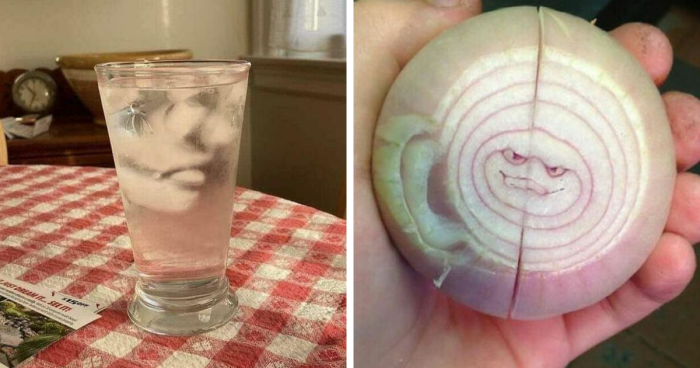
These funny objects with human characteristics are examples of two closely related habits of the human mind. Pareidolia makes us recognize familiar images, especially faces, in ambiguous shapes. Anthropomorphism takes the joke further by assigning those objects emotions, personalities, motives, and occasionally a suspicious amount of attitude.
Why Do Everyday Objects Look So Human?
Pareidolia is the tendency to perceive a meaningful image in a random or unclear visual pattern. Two dots and a curved line can be enough for the brain to declare, “That is definitely a face, and it looks disappointed in me.” Faces in clouds, toast, rocks, buildings, and household appliances are among the most familiar pareidolia examples.
Humans are remarkably sensitive to facial arrangements. Research discussed by Yale and Johns Hopkins suggests that face processing receives specialized attention in the brain, which may explain why even a vague face-like configuration can produce an immediate “I can never unsee that” reaction.
Anthropomorphism begins when we give the discovered “face” a story. A smiling car becomes friendly. A malfunctioning printer becomes vindictive. A leaning lamp becomes tired after a long shift. Researchers have examined how people humanize everything from cars and computers to brands, emotions, and intelligent products. Humanlike features can influence how friendly, trustworthy, entertaining, or unsettling an object appears.
The result is a free comedy show hidden inside ordinary life. No actors are required. The cast includes vegetables, appliances, buildings, tools, office supplies, and one extremely judgmental electrical socket.
Funny Faces Hiding in the Kitchen
-
1. The Horrified Electrical Outlet
Two plug holes become wide eyes while the grounding slot forms an open mouth. It looks like the outlet just watched you connect six appliances to one extension cord.
-
2. The Screaming Cheese Grater
A box grater’s handle resembles a forehead, while its rows of sharp holes create the face of someone trapped in a permanent heavy-metal album cover.
-
3. The Gossiping Kitchen Faucet
With its curved neck and two handles, the faucet looks like a nosy neighbor leaning over the sink to ask why you came home so late.
-
4. The Whisk Having a Bad Hair Day
Place a whisk upside down and it becomes a tiny person whose hairstyle has been professionally arranged by static electricity and terrible decisions.
-
5. The Suspicious Coffee Mug
A stain near the rim and a curved handle can transform an innocent mug into a detective quietly investigating who finished the creamer.
-
6. The Shocked Slice of Toast
Two dark crumbs and a pale patch can make toast look appalled. Perhaps it has finally realized that breakfast is not a retirement plan.
-
7. The Potato With Management Experience
Natural bumps form eyes, a nose, and a stern mouth, giving the potato the expression of a supervisor who has reviewed your quarterly peeling performance.
-
8. The Banana With a Secret
A curved banana with two dark spots can appear to be smiling knowingly, as though it remembers what happened at the fruit bowl party.
Household Objects With Surprisingly Strong Emotions
-
9. The Washing Machine Watching the Laundry Spin
Its round door becomes one enormous eye. The machine seems hypnotized by your socks while wondering where their missing partners went.
-
10. The Clothes Hanger Shrugging
An empty hanger resembles raised shoulders and outstretched arms. Its expression says, “Do not blame me. You bought the shirt in that size.”
-
11. The Mop After a Difficult Week
A wet mop leaning against the wall looks like a tired employee whose hair, posture, and remaining optimism have all collapsed simultaneously.
-
12. The Iron Who Takes Rules Seriously
The narrow front resembles a strict nose, while buttons create watchful eyes. This iron does not merely remove wrinkles; it disapproves of them.
-
13. The Vacuum Cleaner Hunting Crumbs
Its hose becomes a long snout, and the floor head resembles an open mouth. Every cracker crumb has officially entered the food chain.
-
14. The Exhausted Laundry Basket
A basket overflowing with clothes appears to be carrying an impossible workload. It has not complained, but its posture is drafting a resignation letter.
-
15. The Startled Toilet Paper Roll
Two dents and a torn sheet can produce a surprisingly expressive face. It looks shocked that someone replaced the roll before it became completely empty.
-
16. The Shower Controls Judging Your Singing
Two knobs become eyes and the faucet becomes a mouth. Together, they form an audience that did not request your seven-minute concert.
Cars, Streets, and Buildings Acting Like People
-
17. The Car With a Giant Smile
Headlights work as eyes while the grille becomes a grin. Some cars look cheerful; others appear ready to demand your license and registration.
-
18. The Traffic Cone Shouting Instructions
Its wide base and open top make the cone look like a tiny orange official yelling, “Not this lane, champion. Try again.”
-
19. The Mailbox Waiting for Attention
An open mailbox resembles a hungry mouth. When empty, it looks lonely; when stuffed with bills, it looks deeply sorry about what it has done.
-
20. The Offended Parking Meter
The display becomes a forehead and the coin slot forms a tight mouth. It appears personally insulted by your attempt to avoid paying.
-
21. The House That Just Woke Up
Two windows create sleepy eyes while the front door becomes a long mouth. Add crooked shutters, and the entire building needs coffee.
-
22. The Fire Hydrant Bodybuilder
Side nozzles resemble muscular arms, and the top cap looks like a helmet. This compact street athlete is always prepared for an emergency workout.
-
23. The Storm Drain With an Appetite
A dark rectangular opening looks like a giant mouth waiting beside the curb. Fallen leaves approach it with understandable professional concern.
-
24. The Apartment Building Full of Expressions
Windows, balconies, vents, and shadows can create dozens of faces. One floor looks cheerful while the next appears furious about the rent.
Office Supplies That Have Had Enough
-
25. The Passive-Aggressive Printer
A blinking display becomes a cold stare. The paper tray forms a smirk. It knows the deadline and has chosen this moment to “experience an error.”
-
26. The Stapler Ready to Bite
Its hinged top resembles an upper jaw. Pressing it down feels less like office work and more like feeding a small metal crocodile.
-
27. The Scissors Running Away
Open scissors resemble two long legs in motion. They appear to be escaping before someone asks them to cut another sheet of cardboard.
-
28. The Backpack Slumped After Class
Straps become tired arms, pockets resemble a face, and the entire bag collapses like a student who has heard the phrase “group project.”
-
29. The Desk Chair Crossing Its Legs
From the right angle, wheels and supports create the posture of a confident executive waiting for you to explain your internet browsing history.
-
30. The Lamp Conducting an Interrogation
A bent desk lamp can look intensely curious. Pointed directly at your keyboard, it seems ready to ask where the missing spreadsheet went.
-
31. The Tape Dispenser With One Big Tooth
The cutting edge resembles an aggressive dental situation. It looks helpful, but only in the way a cartoon shark might offer wrapping assistance.
-
32. The Calculator Disappointed by Your Math
Its display stares blankly after an incorrect equation. Even before showing “ERROR,” it somehow communicates that your teachers tried their best.
Nature and Technology Joining the Human Comedy
-
33. The Tree With an Ancient Face
Knots form eyes, bark creates wrinkles, and a hollow becomes a mouth. The tree appears ready to share wisdom but mostly complains about squirrels.
-
34. The Rock Taking a Nap
A rounded stone with one crack can resemble a sleeping animal or peaceful elderly face. It has achieved the work-life balance humans keep discussing.
-
35. The Cloud Running Through the Sky
A stretched cloud may look like a dog, rabbit, dragon, or late employee sprinting toward a meeting that began ten minutes ago.
-
36. The Cactus Surrendering
Two upward branches resemble raised arms. The cactus looks surrounded, although hugging it remains an extremely poor negotiation strategy.
-
37. The USB Drive as a Tiny Robot
Metal openings become eyes and the connector resembles a square head. It carries your files while silently questioning your folder organization.
-
38. The Headphones Giving a Hug
When folded inward, ear cups resemble arms embracing one another. It is a touching display from equipment usually responsible for ignoring people.
-
39. The Robot Vacuum Looking for Its Family
A circular body, sensor “eyes,” and uncertain movement make it resemble a confused pet. It bumps into furniture, retreats, and pretends that was intentional.
-
40. The Crushed Soda Can Facing Regret
Dents create eyes, folds form a nose, and the opening becomes a weary mouth. It looks like someone who sent a message at 2 a.m.
Why Anthropomorphic Objects Make Us Laugh
Visual humor often depends on surprise. We know that a faucet has no opinions, a printer is not plotting revenge, and a traffic cone has never attended management training. The comedy appears when an accidental shape matches a recognizable human expression so perfectly that the mind invents a personality before logic can object.
Context makes the illusion even funnier. A smiling toaster is mildly amusing. A smiling toaster beside badly burned bread looks guilty. A bent lamp looks tired, but a bent lamp beside a mountain of paperwork looks emotionally defeated. The object’s surroundings become part of the punch line.
These discoveries also turn ordinary observation into a creative exercise. Instead of seeing only equipment, furniture, food, and architecture, we begin noticing expressions, poses, relationships, and miniature dramas. A pair of salt shakers becomes an arguing couple. Three differently sized bottles become a family portrait. Two chairs angled together appear to be sharing confidential information.
A 500-Word Experience: What Happens When You Start Seeing Faces Everywhere
The experience usually begins with one object. Perhaps you notice that your power outlet looks frightened. You take a photograph, send it to a friend, and receive the expected response: “Why does it look more concerned about your life than you do?” That should be the end of it. Instead, your brain has learned a new game.
The next morning, breakfast becomes crowded with personalities. The coffee maker looks sleepy. The toast appears alarmed. A cracked egg resembles a small character wearing a shell helmet. The kitchen, once a quiet place where cereal happened, now feels like an animated workplace comedy in which every employee is underqualified.
During the commute, car fronts begin displaying personalities. A compact hatchback smiles politely. A large pickup truck appears permanently angry. A vehicle with one foggy headlight looks as though it stayed awake all night making poor financial choices. Buildings join the performance, using windows as eyes, balconies as mouths, and drainpipes as unusually long noses.
The most enjoyable part is sharing the discovery. One person may see a cheerful face in a washing machine, while another sees a shocked astronaut trapped behind the glass. Neither interpretation is objectively required, which makes the conversation playful rather than competitive. The goal is not to identify the “correct” character. The goal is to construct the funniest one.
A simple photo walk can turn into a low-cost creativity exercise. Search for faces in tree bark, sidewalk cracks, tools, vehicles, appliances, and architectural details. Change your viewing angle. Look at objects upside down. Notice how shadows create eyebrows or how two screws can become eyes. Avoid arranging everything deliberately at first; accidental discoveries often produce the best reactions.
Families can turn the activity into a scavenger hunt. Children might search for a surprised object, an angry object, a sleepy object, and an object that looks ready to tell a joke. Adults often become unexpectedly competitive, especially after someone finds a fire hydrant that resembles an armored penguin.
Writers, designers, photographers, and illustrators can use the same exercise to generate characters. A stapler might inspire a mechanical animal. A leaning mailbox could become a tired messenger. A row of windows might suggest a crowd watching an event. Ordinary shapes provide ready-made expressions, silhouettes, and personality cues.
There is also a pleasant change in attention. Instead of rushing through familiar surroundings, you pause long enough to inspect them. The walk to work becomes visually richer. A boring waiting room gains a suspicious lamp and a nervous air vent. Even chores become slightly less dull when the vacuum cleaner behaves like a hungry household pet.
Eventually, you realize that the objects have not changed at all. Your attention has. The world still contains the same outlets, tools, vegetables, cars, and furniture, but they now carry the possibility of a hidden expression. That is the charm of funny anthropomorphic objects: they reward curiosity with tiny, harmless stories hiding in plain sight.
Final Thoughts
Regular objects do not need moving eyes or cartoon voices to display human characteristics. Sometimes two bolts, one opening, and a helpful shadow are enough. Pareidolia supplies the face; anthropomorphism supplies the personality; imagination supplies the unnecessarily complicated backstory.
The next time an appliance looks angry or a vegetable seems emotionally overwhelmed, take a second look. You may have discovered the newest member of an invisible comedy cast performing around us every day.
Note: The 40 examples above are original humorous descriptions inspired by common experiences of pareidolia and anthropomorphism. An object’s apparent expression may change with lighting, orientation, distance, and the viewer’s imagination.