
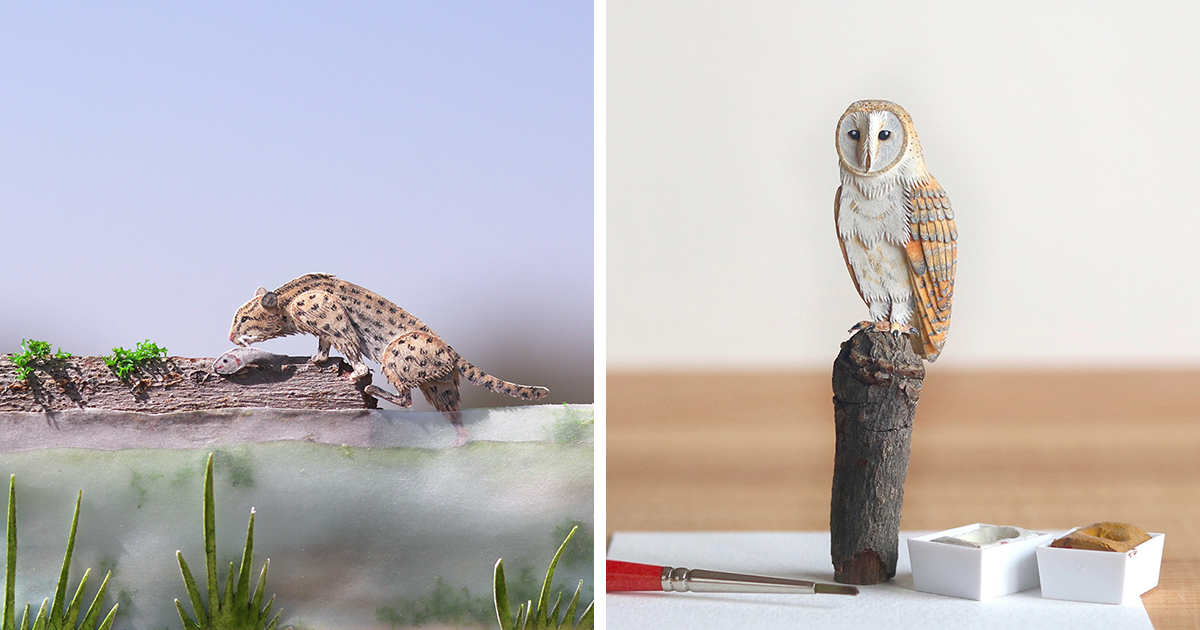
Some people train for marathons. Some people learn sourdough. We spent 1,000 days voluntarily hunched over tiny sheets of paper, whispering, “Please don’t tear, please don’t tear,” while trying to cut windows smaller than a fingernail. And honestly? We would do it again tomorrow.
Miniature paper cut art has a strange superpower: it takes one of the most ordinary materials on Earth and turns it into something theatrical, delicate, and a little bit magical. A flat sheet becomes a glowing street scene. A scrap of cardstock becomes a forest. A blade and a stubborn idea become a full-blown tiny universe. That tension is what kept us going through this 1,000-day adventure and what shaped our 30 favorite creations.
This article is a look at what miniature paper cut art taught us: how tiny scale sharpens design, why negative space matters as much as the paper you keep, how layering creates drama, and why the best work often begins with a simple shape and a reckless amount of patience. We’ll also walk through the 30 creations that defined our journey, from moonlit alleyways and botanical studies to little architectural scenes that nearly cost us our eyesight. Not literally. Probably.
Why miniature paper cut art feels bigger than it looks
Paper cutting has deep roots across traditions, from silhouettes and scherenschnitte to intricate papercuts used for storytelling, decoration, and symbolic design. What makes the miniature version especially compelling is scale. When a piece is only a few inches wide, every decision becomes louder. A curve cannot be lazy. A bridge cannot be bulky. A star cannot look like a potato unless you are deliberately going for “rustic celestial chaos.”
Working small also changes the emotional effect of art. Large work can overwhelm. Miniature work invites. Viewers lean in. They pause. They study the edges. They notice shadows cast by a second layer or a tiny cutout leaf that almost escaped notice. That intimacy is part of the charm and part of the challenge. In miniature paper cut art, nothing hides for long.
Over time, we learned that the most successful pieces were not necessarily the most complicated. They were the ones with strong silhouettes, clean contrast, and a clear visual hierarchy. In other words, tiny paper art behaves a lot like great design in general: less clutter, more intention, and one star element that steals the show.
What 1,000 days taught us about the craft
1. The blade is not the hero. The design is.
At first, we were obsessed with tools. Fancy knife handles. Premium blades. Mats with enough grid lines to launch a spacecraft. Tools matter, of course, but they do not rescue weak composition. Our early pieces were proof. They were technically clean and emotionally flat, like a very polite shrug.
The breakthrough came when we started sketching stronger shapes before cutting. Instead of asking, “What tiny details can we cram in here?” we asked, “What does this piece need to say in one glance?” That shift made the work better immediately.
2. Negative space is not empty space
Miniature paper cut art lives and dies by negative space. The cuts around a bird define the bird. The air between branches creates the feeling of a tree. The light showing through a window tells the story of the house. Once we understood that the removed paper was doing as much storytelling as the remaining paper, our compositions got smarter and far less muddy.
3. Layering creates depth without visual chaos
Flat paper can feel surprisingly cinematic when layered well. A foreground frame, a middle subject, and a lightly detailed background can create depth that feels almost theatrical. Too many layers, though, and the piece starts looking like it is trying too hard. We found that three to five layers usually gave us enough depth for shadow and dimension without turning the work into a papery traffic jam.
4. Paper choice changes everything
Thin paper can look elegant, but it also tears if you breathe too aggressively. Heavy paper resists tearing and holds shape better, but it can fight delicate curves. We eventually became loyal to papers sturdy enough to hold crisp cuts yet smooth enough to allow fine detail. For framed work, archival and acid-free materials became nonnegotiable. Nothing kills the mood faster than spending hours making a tiny masterpiece only to watch it yellow like an old receipt.
5. Tiny art demands slower decisions
Miniature work punishes hurry. Push too hard and a bridge snaps. Rotate too fast and a corner buckles. Add glue too generously and suddenly your elegant moon has a shiny blob on it. We learned to slow down, cut in a logical sequence, and let precision feel like part of the ritual instead of a tax on creativity.
Our 30 creations, grouped by the moments that shaped us
These 30 works were not just projects. They were milestones, experiments, near-disasters, and little victories with excellent lighting.
Paper cities and architecture
- The Lantern Alley A narrow nighttime street scene with hanging lanterns, layered archways, and tiny glowing windows. This taught us how much atmosphere a few cut rectangles can create.
- Rooftops After Rain A cluster of slanted roofs with puddle reflections suggested through cut shapes rather than drawn details. Moody, compact, and dramatically overachieving.
- The Corner Bookshop A storefront with striped awnings and a cat in the upstairs window. Viewers always found the cat first, which we took as a compliment.
- Bridge at Dusk A layered bridge scene with a river cut from negative space. We learned here that curves need confidence or they start to wobble like bad excuses.
- Tiny Town Hall Symmetry nearly broke us on this one, but the final piece had enough charm to make us forgive it.
- Midnight Train Station Strong geometry, minimal detail, and one glowing clock face. Proof that restraint can look sophisticated.
Nature in miniature
- Fern Study No. 1 A botanical experiment in repeated leaf forms. It looked simple until we had to cut every single leaflet. Character-building stuff.
- Moth Garden A central moth framed by flowers and curling stems. This piece taught us how radial balance can make a design feel rich without feeling crowded.
- Winter Birch Grove White trunks against dark cut shadows. Minimal, graphic, and one of our cleanest early successes.
- Mushroom Hollow A forest-floor scene with oversized mushrooms and tiny stones. Whimsical without sliding into chaos.
- Moonflower Trellis Vines, blossoms, and open space working together instead of competing. A lesson in letting the eye rest.
- Heron at the Marsh Long reeds, still water, one standing bird. We stopped adding details halfway through and the piece got better instantly.
Animals with suspiciously big personalities
- The Fox That Knows Things Sharp ears, curled tail, and a look that suggested unpaid taxes and secret opinions.
- Three Swallows in Motion A study in repeated form and directional movement. Clean silhouettes did all the heavy lifting.
- Rabbit Under Clover Soft curves, layered leaves, and a tiny nose cutout that felt unnecessarily stressful.
- Owl in the Window An architectural-animal hybrid piece where the window frame mattered as much as the bird itself.
- Goldfish Bowl Circular cuts, water plants, and lots of restraint. Tiny bubbles nearly ruined our sanity.
- The Staring Cat Portrait Simple outline, dramatic whiskers, maximum attitude. Viewers kept laughing, which means the piece worked.
Storybook and fantasy scenes
- The Paper Moon Circus Tents, flags, stars, and a crescent moon. Busy in concept, surprisingly elegant in execution.
- Castle on the Cliff A layered fantasy silhouette with cut clouds and sea spray. Our lesson here: atmosphere beats over-detailing every time.
- The Library in the Woods A house-shaped library hidden among trees. Ridiculous premise, delightful result.
- Stairway to the Comet A surreal piece built from repeated steps and curved celestial forms. One of our boldest compositions.
- Lantern Boat A tiny vessel floating under cut stars. Emotional, simple, and unexpectedly popular with viewers.
- The Keymaker’s Door Ornamental lock shapes, curling vines, and a door that seemed to promise a plot twist.
Seasonal and celebratory pieces
- First Snow on Maple Street Tiny houses and falling flakes, with enough negative space to keep the scene airy instead of cluttered.
- Harvest Window Pumpkins, leaves, and one mischievous crow silhouette. Autumn basically begged for paper cutting.
- Fireworks Over the Pier Sharp radial bursts against a dark sky. High drama, low room for error.
- Valentine Postbox Hearts, envelopes, and just enough sweetness to stop short of cartoon syrup.
- Spring Tea Table Cups, flowers, lace-like edges, and a lot of patience. Delicate but cheerful.
- New Year Window Scene Curtains, stars, and a city skyline. A fitting final piece for a long experiment in patience and paper dust.
The design patterns that showed up again and again
Looking back across all 30 creations, a few patterns became obvious. First, strong silhouettes always outperformed fussy detailing. When a piece looked good from six feet away, it usually looked even better up close. Second, contrast mattered more than color complexity. Even in layered work, a limited palette often created more elegance than an all-you-can-eat buffet of shades.
Third, repetition was our friend. Repeated windows, leaves, waves, feathers, and stars gave rhythm to a composition. The trick was variation inside repetition. Change the angle a little. Stretch one shape. Shrink another. Give the eye a pattern, then reward it with surprises.
And finally, the best miniature paper cut art always felt edited. Not starved, not empty, but edited. Enough detail to invite a closer look. Not so much detail that the piece turned into visual static.
How we keep miniature paper art looking good over time
After spending days or weeks on a piece, preservation becomes part of the artistic process. We learned to treat framing, mounting, and storage as creative decisions, not boring afterthoughts. Acid-free backing, archival mats, careful handling, and flat storage for unframed work make a real difference. Paper is beautiful, but it is also gloriously vulnerable. Light, humidity, rough adhesives, and bargain-bin framing choices can all age a piece faster than expected.
For display, we prefer shadow-box style framing when the layers matter and clean matting when the silhouette deserves center stage. Either way, the goal is the same: protect the edges, prevent warping, and let the shadows do their quiet little magic.
What this 1,000-day project really gave us
Yes, it gave us 30 finished creations. It also gave us a new relationship with slowness. Miniature paper cut art is not efficient, trendy, or particularly interested in your desire for instant results. It asks for planning, patience, and the humility to recut a piece because one branch snapped at the worst possible moment.
But that is exactly why it feels so rewarding. In a world full of speed, miniature paper art insists on attention. It turns a humble material into architecture, atmosphere, and emotion. It reminds us that detail can be powerful, that restraint can be dramatic, and that even a very small artwork can carry a surprisingly large story.
After 1,000 days, our biggest lesson is simple: paper cut art is never just about cutting paper. It is about editing a scene until it breathes. It is about shaping light as much as material. And sometimes, it is about realizing that the tiny cat in the bookshop window is the true star of the whole project.
500 more words from the studio: what the experience actually felt like
If the polished version of this journey sounds calm, elegant, and deeply artistic, we should probably confess that the studio reality was often a little less graceful. There were mornings when everything clicked: the blade felt sharp, the paper behaved, the composition made sense, and the coffee arrived at exactly the right emotional temperature. On those days, miniature paper cut art felt almost meditative. We would cut a row of windows or a ring of petals and fall into that rare kind of concentration where time becomes irrelevant. One hour disappeared. Then two. Then suddenly we were standing in a snowstorm of paper scraps wondering whether we had remembered lunch.
Other days were pure nonsense. A tiny connecting bridge would snap three cuts before the finish line. A layer that looked perfect on the table would shift half a millimeter during assembly and somehow ruin the entire illusion of depth. Glue would behave like glue only when we did not want it to. We learned that miniature work magnifies not just beauty, but also attitude. If we approached a piece impatiently, the piece knew. Immediately. Rudely.
One of the most memorable parts of the 1,000-day process was how much our eyes changed. Early on, we looked at buildings, trees, clouds, and objects as whole things. Later, we started seeing them as shapes, openings, edges, and layers. A stair rail became a repeating pattern. A rooftop became a triangle interrupted by chimneys. A leafy branch became a rhythm problem. That shift was unexpectedly thrilling. It felt as though the world had quietly switched to a paper-cutting language and we had finally learned to understand it.
We also discovered that viewers respond to miniature art in a very human way. They lean in. They smile before they speak. They point at tiny details like they have discovered buried treasure. Large art can command a room, but small paper art tends to create a conversation. People ask how it was made, how long it took, whether the little fox was intentionally smug, and how anyone cut a circle that small without losing faith in civilization. Those reactions became part of the reward.
Most of all, the experience taught us that consistency beats intensity. We did not make these 30 creations in one burst of genius. We made them through repetition, revision, mistakes, restarts, experiments, and small improvements that only became obvious in hindsight. The first pieces walked so the later ones could dramatically swan-dive into competence. That may be the real heart of this entire adventure. Art does not always arrive as a lightning strike. Sometimes it arrives as a stack of paper, a cutting mat, a careful hand, and the decision to come back tomorrow.












