What happens when an abandoned industrial building, nine imaginative craftspeople, a century-old farne roof? In North Portland, the answer was Beam & Anchora shared creative workspace that combined studios, community gathering areas, and a carefully curated retail shop.
The original project became a memorable example of how a Portland makerspace could support collaboration without sanding away each artist’s individuality. Woodworkers, soap makers, designers, painters, upholsterers, and other independent creators worked near one another, shared ideas, and sold finished goods just downstairs from where they were produced.
This is more than a tour of an attractive warehouse. It is a story about creative coworking, adaptive reuse, small-business incubation, and the surprisingly important role of eating lunch together.
From Neglected Warehouse to Portland Maker Hub
Beam & Anchor began in 2011 when Robert and Jocelyn Rahm transformed a roughly 7,000-square-foot industrial building on North Interstate Avenue. Working with creative retail collaborator Currie Person, the couple envisioned a place where independent makers could produce, display, and sell their work while belonging to a genuine community.
By the time the space was featured in 2012, it housed nine creatives connected with several small brands. Their disciplines included woodworking, furniture restoration, leatherwork, product design, painting, upholstery, organic fragrance, and soap making. The mix was intentional. Instead of filling the building with nine people who owned identical saws and argued about walnut, the founders brought together complementary skills.
The makers came from different parts of the United States, but Portland offered a common attraction: a strong appreciation for independent design, useful handmade objects, and traditional craft interpreted through a modern lens. The city already had a reputation for turning “I made this in my garage” into a perfectly respectable business plan.
The building’s two-level layout gave the concept a practical rhythm. Production happened upstairs, while a retail showroom occupied the ground floor. Customers could browse furniture, ceramics, bags, jewelry, home accessories, art, and apothecary products while knowing that some of the objects had been made only a staircase away.
on>
An Upstairs-Downstairs Model for Creative Business
Most coworking offices provide desks, Wi-Fi, conference rooms, and at least one mysterious refrigerator container nobody is willing to claim. A shared workspace for makers has more complicated needs. It must accommodate tools, raw materials, storage, noise, dust, ventilation, deliveries, photography, packaging, and occasional projects that seem to expand overnight.
The Workshop Upstairs
Beam & Anchor’s upper floor functioned as a collection of working studios. Makers produced furniture, restored wood, mixed fragrances, developed soaps, designed products, and completed detailed craftwork within the same creative ecosystem.
Many work areas were separated by tall curtains rather than permanent walls. This preserved flexibility and allowed visual and social connections between disciplines. The woodworking room was enclosed more completely because sawdust and loud machinery are famously uninterested in respecting curtain boundaries. A glass viewing panel still allowed visitors to observe furniture taking shape.
Materials were stored with purpose rather than hidden away. Boards were sorted by size, glass laboratory containers held ingredients, and tools remained close to the work they supported. The result looked appealing, but it was not a decorative imitation of a workshop. Things were being cut, mixed, repaired, tested, and occasionally reconsidered after somebody said, “Have you tried turning it the other way?”
The Store Downstairs
The lower level completed the business loop. Finished goods made upstairs were displayed beside selected products from other local, national, and international artisans. Over time, the shop represented hundreds of makers, giving small producers access to customers who might never discover them through an isolated studio visit.
The showroom blended raw concrete, whitewashed brick, wood, vintage furniture, textiles, ceramics, dried botanicals, and restored objects. It felt less like conventional retail shelving and more like entering the extremely stylish home of someone who knows how to arrange a wool blanket without trying seventeen times.
More importantly, the shop connected process with product. Shoppers were not simply buying a cutting board, bag, or bowl. They were encountering the materials, skills, people, and decisions behind it. That connection can make handmade goods feel personal without requiring an awkward speech beside the cash register.
on>
The Farm Table at the Center of Everything
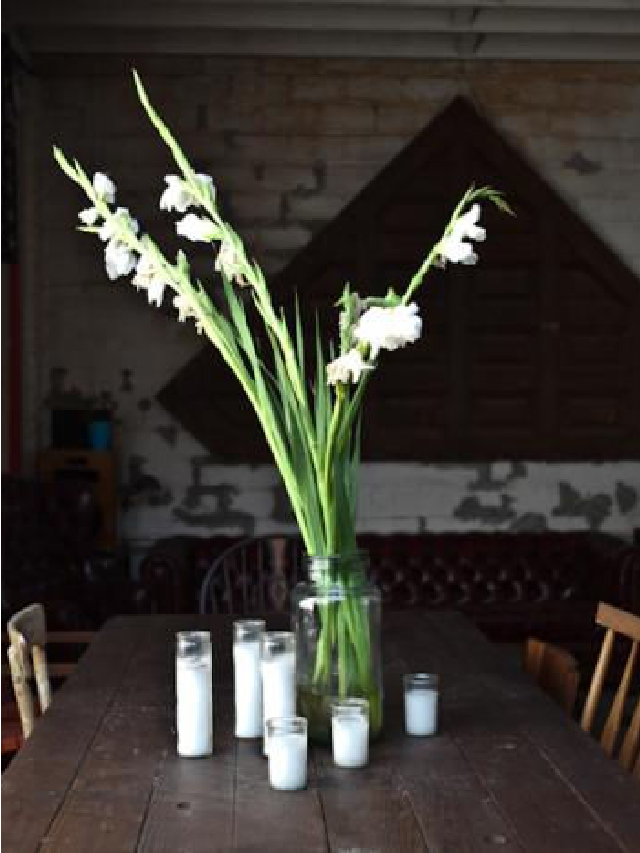
The most important piece of equipment in the building may not have been a woodworking machine or mixing tool. It was a 100-year-old farm table in the shared kitchen.
Robert and Jocelyn Rahm treated the table as a gathering place for meals, conversation, collaboration, and storytelling. That detail reveals why the project attracted so much attention. Beam & Anchor was not designed merely to reduce rent by dividing a building into smaller pieces. It was designed to increase interaction.
Independent makers often spend long hours working alone. That solitude can protect concentration, but it can also limit feedback, professional connections, and opportunities to learn. In a shared maker studio, a casual conversation may solve a design problem, identify a supplier, inspire a collaboration, or stop someone from applying the wrong finish to an expensive piece of wood.
The communal kitchen and table created repeated opportunities for those exchanges. Members did not need a formal networking event or a name badge announcing that they were “ready to synergize.” They simply had to sit down, eat something, and talk about what they were making.
Community Was Part of the Business Model
The founders also welcomed the public through gatherings, workshops, and events. These activities expanded the building’s role beyond production and retail. Visitors could encounter craft as a living process rather than a mysterious activity performed behind locked studio doors.
This approach strengthened the makers’ visibility while giving customers a reason to return. A store may generate a transaction, but a workshop or community dinner can generate a relationship. For a small creative business, that distinction matters.
on>
Why Shared Maker Workspaces Matter
A well-run makerspace pools resources that would be expensive or impractical for individuals to maintain. Members may gain access to production equipment, worktables, specialty tools, storage, safety systems, classrooms, photography areas, galleries, and event space.
Lower Barriers to Starting a Creative Business
Buying machinery, leasing a private workshop, installing ventilation, and carrying commercial insurance can overwhelm a new artisan before the first product is sold. Shared infrastructure lowers those initial barriers. A creator can test an idea, make prototypes, complete a limited production run, and learn whether customers are interested before committing to a full private facility.
This makes makerspaces informal business incubators. They help turn a personal skill into a sellable product and a sellable product into a small company. Access to equipment is valuable, but access to nearby knowledge may be even more useful. Someone in the building may understand pricing, packaging, photography, online sales, shipping, or the ancient art of answering customer emails without sounding exhausted.
Cross-Disciplinary Collaboration
Different crafts solve problems differently. A furniture builder thinks about structure and joinery. A textile artist considers texture and flexibility. A product designer studies usability, while a retailer notices how customers respond to shape, scale, and price.
When these people work in proximity, their methods begin to overlap. A leatherworker may contribute handles to a furniture collection. A ceramicist may collaborate with a fragrance maker on reusable containers. A photographer may help every member present products more convincingly. One project can become several businesses’ opportunity.
Learning Through Participation
Maker culture is grounded in learning by doing. Classes provide structured instruction, but informal observation also matters. Seeing how another person organizes materials, repairs a mistake, or finishes an object can make unfamiliar techniques seem approachable.
Current research and maker organizations also emphasize the economic value of shared fabrication facilities. Public and community makerspaces can support prototyping, skill development, entrepreneurship, and small-batch manufacturing, especially for people who cannot afford private equipment.
on>
Portland’s Larger Makerspace Ecosystem
Beam & Anchor was distinctive, but it did not exist in a vacuum. Portland has long supported artists, designers, independent manufacturers, reuse organizations, craft schools, and community studios. That network helps explain why the city became such fertile ground for shared workshops.
Art Design Xchange, commonly known as ADX, continues the idea of creative exchange by providing studios, offices, open work areas, event facilities, and access to a shared woodshop. Its community brings artists, builders, designers, musicians, and other independent creators together in one industrial setting.
Past Lives Makerspace operates on an even larger scale, with facilities for woodworking, metalworking, blacksmithing, textiles, screen printing, stained glass, photography, CNC equipment, and 3D printing. Members can also teach classes, exhibit work, participate in markets, and earn income by sharing their expertise.
Public models expand access further. The City of Hillsboro’s library-based Collaboratory spaces allow visitors to practice skills, meet other makers, and use available tools and materials without the cost of a commercial studio membership.
Together, these examples show that a makerspace can take many forms. It may be a private creative business, a membership workshop, an arts organization, an educational facility, or a public library program. The common ingredients are access, participation, tools, and people willing to explain why the machine is making that alarming noise.
on>
Design Lessons from the Portland Shared Workspace
1. Preserve the Building’s Character
The Beam & Anchor renovation worked with the industrial warehouse rather than attempting to disguise it. Concrete floors, exposed structure, brick, reclaimed materials, and visible work zones gave the space honesty. Adaptive reuse also connected the new creative activity to the building’s working past.
2. Separate Incompatible Activities
Openness encourages collaboration, but not every process should share the same air. Wood dust, chemical products, finishing materials, loud machinery, and delicate studio work require thoughtful zoning. Glass walls, movable partitions, enclosed rooms, and dedicated ventilation can preserve connection without ignoring safety.
3. Create a Real Community Area
A narrow hallway with a coffee machine is not automatically a community space. People need a comfortable place where they can pause without feeling that they are blocking traffic. A generous table, kitchen, lounge, courtyard, or project-review area can become the social engine of the building.
4. Make the Creative Process Visible
Windows into workshops, demonstrations, tours, and open-house events help visitors understand the labor behind handmade products. Visibility also creates accountability and pride. It is harder to describe a mass-produced object as “artisan inspired” when an actual artisan is twenty feet away shaping wood by hand.
5. Connect Production with Sales
A workshop-retail combination shortens the distance between maker and customer. Creators receive immediate reactions, shoppers gain richer product stories, and the business can respond quickly to demand. The model also encourages experimentation with limited editions and small production runs.
6. Choose Members for Compatibility, Not Sameness
A strong shared workspace needs varied skills and compatible values. Members should respect safety rules, shared resources, deadlines, and one another’s concentration. Personality matters because a makerspace is part workshop, part business network, and part unusually tool-heavy household.
A Realistic Day Inside a Shared Workspace for Portland Makers
The following experience is an illustrative day-in-the-life scenario based on the documented operation of shared maker studios rather than a claim of personal attendance.
The day begins before the retail floor opens. Rain taps lightly against the warehouse windowsbecause Portland likes to maintain its brand standardsand the first makers arrive carrying coffee, rolled drawings, and reusable bags filled with objects that looked much smaller at home.
Upstairs, the woodworker checks a set of cabinet doors glued the previous afternoon. Across the room, a product designer arranges hardware samples on a table. Someone in the apothecary area measures ingredients into amber bottles, while another maker photographs a finished leather bag near the best patch of morning light.
The space is active without feeling chaotic. Machinery starts in short bursts. A vacuum system hums. Drawers open and close. People move between benches with the careful awareness that another person may be carrying a six-foot board around the corner.
A problem appears before lunch. A prototype stool looks elegant but rocks slightly on the concrete floor. In a private studio, its maker might spend an hour checking measurements alone. Here, two neighbors wander over. One studies the joints, another checks the floor, and a third suggests testing the piece on a flatter surface before redesigning western civilization. The problem turns out to be minor.
That small exchange captures the practical appeal of creative coworking. Help is available without scheduling a meeting. Feedback arrives while the project is still changeable. The maker remains responsible for the final decision, but no longer has to invent every solution in isolation.
At midday, people gather around the shared table. Conversation moves from weekend plans to wholesale pricing, a reliable local metal supplier, an upcoming craft market, and whether a new soap fragrance smells more like cedar or an extremely confident sandwich. Nothing is formally placed on an agenda, yet several useful decisions emerge.
In the afternoon, visitors enter the retail area downstairs. They pick up ceramic cups, open cabinet doors, smell apothecary products, and examine the stitching on canvas bags. Staff members explain who made certain pieces and how they were produced. A customer looking for a dining table asks about custom sizing, creating a direct lead for the furniture studio upstairs.
Later, a workshop group arrives. Participants are shown how raw materials become finished objects and are introduced to basic tools under supervision. Some are experienced hobbyists; others have not made anything since a school project involving too much glue. Both groups leave with a stronger appreciation for craft.
Near closing time, the building grows quieter. Finished products move downstairs, scraps are sorted, tools return to storage, and work surfaces are cleared. The cleanup is not glamorous, but shared spaces depend on it. Community becomes significantly less poetic when someone repeatedly leaves sawdust in the wrong place.
The final experience is not simply one of having access to a workshop. It is the feeling that creative work belongs to a larger cycle. Materials enter the building. Skills transform them. Neighbors improve the process. Customers encounter the results. Classes pass knowledge forward. The workspace supports not only objects but also careers, friendships, and confidence.
That is why the strongest Portland maker spaces feel different from ordinary rental studios. They provide room to work, but they also produce momentum. A half-finished idea brought through the door in the morning may leave as a tested prototype, a new collaboration, or the beginning of a business.
Why This Portland Maker Story Still Resonates
Beam & Anchor demonstrated that commerce, craftsmanship, education, and community did not need separate addresses. A neglected warehouse could become a workplace, showroom, classroom, gathering place, and creative landmark at the same time.
The original retail business later closed after announcing its departure in 2024, but the ideas embodied by the project remain visible throughout Portland’s maker community. Shared tools continue to reduce startup costs. Classes continue to turn curiosity into skill. Galleries and markets continue to connect independent creators with customers.
The lasting lesson is refreshingly simple: creative people need more than square footage. They need useful infrastructure, flexible boundaries, public visibility, and opportunities to exchange knowledge. Add a large table and decent coffee, and the chances of collaboration improve considerably.
A successful shared workspace for Portland makers is therefore not just a building full of equipment. It is a living network in which people make objects, businesses, relationships, and occasionally a respectable amount of noise.