
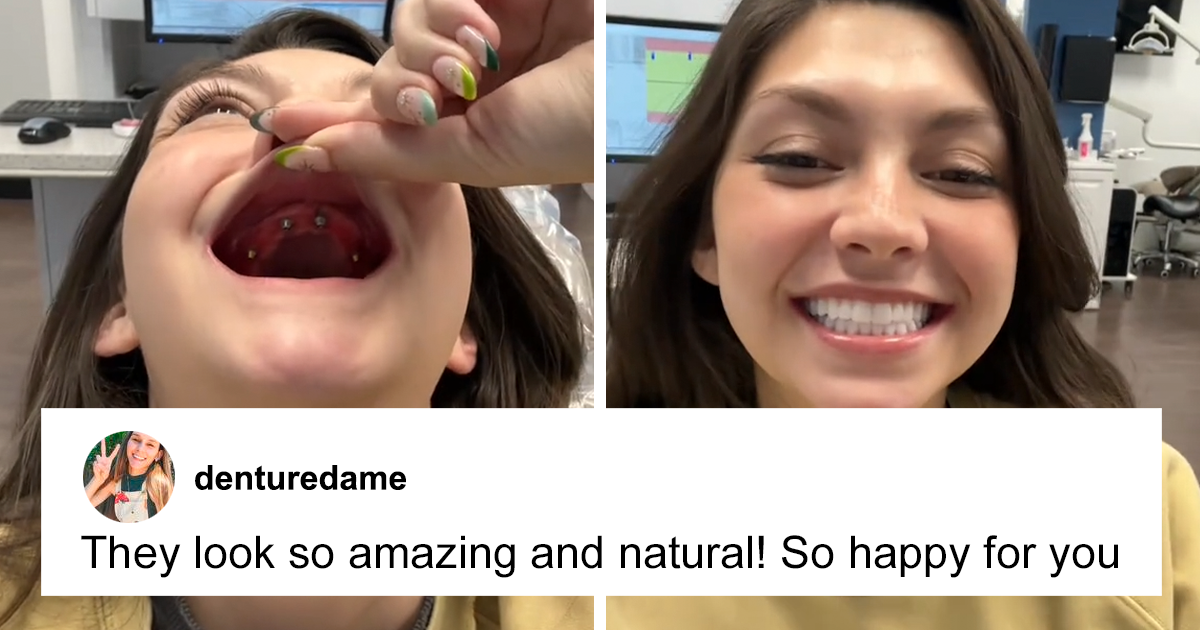
There are glow-ups, and then there are life-changing transformations that make the internet stop scrolling mid-thumb. One woman’s “before/after” dental implants transformation has done exactly that, not just because her new smile looks polished enough for a toothpaste commercial, but because the story behind it is raw, painful, expensive, emotional, and painfully familiar to anyone who has ever delayed dental care because the price tag looked like it needed its own mortgage.
The woman at the center of the viral story is Cheyenne Chalai, who shared that she had all of her teeth pulled out when she was only 20 years old. Now in her early 30s, she has opened up about the long road from full dentures to implant-supported teeth, showing the kind of before-and-after transformation that is not merely cosmetic. It is about eating without pain, speaking without anxiety, laughing without hiding, and finally feeling at home in your own face.
Her story also raises a bigger question: Why is dental health still treated like a luxury add-on when teeth are part of the body? Spoiler alert: they are not detachable accessories, even if the insurance system sometimes behaves as if molars are optional decor.
A Smile Transformation That Went Viral for a Reason
Cheyenne’s dental implants journey gained attention after she documented the process of getting what she described as her “new teeth.” According to her own account, she had been living with dentures for more than a decade after having her teeth extracted at age 20. She said the decision came at a time when she could not afford the dental work she needed and trusted the professional guidance she received.
Years later, the consequences became harder to ignore. Dentures can restore appearance and function, but they do not work exactly like natural teeth or dental implants. For many patients, removable dentures may shift, rub, cause sore spots, and become less stable over time. When natural teeth are removed, the jawbone no longer receives the same stimulation from tooth roots. Over time, the bone can shrink, which may make dentures fit more poorly. That is not vanity; that is biology wearing a tiny lab coat.
Cheyenne shared that her bone loss became severe enough that eating, talking, and even wearing dentures could be painful. Her eventual move to implant-supported teeth gave her not only a new smile but also a dramatic change in comfort and confidence. Online viewers praised the natural look of the final result, with many commenting that the transformation looked incredibly realistic.
Why Losing Teeth So Young Can Be So Emotionally Heavy
Losing teeth at any age can be upsetting. Losing all of them at 20 can feel like being handed an identity crisis with a side of mashed potatoes. Young adulthood is already a season of first jobs, relationships, photos, social events, and figuring out how to look relaxed in group selfies. Add dentures, dental pain, or fear of judgment, and everyday life can become exhausting.
Many people assume tooth loss happens only later in life, but severe dental issues can affect younger adults too. Tooth decay, gum disease, trauma, genetic conditions, eating disorders, medication-related dry mouth, limited access to dental care, and financial barriers can all contribute to serious oral health problems. Sometimes the problem is not that someone “didn’t care.” Sometimes they were uninsured, underinsured, embarrassed, misinformed, terrified of dental visits, or simply unable to pay for treatment before the situation snowballed.
That is one reason Cheyenne’s story resonated so widely. It was not just a shiny before-and-after reveal. It was a window into how dental problems can affect self-esteem, food choices, speech, relationships, and mental health. A smile is not just a photo feature. It is part of how people communicate, work, date, laugh, and move through the world without feeling like they need to apologize for existing.
Dentures vs. Dental Implants: What Is the Difference?
To understand why Cheyenne’s dental implants transformation was such a big deal, it helps to understand the difference between dentures and implants.
Dentures
Dentures are removable appliances designed to replace missing teeth. Full dentures replace all teeth in the upper jaw, lower jaw, or both. They can improve appearance, speech, and chewing ability, and for many people they are the most accessible option because they are generally less expensive than implants.
However, dentures rest on the gums and depend on fit, suction, adhesives, and the shape of the jaw ridge for stability. As the jawbone changes over time, dentures may need relining, adjusting, or replacing. Some people adapt beautifully. Others deal with slipping, clicking, sore gums, food limitations, or the constant fear that a laugh could turn into an unscheduled dental magic trick.
Dental Implants
Dental implants are small posts, often made from titanium or other biocompatible materials, placed into the jawbone to act like artificial tooth roots. After healing, they can support crowns, bridges, or full-arch prosthetic teeth. In full-mouth implant cases, systems such as implant-supported dentures or “All-on-X” style restorations may use several implants to anchor an entire arch of replacement teeth.
The major advantage is stability. Implant-supported teeth do not rely only on the gums for support. Because implants integrate with the jawbone, they can offer a more secure bite and may help preserve bone better than traditional removable dentures. For someone who has struggled with loose dentures, the difference can feel like upgrading from a folding chair to a custom-built sofa.
Why Bone Loss Matters After Tooth Extraction
Jawbone is living tissue. It responds to pressure and function. Natural tooth roots help stimulate the bone during chewing. When teeth are removed and not replaced with implants, the area may gradually lose volume. This process is called bone resorption.
Bone loss can affect facial shape, denture fit, chewing strength, and future treatment options. In some cases, patients who want dental implants later may need bone grafting before implants can be placed. Bone grafting helps rebuild or preserve bone volume, but it adds time, cost, healing, and another round of “please let this be worth it” to the journey.
Cheyenne’s account of rapid bone loss struck a nerve because it reflects a real challenge for long-term denture wearers. A denture that once fit well may become loose as the jaw changes. This can cause rubbing, pain, trouble eating, and embarrassment. For people who have worn dentures since a young age, those changes can begin much earlier than most people expect.
The Cost Problem: Why Dental Implants Feel Out of Reach
One of the most talked-about parts of Cheyenne’s story was the cost. She reportedly needed tens of thousands of dollars for her implant treatment, a number that made many people in the comments section collectively clutch their wallets.
Full-mouth dental implant treatment can be expensive because it may involve consultations, imaging, extractions, bone grafting, sedation, implant placement, temporary teeth, final prosthetics, lab work, and multiple follow-up visits. The final cost can vary widely depending on location, the patient’s bone condition, the number of implants, the materials used, the dental team’s training, and whether complications need to be addressed.
For many Americans, the biggest obstacle is not fear of the dentist. It is the bill. Dental insurance often has annual maximums that may help with cleanings and basic care but fall dramatically short when major restorative work is needed. That gap can leave patients choosing between pain, dentures, loans, crowdfunding, or simply waiting until the problem becomes impossible to ignore.
This is why so many people responded emotionally to Cheyenne’s transformation. Her story highlights a frustrating truth: oral health is deeply connected to overall health, but dental care is often separated from medical care in the way it is covered and financed. The mouth did not file for independence from the body. Yet the system often treats it like a neighboring country.
What the Dental Implant Process Can Involve
Dental implant treatment is not usually a one-and-done appointment. It is more like a carefully planned renovation project, except the construction zone is your mouth and the soundtrack is a suction tube.
1. Consultation and Imaging
A dentist, oral surgeon, periodontist, or prosthodontist evaluates the patient’s oral health, medical history, jawbone, bite, and treatment goals. Digital scans, X-rays, or 3D imaging may be used to plan implant placement.
2. Extractions or Bone Grafting
If damaged teeth remain, they may need to be removed. If the jawbone is too thin or weak, bone grafting may be recommended. Some patients can have implants placed immediately; others need months of healing first.
3. Implant Placement
The implants are surgically placed into the jawbone. Over the next several months, the bone heals around the implants in a process called osseointegration. This is what gives implants their stability.
4. Temporary Teeth
Depending on the case, patients may receive temporary teeth while healing. These allow them to function and smile during the transition period, though the diet may be restricted to protect the implants.
5. Final Prosthetic Teeth
Once healing is complete, the final crowns, bridges, or full-arch teeth are attached. This is the big reveal moment, the dental version of a home makeover show, minus the dramatic sledgehammer scene.
Are Dental Implants Always the Best Choice?
Dental implants can be life-changing, but they are not automatically the right choice for everyone. A good candidate typically needs enough healthy bone, healthy gums, and overall health that supports healing. Smoking, uncontrolled diabetes, certain medications, untreated gum disease, heavy teeth grinding, and poor oral hygiene can raise the risk of complications.
Implant complications are not common when treatment is properly planned and maintained, but they can happen. Possible risks include infection, nerve irritation, sinus problems in upper-jaw cases, implant loosening, delayed healing, gum inflammation, and peri-implantitis, a condition involving inflammation and bone loss around implants. In other words, implants are strong, but they are not magical titanium unicorns. They still require care.
Patients considering implants should ask detailed questions: Who is placing the implants? What training do they have? What type of restoration is being used? What happens if an implant fails? How often will maintenance visits be needed? What is included in the quoted price? What is not included? A beautiful smile is wonderful, but a clear treatment plan is even prettier.
The Confidence Factor: Why “Before/After” Stories Hit So Hard
Before-and-after photos are popular because they tell a story quickly. But dental transformations carry a special emotional weight. Teeth are visible when we talk, laugh, eat, and meet new people. When someone feels ashamed of their teeth, they may avoid photos, cover their mouth, speak less, skip social events, or smile with their lips pressed together like they are guarding a national secret.
Cheyenne’s reaction to her final teeth showed why the transformation mattered. Her new smile represented comfort, freedom, and a restored sense of self. That kind of confidence is not superficial. It affects how people participate in daily life.
Of course, not every person with dentures or missing teeth feels the same way. Some people are confident with dentures. Some choose not to pursue implants. Some cannot because of health, cost, or bone limitations. The point is not that everyone needs implants to be beautiful. The point is that people deserve access to options, accurate information, and compassionate care before dental problems become life-altering.
What This Story Teaches About Preventive Dental Care
Cheyenne’s experience is dramatic, but the lesson is practical: early dental care matters. Small cavities are easier and cheaper to treat than infections, broken teeth, or full-mouth reconstruction. Gum inflammation is easier to manage before it becomes advanced periodontal disease. A slightly annoying toothache is easier to handle before it starts behaving like a tiny villain with a drum set.
Good oral health habits are not glamorous, but they work. Brushing twice daily with fluoride toothpaste, flossing or using interdental cleaners, limiting frequent sugary drinks, treating dry mouth, wearing a night guard for grinding if recommended, and seeing a dentist regularly can reduce the risk of serious problems. For people with dental anxiety, finding a gentle provider, asking about sedation options, and starting with a simple consultation may make care feel less overwhelming.
For people who cannot afford traditional dental care, possible options may include dental schools, community health clinics, nonprofit dental programs, payment plans, membership plans, and local free-care events. These options are not perfect, and availability varies, but they can sometimes help patients get care before extraction becomes the only realistic option.
Why the Internet Connected With Cheyenne’s Journey
Viral stories often disappear after a day, replaced by a dancing raccoon, a celebrity haircut, or a recipe involving suspicious amounts of cheese. But Cheyenne’s dental implants transformation stuck with people because it touched on something personal. Many viewers saw a woman who had carried discomfort and insecurity for years finally get relief.
Others saw the financial unfairness. Many people in the comments recognized that dental problems can affect employment, nutrition, speech, confidence, and overall well-being, yet treatment remains unaffordable for countless patients. Her story became both a celebration and a conversation starter.
It is easy to admire the final smile. It is harder, but more important, to notice the years behind it: the denture adjustments, the pain, the fundraising, the uncertainty, the waiting, and the courage required to share such a vulnerable process online. The final result may look effortless, but the journey was anything but.
Experiences and Real-Life Lessons From a Full-Mouth Dental Transformation
Stories like Cheyenne’s often spark a flood of personal memories from people who have lived through similar dental struggles. Some describe wearing dentures in their 20s or 30s and feeling older than their actual age. Others talk about avoiding crunchy foods, cutting meals into tiny pieces, or pretending not to be hungry at social gatherings because eating in public felt too risky. Dental problems can turn ordinary moments into strategic missions. A dinner date becomes a chewing calculation. A group photo becomes a mouth-positioning exercise. A joke becomes a split-second decision: laugh freely or hide it?
One common experience among denture wearers is the adjustment period. New dentures can feel bulky at first. Speaking may sound different. Certain foods may be difficult. Gums may become sore until the fit is adjusted. People often need patience, follow-up appointments, and realistic expectations. Dentures are not a failure; they are a tool. But like shoes, they need to fit properly, and even good shoes are not ideal for every road.
People who move from traditional dentures to implant-supported teeth often describe the biggest change as stability. Instead of worrying that dentures will shift while speaking or eating, implant-supported restorations can provide a more secure feel. That stability can make meals more enjoyable and social situations less stressful. Many patients say the emotional relief surprises them. They expected better teeth; they did not expect to feel lighter, braver, or more willing to be seen.
Another lesson is the importance of asking for second opinions. When facing major dental decisions such as full extraction, implants, bone grafting, or full-mouth reconstruction, patients should feel empowered to ask questions and consult another qualified provider. A second opinion is not an insult to a dentist. It is a normal part of making a major health decision. If someone would compare prices on a refrigerator, they are absolutely allowed to compare treatment plans for their jawbone.
Finally, Cheyenne’s journey reminds readers that shame does not fix teeth. Many people avoid the dentist because they are embarrassed, only to find that compassionate dental teams have seen it all before. Decay, broken teeth, gum disease, missing teeth, dentures, failed dental work, fear, tears, financial stressnone of it makes a person less worthy of care. The best dental professionals do not lecture patients into the chair. They help them find a path forward.
A before-and-after implants transformation may look like a beauty story on the surface, but underneath it is a health story, a money story, a confidence story, and a reminder that smiles carry history. Cheyenne’s new teeth are stunning, yes. But the most powerful part is not that her smile changed. It is that her life looked a little easier to live after it did.
Conclusion
Cheyenne Chalai’s dental implants transformation is more than a viral “before/after” moment. It is a powerful look at what happens when dental health, affordability, confidence, and modern restorative dentistry collide. After having all her teeth pulled out at 20 and spending years with dentures, her move to implant-supported teeth gave her a smile that viewers praised for looking natural and beautiful. More importantly, it gave her comfort, stability, and renewed confidence.
Her story also shines a spotlight on the real challenges many people face: expensive dental care, limited insurance coverage, bone loss after tooth extraction, and the emotional toll of living with missing teeth or uncomfortable dentures. Dental implants are not the right answer for everyone, but for qualified patients, they can be life-changing. The biggest takeaway is simple: oral health is health, and people deserve information, access, and compassion long before their dental problems become emergencies.
Note: This article is for informational and editorial purposes only. Anyone considering dental implants, dentures, extractions, or full-mouth restoration should consult a licensed dental professional for personalized diagnosis and treatment advice.











