
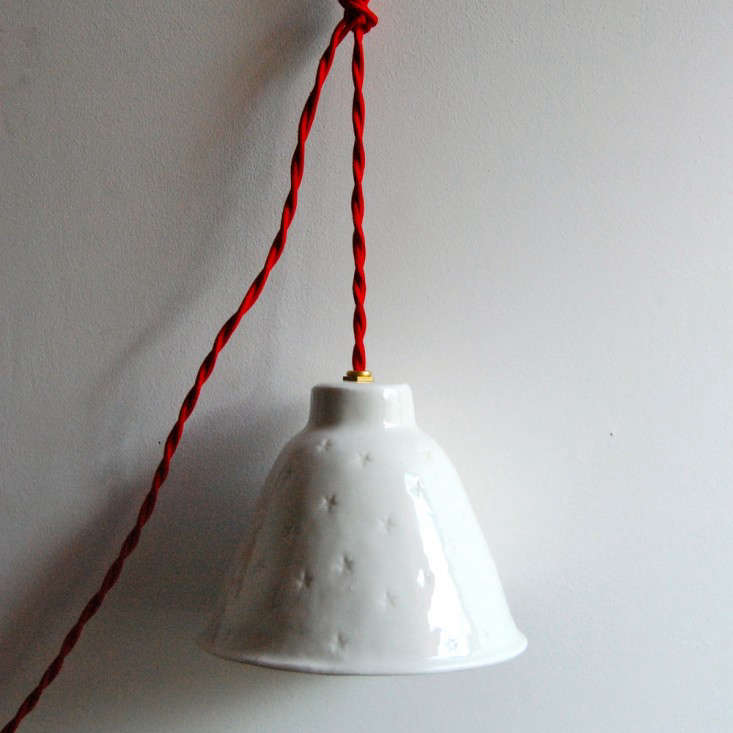
Some pendant lights are here to “light the room.” An Alix D. Reynis lighting pendant is here to
romance the roomquietly, confidently, and with the kind of French restraint that makes you want to
whisper even if you’re just reheating leftovers.
If you’ve been eyeing these porcelain pendants online and wondering, “Is it really worth it?” you’re in the
right place. Below is a practical (and lightly cheeky) guide to what these pendants are, why the glow looks
so different from typical glass or metal fixtures, how to choose the right model and finish, and how to hang
it so it looks intentionalnot like you lost a fight with a tape measure.
What Makes an Alix D. Reynis Pendant Different?
Alix D. Reynis is known for porcelain craftsmanship rooted in French tradition, with lighting pieces made in
Limoges porcelain and finished to emphasize texture, relief, and light diffusion. In plain English: the shade
isn’t just a cover for a bulbit’s the star.
The brand’s pendant shades often feature patterns inspired by architecture, ornament, or historical motifs
(think lantern silhouettes, classical columns, or delicate relief designs). When lit, those details don’t shout.
They glowsoftly outlining the form and giving the light a “candle-but-make-it-electric” mood.
Porcelain’s Superpower: Soft, Flattering Light
Porcelainespecially in matte finishesnaturally diffuses light. That means fewer harsh hotspots and less
“why do I look like I just ran up a mountain?” glare. If you love warm interiors, layered lighting, and
rooms that feel calm at night, porcelain pendants are a cheat code.
Matte vs. Enameled: Choose Your Glow Personality
Alix D. Reynis pendants are commonly offered in two finishes:
-
Matte: velvety, soft, and slightly more atmospheric. The light feels diffused and gentle,
making it a favorite for bedrooms, living rooms, and hallways. -
Enameled (gloss): smoother and easier to wipe clean. It still looks elegant, but it’s
especially practical in kitchens where steam, splatter, and airborne olive oil are a real thing.
If you’re stuck: matte is the “mood lighting” choice, enamel is the “I cook like a functional adult” choice.
Both can work anywhere, but lifestyle mattersbecause cleaning a matte shade with greasy fingers is a fast
track to regret.
Popular Alix D. Reynis Pendant Styles (and How They Read in a Room)
The collection includes several recognizable forms. Below are examples often seen through retailers, with
approximate sizes so you can visualize scale. (Always confirm final specs at purchasesmall differences matter
when you’re hanging multiples.)
| Model | Visual vibe | Approx. size | Best for |
|---|---|---|---|
| Angkor | Bell-like silhouette with sculptural relief | ~18 cm Ø x 15.5 cm H (about 7.1" Ø x 6.1" H) | Island clusters, bedside pendants, small dining nooks |
| Lutèce | Lantern-inspired, refined and architectural | ~13.5 cm Ø x 18.5 cm H (about 5.3" Ø x 7.3" H) | Entryways, hallways, bedside reading glow |
| Paris | Classic, city-inspired motif; elegant and balanced | ~14.5 cm Ø x 17 cm H (about 5.7" Ø x 6.7" H) | Kitchen peninsula, breakfast table, layered living areas |
| Nuit Étoilée | Starry relief pattern; dreamy, slightly playful | ~14.5 cm Ø x 16 cm H (about 5.7" Ø x 6.3" H) | Bedrooms, nurseries, cozy corners (with the right bulb) |
| Corinthe (Large) | Column-inspired detail; taller, more graphic | ~14 cm Ø x 20 cm H (about 5.5" Ø x 7.9" H) | Dining statement, single focal pendant, taller ceilings |
Quick style note: small pendants aren’t “less important”
Many Alix D. Reynis pendants are intentionally compact. That’s not a downsideit’s the reason they’re so good
in multiples. Two or three small porcelain pendants over an island can look more tailored (and less
chandelier-chaos) than one oversized fixture.
Where an Alix D. Reynis Pendant Works Best
1) Over a kitchen island
Porcelain pendants can absolutely work over an islandespecially if you pair them with the right bulb and
add a dimmer. The key is placement: you want task lighting where you prep food, but you also want sightlines
so people can talk across the island without feeling like they’re negotiating a lighting obstacle course.
- Hanging height: A common guideline is roughly 28–36 inches from the countertop to the bottom of the pendant.
- Spacing: Keep multiple pendants at least about 24 inches apart (more if the shades are wider).
- Edge breathing room: Don’t hang the pendant right at the island edgeleave space so it looks centered and feels safe in traffic flow.
If your island is a workhorse (kids doing homework, chopping, assembling, living), consider the
enameled/gloss finish for easier wipe-down. Matte can still workjust accept that you’ll dust it
like you dust a beloved bookshelf: gently, frequently, and with mild disappointment.
2) Above a dining table
Porcelain pendants are especially good in dining spaces because they flatter faces. You can keep the light warm
and low enough for intimacy without turning the table into a spotlight interrogation.
- Hanging height: Often around 30–36 inches above the tabletop (adjust higher for taller ceilings).
- Size balance: The fixture should feel proportional to the tablelarge enough to anchor the space, not so large it dominates the conversation.
3) Bedside pendants (the “hotel energy” move)
Hanging pendants beside the bed frees up nightstand space and looks instantly intentional. Alix D. Reynis
pendants shine (politely) here because the porcelain diffuses light and reduces harsh glare when you’re
half-awake searching for water at 2 a.m.
Tip: choose a bulb that’s warm and not too bright. Bedside lighting should be comforting, not motivational.
4) Hallways, entries, and small “in-between” spaces
These are the underrated zones where decorative pendants do their best work. A small porcelain pendant in a
hallway or entry creates a welcoming rhythmlike a visual “hello” that doesn’t require small talk.
Bulbs, Brightness, and Color Temperature: Don’t Skip This Part
The same pendant can look magical or miserable depending on the bulb. Porcelain diffuses light, but you still
want the right “ingredients” for the glow.
Pick a warm color temperature
For most homes, 2700K to 3000K is the sweet spot: warm, inviting, and flattering. If your home
leans modern with cooler finishes (gray stone, crisp white paint, lots of chrome), you can go slightly higher
(around 3000K–3500K) without losing warmth.
Choose brightness based on the job
- Ambient mood: roughly 400–800 lumens per pendant (especially if you have other lighting layers).
- Task lighting over an island: you may want more total output, often achieved by using multiple pendants and/or pairing with recessed lights.
Dimmers: yes, but make them compatible
A dimmer is the difference between “pretty fixture” and “I will never leave this room.” Use dimmable LEDs and
an LED-compatible dimmer to prevent flicker or buzzing. Compatibility matters because not all LEDs play nicely
with all dimmers (they’re picky like that).
Installation & Planning Tips (So It Looks Custom, Not Accidental)
Measure like a designer, not like a panicked person on a ladder
Before you commit to junction box placement, mock it up. Use painter’s tape on the ceiling and a piece of
string to simulate the drop. Step back. Sit down. Walk through the space. If you can see it from the couch,
it matters.
Mind your clearance
In walkways or open areas, many lighting guides recommend keeping the bottom of a pendant around
7 feet above the floor when possible so it doesn’t become an unplanned forehead test.
Plan multiples with symmetry (or intentional asymmetry)
If you’re hanging two or three pendants, align them with the island’s centerline. Keep spacing consistent.
Uneven spacing rarely looks “artsy”; it mostly looks like you changed your mind mid-install.
Care & Cleaning: How to Keep Porcelain Looking Crisp
- Dust first: use a soft, dry microfiber cloth. Dust is the #1 culprit for “why does this look dull?”
- Spot clean gently: a slightly damp cloth with mild soap is usually enough. Avoid abrasive cleaners.
- Go easier on matte: matte finishes can show oils more readily. Clean with care and don’t over-scrub.
- Turn power off before cleaning: safety first, aesthetic second.
Is It Worth the Price? A Practical Value Check
You’re paying for craftsmanship, material, and design that reads as timeless rather than trendy. These aren’t
“swap it out next year” fixtures. They’re the kind of pieces people move house withwrapped like a museum
artifact and carried like a newborn.
The value equation usually comes down to this:
-
If you want the glow: porcelain diffusion and relief detail are hard to replicate with
cheaper materials. -
If you want a statement without shouting: these pendants add texture and presence without
dominating your entire room. -
If you want flexibility: smaller pendants can be used as singles, pairs, or triosso you
can scale your lighting plan without changing the design language.
FAQ: Quick Answers Before You Click “Add to Cart”
Are these pendants bright enough for a kitchen?
They can be, especially in multiples and with the right bulb. Many homeowners pair decorative pendants with
recessed or under-cabinet lighting for true task coverage.
Which finish should I pick for a kitchen?
If you cook often, enameled/gloss is typically the easiest to maintain. Matte works best when
your priority is a soft, atmospheric glow and you don’t mind more frequent dusting.
Do I need professional installation?
If the pendant is hardwired or you’re changing junction box locations, yesprofessional installation is a smart
move. It protects your ceiling, your wiring, and your sanity.
Real-World Experiences (500+ Words): What Living With an Alix D. Reynis Pendant Feels Like
Because lighting is one of those home choices you don’t fully understand until you live with it, here are
common experiences people report when they add a porcelain pendant like an Alix D. Reynis pieceespecially in
kitchens, bedrooms, and dining spaces.
The “soft glow” is realand it changes the mood fast
The first thing people tend to notice is how forgiving the light feels. Instead of a bright point of
light that makes the ceiling look like a stage, porcelain spreads illumination outward. In dining rooms, that
often translates to a warmer atmosphere where the table feels like the center of the room (without the
dramatic “spotlight on the salad” effect). In bedrooms, the light can feel calmermore like a lampshade glow
than a ceiling fixture glow.
Texture becomes a design featureeven when the light is off
A porcelain pendant with relief patterning doesn’t disappear during the day. People often describe these
pendants as “sculptural” or “architectural,” because the material and pattern are visible even without
illumination. That means you’re not buying a fixture that only looks good at nightyou’re adding an object
that contributes to the room’s texture, especially in spaces heavy on flat surfaces (stone counters, smooth
cabinets, large painted walls).
Small pendants surprise peoplein a good way
Many shoppers underestimate the impact of a smaller pendant. Then they hang it, turn it on, and realize the
size is part of the charm. Compact pendants can look “tailored” rather than bulky, especially in kitchens
where you don’t want fixtures blocking sightlines. In a row of two or three, they create a rhythm that feels
customlike the lighting plan was designed for the house instead of added after the fact.
The finish choice affects your day-to-day life more than you expect
Matte finishes are often described as “dreamy” and “soft,” but they can show handling marks more easily,
particularly in kitchens. People who love matte tend to treat the fixture a bit like a favorite piece of
ceramichandled gently, dusted regularly, cleaned carefully. People who choose enamel often mention the
practical relief of being able to wipe it down quickly without worrying about changing the surface texture.
Dimmers become non-negotiable
A recurring theme: once porcelain lighting goes up, people want control. Bright for cooking or cleaning,
lower for dinner, and low-low for “I’m just here for a snack and existential peace.” A dimmer makes that easy.
Many homeowners say they use the lowest settings more than they expected, especially in open-plan spaces where
overhead lighting can otherwise feel intense.
What people wish they’d done differently
-
They wish they’d tested bulb color sooner: warm bulbs make these pendants sing; cooler bulbs
can make porcelain feel stark. -
They wish they’d planned spacing more carefully: pendants look best when centered and evenly
spacedespecially in multiples. -
They wish they’d considered layered lighting from the start: decorative pendants are amazing,
but pairing them with under-cabinet or recessed lights can make kitchens more functional.
The overall takeaway from real homes is consistent: an Alix D. Reynis pendant is less about blasting light and
more about creating a room that feels intentional. If you want lighting that makes your home feel calmer,
warmer, and more “designed” without being trendy, porcelain pendants can be one of the most satisfying upgrades
you make.











