
Note: This article is written as an opinion-style media critique based on publicly available information, podcast listings, audience trends, and coverage of recent political podcasting culture.
There is a special kind of exhaustion that arrives when a comedy podcast decides it is also a political nerve center. Suddenly, the jokes need a civics degree, the analysis needs a punchline, and everyone at the table acts as if yelling “both sides are crazy” counts as a policy framework. That is the strange little carnival tent where Andrew Schulz and Charlamagne Tha God’s long-running podcast universe often sits: part comedy hangout, part political barbershop, part cable-news afterparty with fewer fact-checkers and more microphones.
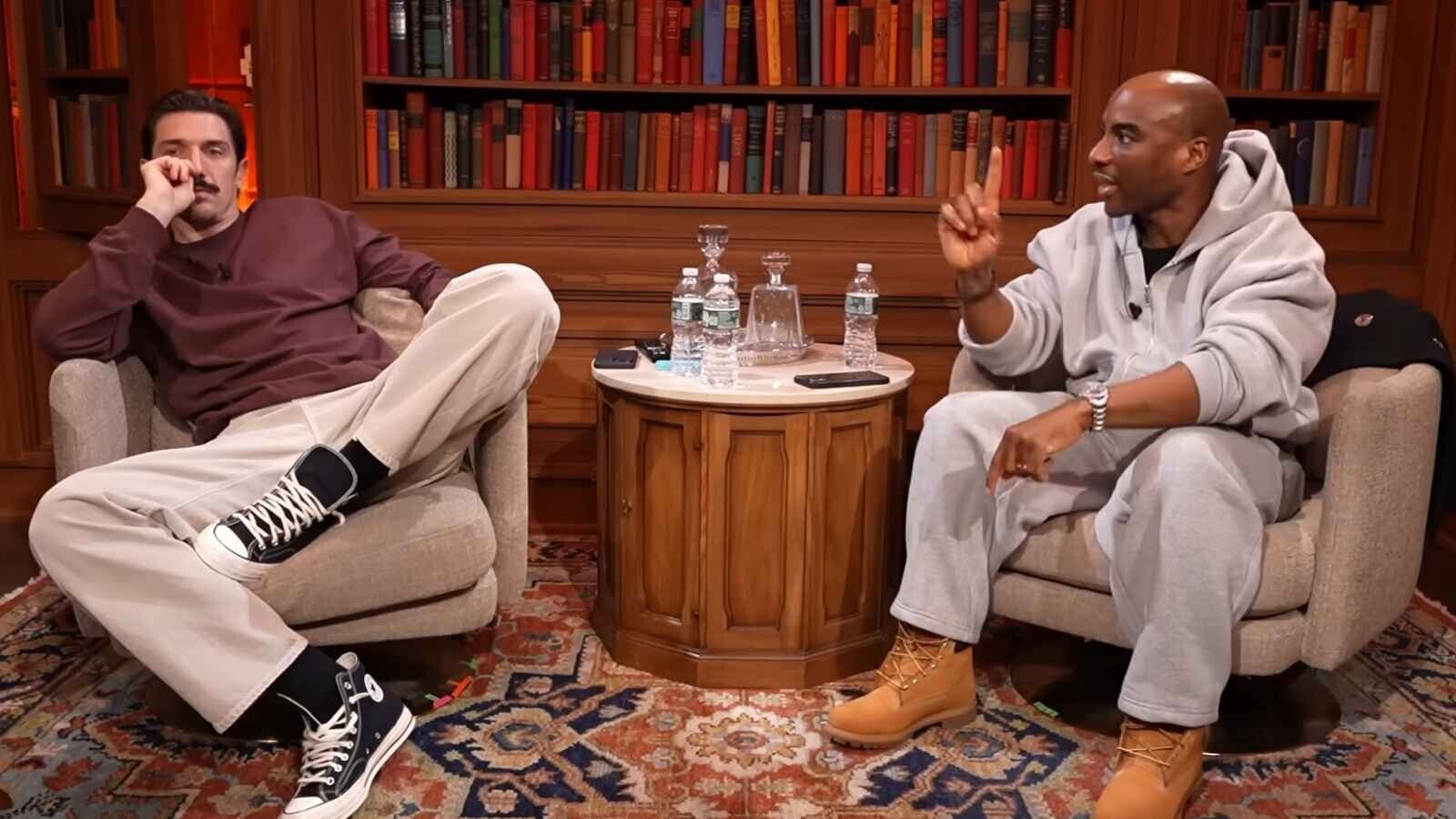
The podcast at the center of the conversation is The Brilliant Idiots, hosted by Schulz and Charlamagne. On paper, the concept has always made sense. Schulz brings the restless energy of a stand-up comic who loves provocation. Charlamagne brings the instincts of a veteran radio personality who knows how to turn cultural tension into conversation. Together, they promise a mix of current events, pop culture, politics, jokes, arguments, and the occasional “did they really just say that?” moment. The title itself is a clever safety net: when the hosts are sharp, they are brilliant; when they are messy, well, they warned you.
But that safety net has started to sag. The problem is not that comedians talk politics. Comedians have always done that. The problem is that when a show tries to be politically relevant without doing the hard work of political analysis, and tries to be funny while treating every subject like a culture-war speed bag, the result can feel like a podcast trapped between two jobs and underqualified for both.
Why the Podcast’s Formula Once Worked
To be fair, the Schulz-Charlamagne pairing did not become popular by accident. Their chemistry is real. Charlamagne is quick, blunt, and deeply fluent in the rhythms of radio. Schulz is aggressive, fast, and built for clips. The show’s best moments often come when the two are not pretending to be philosophers of democracy, but simply reacting like two smart, ridiculous friends arguing over whatever the internet dragged into the room that week.
That looseness is the original appeal of many successful comedy podcasts. Listeners do not always want a polished editorial package. Sometimes they want chaos with better audio. They want the feeling of being in the room while funny people riff, disagree, exaggerate, interrupt, and occasionally stumble into an actual insight. The Brilliant Idiots understood that early. It was not trying to be Meet the Press. It was more like a group chat that learned how to sell ads.
Schulz also built a larger media identity through Flagrant, a comedy podcast known for unfiltered takes, celebrity guests, political figures, and jokes that deliberately test the fence line. Charlamagne, meanwhile, has a long history as a major voice on The Breakfast Club, where politicians, musicians, actors, and public figures go when they want to reach audiences that traditional Sunday shows often miss. Put them together and the formula looks powerful: comedy reach plus radio credibility plus cultural timing.
Yet the same ingredients that made the show magnetic also create its biggest weakness. Fast reactions can sound exciting until the topic requires patience. Contrarian jokes can feel fresh until they become predictable. Political “real talk” can feel bold until it becomes a substitute for evidence. That is when the podcast stops sounding dangerous and starts sounding like a comments section with a merch line.
The Political Problem: Vibes Are Not Analysis
Political podcasting exploded because audiences lost patience with traditional media. Many listeners believe mainstream outlets are too scripted, too cautious, too partisan, or too disconnected from ordinary people. Podcasts offered something warmer and messier: long conversations, personality, humor, and the illusion of honesty. In that environment, a host does not need to be a political scientist. He just needs to sound more human than a press secretary.
That shift helped make podcasts central to modern campaigning. Politicians learned that a two-hour conversation with a popular podcaster could reach voters who would never watch a televised town hall. Donald Trump’s appearance on Schulz’s Flagrant became one of the clearest examples of this trend. Kamala Harris, too, leaned into nontraditional media, including conversations with hosts like Charlamagne. The 2024 election proved that politics no longer lives only in debates, newspapers, and cable panels. It lives in comedy studios, influencer feeds, and YouTube thumbnails with shocked faces.
But there is a difference between political access and political insight. Access means a candidate sits on your couch. Insight means you ask the questions that matter, understand the answer, follow up when necessary, and refuse to let charm replace accountability. Too often, comedy-podcast politics depends on the first part and shrugs at the second.
Schulz and Charlamagne are both capable of interesting political observations. Charlamagne, especially, has shown a willingness to challenge Democrats and Republicans, and he often speaks directly to frustrations among Black voters, younger voters, and media-skeptical audiences. Schulz, for his part, has an instinct for spotting how parties communicate to men who feel alienated from polished institutional politics. Those are useful instincts.
The issue is that instincts are not enough. Political commentary becomes thin when it floats from one outrage to another without a stable standard. Is the argument about free speech, corruption, hypocrisy, masculinity, race, class, media failure, or just who looked cooler in a viral clip? The answer often seems to be: yes, all of it, in whatever order gets the biggest reaction.
The Comedy Problem: Provocation Is Not a Punchline
The other half of the failure is comedic. Andrew Schulz built much of his brand around offense as a kind of democratic principle: everyone can get joked about, nobody is sacred, and discomfort is part of the show. That approach can work when the joke is carefully constructed, surprising, and aimed at something true. Good edgy comedy is not simply saying the thing people are not supposed to say. It is saying something revealing enough that the audience laughs before its moral committee can hold a meeting.
But when every joke arrives wearing boxing gloves, the audience eventually sees the swing coming. The rhythm becomes familiar: identify a sensitive topic, say the forbidden version, accuse critics of being too soft, repeat next week. That may still generate clips, but clips are not the same as comedy. A fire alarm is loud too. Nobody calls it a concert.
Charlamagne’s role can also become awkward in this setup. He is often positioned as the voice who can challenge, contextualize, or redirect Schulz when the conversation veers into rough territory. Sometimes that tension creates real comedy. Other times it creates a predictable loop: Schulz pushes, Charlamagne reacts, the show debates whether the push was too far, and the actual subject disappears under a pile of meta-commentary about who is allowed to joke about what.
That is not automatically bad. Comedy about comedy can be fascinating. But when the podcast repeatedly turns controversy into content about the controversy, it risks becoming less a comedy show than a customer-service desk for its own backlash.
Why “Both Sides” Commentary Feels Tired
One reason the podcast struggles politically is its dependence on a familiar posture: everyone is lying, both parties are corrupt, the media is fake, and only the people laughing in the podcast studio are clear-eyed enough to see the game. This posture has obvious appeal. It flatters the listener. It says, “You are not fooled like the sheep on cable news.” It is also very convenient because it rarely requires the host to build a complete argument.
There is truth in criticizing both major parties. American politics is full of hypocrisy, theatrical outrage, donor influence, weak messaging, and institutional cowardice. A good political comedy podcast could feast on that buffet for years and never run out of material. The problem is that “both sides are bad” becomes lazy when it treats all failures as interchangeable. A broken campaign promise, a bad policy, a corrupt official, a clumsy media answer, and an authoritarian threat are not the same category of problem.
Comedy can simplify. Politics cannot always afford to. When a podcast collapses every issue into vibes, politics becomes just another roast battle. The audience may leave entertained, but not better informed. Worse, the listener may leave feeling informed because the hosts sounded confident while skipping the boring parts where knowledge usually lives.
Charlamagne’s Strength Is Also the Show’s Escape Hatch
Charlamagne Tha God remains the more politically serious figure in the pairing, largely because he has spent years interviewing public officials and speaking to communities that campaigns often court but do not always respect. He understands that voters are not spreadsheets. He knows that cultural trust matters. He also knows how to ask a blunt question without wrapping it in think-tank tissue paper.
That is why his best political moments usually happen outside the pure comedy frame. In a more focused interview setting, Charlamagne can press candidates on criminal justice, race, the economy, messaging, and whether politicians are actually listening. He is not a traditional journalist, but he can be an effective public interrogator because he speaks in a language many audiences recognize.
On The Brilliant Idiots, however, that strength often gets diluted by the show’s need to keep the circus moving. A serious point lands, then someone swerves into a joke, then the conversation detours into celebrity gossip, then a half-formed theory enters wearing sunglasses. That can be fun. It can also make the political moments feel like loose change rattling around in a dryer.
Schulz’s Strength Is Also the Show’s Liability
Schulz is skilled at creating moments. He understands the internet’s appetite for confrontation, irreverence, and swagger. He knows that a sharp clip can travel farther than a thoughtful hour. He also understands the market for comedy that frames sensitivity as weakness and offense as honesty. That market is large, loyal, and very active in comment sections.
But the same talent can flatten complex topics into performance. The Schulz style often asks the audience to admire fearlessness. Yet fearlessness is not the same as accuracy, and saying a thing loudly does not make it more insightful. At times, his political persona seems built less around a coherent worldview than around resistance to being told what not to say.
That can be funny in short bursts. Over time, it becomes a cage. If the brand requires constant rebellion, then every issue must be converted into another battle against scolds, elites, activists, journalists, Democrats, Republicans, or whoever is currently useful as the boring adult in the room. The result is a podcast that sometimes mistakes defiance for depth.
The Audience Has Changed Too
Another challenge is that podcast audiences are no longer just hanging out. Many listeners now treat podcasts as news-adjacent media. They may not call it journalism, but they absorb political narratives from it. They hear which politicians are “authentic,” which movements are “crazy,” which scandals matter, and which institutions cannot be trusted. That gives hosts more influence than the old “we’re just joking” defense can comfortably handle.
This is where The Brilliant Idiots faces a modern media dilemma. If it wants the cultural power of political commentary, it also inherits some responsibility for the quality of that commentary. Nobody is demanding that Schulz and Charlamagne turn into C-SPAN with better sneakers. But when political subjects become regular content, the show cannot always retreat into “we’re idiots” whenever criticism arrives.
The audience is also more fragmented than ever. Some listeners want jokes and are annoyed by politics. Some want political honesty and are annoyed by lazy jokes. Some want anti-establishment commentary, but only when it attacks the other side. Some want chaos, but not consequences. Trying to satisfy all of them produces the podcast equivalent of a restaurant that serves sushi, barbecue, cereal, and legal advice. Technically, everyone can order something. Spiritually, the chef is in trouble.
Specific Examples of the Tension
The Trump interview on Flagrant is a useful example because it showed both the promise and the limits of comedy-podcast politics. On one hand, getting a major presidential candidate into a long, informal conversation is a real media event. It reaches people traditional outlets miss. It can reveal personality, instincts, humor, and weaknesses in a different way than a formal debate.
On the other hand, a relaxed comedy setting can soften scrutiny. A candidate who should be pressed on policy may instead benefit from the atmosphere of a hang. The audience remembers the laugh, the vibe, the “he seemed normal” feeling. That may be politically powerful, but it is not necessarily politically clarifying.
Charlamagne’s interviews with Democratic figures reveal another side of the same issue. He can push them into sharper language, challenge their assumptions, and demand that they speak more directly to voters who feel ignored. That is valuable. But when those moments are folded back into the broader podcast ecosystem, they can become fuel for the same vibe war: who sounded real, who looked scared, who understood the streets, who got cooked.
Politics deserves more than vibe scoring. Comedy deserves more than applause for nerve. The best version of Schulz and Charlamagne would recognize that and build segments where jokes sharpen the analysis instead of replacing it.
How the Podcast Could Be Better
The fix is not to stop talking politics. That would be impossible and probably boring. The fix is to separate the modes more clearly. If an episode is going to tackle a serious political subject, bring in context. Define the issue. Admit uncertainty. Ask follow-ups. Let jokes breathe, but do not let them drive the bus into a lake.
The show could also benefit from fewer instant takes and more structured arguments. Schulz and Charlamagne are both talented enough to disagree in ways that are actually illuminating. Instead of racing toward the hottest reaction, they could slow down and ask: What is the claim? What evidence supports it? Who benefits from this framing? What are we missing? Then, after doing that for five minutes, by all means make the joke. The joke will probably be better because it will have something sturdy to stand on.
For comedy, the answer is not softness. It is precision. The best offensive jokes are not broad smears; they are accurate missiles. They work because the target is clear and the observation is earned. If every sensitive subject becomes an excuse to prove the hosts are not afraid, the comedy becomes less rebellious and more routine.
Experience Section: What Listening to This Kind of Podcast Culture Teaches You
Anyone who has spent time listening to comedy podcasts that drift into politics recognizes the pattern. You click for laughs while folding laundry, driving to work, or pretending the gym treadmill is not a medieval punishment device. At first, the loose talk feels refreshing. No panel of consultants. No robotic talking points. No host saying “we’ll have to leave it there” just when the conversation gets interesting. It feels like real people saying real things.
Then, after a while, the experience changes. You start noticing how often confidence fills the space where research should be. You hear a complicated issue turned into a personality test. You hear a joke do the work of an argument. You hear a host say something that sounds bold, then realize it is mostly bold because it is under-explained. The show is still entertaining, but now you are laughing with one eyebrow raised, which is dangerous because your face can get stuck like that.
This is not unique to Andrew Schulz and Charlamagne Tha God. It is a broader problem in the creator-media era. Podcasts are intimate. They make listeners feel like they know the host. That intimacy builds trust faster than expertise does. A host can be wrong five times, but if he sounds honest, funny, and unfiltered, many listeners will keep granting him credibility. Traditional media has its own failures, but creator media has a special talent for making opinion feel like friendship.
The experience also teaches you that comedy audiences are not all asking for the same thing. Some listeners truly want jokes and nothing else. They get irritated when the show becomes a political debate. Others want the hosts to say what mainstream commentators will not say. Some listeners want anti-woke comedy, some want anti-Trump honesty, some want anti-Democrat frustration, and some just want to hear famous people be less polished. A podcast trying to satisfy all of those audiences will inevitably become unstable.
That instability is part of the appeal, but it is also why the format can fail. A good political comedy podcast needs a spine. It needs values beyond “say the wild thing.” It needs curiosity beyond “what will trend?” It needs the humility to admit when a subject is too serious for pure riffing and the discipline to make the riff worth hearing anyway.
Listening to Schulz and Charlamagne at their best can still be entertaining. They are not boring people. They have timing, cultural awareness, and the rare ability to make a conversation feel alive. But listening to them at their weakest is like watching two chefs argue over whether dinner should be pizza or steak, then serving a plate of hot microphone cables. There is heat. There is noise. There may even be flavor. But after the meal, you are not exactly nourished.
The larger lesson is simple: politics and comedy can absolutely work together, but neither can be treated as decoration. Political commentary needs substance. Comedy needs craft. When a podcast wants the credibility of the first and the freedom of the second, it has to earn both. Otherwise, it ends up stranded in the middle: not insightful enough to inform, not sharp enough to be truly funny, and not self-aware enough to realize that “we’re just talking” stopped being a defense the moment the talking started shaping how people see the world.
Conclusion
Andrew Schulz and Charlamagne Tha God are talented media figures with real influence, real chemistry, and real instincts for what keeps people watching. That is exactly why the weaknesses of their political-comedy format matter. The Brilliant Idiots can be chaotic, funny, clever, and occasionally perceptive. But when it tries to operate as both a comedy podcast and a political analysis show, it too often exposes the limits of both identities.
The politics fail when vibes replace evidence, when contrarian energy substitutes for a worldview, and when interviews become more about cultural positioning than accountability. The comedy fails when provocation becomes formula, when backlash becomes content, and when the joke matters less than proving the hosts are brave enough to say it.
That does not mean the show is doomed. It means it needs discipline. Schulz and Charlamagne do not have to become journalists, professors, or saints. Nobody asked for The Brilliant Accountants. But if they want to keep playing in the space where politics and comedy collide, they need to respect both crafts. The audience can handle jokes. The audience can handle hard conversations. What it should not have to accept is a show that treats both as interchangeable noise.














