
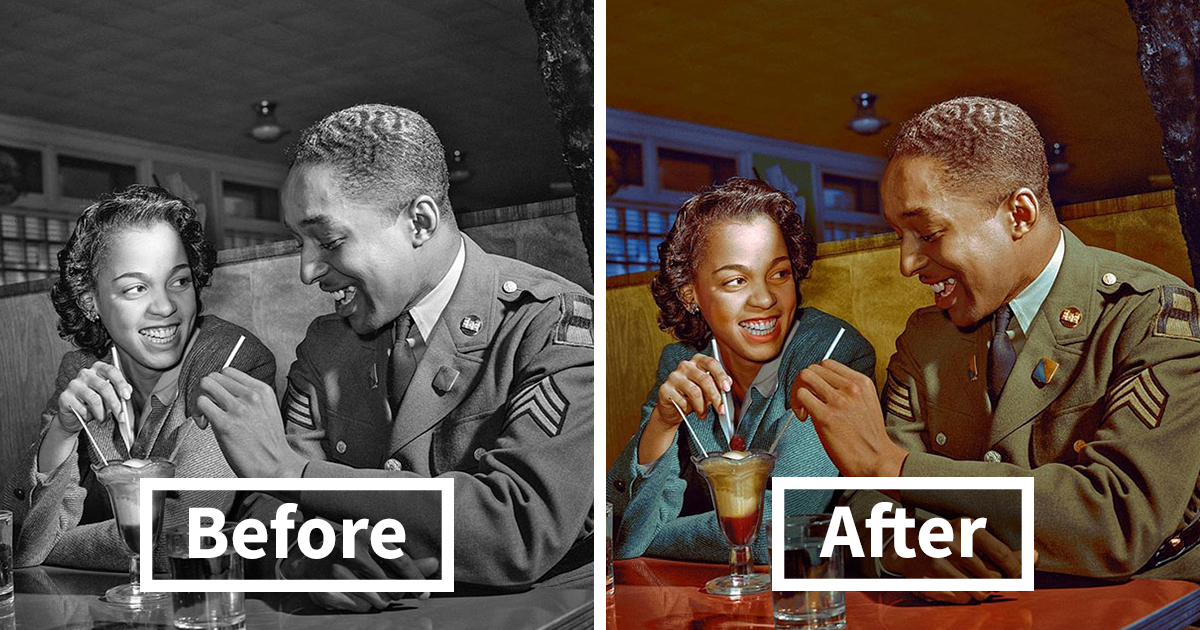
History has a funny habit of dressing in black and white. Open an old photo album, flip through an archive, or stare at a Civil War portrait, and the past can feel like another planet: stiff collars, solemn faces, streets without traffic lights, and children who somehow look like tiny accountants. Then an artist colorizes an old photo, and suddenly the distance collapses. A soldier becomes someone’s tired brother. A street vendor looks like a person you might pass on your lunch break. A famous historical figure stops being a marble statue in human form and starts looking uncomfortably real.
That is the power behind colorized historical photos. They do not replace the original black-and-white images; they translate them. When done carefully, photo colorization can turn a familiar photograph into a fresh emotional experience. It can make history feel less like homework and more like a window someone just cleaned after 120 years of dust, fog, and dramatic museum lighting.
The title “Artist Colorizes Old Photos, And It Might Change The Way You Perceive History (50 Pics)” points to a growing fascination online: digital artists restoring and colorizing vintage photographs so viewers can see the past with new energy. One modern example is French digital artist Sébastien de Oliveira, whose colorized portraits and historical scenes have drawn attention for making old photographs feel vivid, human, and surprisingly close to the present day.
Why Colorized Old Photos Feel So Powerful
Black-and-white photography is beautiful. It has contrast, mood, and an elegance that says, “I own a fountain pen and possibly a secret.” But it also creates emotional distance. Since most people today experience life in color, monochrome images can make historical subjects seem older than they really were. Color gently reminds us that people in the 1860s, 1910s, or 1940s lived in a colorful world too. The sky was blue. Dresses were red, green, or lavender. Soldiers had sunburned faces. Cities had painted signs, muddy streets, and market stalls full of bright fruit.
That shift matters. A colorized photo of a young woman from the early 1900s may reveal not just her hairstyle, but her personality. A colorized image of immigrants arriving in America can make their exhaustion, hope, and uncertainty more immediate. A colorized battlefield portrait can make a uniform feel less like a costume and more like clothing worn by a real person standing inside a dangerous moment.
In other words, color does not simply decorate history. It changes how the brain receives it. The image becomes less “old document” and more “human scene.” That is why viewers often describe good colorized photos as haunting, emotional, or even shocking. The past suddenly looks like it could have happened yesterday, which is both fascinating and mildly rude to our sense of time.
The Art Behind Historical Photo Colorization
Colorizing old photographs is not the same as dragging a rainbow filter over a dusty portrait and calling it a day. At least, not if the artist respects the original image. High-quality photo colorization is part art, part research project, part detective story, and part “why did I zoom in on this button for 40 minutes?”
A careful digital artist usually begins by restoring the photograph. This may include removing scratches, repairing cracks, balancing contrast, sharpening damaged areas, and cleaning age stains. Only after the image is stable does the color work begin. The artist studies the time period, location, clothing, military uniforms, building materials, flags, skin tones, lighting conditions, and even regional color trends. A dress from 1895, a U.S. Army uniform from World War II, and a Parisian storefront from 1910 all require different visual research.
Digital tools such as Photoshop allow artists to build color layer by layer. Skin may require several subtle tones, not one flat peachy wash. Shadows must stay believable. Metal, leather, wool, wood, stone, glass, grass, and smoke all react differently to light. A great colorized photograph feels natural because the artist has resisted the temptation to make everything look like a candy commercial.
Research Is the Secret Ingredient
The best colorizers do not guess wildly. They investigate. For example, when colorizing a historical portrait, an artist may look at museum collections, uniform guides, textile references, surviving garments, old advertisements, written descriptions, and similar photographs from the same place and time. If the original photograph shows a famous person, the artist may search for documented eye color, hair color, medals, ribbons, or clothing notes.
Sometimes the answer is clear. A flag has known colors. A military insignia follows a standard. A streetcar company may have used a documented paint scheme. Other times, the artist must make an educated choice. That is where honesty matters. A responsible colorized photo should be understood as an interpretation, not a time machine with perfect Wi-Fi.
Colorization Does Not Replace the Original Photo
One common mistake is treating colorized photos as “better” versions of black-and-white originals. They are not better; they are different. The original photograph remains the historical record. It contains the composition, lighting, framing, and tonal choices made by the photographer. In some cases, the black-and-white format was not a limitation but part of the image’s artistic power.
Colorization works best when it is seen as a companion. The original says, “Here is what the camera captured.” The colorized version says, “Here is one researched way we might imagine the colors of that moment.” Together, they invite viewers to look more closely. The black-and-white image preserves the artifact. The colorized image opens an emotional door.
This distinction is important because history is not a coloring book. It is a record of real people, real events, and real consequences. A sloppy colorization can mislead viewers. An overly glossy one can make hardship look cinematic in the wrong way. A respectful one can help people connect without distorting what happened.
Why These 50 Pics Can Change How We See the Past
A collection of 50 colorized old photos has a special effect because it creates range. One image may be touching; fifty can build a whole new relationship with history. You may see portraits, street scenes, workers, children, performers, soldiers, immigrants, inventors, celebrities, and ordinary families. The variety matters because it shows that history was not only made by presidents, generals, and people standing very seriously beside furniture.
Colorized portraits can reveal warmth in faces that once looked distant. Urban scenes can show how lively old streets really were. Rural images can bring out the textures of land, clothing, tools, and weather. Photos from major events can feel more immediate, while everyday snapshots can become unexpectedly moving. A child holding a toy, a couple posing in formal wear, a worker leaning against machinery, or a woman looking straight into the camera may suddenly feel less like “someone from the past” and more like someone you recognize.
That recognition is the big magic trick. Colorized historical photos remind us that people before us were not sepia-toned background characters waiting for modern life to begin. They worried about money, loved bad jokes, had favorite clothes, missed trains, got sunburned, and probably complained about the weather with the same passion we do today.
Photo Colorization and Emotional Connection
Color is emotional shorthand. Red can suggest urgency, warmth, danger, or celebration. Blue may feel calm, cold, formal, or distant. Green can make a landscape breathe. Warm skin tones can make a face feel present. When a historical photo is colorized well, those emotional signals return to the image.
This is especially powerful for younger audiences. Many students see black-and-white photographs and unconsciously file them under “ancient.” Colorized images challenge that reaction. A teenager from 1915 in a colorized portrait may suddenly look like someone who could have had a social media account if only history had been irresponsible enough to provide one. The hairstyle may differ, the clothing may differ, but the eyes, posture, and mood can feel familiar.
That familiarity can encourage curiosity. A viewer may ask: Who was this person? Where was this photo taken? What happened before and after the image? Why were they dressed that way? What did the city sound like? What was happening in the world at that moment? Good colorization does not end the conversation; it starts one.
The Ethics of Colorizing Historical Photos
Because colorization affects perception, ethics matter. Artists should avoid presenting colorized images as flawless historical truth. They should be transparent when colors are researched, estimated, or artistically interpreted. They should also be careful with sensitive subjects, including war, tragedy, displacement, poverty, and images of people who were photographed without real consent.
There is also a risk of making painful history look too polished. A colorized photo of conflict or hardship should not turn suffering into visual entertainment. The goal should be understanding, not decoration. Respectful colorization keeps the dignity of the subject intact.
Another ethical issue involves cultural accuracy. Clothing, skin tone, ceremonial objects, religious items, and regional details require care. Color choices can unintentionally erase identity or impose modern assumptions. When the subject belongs to a specific community, the best approach includes research from credible sources and, when possible, knowledge from people connected to that culture.
Manual Colorization vs. AI Colorization
Artificial intelligence has made photo colorization faster than ever. Upload a black-and-white image, press a button, and watch software make a guess. Sometimes the result is surprisingly decent. Sometimes everyone looks like they were dipped in beige soup. AI can be useful for rough previews, but it often struggles with historical accuracy, unusual objects, old uniforms, damaged photos, and subtle lighting.
Manual colorization remains valuable because a human artist can interpret context. A person can research whether a 1940s nurse’s uniform was white, blue, gray, or patterned. A person can notice that a ribbon has official colors. A person can decide that a shadow should remain muted instead of turning purple for no apparent reason. AI is fast; human research is careful. The strongest results often combine technology with human judgment.
What Makes a Colorized Photo Look Real?
Realism depends on restraint. Beginners often make colors too bright because the temptation is understandable. After all, if you have the power to repaint history, why not give everyone dramatic movie-poster lighting? But old photographs usually need subtle tones. Fabric fades under light. Skin has cool and warm areas. Shadows reduce saturation. Backgrounds should not fight the subject.
A believable colorized photo also respects the original light source. If the face is lit from the left, color and shadow must follow that direction. If the image was taken on a cloudy day, the colors should feel softer. If a room was dim, the palette should not look like a supermarket produce aisle.
Texture is another clue. Wool absorbs light differently than silk. Brass shines differently than iron. Old wooden furniture has depth, not one flat brown. When these details are handled carefully, the viewer stops thinking about the technique and starts looking at the person or scene.
Famous Subjects Become Strangely Human
One reason colorized historical photos go viral is that they make famous figures look less mythical. Abraham Lincoln in black and white feels monumental. Lincoln in carefully researched color may feel tired, thoughtful, and intensely human. A colorized image of a young soldier from World War II can make the war feel less like a chapter title and more like millions of individual lives interrupted.
The same applies to artists, scientists, activists, writers, and performers. Color can soften the museum glass between viewer and subject. It can make a familiar face feel newly alive. This does not reduce their importance; it deepens it. Historical figures were not born as textbook illustrations. They were people first.
Ordinary People Are Often the Most Moving
While famous subjects attract attention, ordinary people often create the strongest emotional response. A colorized photo of a street cleaner, factory worker, farm family, schoolchild, or shopkeeper can be unforgettable because it restores attention to people who rarely receive it. History is full of unnamed faces, and colorization can make viewers pause long enough to wonder about them.
That pause is valuable. It reminds us that archives are not just collections of paper and film. They are collections of lives. Every old photograph contains a moment someone lived through, whether or not their name was recorded. Colorization can make that moment feel less lost.
How Colorized Photos Help Modern Storytelling
Publishers, educators, museums, documentary makers, and online creators use colorized photos because they attract attention quickly. In a crowded feed, a vivid historical image can stop the scroll. But the best use goes beyond clicks. Colorized images can introduce readers to deeper history, encourage archive exploration, and make long-form storytelling more accessible.
For SEO and digital publishing, topics like “colorized historical photos,” “old photos brought to life,” “vintage photo restoration,” and “history in color” perform well because they combine visual curiosity with emotional discovery. People enjoy before-and-after transformations, but they also enjoy learning. The image pulls them in; the story keeps them there.
Examples of Scenes That Work Beautifully in Color
Street Life
Old city streets are perfect for colorization. Signs, awnings, carts, coats, brickwork, and storefronts create visual layers. A black-and-white street can look frozen; a colorized one can feel noisy, crowded, and alive.
Portraits
Faces benefit from careful color because small details matter: cheeks, lips, eyes, hair, and clothing. A good portrait colorization can turn a formal pose into something intimate.
Workplaces
Factories, farms, workshops, and offices reveal the texture of daily life. Color can highlight tools, uniforms, machinery, and the physical environments where people spent their days.
Historic Events
Colorized images from marches, wars, celebrations, and public gatherings can help modern audiences understand that these events happened in a world as visually rich as ours.
Why We Should Still Love Black-and-White Photography
Colorization is exciting, but black-and-white photography deserves respect. Monochrome images are not incomplete. They are their own visual language. They emphasize shape, contrast, expression, and atmosphere. Some photos are more powerful without color because the absence of color directs attention to light, form, and emotion.
The healthiest way to enjoy colorized history is to appreciate both versions. The black-and-white original is the foundation. The colorized version is a thoughtful interpretation. One preserves the historical artifact; the other invites new viewers into the room.
Experience: What It Feels Like to Look Through 50 Colorized Old Photos
Spending time with a large set of colorized old photos feels different from casually seeing one viral image online. At first, the reaction is simple: “Wow, that looks real.” Then the experience deepens. You begin noticing patterns. People from the past stop appearing like distant symbols and start looking like neighbors, classmates, relatives, coworkers, and strangers you might sit beside on a bus.
The first few images usually impress because of the technical transformation. A cracked portrait becomes clean. A gray coat turns navy. A pale background becomes a warm room. The artist’s skill is obvious. But after ten or fifteen photos, the novelty fades and something better replaces it: attention. You begin reading faces. You wonder why someone is smiling, why someone looks nervous, why a group is standing so close together, or why a child seems bored in the exact same way children are bored today.
That is where the emotional value of photo colorization lives. It slows you down. In a normal online scroll, vintage photos can become decorative: nice, old, interesting, next. Colorized images ask for another second. That extra second can change the entire experience. A woman in a long dress no longer looks like “the 1890s.” She looks like a person who chose that dress, stood in that light, and had a life outside the frame. A worker covered in dust no longer looks like a symbol of industrial history. He looks tired. Real tired. The kind of tired that needs dinner, not a caption.
Looking at 50 colorized pictures also reveals how much modern viewers rely on color to judge time. Without color, the past often seems emotionally sealed. With color, it becomes porous. The distance between then and now feels smaller. This can be comforting, but it can also be unsettling. We realize that people in old photos were not fundamentally different from us. They were modern to themselves. They had new inventions, popular fashions, arguments, ambitions, and probably at least one relative who ruined every family gathering.
Another memorable experience is noticing how color changes empathy. A black-and-white image of a young soldier may feel historic; a colorized version may feel personal. A black-and-white photo of children in a crowded neighborhood may feel documentary; a colorized version may make you think about their daily lives, their families, their futures, and whether they ever knew their image would travel across the internet many decades later.
For artists, writers, teachers, and history lovers, these images are also a reminder that presentation matters. The facts of history are essential, but the way people encounter those facts affects whether they care. Colorization is not a substitute for research, context, or honest storytelling. But it can be a bridge. It invites people who might never open an archive to stop and ask a question. And every good historical question is a small victory against forgetfulness.
The best experience, though, is returning to the original black-and-white image afterward. Once you have seen the colorized version, the original changes too. You notice more detail. You imagine the colors even when they are not there. You understand the photograph as both a document and a doorway. That is the quiet success of thoughtful colorization: it does not steal attention from history. It gives attention back.
Conclusion
Colorized old photos can change the way we perceive history because they restore a sense of closeness. They remind us that the past was not gray, silent, or emotionally distant. It was full of color, movement, weather, clothing, noise, and human feeling. When an artist colorizes historical photographs with care, research, and restraint, the result can be more than a visual makeover. It can be an invitation to look again.
A collection like “Artist Colorizes Old Photos, And It Might Change The Way You Perceive History (50 Pics)” succeeds because it taps into something universal: our desire to recognize ourselves in people who lived before us. Color does not make history more real; history was already real. But color can make us feel that reality more strongly. And sometimes, that is enough to turn a quick glance into genuine curiosity.
Note: This article is written for web publication and synthesizes information from reputable American museum, archival, conservation, photography, history, and technology sources without inserting source-link clutter into the body copy.














