
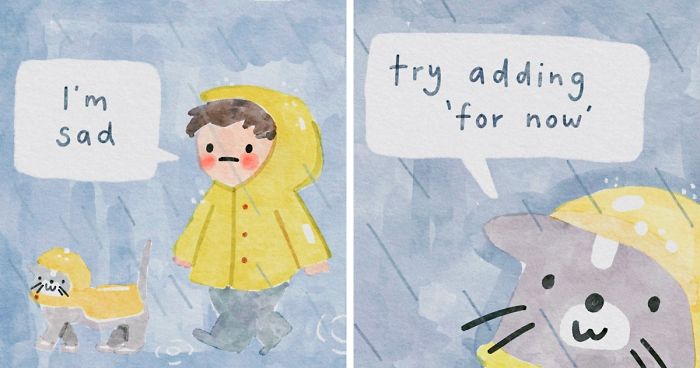
Some mental health advice arrives wearing a white coat. Some arrives in a podcast with a 49-minute intro. And sometimes, wonderfully, it arrives as a tiny watercolor cat who looks like it has seen your emotional browser history and still believes in you.
That is the gentle magic behind the wholesome watercolor comics by UK-based artist Hector Janse van Rensburg, better known online as Swatercolour. His soft, simple, emotionally intelligent comics feature a wise cat offering comfort, perspective, and tiny emotional life rafts to a human who is often tired, overwhelmed, or stuck inside a mental loop. The cat does not shout motivational slogans. It does not say, “Just be positive,” which is the emotional equivalent of handing someone a fork during a soup emergency. Instead, the cat listens, reframes, and reminds us that being human is complicated, but it does not have to be lonely.
The original series gained attention because it did something rare on the internet: it made people feel calmer. In a scrolling world full of hot takes, doom, and “five productivity hacks before breakfast” energy, these watercolor cat comics feel like a cup of tea with paws. They are funny, tender, visually modest, and surprisingly deep. Most importantly, they treat mental health advice not as a dramatic lecture, but as a quiet conversation.
Who Is the Artist Behind the Watercolor Cat Comics?
Hector Janse van Rensburg is a painter and comic artist known for his loose watercolor style, dry humor, and emotionally honest illustrations. His online name, Swatercolour, is a playful version of the title that first made him recognizable across social media. Over time, his art became known for its self-deprecating wit, simple compositions, and ability to turn ordinary feelings into small visual stories.
The cat in these comics is not just a random cute mascot tossed into the panels like internet seasoning. According to the artist, the character was inspired by his cat, Ona, who had passed away before the series began. That detail gives the comics an extra layer of tenderness. The cat becomes more than a cartoon adviser; it feels like memory, love, and emotional wisdom painted into a small furry shape.
What makes the series especially memorable is its purpose. The artist has explained that the comics are not meant to “solve” mental health struggles. Instead, they offer a different perspective. That distinction matters. A four-panel comic cannot replace therapy, medical care, or support from real people. But it can create a pause. It can help someone step sideways from a harsh thought and see it from another angle. Sometimes, that tiny shift is enough to breathe again.
Why a Cat Giving Mental Health Advice Works So Well
Cats are emotionally fascinating creatures. They can be aloof, affectionate, chaotic, suspicious of cucumbers, and deeply committed to sitting on the exact document you need. In these comics, the cat’s personality gives the advice a special kind of softness. A human saying “you are not broken forever” might sound serious or even cheesy. A watercolor cat saying it feels like a warm blanket that also has whiskers.
The cat works because it lowers the emotional temperature. Mental health can be a heavy topic, and many people feel nervous discussing anxiety, sadness, burnout, loneliness, or negative self-talk. But when a comic uses a small animal character, the message becomes easier to approach. The reader is not being cornered by a lecture. They are being invited into a scene.
That is the genius of wholesome comics: they make difficult truths feel safe enough to hold. The watercolor cat can talk about sadness without making the reader feel trapped inside it. It can mention fear without turning the comic into a thunderstorm. It can tell us to rest, ask for help, or be patient with ourselves in a way that feels honest rather than sugary.
The Watercolor Style Makes the Advice Feel Human
Watercolor is not a perfect medium, and that is exactly why it fits these comics. It bleeds. It fades. It leaves uneven edges. It has a softness that digital precision sometimes lacks. In a series about mental health, that visual imperfection becomes part of the message.
The loose lines and pale washes suggest that life does not need to be inked with perfect confidence before it is worth showing. The panels feel handmade, as though they were created quickly but thoughtfully, with room for wobble. That wobble is comforting. It quietly says, “You do not need to be polished to be lovable.”
Many mental health conversations become intimidating because they sound clinical, complicated, or overly serious. Swatercolour’s comics do the opposite. A simple room, a small person, and a cat with gentle wisdom are enough. The art style removes noise so the emotional message can sit in the center, paws folded, waiting for us to notice.
What Kind of Mental Health Advice Appears in the Comics?
The advice in the cat comics often centers on everyday emotional survival. It is not dramatic. It is practical, humble, and kind. The cat might remind the human that sadness changes over time, that rest is not failure, or that friendship can make hard things easier to carry. These are simple ideas, but simple does not mean shallow. Simple is often what we need when the brain has opened 37 tabs and one of them is playing panic music.
1. Reframing Negative Thoughts
One recurring theme is perspective. The human in the comics may see a problem as permanent, total, or proof that everything is ruined. The cat gently reframes it. This mirrors a common mental health skill: noticing when a thought is not the whole truth. The comic format makes this especially effective because we can see the thought shift from panel to panel.
2. Accepting Small Steps
Another common message is that progress does not have to be huge. Some days, getting out of bed, answering one message, drinking water, or doing “half a thing” is still movement. The cat does not demand a heroic transformation. It honors the small step, which is often the most realistic and humane place to begin.
3. Remembering That Feelings Pass
The comics often treat feelings as weather rather than identity. Sadness, fear, shame, and exhaustion may arrive, but they are not the entire sky. That metaphor is useful because it gives readers a little distance from what they are feeling. You can be in a storm without becoming the storm. Also, if the storm includes a cat, at least someone is judging the thunder with you.
4. Valuing Connection
The cat’s advice frequently points toward connection: friendship, listening, companionship, and shared difficulty. This matters because emotional struggle often convinces people to isolate. A small comic can gently remind readers that needing others is not weakness. It is mammal behavior. Even cats, who pretend to be mysterious independent philosophers, still sit on your lap when they choose you.
Why These Comics Feel Like “Miniature Hugs”
The internet often rewards speed, outrage, and exaggeration. These comics move in the opposite direction. They are slow, tender, and tiny. That is probably why people describe them as comforting. They do not try to win an argument. They try to sit beside you.
There is also something powerful about seeing emotional struggles drawn plainly. A reader may recognize themselves in the tired human figure: the slump, the doubt, the overthinking, the tiny spiral. Recognition can be relieving. It says, “Oh. Other people feel this too.” That moment can reduce shame, which is one of the sneakiest emotional gremlins around.
The humor helps too. These comics are not stand-up comedy with fur. They are gently funny in the way cats are funny: understated, slightly absurd, and somehow wise despite having once fought a curtain. Humor does not erase pain, but it can make pain less lonely. It opens a window in a room that felt too stuffy.
The Difference Between Comforting Art and Professional Mental Health Care
It is important to say this clearly: wholesome watercolor comics are not a replacement for therapy, counseling, medical care, or support from qualified professionals. They are not diagnostic tools. They cannot treat a mental health condition. The cat is emotionally wise, yes, but it probably cannot handle insurance paperwork.
However, comforting art can still play a meaningful role in everyday well-being. A comic can help someone name a feeling, pause before reacting, feel less alone, or start a conversation. It can be part of a healthy self-care routine, especially when paired with real-world support such as sleep, movement, trusted relationships, creative hobbies, and professional help when needed.
Art therapy is a formal mental health profession that involves trained clinicians using creative processes within a therapeutic relationship. That is different from enjoying comics or drawing for relaxation. Still, both remind us that creativity can help people express what words sometimes struggle to carry.
Why the “20 Pics” Format Is So Shareable
A collection of 20 pics works beautifully for this type of content because each comic offers a small emotional takeaway. Readers can move through the images at their own pace. One person may laugh at a panel about overthinking. Another may stop at a strip about sadness passing. Someone else may send a comic to a friend with the message, “This made me think of you,” which is modern friendship code for “I care, but I am too awkward to write a speech.”
The gallery format also makes the emotional tone cumulative. One comic is sweet. Twenty comics create a whole atmosphere. By the end, readers feel as though they have spent time with a tiny therapist-cat who accepts payment in tuna and emotional honesty.
What Creators Can Learn From Swatercolour’s Cat Comics
Artists, writers, and content creators can learn several useful lessons from this series. First, emotional honesty does not require visual complexity. A simple style can be powerful when the idea is clear. Second, humor and sincerity can live in the same room. In fact, they often make excellent roommates, as long as humor does not leave dishes in the sink.
Third, personal inspiration can create universal connection. The cat being based on Ona gives the work emotional roots. Readers may not know Ona, but they understand love, loss, memory, and the comfort of imagining what a beloved pet might say if it could speak. That personal truth makes the comics feel real rather than manufactured.
Finally, the series shows that mental health content does not have to be loud to matter. It can be quiet. It can be gentle. It can be painted in soft colors and delivered by a cat whose main credential is compassion.
Why Readers Keep Returning to Wholesome Cat Comics
People return to these comics because they are emotionally useful. They are the kind of content you can read when you are tired but still want something good to enter your brain. They do not demand that you become a new person by Monday. They suggest that maybe you can be kinder to the person you already are.
In a culture that often treats productivity as proof of worth, the cat’s advice feels almost rebellious. Rest matters. Feelings matter. Friendship matters. A bad day is not a failed life. Being gentle with yourself is not laziness; it is maintenance. Even phones need charging, and they do not have childhood memories or tax anxiety.
The comics also speak to readers who enjoy animals, cozy art, and emotionally intelligent storytelling. They sit at the intersection of cat comics, watercolor illustration, mental health awareness, and wholesome internet culture. That combination is extremely clickable, but more importantly, it is meaningful.
Experiences Inspired by These Wholesome Watercolor Cat Comics
Spending time with these comics feels a little like having a quiet conversation with the kinder part of your own brain. The experience is not dramatic. There are no fireworks, no grand speech, no cinematic rain scene where someone learns the meaning of life while staring at a bridge. Instead, the effect is smaller and more believable. You read one panel, then another, and somewhere along the way your shoulders drop by half an inch.
One common experience readers may have is recognition. The tired human in the comic looks familiar, not because of facial details, but because of emotional posture. We know that slump. We know the feeling of wanting to do better while also wanting to become a decorative pillow for eight hours. The cat’s advice lands because it does not shame that feeling. It meets it. That is rare, especially online, where everyone seems to be either performing success or selling a system for achieving it.
Another experience is emotional permission. A comic might suggest that doing one small thing is enough for today. For someone who has been measuring themselves against impossible expectations, that message can feel surprisingly powerful. It gives the reader permission to choose a smaller, kinder goal. Wash one cup. Step outside for two minutes. Send one honest message. Rest without writing a courtroom defense for why rest is allowed.
These comics can also inspire people to create their own comfort rituals. A reader might start saving gentle comics in a folder for difficult days. Someone else might send them to friends as a softer way of checking in. Another person may pick up watercolor paints, not to become a professional artist, but to make something messy and true. That is one of the loveliest ripple effects of art: it gives people permission to make more art.
The cat character also reminds readers of the emotional wisdom pets seem to carry. Anyone who has lived with a cat knows they are not always gentle angels. Sometimes they are tiny furniture goblins with excellent balance. But pets can create routines, offer companionship, and make a room feel less empty. The comic cat captures that feeling without pretending pets solve everything. It simply shows how comforting it can be to imagine a small creature sitting beside you and saying, in its own way, “Stay. Try again tomorrow.”
For creators, the experience is equally valuable. These comics prove that vulnerability can be shared without becoming overwhelming. They show how a personal memory, a simple character, and a consistent visual style can turn into work that resonates across cultures and screens. You do not need a massive production budget to reach people. Sometimes you need watercolor, honesty, and a cat with better emotional boundaries than most group chats.
Most of all, the experience of reading these comics is a reminder that comfort can be small and still matter. A tiny comic will not fix the entire day. But it can soften one moment. It can interrupt a harsh thought. It can help someone feel seen. And in a world where many people are carrying quiet worries, a small painted cat offering gentle mental health advice is not silly at all. It is a tiny act of care with whiskers.
Conclusion
Artist Draws Wholesome Watercolor Comics Where A Cat Is Giving Out Mental Health Advice (20 Pics) is more than a cute internet headline. It represents a style of storytelling that blends humor, softness, visual simplicity, and emotional intelligence. Hector Janse van Rensburg’s cat comics work because they do not pretend life is easy. They simply suggest that life may be easier to face with patience, perspective, and a small imaginary cat who believes you are doing better than you think.
The series stands out because it respects the reader. It does not reduce mental health to slogans. It does not turn pain into decoration. Instead, it offers gentle reframes, small steps, companionship, and a reminder that feelings can change. The watercolor style makes everything feel handmade and human, while the cat gives the advice just enough distance to feel safe.
In the end, these comics are popular because they are kind. Not flashy-kind. Not “buy this mug and become peaceful” kind. Real kind. The kind that says you can have a hard day and still be worthy of tenderness. The kind that understands healing is often slow, ordinary, and full of tiny pauses. The kind that, naturally, would be improved by a cat.














