
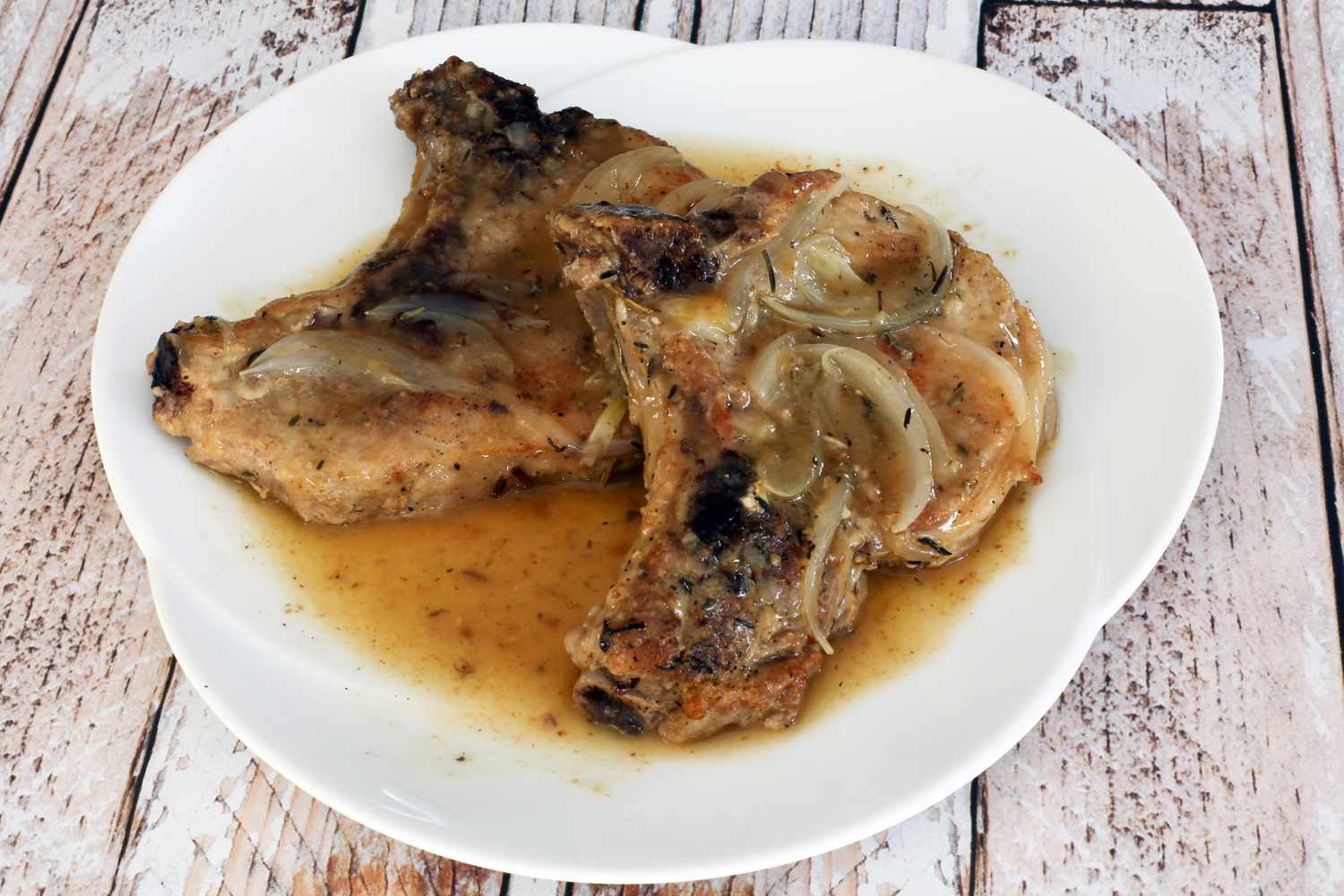
Editorial Note: This family-friendly version creates the bright, elegant flavor of a classic white wine pork chop recipe without using alcohol. The sauce gets its “white wine” personality from low-sodium chicken broth, lemon juice, and a small splash of white wine vinegar. It is tangy, savory, cozy, and very good at making plain pork chops feel like they have a dinner reservation somewhere fancy.
Introduction: The Pork Chop Glow-Up Your Weeknight Dinner Needs
Baked pork chops have a reputation problem. Too many people hear “pork chops” and immediately remember a dry, gray slab from childhood that needed half a bottle of applesauce and a motivational speech to get through. But when cooked correctly, pork chops are juicy, tender, flavorful, and surprisingly elegant. Add a silky white wine-style sauce, and suddenly dinner looks like it came from a charming bistro instead of your Tuesday-night survival plan.
This baked pork chops with white wine recipe is designed for real home cooks. No culinary degree, no dramatic flame tricks, no mystery ingredients hiding behind a velvet curtain. You will season thick-cut pork chops, sear them for color, bake them gently, and finish them with a bright, savory pan sauce that tastes rich without feeling heavy.
The secret is balance. Pork chops are lean, so they need smart seasoning, controlled heat, and a little moisture. The sauce adds acidity, aroma, and depth, while the oven keeps the cooking steady. The result is a dish that feels special enough for guests but easy enough for a weeknight when your energy level is somewhere between “productive adult” and “microwave popcorn philosopher.”
Why This Baked Pork Chops Recipe Works
A good pork chop recipe should do three things: keep the meat juicy, build flavor on the surface, and provide a sauce that makes every bite more exciting. This recipe checks all three boxes.
1. Thick pork chops stay juicier
Thin pork chops cook quickly, which sounds convenient until they go from tender to tough in the time it takes to answer one text message. Thick-cut pork chops, ideally about 1 to 1 1/4 inches thick, give you more control. They can be seared for color and then gently finished in the oven without drying out.
2. A quick dry brine seasons the meat deeply
Salt is not just there to make food taste salty. When pork chops rest with salt for even 20 to 30 minutes, the seasoning has time to move into the meat. This helps the chops taste better all the way through, not just on the surface. Think of it as giving the pork chops a short spa treatment before the hot skillet gets involved.
3. The white wine-style sauce adds brightness
Classic white wine sauces are loved because they add acidity and complexity. Here, low-sodium chicken broth provides savory body, lemon juice brings freshness, and white wine vinegar gives that sharp, wine-like sparkle. Dijon mustard rounds everything out and helps the sauce taste polished instead of plain.
Ingredients for Baked Pork Chops With White Wine-Style Sauce
For the pork chops
- 4 bone-in or boneless pork chops, 1 to 1 1/4 inches thick
- 1 1/4 teaspoons kosher salt
- 1 teaspoon black pepper
- 1 teaspoon garlic powder
- 1/2 teaspoon onion powder
- 1/2 teaspoon dried thyme
- 1/2 teaspoon smoked paprika
- 1 tablespoon olive oil
- 1 tablespoon unsalted butter
For the white wine-style sauce
- 1 small shallot, finely chopped
- 2 cloves garlic, minced
- 3/4 cup low-sodium chicken broth
- 1 tablespoon fresh lemon juice
- 1 to 2 teaspoons white wine vinegar
- 1 teaspoon Dijon mustard
- 1/2 teaspoon honey, optional
- 1 tablespoon unsalted butter, for finishing
- 1 tablespoon chopped fresh parsley
- Optional: 1/3 cup sliced mushrooms for extra savory flavor
How to Make Baked Pork Chops With White Wine-Style Sauce
Step 1: Season the pork chops
Pat the pork chops dry with paper towels. This matters because moisture on the surface prevents browning, and browning is where the flavor party begins. Mix the salt, pepper, garlic powder, onion powder, thyme, and smoked paprika in a small bowl. Rub the seasoning evenly over both sides of the pork chops.
Let the chops rest at room temperature for 20 to 30 minutes. This short rest allows the seasoning to work its way into the meat and helps the pork cook more evenly. Do not leave raw pork out for hours; we are seasoning dinner, not starting a science project.
Step 2: Preheat the oven
Preheat your oven to 375°F. Place a rack in the center position. A moderate oven temperature is ideal because it cooks the pork through without blasting the outside into toughness.
Step 3: Sear the pork chops
Heat an oven-safe skillet over medium-high heat. Add the olive oil and 1 tablespoon of butter. When the butter foams and the pan smells nutty, add the pork chops. Sear for 2 to 3 minutes per side, until golden brown.
You are not trying to cook the pork all the way through at this stage. The goal is color. A good sear gives the chops a savory crust and creates browned bits in the pan. Those browned bits are tiny flavor coupons, and the sauce is about to cash them in.
Step 4: Build the sauce
Transfer the seared pork chops to a plate. Lower the heat to medium. Add the shallot to the same skillet and cook for about 1 minute, stirring often. If using mushrooms, add them now and cook for 3 to 4 minutes, until softened and lightly browned. Add the garlic and cook for 30 seconds, just until fragrant.
Pour in the chicken broth, lemon juice, and white wine vinegar. Use a wooden spoon to scrape up the browned bits from the bottom of the pan. Stir in the Dijon mustard and honey, if using. The honey is optional, but it helps soften the acidity if your lemon or vinegar is especially bold.
Step 5: Bake the pork chops
Return the pork chops to the skillet, nestling them into the sauce. Spoon a little sauce over the top of each chop. Transfer the skillet to the oven and bake for 8 to 15 minutes, depending on thickness and whether your chops are boneless or bone-in.
The most reliable way to know when pork chops are done is to use an instant-read thermometer. Cook until the center reaches 145°F, then let the pork rest for at least 3 minutes before serving. Resting allows the juices to settle, which means more moisture stays in the meat instead of running all over the cutting board like it has somewhere better to be.
Step 6: Finish the sauce
Remove the skillet from the oven and transfer the pork chops to a clean plate. Place the skillet back on the stovetop over low heat. Stir in the remaining tablespoon of butter until the sauce looks glossy. Taste and adjust with a tiny pinch of salt, a little more lemon juice, or another small splash of broth if needed.
Spoon the sauce over the pork chops and sprinkle with fresh parsley. Serve immediately while everything is warm, shiny, and emotionally supportive.
Recipe Card: Baked Pork Chops With White Wine-Style Sauce
Prep Time
10 minutes, plus 20 to 30 minutes resting time
Cook Time
20 to 25 minutes
Total Time
50 to 65 minutes
Servings
4 servings
Best For
Weeknight dinners, cozy Sunday meals, small dinner parties, and anyone trying to prove pork chops can be juicy.
Best Pork Chops to Use
For this recipe, center-cut pork chops are a great choice. Bone-in chops often have more flavor and are slightly more forgiving because the bone helps slow the cooking near the center. Boneless pork chops are convenient and easy to serve, but they can dry out faster, so watch the temperature carefully.
Aim for pork chops that are at least 1 inch thick. If your chops are thinner than that, reduce the oven time and start checking early. If they are closer to 1 1/2 inches thick, they may need a few extra minutes. The thermometer is the boss here. The clock is merely an intern.
Flavor Variations
Creamy white wine-style pork chops
For a richer sauce, stir in 2 to 3 tablespoons of heavy cream after the pork comes out of the oven. Keep the heat low so the sauce stays smooth. This version is excellent with mashed potatoes or buttered noodles.
Garlic herb pork chops
Add fresh rosemary or sage to the skillet while the sauce simmers. These herbs pair beautifully with pork and make the kitchen smell like you planned dinner days in advance, even if you absolutely did not.
Mushroom pork chops
Add sliced cremini mushrooms after the shallot and cook until browned. Mushrooms bring earthy depth to the sauce and make the dish feel heartier without adding much effort.
Lemon caper pork chops
Stir in 1 tablespoon of drained capers at the end. The salty, briny flavor gives the sauce a lively restaurant-style finish.
What to Serve With Baked Pork Chops
These baked pork chops with white wine-style sauce are flexible. They play nicely with comfort food, vegetables, grains, and simple salads. If the sauce is the star, serve it with something that can catch every drop.
Mashed potatoes
Mashed potatoes are the classic choice. They soak up the sauce beautifully and turn the meal into full comfort-food territory.
Roasted vegetables
Roasted carrots, green beans, Brussels sprouts, or asparagus add color and freshness. Their caramelized edges also pair well with the tangy sauce.
Rice or couscous
Steamed rice, wild rice, or couscous makes the meal lighter while still giving the sauce somewhere to land.
Simple salad
A crisp green salad with a lemony vinaigrette balances the richness of the pork and keeps the plate from feeling too heavy.
Common Mistakes to Avoid
Overcooking the pork
This is the number one pork chop mistake. Pork chops are lean and can dry out quickly. Use a thermometer and remove them from the oven when they reach the safe internal temperature. Guessing is brave, but not always delicious.
Skipping the sear
Baking alone can cook pork chops, but searing first builds deeper flavor. It also gives the sauce a stronger foundation because the browned bits in the pan become part of the sauce.
Using too much vinegar
White wine vinegar is powerful. Start with 1 teaspoon, taste the sauce, and add more only if needed. The goal is bright and balanced, not “pickle with a pork chop nearby.”
Cutting the pork immediately
Let the pork rest for at least 3 minutes after cooking. Cutting too soon releases juices that should stay inside the chop.
Storage and Reheating Tips
Store leftover pork chops and sauce in an airtight container in the refrigerator for up to 3 days. For best results, reheat gently in a covered skillet over low heat with a splash of broth. This helps loosen the sauce and keeps the pork from drying out.
You can also reheat leftovers in the microwave at 50% power in short intervals. Add sauce over the top before reheating to protect the meat. Pork chops do not love aggressive reheating. Treat them gently, and they will return the favor.
Nutrition Notes
Pork chops are a good source of protein and can fit into a balanced meal, especially when served with vegetables and a smart portion of potatoes, rice, or whole grains. Choosing low-sodium broth helps control salt, while the alcohol-free sauce keeps the flavor bright without relying on wine.
For a lighter version, use boneless center-cut pork chops, skip the cream variation, and serve with roasted vegetables or salad. For a heartier dinner, pair with mashed potatoes and mushrooms. Both paths lead to a good meal. One just wears sweatpants; the other wears a blazer.
Frequently Asked Questions
Can I make this recipe with boneless pork chops?
Yes. Boneless pork chops work well, but they usually cook faster than bone-in chops. Start checking the internal temperature early so they stay juicy.
Can I use apple juice instead of the white wine-style substitute?
You can, but apple juice is sweeter. If using it, balance the sweetness with lemon juice or a very small splash of white wine vinegar.
Can I make the sauce ahead of time?
The sauce is best fresh because it picks up flavor from the pork drippings in the skillet. However, you can chop the shallot, mince the garlic, and measure the broth, lemon juice, and vinegar ahead of time.
Why are my pork chops dry?
Most dry pork chops are overcooked, too thin, or not rested after cooking. Use thicker chops, season ahead, sear quickly, bake gently, and rely on a thermometer.
Conclusion
This baked pork chops with white wine recipe proves that pork chops do not have to be dry, boring, or rescued by a mountain of gravy. With thick-cut chops, a quick seasoning rest, a golden sear, and a bright white wine-style sauce, you get a dinner that is simple but impressive.
The sauce is the real charm here. It brings together savory broth, fresh lemon, gentle vinegar, Dijon mustard, garlic, and shallot for a flavor that feels classic and cozy. It is elegant enough for a dinner guest and easy enough for a weeknight when you want something better than the usual rotation.
Most importantly, this recipe gives you control. You can make it creamy, mushroomy, extra lemony, or herb-packed. You can serve it with potatoes, rice, vegetables, or salad. Once you understand the method, you can make baked pork chops that taste like you know exactly what you are doingeven if you were searching for clean socks five minutes before cooking.
Extra Experience Notes: Real-Life Tips for Better Baked Pork Chops With White Wine-Style Sauce
After making baked pork chops many times, one thing becomes very clear: pork chops reward patience, but they punish distraction. They are not difficult, but they are not the kind of food you can abandon while you reorganize the spice cabinet, answer messages, and wonder whether the dishwasher has been clean for two days. Pork chops need just enough attention to keep them juicy.
The first experience-based tip is to buy thicker chops whenever possible. Thin chops may look budget-friendly and fast, but they are much easier to overcook. A thicker chop gives you a wider window between “not done yet” and “why does this taste like a sandal?” If you can choose between several packages, look for chops with a little marbling and a fresh pink color. A bit of fat around the edge is not a problem; it adds flavor and helps protect the meat during cooking.
The second tip is to avoid rushing the seasoning step. Letting salt sit on the pork for 20 to 30 minutes makes a noticeable difference. The chops taste more complete, and the surface browns better after you pat it dry. If you have more time, you can season the chops and refrigerate them uncovered for a few hours. That method helps dry the surface even more, which is excellent for searing.
Another lesson: do not crowd the skillet. If the pork chops are packed too tightly, they steam instead of sear. Steamed pork chops are not a tragedy, but they are not the goal. Use a large skillet or sear in batches. The extra few minutes are worth it because the browned crust gives the finished dish deeper flavor.
The sauce also teaches a useful kitchen lesson: acidity wakes food up. Broth alone can taste flat, but lemon juice and a small amount of white wine vinegar make it lively. Start small and taste as you go. A sauce should make you want another bite, not make your eyes blink like you just licked a battery.
If you are cooking for picky eaters, keep the mushrooms optional and serve the sauce on the side. Some people love a glossy pan sauce poured over everything; others want control. Sauce-on-the-side diplomacy can save dinner-table negotiations.
For meal planning, this dish is best fresh, but leftovers can still be delicious if reheated gently. Slice leftover pork thinly and warm it in the sauce over low heat. You can tuck it into sandwiches, serve it over rice, or chop it into a quick skillet meal with vegetables. The sauce keeps the pork from feeling dry the next day.
Finally, trust the thermometer. Many home cooks grew up thinking pork must be cooked until completely pale and firm. Modern cooking guidance allows pork chops to remain juicy when cooked to the proper safe temperature and rested. Once you stop guessing, pork chops become much easier. The thermometer is not a gadget for perfectionists; it is a tiny truth-teller that saves dinner.
In short, the best baked pork chops come from small smart choices: thick chops, good seasoning, a hot sear, gentle baking, a balanced sauce, and a proper rest. Do those things, and this recipe becomes the kind of dependable dinner you will actually want to repeat.













