
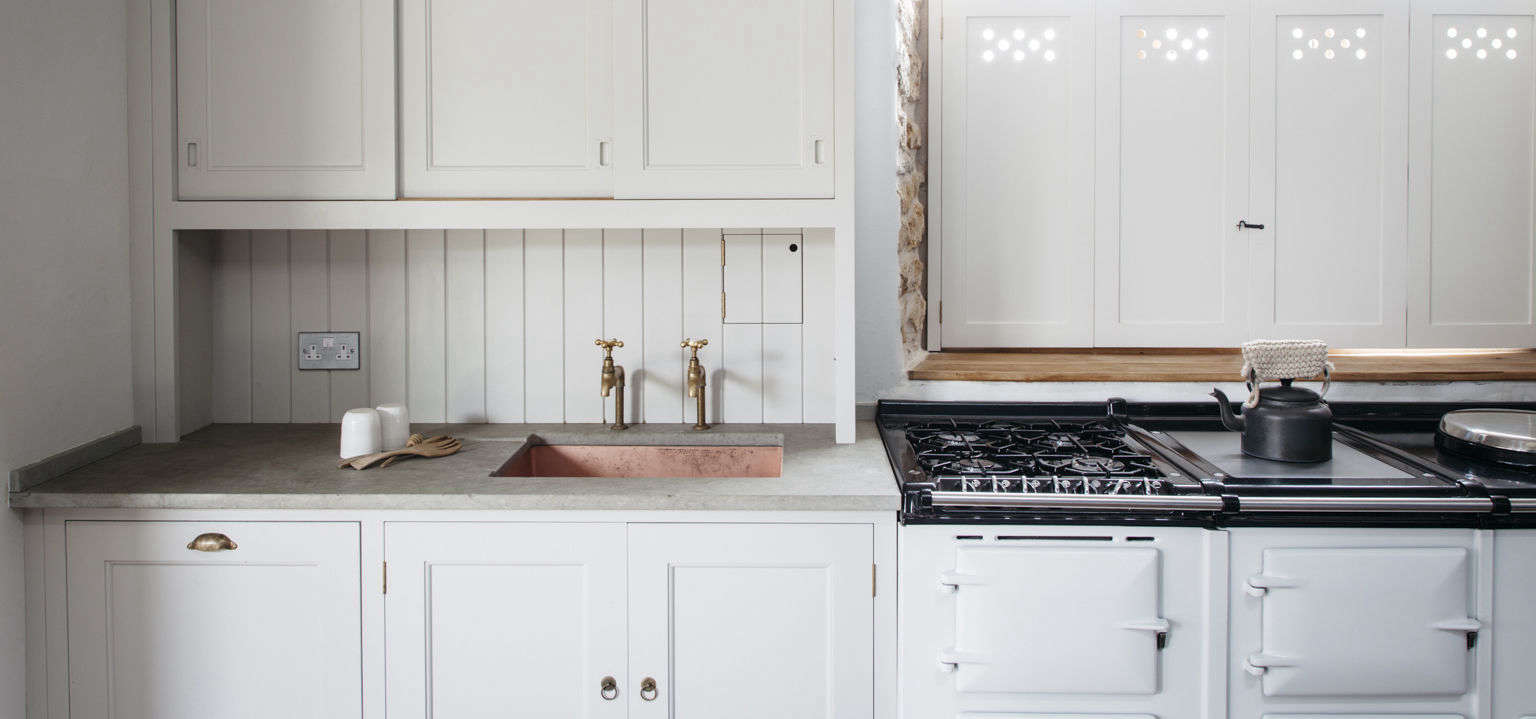
Some kitchen fixtures whisper. Others politely clear their throat. The Barber Wilsons 260 1/2-Inch Sink Bib Tap does neither. It walks into the room wearing a waistcoat, carrying a brass toolbox, and somehow makes the sink look like it has a family crest. This is not the faucet you buy because it happened to be on an endcap at the hardware store. It is the tap you choose when a kitchen, pantry, scullery, boot room, laundry room, or classic utility sink needs one small detail that says, “Yes, someone thought about this.”
Also known through Barber Wilsons’ Regent 260 family, this traditional sink bib tap is a heritage-style fixture with practical bones. It is built around the old-school charm of exposed fittings, separate hot and cold taps, and a compact spout profile that works especially well with farmhouse sinks, Belfast sinks, butler sinks, prep sinks, and period-inspired interiors. It is simple, sculptural, and refreshingly free of unnecessary gadgetry. No app. No glowing temperature ring. No faucet asking for a firmware update while you are trying to rinse parsley.
But beneath the nostalgic good looks is a serious piece of plumbing hardware. The Barber Wilsons 260 1/2-inch sink bib tap is valued for its solid construction, adaptable installation options, classic handle choices, multiple finishes, and made-to-order craftsmanship. For homeowners and designers who care about authentic traditional kitchen fittings, it is one of those details that can quietly carry an entire room.
What Is the Barber Wilsons 260 1/2-Inch Sink Bib Tap?
The Barber Wilsons 260 is a traditional bib tap designed for sink applications. In simple terms, a bib tap is a wall- or deck-mounted tap with a projecting spout, often used in kitchens, utility areas, pantries, laundry rooms, and boot rooms. The “1/2-inch” reference relates to the fitting size, while the 260 model sits within Barber Wilsons’ traditional Regent-style offering.
One commonly referenced product description lists it as a 1/2-inch sink bib tap supplied with a 6-inch standard and available extensions of 1, 2, 3, or 4 inches. That extension flexibility matters more than it sounds. Sink dimensions vary wildly, especially in older houses or custom kitchens. A deep fireclay sink, a stone backsplash, and a thick counter can turn a “standard” tap into a tiny decorative fountain pointed at the wrong zip code. The ability to adjust reach helps the tap land water where it should: inside the bowl, not on your shirt.
Why This Tap Has a Cult Following
Barber Wilsons is not a trendy startup selling “heritage-inspired” fixtures made five minutes ago. The company has a long history in British brassware and is known for traditional taps, mixers, showers, and specialty fittings. Its fixtures often appeal to architects, designers, restoration specialists, and homeowners who want a genuine period look rather than a modern faucet wearing a fake mustache.
The 260 sink bib tap has that classic below-stairs, working-house charm. It looks appropriate in a country kitchen, an English-inspired pantry, a polished mudroom, a laundry sink station, or a restaurant-style prep area. It is decorative without being fussy. It has personality without shouting. And unlike many showpiece faucets, it still feels like it was designed to work.
A Small Fixture With Big Design Energy
In interior design, some details behave like punctuation. Cabinetry is the sentence. Countertops are the paragraph. The faucet is the exclamation point, comma, orif chosen badlythe typo. The Barber Wilsons 260 acts like a beautifully placed period at the end of a very confident sentence.
Its shape works especially well with traditional kitchens because it has visual weight without bulk. The exposed character, crosshead or lever options, and period escutcheon choices allow the tap to feel intentional. In a white fireclay sink, it becomes crisp and architectural. Against marble, soapstone, or wood countertops, it adds warmth and depth. In polished chrome or nickel, it can feel clean and classic. In brass or bronze, it moves toward old-world richness.
Design Styles That Pair Well With the Barber Wilsons 260
The Barber Wilsons 260 1/2-inch sink bib tap is not locked into one narrow aesthetic. It is traditional, yes, but traditional does not have to mean dusty, dark, or “grandma’s soup tureen collection has entered the chat.” Used well, it can sharpen a wide range of interiors.
English Country Kitchens
This is the obvious match, and for good reason. Pair the tap with a deep apron-front sink, painted cabinetry, unlacquered brass hardware, open shelving, and stone or wood counters. The result feels relaxed, lived-in, and quietly expensivethe design equivalent of owning wellies and knowing exactly where the good jam is kept.
Modern Farmhouse Spaces
Modern farmhouse design can sometimes lean too hard on black metal and shiplap. A Barber Wilsons bib tap adds authenticity and softens the look. Instead of feeling like a showroom trend, the room gains a more collected character. Choose polished nickel, chrome, or brass depending on the cabinet hardware and lighting.
Utility Rooms, Mudrooms, and Boot Rooms
The 260 is particularly compelling in hardworking secondary spaces. A laundry sink, dog-washing corner, gardening sink, or boot-room basin benefits from a tap that feels rugged and handsome. It looks appropriate in a place where you might rinse paintbrushes, muddy hands, flower buckets, or the paws of a dog who has no regrets.
Traditional Bathrooms and Powder Rooms
Although commonly discussed in kitchen and utility contexts, bib-style taps can also support a period-style basin when planned carefully. Wall-mounted versions can clear counter space and make cleaning easier. Deck-mounted versions can create a classic symmetrical look. The key is proportion: the spout reach, basin depth, and splash zone must all agree with one another like civilized adults.
Key Features and Product Details
The Barber Wilsons 260 is best understood as a customizable traditional tap rather than a one-size-fits-all faucet. Depending on supplier and configuration, shoppers may encounter options for escutcheon style, handles, finish, mounting format, riser height, and extensions.
1/2-Inch Sink Bib Tap Format
The 1/2-inch sink bib format gives the fixture a compact, traditional utility profile. It is suitable for classic sink installations where separate hot and cold taps are desired. In American homes, where single-lever mixer faucets are common, separate bib taps create a distinctly European or historic look.
6-Inch Standard and Extension Options
The referenced 260 configuration includes a 6-inch standard with optional extensions. Those extensions are useful when a backsplash, thick wall, or deep sink requires extra projection. In practical terms, this helps the water stream land closer to the center of the basin rather than hugging the rear wall of the sink.
1890s and 1900s Style Options
Barber Wilsons often separates its traditional designs into period looks. The 1890s style tends to emphasize a more exposed, industrial character, while the 1900s style presents a cleaner appearance with more shielded fittings. Both are classic, but they create different moods. Choose 1890s if you like mechanical honesty and visible charm. Choose 1900s if you want traditional lines with a slightly tidier suit jacket.
Crosshead, Metal Lever, and Ceramic Lever Choices
Handle style changes the personality of the tap. Cross handles feel architectural and historic. Metal levers are slightly more streamlined and easier for some users to operate. Ceramic levers can add an old-house softness, particularly in bathrooms, pantries, and cottage-style kitchens. The best choice depends on both appearance and daily comfort.
Finish Options
Finish selection is where the 260 becomes funand mildly dangerous for anyone who has ever spent three hours comparing two shades of nickel. Depending on availability, buyers may find finishes such as polished chrome, polished nickel, brushed nickel, satin nickel, polished brass, brushed brass, brushed gold, bronze tones, and other specialty finishes. Polished chrome reads crisp and bright. Polished nickel feels warmer and softer. Brass brings instant heritage character. Bronze adds depth and drama.
One important note: unlacquered brass is a living finish. It changes over time, developing patina from air, water, fingerprints, and cleaning habits. Some people love that evolution; others panic the first time a fixture stops looking fresh from the box. Know your finish personality before ordering. If you want a tap to age like a leather chair, brass may be your friend. If you want it to stay shiny like a freshly polished spoon, consider a protected or plated finish.
Why Solid Brass Construction Matters
A premium tap is not just about looks. The body material matters because water, minerals, pressure, cleaning products, and time are relentless. Solid brass has long been prized in quality faucets because it resists corrosion and handles daily use well. In areas with hard water, durable construction becomes even more important. A cheaper fixture may look fine on day one, but day one is not the test. Day 1,500 is the test.
The Barber Wilsons 260 belongs in the category of fixtures bought for long-term use, not quick cosmetic replacement. That is also why its price can look startling if you are comparing it to mass-market faucets. It is not competing with a budget pull-down faucet from a big-box aisle. It is competing with architectural hardware, heritage plumbing, and custom design details.
Where the Barber Wilsons 260 Works Best
The best home for this tap is a space where its traditional shape feels intentional. It is especially suitable for:
- Farmhouse kitchen sinks
- Belfast and butler sinks
- Prep sinks and pantry sinks
- Laundry room utility sinks
- Boot rooms and mudrooms
- Classic powder rooms
- Historic home renovations
- English country, cottage, traditional, and transitional kitchens
It may be less ideal if you need a pull-down sprayer, touchless activation, integrated filtration, or a single-handle mixer for fast temperature control. This tap is charming, but it is not pretending to be a spaceship. If your kitchen routine involves blasting sheet pans, rinsing oversized stockpots, and using a sprayer six times before breakfast, you may want a separate rinse fixture or a different primary faucet.
Installation Considerations Before You Buy
Before choosing the Barber Wilsons 260 1/2-inch sink bib tap, measure carefully. A beautiful tap installed at the wrong reach is still wrongit is just wrong with excellent cheekbones.
Check Sink Depth and Spout Reach
Start with the sink. Measure the bowl depth, rim width, backsplash thickness, and the desired landing point of the water stream. The spout projection should be appropriate for the basin. Too short, and water hits the back wall. Too long, and the stream may splash near the front. The sweet spot is usually somewhere near the center of usable sink space.
Confirm Deck or Wall Mounting
Some configurations are better suited to deck mounting, while others work as wall-mounted taps. Wall-mounted taps can look spectacular, especially above a fireclay or stone sink, but they require accurate rough-in plumbing. Deck-mounted taps may be easier in some remodels, depending on the counter and sink setup.
Plan for Hot and Cold Tap Use
Separate bib taps have a different user experience than a mixer. You may turn on hot and cold separately, mix water in the basin, or use one side more often depending on the task. For some homeowners, that is part of the charm. For others, especially those accustomed to single-lever control, it may require adjustment.
Use a Qualified Plumber
Because premium traditional fittings often involve specific rough-ins, extensions, and finish protection, professional installation is strongly recommended. A plumber can confirm supply compatibility, pressure suitability, spacing, sealing, and local code requirements. This is not the fixture on which to test your “I watched one video, how hard can it be?” confidence.
Performance, Water Flow, and Practical Use
In the United States, water efficiency and local plumbing requirements can affect faucet selection. Many bathroom sink faucets are discussed in relation to WaterSense standards, and homeowners should always confirm flow rates, aerator options, and code compliance with the supplier or installer. For a specialty imported or made-to-order fixture, do not assume the default configuration matches every local requirement.
In daily use, the Barber Wilsons 260 is best appreciated as a traditional tap with tactile operation. It is not about maximum features. It is about satisfying simplicity: turn the handle, water comes out, the room looks better. That sentence may not win a technology award, but it does make breakfast cleanup feel more civilized.
Pros and Cons of the Barber Wilsons 260 1/2-Inch Sink Bib Tap
Pros
- Authentic traditional design: Ideal for period-style kitchens, farmhouse sinks, utility rooms, and classic interiors.
- Customizable appearance: Handle, escutcheon, finish, and extension options allow a tailored look.
- Premium craftsmanship: Barber Wilsons is known for made-to-order brass fittings with hand-finished character.
- Adaptable reach: Standard and extension options help solve tricky sink-depth and backsplash situations.
- Long-term design value: A classic tap is less likely to feel dated than a trendy fixture.
Cons
- Premium price: This is an investment fixture, not a budget replacement faucet.
- No modern sprayer: It does not offer the convenience of pull-down or pull-out spray functions.
- Separate taps may not suit everyone: Users accustomed to single-handle mixers may need time to adjust.
- Care varies by finish: Living finishes like brass require realistic expectations and gentle cleaning.
- Installation planning matters: Measurements, rough-ins, and reach must be checked before ordering.
How to Choose the Right Finish
The finish should coordinate with the rest of the room, but it does not have to match every metal exactly. In fact, many designers now mix metals intentionally. A polished nickel tap with aged brass cabinet hardware can look layered and timeless. A brass tap with black iron lighting can feel warm and grounded. The goal is harmony, not a military inspection.
For bright traditional kitchens, polished nickel is a safe and elegant choice. For crisp utility rooms, chrome is practical and familiar. For old-world kitchens, brass or bronze can be stunning. For a more subtle look, brushed finishes reduce glare and tend to hide minor marks better than mirror-polished surfaces.
Cleaning and Maintenance Tips
Premium finishes deserve gentle care. Avoid harsh abrasives, aggressive chemical cleaners, scouring pads, and acidic sprays unless the manufacturer specifically approves them. A soft cloth, mild soap, and water are usually the safest starting point. Drying the tap after use can reduce water spotting, especially on polished finishes.
If you choose unlacquered brass, accept that it will darken and patinate. That is not damage; that is the finish doing exactly what it was invited to do. If you prefer a consistent appearance, ask about protected finishes before buying. The most expensive finish is the one you secretly dislike six months later.
Who Should Buy the Barber Wilsons 260?
The Barber Wilsons 260 1/2-inch sink bib tap is a smart choice for homeowners, designers, and renovators who value traditional craftsmanship, authentic details, and long-term design. It is especially appropriate when the sink is meant to be a visual feature. If the room has custom cabinetry, stone counters, a fireclay basin, or historic architectural character, a generic faucet can feel like wearing sneakers with a tuxedo. Comfortable? Maybe. Correct? Questionable.
It is not the right choice for every home. If your priority is low cost, instant availability, modern spray functions, or ultra-minimal styling, another faucet may make more sense. But if you want a tap that feels as though it belongs to the architecture of the room, the Barber Wilsons 260 is worth serious consideration.
Experience Notes: Living With a Traditional Bib Tap
Traditional bib taps change the rhythm of a sink area. That may sound dramatic, but fixture design affects how people move through a kitchen. A modern pull-down faucet encourages quick rinsing, spraying, filling, and multitasking. A traditional bib tap encourages a slower, more deliberate workflow. You turn one handle, then the other. You position the bowl or pot carefully. You become aware of the sink as a working station rather than just a wet countertop accessory.
In a pantry sink, this experience can feel wonderful. Imagine rinsing berries in a small fireclay basin beside a marble counter. The separate taps look balanced, the cross handles feel satisfying, and the whole setup has a quiet ritual quality. It is less “suburban kitchen appliance” and more “small hotel in the Cotswolds where even the jam labels have good typography.”
In a laundry or mudroom, the experience is different but equally appealing. The Barber Wilsons 260 feels sturdy and purposeful. It pairs well with deep sinks used for soaking clothes, washing garden tools, or filling buckets. Because the spout is fixed and traditional, the surrounding layout matters. A nearby hand sprayer or secondary utility fixture may be helpful if the sink is used for messy cleaning tasks. The bib tap provides beauty and basic function; the supporting fixtures can handle the chaos.
One practical lesson from traditional tap planning is that reach matters more than photographs suggest. Product images often show the tap looking perfect in isolation. Real kitchens have backsplash tile, thick counters, uneven walls, and sinks that may sit forward or back. A one-inch difference can affect splashing and usability. Before ordering, tape out the spout location, measure the water landing point, and think about the objects you actually wash. A teacup, a Dutch oven, and a muddy boot are three very different design consultants.
Another experience-based point: finish choice affects mood every day. Polished chrome feels clean and bright, but it may show water spots. Polished nickel feels warmer and often blends beautifully with traditional interiors. Brass can be magical, but only if you enjoy patina. A living finish is like a sourdough starter or a houseplant with opinionsit changes, and you have to be emotionally prepared for that relationship.
The biggest reward of a tap like the Barber Wilsons 260 is not just function. It is the daily pleasure of touching something well made. In a world full of disposable fixtures, flimsy handles, and design trends that age faster than an avocado, a traditional brass bib tap has staying power. It turns an ordinary sink into a small architectural moment. That may not make dishwashing thrilling, but it can make it slightly less offensive, which is honestly a major victory for civilization.
Final Verdict
The Barber Wilsons 260 1/2-Inch Sink Bib Tap is a premium traditional fixture for people who believe a sink deserves better than an afterthought. Its appeal lies in a rare combination: historic styling, customizable details, durable brassware character, and real usefulness in kitchens, pantries, mudrooms, and classic utility spaces.
It is not the cheapest tap. It is not the most feature-packed tap. It will not spray, swivel like a robot arm, or notify your phone when the sink is full. What it will do is bring authenticity, proportion, and old-world charm to a hardworking space. For the right project, that is more valuable than a dozen flashy features.
Note: Product specifications, finishes, pricing, lead times, and code requirements can change. Before purchasing, confirm the exact Barber Wilsons 260 configuration, mounting type, valve option, extension length, finish care instructions, flow rate, and local plumbing compatibility with an authorized dealer or licensed plumber.













