
Note: This publication-ready HTML body omits inline source links, as requested, but is based on real U.S. policy, polling, and health-care research.
American health care has a very special talent: it can make people feel both insured and financially hunted at the same time. You can have a card in your wallet, an app on your phone, a deductible the size of a used car, and a sneaking suspicion that one bad MRI could turn your budget into modern art. That is the swamp Bernie Sanders has spent years stomping into with his favorite political bullhorn: single-payer health care, usually branded as Medicare for All.
For a lot of people, the idea lands in one of two mental boxes. Box one says, “Finally, somebody is talking about fixing this circus.” Box two says, “Absolutely not, I do not want Washington handling my blood pressure and my billing code.” Both reactions are understandable. But here is the real point: even if you think Bernie Sanders is too idealistic, too left, too loud, or too fond of turning a policy pitch into a moral sermon, the single-payer dream deserves serious attention. Not because it is guaranteed to become law next Tuesday. Not because every line of every Medicare for All bill is perfect. And not because slogans are substitutes for spreadsheets. We must take it seriously because the problems it is trying to solve are real, persistent, and expensive in ways that are hard to overstate.
Why this idea keeps coming back
Single-payer is not a political novelty that wandered into the room five minutes ago. It keeps returning because the underlying pain never leaves. Americans remain anxious about premiums, deductibles, surprise bills, narrow networks, prescription prices, medical debt, and the weirdly humiliating experience of arguing with an insurer while also trying to be sick in peace. That is why Sanders has kept the issue alive for years, and why he and allied lawmakers reintroduced a Medicare for All bill again in 2025.
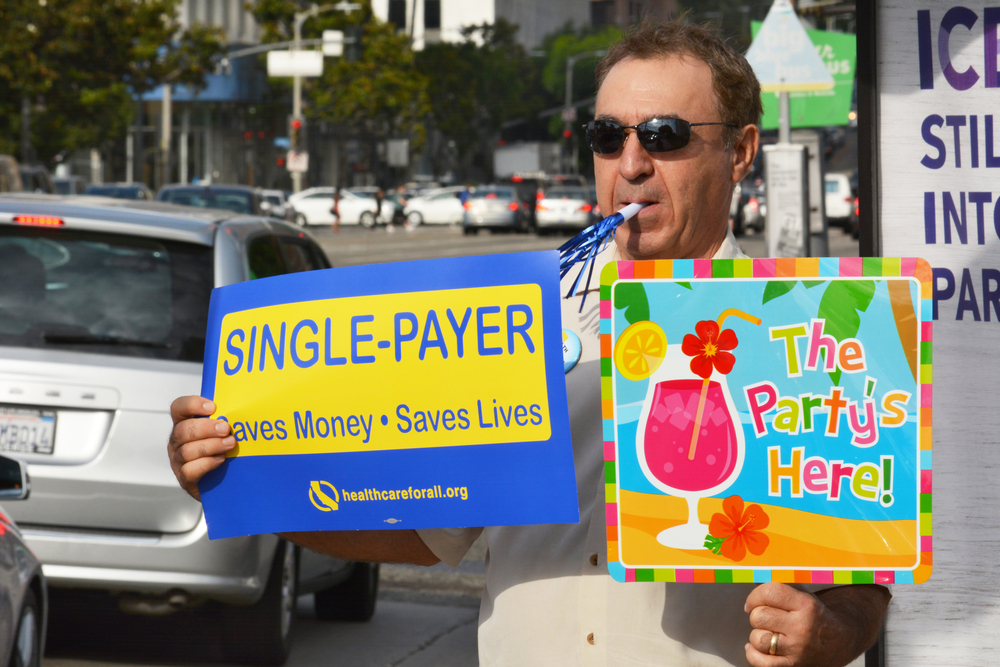
The pitch is simple enough to fit on a bumper sticker, which is probably why it survives election cycles. Under a Sanders-style approach, the federal government becomes the main insurer, coverage is universal, benefits are comprehensive, and most private insurance for covered services disappears. No premiums, no co-pays, no deductibles for essential care. More dental, vision, hearing, long-term care support, and fewer insurance-company obstacle courses. In Sanders’s framing, health care stops behaving like a consumer luxury and starts behaving like a public guarantee.
That message sticks because Americans do not need a white paper to know the current system is exhausting. They live it every month.
First, let’s be clear about what single-payer actually is
One reason this debate gets messy is that people use “single-payer,” “Medicare for All,” “universal coverage,” and “government-run health care” as if they are identical twins. They are not. Universal coverage means everyone is covered. Single-payer describes one financing model for getting there. And current Medicare, despite the name recognition, is not itself a pure single-payer system. It includes private plans, premiums, and cost sharing.
That distinction matters. A Sanders-style plan is not simply taking today’s Medicare card and photocopying it for the whole country. It is a much bigger redesign. It would replace a patchwork of employer insurance, ACA marketplace plans, Medicaid, and most private coverage with a new national program. That means the proposal is more disruptive than the casual phrase “expand Medicare” makes it sound. Anyone discussing this seriously has to admit that upfront.
Still, clarity cuts both ways. Critics sometimes describe single-payer as government taking over hospitals and bossing every doctor around like a clipboard-wielding hall monitor. That is not what the model necessarily means. Single-payer changes who pays, not automatically who owns the clinics, hires the physicians, or performs the surgery. In many versions, hospitals stay hospitals, doctors stay doctors, and patients still choose providers. The biggest change is the financing architecture.
Why Sanders still has a point
The affordability crisis is not imagined
This is the heart of the case for taking the single-payer dream seriously: the affordability crisis is not partisan fan fiction. It is measurable. A huge share of Americans say health care is difficult to afford. Many report problems paying medical bills, and cost still causes some people to skip care, delay care, or ration prescriptions. That should be politically radioactive, yet it has become weirdly normal.
And the pain is not limited to the uninsured. That is one of the most important features of the American health-care mess. People with coverage can still feel one urgent care visit away from a budget emergency. Being insured in the United States often means you are protected in theory and exposed in practice. Sanders did not invent that contradiction; he built a movement around it.
America pays first-class prices for uneven results
The United States spends more on health care than peer nations and still posts weaker outcomes on too many basic measures. That is the part of the debate that makes even cautious centrists stop and rub their temples. We are not arguing over whether America should spend more money to reach universal coverage from a position of thrift. We already spend a staggering amount. The argument is over whether we are spending badly.
That is why Sanders’s message resonates beyond the activist left. Even people who do not support single-payer often agree with the diagnosis: America is paying luxury rates for an experience that can feel like a bureaucratic escape room. When a country spends extraordinary sums and still has coverage gaps, cost barriers, medical debt, and worse health outcomes than many peers, radical reform stops sounding like a campus slogan and starts sounding like a reasonable response to persistent failure.
The administrative maze is not a side issue
One of the strongest arguments for single-payer is not emotional, but operational. The United States burns an astonishing amount of money on administration: billing, coding, claims management, prior authorization, network rules, plan design, appeals, compliance layers, and enough paperwork to make a fax machine feel relevant. Defenders of the status quo often treat this as unfortunate scenery. It is not scenery. It is the plot.
If you simplify financing, you reduce friction. Fewer payers, fewer contracts, fewer forms, fewer billing departments the size of airport terminals. Supporters of single-payer believe that streamlining alone could generate major savings and free up time for care rather than paperwork. That does not mean every projected savings estimate is right. It does mean the waste is substantial enough that no serious reform conversation can ignore it.
The serious objections are also real
Now for the part that single-payer supporters sometimes rush past like it is an inconvenient pothole on the road to justice: the objections are not imaginary, either. A serious idea deserves serious criticism.
Yes, taxes would rise
The most obvious objection is fiscal. A Sanders-style plan would shift an enormous amount of health spending onto the federal ledger. Even if households and employers paid less in premiums and out-of-pocket costs, Washington would be collecting and distributing far more money. That is not a trivial accounting detail. It is the central challenge.
Critics are right to say voters do not always distinguish between total national health spending and federal spending. That distinction matters. A system can reduce some private costs while still requiring much higher taxes. But supporters are also right to say that judging single-payer only by how much federal spending rises is misleading if you ignore premiums, deductibles, employer contributions, and medical debt that people would no longer pay in the same way. The honest version of the debate is this: taxes almost certainly go up, but private payment burdens may go down. The question is how much, for whom, and under what assumptions.
Provider payments would be a political knife fight
Single-payer math gets prettier when you assume hospitals, specialists, and drug companies accept lower payment rates. It gets much uglier when you assume they do not. That is not a minor detail hiding in the footnotes. It is the whole wrestling match.
If a national plan pays providers less than many private insurers do now, some savings appear. But lower payment rates can also create disruptions, especially for hospitals already operating on thin margins, rural systems under stress, or provider groups with business models built around commercial reimbursements. A reform that looks elegant in a spreadsheet can get very noisy in real life once every affected industry shows up with lobbyists, ad campaigns, and a terrifying number of talking points.
Americans like reform in theory and details in moderation
Polling on health care is famous for making everyone feel briefly victorious before the crosstabs ruin the party. Many Americans say government should ensure coverage. A meaningful share even favors a single national plan. But support gets softer when people hear about tax increases, potential delays, or the loss of private insurance. That does not mean the public is hypocritical. It means people want universal security without too much disruption, which is a very human thing to want.
In other words, Sanders is speaking to a real public desire, but not a simple one. Americans often love the promise of universal health care and panic at the mechanics. They want freedom from financial risk and freedom from government overreach, sometimes in the same sentence, sometimes in the same breath, sometimes before coffee.
Why incremental reform is not a complete answer
There is a respectable counterargument that says America should not blow up the system. Instead, it should improve the ACA, expand Medicaid where states still refuse, strengthen Medicare, regulate prices more aggressively, cap out-of-pocket costs, curb medical debt, and build a public option if possible. That is not a lazy argument. In many ways, it is the most politically plausible path.
But Sanders’s importance lies in exposing what incrementalism still leaves untouched. A piecemeal approach can reduce suffering, and that matters a lot. Yet it often leaves intact the fragmentation that drives complexity in the first place: different rules for different people, different networks, different formularies, different billing logic, different levels of generosity, different paperwork jungles. A system can become less cruel and still remain structurally incoherent.
That is why single-payer keeps haunting the conversation. It is not just a bigger coverage plan. It is a cleaner theory of the entire system.
Why we must take it seriously, even if it does not pass soon
We should take Sanders’s single-payer dream seriously for three reasons.
First, it correctly identifies that the problem is not merely the number of uninsured people. It is underinsurance, cost anxiety, administrative waste, and a financing model that ties stability to employment, geography, age, income, and luck. That diagnosis is stronger than many critics want to admit.
Second, it forces honesty about tradeoffs. Americans cannot keep pretending there is a magical reform that provides universal, generous, affordable coverage with no disruption, no taxes, no industry losers, and no political pain. Sanders’s model is blunt, but it at least makes the tradeoffs visible.
Third, it functions as a policy north star. Big ideas often matter before they become laws. They shift expectations. They move the center of debate. They pressure moderates to adopt partial fixes they might otherwise avoid. Even people who never want full single-payer have benefited politically from the pressure it created. When the boldest proposal on the table is sweeping, the “pragmatic” alternatives often become more ambitious.
That may be the strangest compliment Sanders receives from his critics: by asking for the moon, he sometimes changes what counts as realistic on Earth.
Experiences that make this debate feel personal
The single-payer debate is often described in language so abstract it could put a caffeinated raccoon to sleep. “Risk pooling.” “Cost shifting.” “Federal outlays.” “Provider reimbursement dynamics.” All important. Also: not how most people encounter the system. Most people encounter it at the kitchen table.
It looks like the freelancer who turns down a promising contract because it would mean losing employer-sponsored coverage for a child with asthma. It looks like the restaurant owner who offers health insurance to keep staff but quietly wonders whether premiums are eating the future of the business one renewal season at a time. It looks like the middle-class family with insurance who still delays an MRI because they have no idea what the final bill will be, and nobody on the phone will say a number without sounding like they are defusing a bomb.
It looks like an older woman on Medicare who is grateful for the program and still dreads out-of-pocket costs for dental work, hearing aids, or a drug that somehow costs more every year while the bottle gets smaller, almost as if capitalism has learned sleight of hand. It looks like the diabetic patient stretching insulin or the parent skipping therapy appointments for a teenager because the network directory might as well be historical fiction. It looks like the worker who stays in a miserable job because quitting would mean rolling the dice on insurance during a medically complicated year.
It also looks like the physician who spends hours dealing with billing codes, prior authorizations, and plan-specific rules instead of seeing patients. Ask enough doctors and nurses what makes the job harder, and you will hear a version of the same complaint: the system is not merely expensive, it is cluttered. It extracts time, attention, and morale. Single-payer supporters hear that and conclude the financing structure itself is the disease. Opponents hear it and argue for simplification without full nationalization. But both sides are responding to a lived frustration, not a theoretical one.
Then there is the experience of plain uncertainty, which may be the most American health-care feeling of all. Not knowing what is covered. Not knowing whether the anesthesiologist is in network. Not knowing whether a “covered” service will still produce a bill large enough to rearrange your month. Not knowing whether a job change, divorce, move, or birthday will scramble your access to care. Sanders’s movement has always understood that uncertainty itself is a form of burden. People do not just want coverage; they want confidence.
This is why the single-payer dream keeps surviving ridicule. It speaks to a desire for moral simplicity in a system built on administrative complexity. It tells people that health care should not feel like a coupon app glued to a casino. It offers a picture, maybe too neat for some, in which the card works, the bill does not wreck you, and the doctor visit does not require a side quest through customer service hell.
You do not have to agree with every Sanders proposal to understand why that vision carries power. The power comes from experience. Millions of Americans have learned, in ways both dramatic and ordinary, that the current system can fail even when it is technically functioning. That is why the single-payer dream deserves more than mockery, more than reflexive applause, and more than lazy partisan shorthand. It deserves a grown-up argument, because the people living inside this system are already paying the price for every year we refuse to have one.
Conclusion
Bernie Sanders has spent years arguing that health care is a human right, not a consumer product with a deductible and a customer-loyalty penalty. You may or may not agree with his remedy. You may prefer a public option, a stronger ACA, Medicaid expansion, tighter price regulation, or a long ladder of incremental fixes. Fair enough. But dismissing the single-payer vision as unserious is the real unserious move.
The dream persists because the dysfunction persists. Americans are still paying too much, fearing too much, postponing too much, and deciphering too much. Sanders’s answer is sweeping, disruptive, and politically difficult. It is also a response to a system that has earned that level of scrutiny. The right question is not whether single-payer sounds radical in a campaign speech. The right question is whether the status quo has become so normal that we have forgotten how radical its failures already are.













