
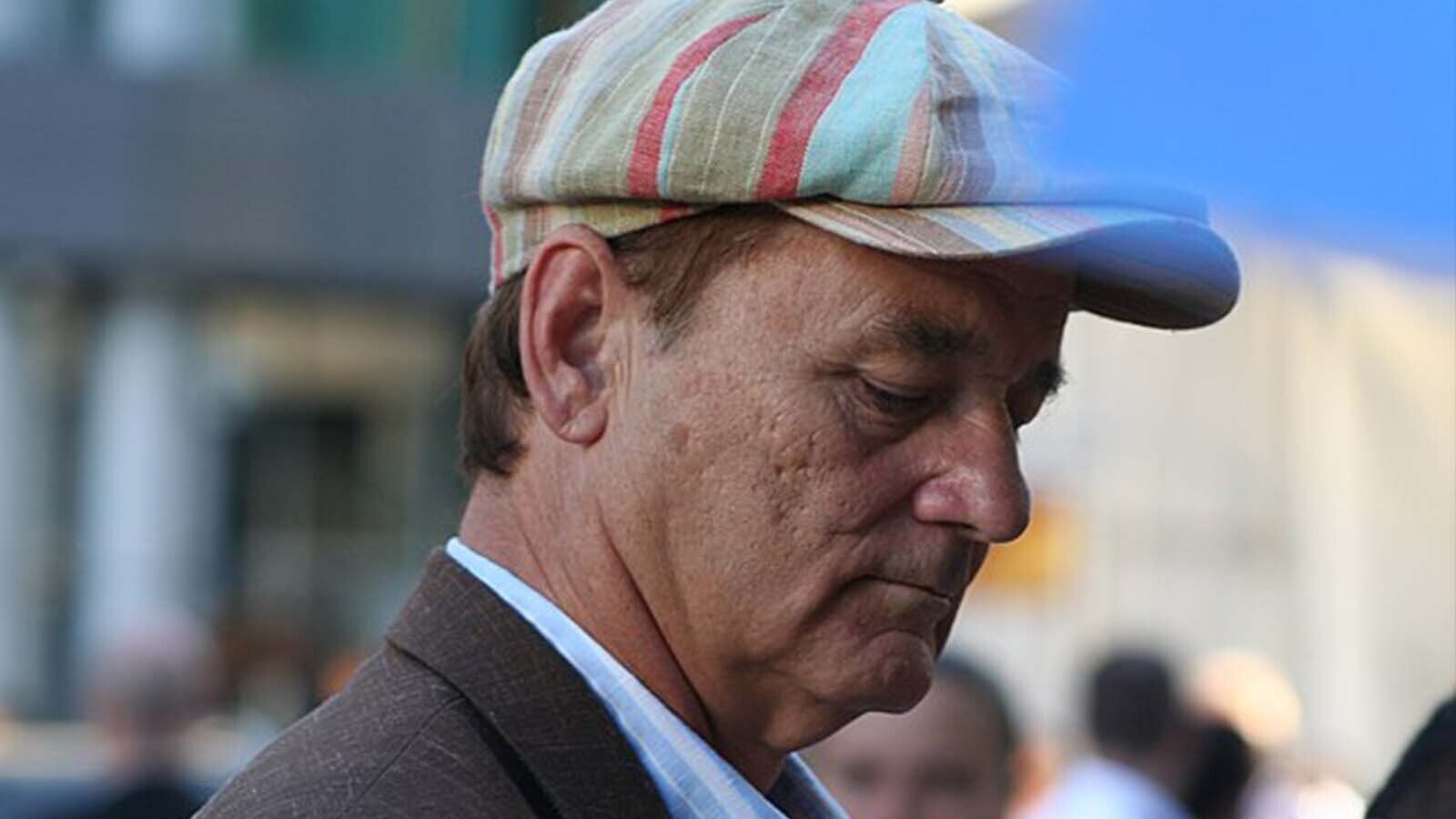
Bill Murray has spent decades playing lovable oddballs, dry-witted philosophers, reluctant heroes, and the kind of man who can make a raised eyebrow feel like a full paragraph. But the story surrounding Being Mortal, the unfinished Aziz Ansari film that was halted in 2022, is not a quirky Hollywood anecdote. It is a workplace story, a power story, and a reminder that even the most beloved public figures do not get a free pass when conduct on set crosses a line.
According to multiple reports, Murray reached a private settlement of just over $100,000 with a younger female staffer after a complaint about inappropriate behavior on the set of Being Mortal. The reported incident led Searchlight Pictures to suspend production, leaving the film in limbo and turning a high-profile comedy-drama into a case study in modern Hollywood accountability.
The case became especially notable because it involved several layers at once: a famous actor, a younger production employee, a pandemic-era film set, an internal complaint, a confidential settlement, and a movie that may have otherwise been a prestige release. In other words, it had everything Hollywood dislikes discussing in publicexcept craft services running out of coffee, which somehow still gets handled faster.
What Happened on the Set of Being Mortal?
Being Mortal was planned as Aziz Ansari’s feature directorial debut. Ansari wrote, directed, produced, and acted in the film, which was based on Dr. Atul Gawande’s nonfiction book Being Mortal: Medicine and What Matters in the End. The project had a strong cast, including Bill Murray, Seth Rogen, and Keke Palmer. Searchlight Pictures had expected the film to become a thoughtful comedy-drama about aging, mortality, care, and human connection.
Production began in 2022, but in April of that year, Searchlight suspended filming after an internal complaint. Early reports confirmed that the complaint was not against Ansari or Rogen. Later reporting identified Murray as the subject of the complaint and described the alleged conduct as inappropriate behavior involving a female production staffer.
Murray publicly described the situation as a “difference of opinion” and said he had done something he thought was funny, but it was not received that way. That explanation became one of the most repeated parts of the story because it revealed a core tension: what one person frames as humor may feel uncomfortable, invasive, or unacceptable to another personespecially in a workplace with major power differences.
The Reported $100,000 Settlement
In October 2022, Puck reported that Murray had paid the staffer a settlement of a little more than $100,000. Other outlets later summarized the settlement as being around or just over $100,000. Reports also said the agreement included confidentiality terms and a waiver of certain legal claims related to the production.
It is important to be precise here: a settlement is not the same thing as a court verdict, and it is not automatically an admission of wrongdoing. Settlements often happen because the parties want to avoid a longer dispute, reduce legal risk, protect privacy, or move on. Still, in the court of public opinion, the number mattered. The reported $100,000 payment became shorthand for how serious the complaint was considered within the production ecosystem.
The settlement also raised questions about how Hollywood handles disputes involving powerful stars and less powerful workers. On a movie set, the difference between a famous lead actor and a staffer can be enormous. The actor may be central to financing, marketing, and creative identity. The staffer may be one of many people working long hours behind the camera. When something goes wrong, that imbalance shapes everythingfrom whether someone feels safe reporting an incident to whether a project can continue.
Why the Story Hit Hollywood So Hard
The shutdown of Being Mortal was not just another celebrity controversy. It affected dozens of workers, paused a major production, and complicated the directorial debut of Aziz Ansari. Keke Palmer later said she wanted the film to be completed but suggested it might need a major rewrite to move forward. That comment captured the creative damage: a single workplace incident can ripple through an entire production.
Films are fragile machines. A movie can have a brilliant script, a strong cast, a respected studio, and a release planand still be derailed by conduct that makes continuing impossible. The public often sees only the celebrity name in the headline, but the consequences land on crew members, assistant directors, costumers, lighting teams, editors, publicists, and everyone else whose job depends on the set functioning professionally.
In this case, the incident also landed during a period when Hollywood had become more alert to workplace misconduct after the #MeToo movement. Studios were under more pressure to investigate complaints instead of quietly burying them under a red carpet and hoping nobody noticed the lump.
Bill Murray’s Response and Public Reflection
Murray’s public comments have been a major part of the story. In 2022, he said he thought his behavior was funny and that the studio wanted to investigate. He also said he and the woman involved were trying to make peace with each other. In later comments, Murray acknowledged that the situation continued to bother him and suggested he had learned from it, while still describing his intention as humorous rather than harmful.
That response has divided observers. Some people see Murray’s comments as an older performer trying to understand new workplace expectations. Others believe the explanation misses the central issue: intent does not erase impact. A joke that depends on physical contact, surprise, or power imbalance can stop being a joke the moment the other person does not feel comfortable.
Comedy has always involved risk, timing, and audience awareness. But a film set is not a comedy club stage where everyone has paid for unpredictable material. It is a workplace. The audience is not a crowd; it is coworkers. The rules are different, and “I meant it as a joke” is not a magic wand. If it were, every HR department in America would be replaced by a rubber chicken and a fog machine.
Power Dynamics Matter More Than Celebrity Charm
Bill Murray’s public image has long been built around spontaneity. He appears in unexpected places, crashes random events, gives offbeat interviews, and has cultivated a mythos as Hollywood’s charming wildcard. That persona can be delightful on screen and in harmless public encounters. But the same unpredictability can become complicated in a workplace where people cannot simply walk away from a star.
A production staffer may not feel free to challenge a famous actor directly. Even if a set has official reporting channels, younger or lower-ranking workers may worry about retaliation, career consequences, or being labeled “difficult.” The entertainment industry runs heavily on relationships and reputation. That makes professional boundaries even more important, not less.
The Murray settlement story shows why modern productions need clear conduct policies, trained supervisors, accessible reporting systems, and a culture where complaints are handled without turning the complainant into the problem. A workplace cannot rely on vibes, fame, or “that’s just how he is.” Vibes are not a policy. Fame is not consent. And “that’s just how he is” is usually a sentence people say right before something goes very wrong.
What Happened to Being Mortal?
After the complaint and investigation, Being Mortal remained suspended. The film was reportedly partly completed, but it did not move forward as originally planned under Searchlight. Ansari later shifted his energy toward Good Fortune, another feature project with Seth Rogen and Keanu Reeves, while still expressing hope that Being Mortal might one day be finished.
The unfinished status of Being Mortal adds a bittersweet layer to the story. The source material deals with aging, dignity, medical care, and the emotional complexity of human life. Those are meaningful themes. Yet the film became known less for its subject matter than for a workplace controversy. That is the kind of irony even a screenwriter might consider too on-the-nose.
Why This Story Still Matters
The reported Bill Murray settlement remains relevant because it sits at the intersection of celebrity culture, workplace ethics, and accountability. The lesson is not that comedy is dead or that every awkward interaction should become a scandal. The lesson is that professional environments require respect, especially when one person has far more status than another.
For celebrities, the story is a warning: charm does not cancel boundaries. For studios, it is a reminder that workplace systems must be strong enough to handle complaints involving valuable talent. For employees, it reinforces the importance of reporting mechanisms that are clear, confidential, and taken seriously.
For audiences, the story complicates the way we think about beloved performers. People can be talented and still make serious mistakes. A great filmography does not erase workplace harm. At the same time, accountability does not require turning every flawed person into a cartoon villain. The more useful conversation is about behavior, responsibility, repair, and prevention.
Hollywood’s Changing Rules of Professional Behavior
Hollywood has always loved the myth of the difficult genius. For decades, audiences heard stories about actors, directors, and producers behaving badly in the name of art. Some of those stories were treated as colorful trivia. Others were hidden because too much money was at stake. The modern industry is slowly learning that a toxic set is not a sign of artistic passion. It is a management failure.
The Being Mortal case shows that the old playbook is weaker than it used to be. A complaint was filed. Production stopped. An investigation followed. A settlement was reached. The film did not simply continue as if nothing had happened. Whether every step was perfect is a separate question, but the overall response shows that studios now understand the reputational and legal risk of ignoring workplace complaints.
This shift does not mean every allegation is automatically simple. It does mean that companies must take complaints seriously, document their process, and prioritize safety over convenience. That is not anti-comedy, anti-art, or anti-fun. It is pro-workplace. And unless a film is being made entirely by raccoons in sunglasses, a workplace still needs rules.
Experiences and Takeaways Related to the Bill Murray Settlement Story
One of the most useful ways to understand the Bill Murray Being Mortal controversy is to look beyond the celebrity name and think about everyday workplace experiences. Most people will never work on a major Searchlight film with Oscar nominees and comedy stars wandering around craft services. But many people have experienced a version of the same problem: someone with more power does something uncomfortable, then explains it as a joke.
In offices, restaurants, schools, production sets, retail stores, and creative agencies, “just joking” can become a shield. A manager makes a comment. A senior coworker ignores someone’s personal space. A well-liked employee pushes a boundary because everyone has always laughed before. The first time it happens, people may freeze. The second time, they may start avoiding that person. By the third time, the workplace has a culture problem, even if nobody has written a formal memo titled “We Have a Culture Problem.” Spoiler: nobody ever wants to write that memo.
The experience of the lower-power employee is often the most overlooked. When a famous or senior person behaves in a way that feels uncomfortable, the person on the receiving end may immediately start calculating consequences. Will reporting it cost me future work? Will people believe me? Will I be blamed for ruining the mood? Will the team say I cannot take a joke? These questions are exhausting, and they are exactly why clear workplace systems matter.
Another lesson is that intent and impact must be discussed together. Someone may genuinely believe they are being playful. But a healthy workplace does not measure conduct only by the actor’s intention. It also considers how the behavior lands, whether consent was clear, whether the setting was appropriate, and whether power differences made it hard to object. Humor works best when everyone is in on the joke. If one person becomes the joke, the room has already changed.
The Being Mortal case also offers a practical lesson for leaders. When a complaint involves a valuable person, the organization’s values are tested. It is easy to enforce rules against someone replaceable. It is harder when the person is central to the project, beloved by audiences, or financially important. That is when policies become real. A code of conduct that disappears when a star enters the room is not a code of conduct. It is wallpaper.
Finally, the story reminds us that accountability can be uncomfortable without being cruel. The goal should not be public humiliation as entertainment. The goal should be safer workplaces, fair investigations, honest reflection, and better behavior. Murray’s reported settlement did not simply close a celebrity gossip chapter. It opened a larger conversation about how creative workplaces can protect people while still allowing humor, collaboration, and human imperfection. The future of Hollywood does not need to be humorless. It just needs to understand that respect is not optional equipment.
Conclusion
The reported $100,000 settlement involving Bill Murray and a female Being Mortal staffer is more than a headline about a famous actor. It is a story about how workplace boundaries have changed, how power shapes behavior, and how entertainment companies respond when allegations involve major talent. Murray has framed the incident as a misguided joke, while reports describe a complaint serious enough to halt production and lead to a private settlement.
The lasting lesson is simple: professionalism matters, even when the workplace is a movie set and the person involved is a comedy legend. Especially then. A beloved reputation may open doors, but it does not replace consent, respect, or accountability. In Hollywood, as everywhere else, the best performance is still treating people well when the cameras are off.












