A bright living room makeover does not require knocking down three walls, installing a glass ceiling, or selling a kidney to f beneath heavy curtains, awkward furniture, tired paint, weak lighting, and a collection of decorative objects that somehow multiplied while nobody was looking.
The goal is not to create a blindingly white showroom where everyone is afraid to drink coffee. A successful makeover makes the room feel open, cheerful, comfortable, and easy to use. By improving the way light enters, moves through, and reflects around the space, you can transform even a dim living room into a welcoming place for reading, entertaining, relaxing, and pretending you did not hear the laundry timer.
Begin With a Living Room Light Audit
Before buying paint or ordering new furniture, observe the room for a full day. Notice where sunlight enters in the morning, which corners remain dark at noon, and how the room feels after sunset. Natural light changes in color and intensity throughout the day, so a paint shade that looks creamy at breakfast may become gray, green, or unexpectedly peachy in the evening.
Paint manufacturers and interior-design experts consistently recommend testing colors in the actual room rather than relying on a tiny paper chip or a digital image. Natural light direction, artificial bulbs, flooring, upholstery, and nearby surfaces can all change how a color appears. ions Before Making Changes
- Are curtains covering part of the glass even when they are open?
- Does one large ceiling fixture provide all the artificial light?
- Are tall cabinets or bulky chairs blocking windows?
- Do dark walls, floors, or textiles absorb most of the available light?
- Is the furniture arrangement interrupting natural walking paths?
- Are shelves and tabletops so crowded that the room feels visually heavy?
This quick evaluation prevents random decorating. Without it, you may buy six beige pillows when the real problem is a brown curtain panel hanging over half the window.
Choose a Bright Color Palette That Still Feels Warm
Light paint is one of the fastest and most affordable ways to refresh a living room, but “light” does not automatically mean refrigerator white. Pure, cool whites can look crisp in sunny rooms, yet they may feel flat or chilly in spaces with limited natural light. Warm whites, pale greige, soft cream, light taupe, gentle peach, muted yellow, and barely-there beige often create a more inviting result.
North-facing or naturally dim rooms frequently benefit from warm undertones, while bright south-facing rooms can usually handle cooler whites and pale grays. Paint colors with higher light reflectance values return more light to the room, although undertone and finish remain just as important as the number on the label. t Samples
Paint at least two coats on poster board or several large sections of wall. Move the sample around and inspect it in the morning, afternoon, and evening. Place it beside the sofa, flooring, curtains, and trim. A five-minute decision in the paint aisle can become a five-year relationship, so a little dating before commitment is sensible.
Use Contrast Without Darkening the Room
A bright living room still needs definition. If every wall, chair, table, pillow, and accessory is the same pale color, the room can feel washed out rather than airy. Add controlled contrast through natural wood, matte black frames, navy accents, olive greenery, terracotta pottery, or a richly colored chair.
Keep the largest surfaces relatively light, then use deeper colors in smaller amounts. For example, pair creamy walls with a camel leather chair, medium-toned oak, blue pillows, and thin black picture frames. The result feels lively and grounded without losing brightness.
Make the Windows Work Harder
Windows are valuable real estate in a bright living room makeover. Heavy drapes, dark blinds, dusty screens, and furniture placed directly in front of the glass can dramatically reduce the light entering the space.
Hang Curtains High and Wide
Install the curtain rod several inches above the window frame and extend it beyond both sides. This allows open curtains to sit beside the window instead of covering the glass. The higher placement also draws the eye upward, making the ceiling appear taller.
Choose sheer or lightweight woven panels when privacy permits. In rooms that require better light control, combine sheers with shades or lined outer panels. Light, airy treatments allow more daylight into a room than dense, dark fabric and can make the entire window wall feel less bulky. s Near the Glass
Relocate tall bookcases, large plants, televisions, and high-backed chairs that block the brightest part of the window. A low bench or slim console may work beneath the sill, but the main glass area should remain open.
Clean the windows inside and outside, if safely accessible. This is not the most glamorous makeover task, but neither is brushing your teeth, and both produce noticeably better results.
Layer the Living Room Lighting
A bright room cannot depend entirely on sunshine. Cloudy days, evening gatherings, and seasonal changes require a thoughtful artificial-lighting plan. Instead of relying on one powerful ceiling fixture, use several sources at different heights.
Lighting guidance for living spaces commonly combines ambient illumination, task lighting, and accent lighting. This layered approach distributes light more evenly, reduces gloomy corners, and allows the atmosphere to change with the activity. g
Ambient light provides general illumination. It may come from a chandelier, flush-mount fixture, recessed lights, track lighting, or a large floor lamp. Choose a fixture with an appropriate scale: a tiny ceiling light in a large room can look like a lonely cookie stuck to the ceiling.
Task Lighting
Place task lights where people read, work, sew, play games, or use a laptop. A floor lamp beside an armchair or a table lamp next to the sofa provides focused light without flooding the entire room.
Accent Lighting
Use sconces, picture lights, shelf lighting, or small directional fixtures to highlight artwork, built-ins, plants, and architectural details. Accent lighting creates depth, which is especially useful in a pale room that might otherwise look flat.
Select a Comfortable Bulb Temperature
For a cozy living room, warm-white bulbs around 2700K to 3000K are a practical starting point. Extremely cool bulbs may appear brighter on paper, but they can make soft furnishings and skin tones look harsh. Keep bulb color temperatures reasonably consistent so one corner does not resemble a candlelit café while another resembles a pharmacy aisle.
Add dimmers where possible, and consult a licensed electrician for new wiring, ceiling fixtures, or switches when the work exceeds your experience.
Rearrange the Furniture Before Replacing It
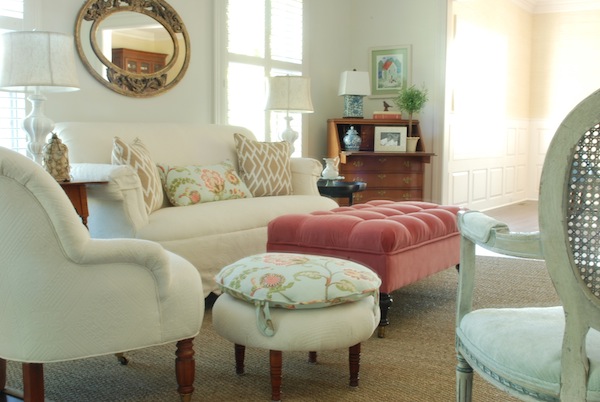
A room can feel dark simply because it feels crowded. Large pieces pushed against every wall may create an empty center while blocking windows and weakening conversation areas. Try moving the sofa away from the wall, turning chairs toward one another, and leaving clear paths between entrances.
Design guidance frequently emphasizes intentional furniture proportions, conversation-friendly groupings, and enough negative space for the room to breathe. At least the front legs of the main seating pieces should generally rest on the area rug, helping the arrangement read as one connected zone. Lighter Furniture
You do not have to replace every dark item. Instead, balance heavy pieces with furniture that has exposed legs, open frames, glass tops, pale upholstery, or slender profiles. A sofa raised several inches above the floor reveals more flooring and makes the room appear less crowded.
If the sofa is structurally sound but visually heavy, brighten it with a washable slipcover, a light throw, or pillows in varied textures. Avoid covering it with twenty tiny cushions unless you enjoy moving a decorative mountain every time you sit down.
Use Reflective Surfaces Strategically
Mirrors can increase the sense of light and depth when they reflect something useful. Position a large mirror opposite or diagonally from a window, beside a bright lamp, or where it captures an attractive view. Do not automatically hang one across from a cluttered shelf unless you would like twice as much clutter.
Design sources also recommend glass, polished metal, glossy ceramics, satin paint, and other subtly reflective materials to distribute light without making a room feel flashy. ble, brass lamp, silver picture frame, or glazed vase may be enough. Use shine as seasoning, not soup.
Brighten the Floor and Soft Furnishings
Dark floors can be beautiful, but they often absorb visual light. Refinishing or replacing flooring is expensive, so begin with a large area rug in ivory, oatmeal, pale blue, faded terracotta, or a low-contrast pattern. The rug creates a lighter central field while making the seating area feel finished.
Repeat the rug colors in curtains, pillows, artwork, and throws. Choose a combination of linen, cotton, wool, boucle, and woven fibers to prevent a neutral palette from feeling bland. Texture supplies interest when color remains restrained.
Keep Patterns in Proportion
Large patterns can energize a spacious room, while smaller, quieter prints may work better in compact spaces. Mix one dominant pattern with one or two supporting designs. Florals, stripes, checks, and geometrics can coexist, but they need a shared color story. Otherwise, the living room may begin to resemble a fabric store during an earthquake.
Create One Clear Focal Point
A bright room becomes more attractive when the eye knows where to land. Choose one primary focal point: a fireplace, large artwork, a window view, an architectural wall, or a thoughtfully styled media unit.
If the television is the practical center of the room, integrate it rather than pretending it does not exist. Use low cabinets, a balanced gallery wall, restrained shelving, or a darker panel behind the screen. Keep surrounding accessories simple so the wall does not become a competition between the television, seventeen framed photographs, and a decorative wooden word telling everyone to “RELAX.”
Add Color, Plants, and Personality
Brightness is not measured only by the amount of white paint. Cheerful colors, greenery, and personal objects can make a living room feel emotionally brighter. Add plants suited to the actual light conditions, not the conditions you wish you had. Low-light rooms may be better for snake plants, pothos, cast-iron plants, or realistic artificial greenery.
Display a few meaningful books, photographs, travel finds, handmade objects, or vintage pieces. Rotate accessories seasonally instead of displaying everything at once. A controlled collection looks personal; an uncontrolled collection looks as though the room is preparing for a yard sale.
A Practical Bright Living Room Makeover Budget
| Budget Level | Best Improvements | Expected Impact |
|---|---|---|
| Under $200 | Decluttering, cleaning windows, rearranging furniture, new bulbs, sheer curtains, pillow covers | Noticeably lighter and more organized |
| $200–$750 | Paint, larger rug, floor lamp, mirror, updated shades, thrifted side tables | Strong visual transformation |
| $750–$2,500 | New main fixture, quality window treatments, accent chair, refinished furniture, professional painting | Polished makeover with better function |
| Over $2,500 | Flooring, built-ins, electrical work, new windows, major furniture replacement | Long-term architectural improvement |
Spend first on changes that affect the entire room: paint, window access, layout, lighting, and the main rug. Small accessories should come later. Ten inexpensive decorations cannot rescue a poor furniture arrangement, although they can certainly make dusting more time-consuming.
Common Bright Living Room Makeover Mistakes
Using Only Stark White
White can reflect light, but the wrong white may appear cold, dingy, or gray. Match the undertone to the room and test it before painting everything.
Relying on One Ceiling Light
A central fixture often creates bright light directly beneath it and shadows everywhere else. Add lamps and accent lighting at different heights.
Buying Furniture Before Measuring
A beautiful sectional can become a very expensive wall if it overwhelms the room. Measure walls, windows, doors, pathways, and stairways before purchasing.
Making Everything Pale and Flat
A bright room needs contrast, texture, and shape. Use wood, greenery, black accents, colorful artwork, and varied fabrics to add dimension.
Ignoring Daily Life
A room is not successful if it photographs beautifully but has nowhere to place a drink, charge a phone, store a blanket, or read comfortably. Design for real behavior, including children, pets, hobbies, and snack habits.
Conclusion: Let the Room Breathe
A bright living room makeover works best when it solves practical problems before adding decorative layers. Begin by understanding the natural light, then choose an appropriate wall color, expose more of the windows, layer artificial lighting, and improve the furniture arrangement. Use lighter textiles and reflective materials to move light around the space, but balance them with texture, warmth, and personal character.
The finished room should not merely look brighter. It should feel easier to enter, easier to use, and easier to enjoy. When the sunlight reaches farther, the lamps support different activities, and the furniture stops behaving like an obstacle course, the entire home can feel more welcoming.
Experiences and Lessons From Bright Living Room Makeovers
Note: The following experience-based examples are composites drawn from common homeowner and DIY makeover situations. They are presented as practical lessons rather than as claims of the writer’s personal projects.
Experience 1: Paint Did Less Than Expected Until the Curtains Changed
In one typical makeover scenario, homeowners painted a dim beige living room a warm off-white and expected an immediate flood of brightness. The walls looked cleaner, but the transformation was underwhelming. The real problem was a pair of thick brown curtains that remained bunched over almost one-third of each window.
After replacing the short curtain rod with a wider one, the panels could rest completely outside the window frames. Lightweight inner curtains provided privacy while allowing daylight through. That relatively inexpensive adjustment made the new paint look brighter and revealed that the room had always received more sunlight than anyone realized. The lesson was simple: do not judge a new wall color while the windows are still wearing winter coats.
Experience 2: Better Bulbs Improved the Room More Than New Decorations
Another common project began with a shopping list full of pillows, vases, trays, and framed prints. Before buying them, the homeowners replaced several mismatched bulbs. One lamp produced yellow light, another gave off a bluish glare, and the ceiling fixture looked as though it were interrogating the coffee table.
Using warm-white bulbs with consistent color temperatures immediately made the upholstery and paint appear more coordinated. A floor lamp was moved into a dark corner, and a small table lamp was added near the sofa. Suddenly the room felt calm and balanced. Most of the planned decorations were no longer necessary, which saved money and prevented the shelves from becoming crowded.
Experience 3: Rearranging Furniture Solved a “Small Room” Problem
A compact living room can feel especially gloomy when every piece is pushed against the perimeter. In one layout, the sofa blocked part of a window, two chairs faced the television instead of each other, and a large coffee table interrupted the main walkway.
The sofa was moved several inches away from the window, the chairs were angled inward, and the oversized coffee table was replaced with two smaller nesting tables already owned by the family. No square footage was added, but the room immediately felt larger. Sunlight traveled farther across the floor, conversations became easier, and nobody had to perform a sideways shuffle to reach the hallway.
Experience 4: A Mirror Worked Only After It Was Repositioned
Mirrors are often recommended for dark rooms, yet placement matters. One large mirror had originally been hung opposite a tall bookcase. It reflected books, storage boxes, and several cables, effectively creating a second, equally cluttered bookcase.
Moving the mirror to a wall diagonal from the main window allowed it to catch daylight and reflect a piece of artwork. The room became brighter and visually deeper without adding another lamp. The experience showed that a mirror is not a portable window. It only repeats whatever stands in front of it, so give it something worth repeating.
Experience 5: The Best Makeover Happened in Stages
The most satisfying transformations are often completed gradually. A family may begin with decluttering and window cleaning, live with the room for a week, then repaint. After observing how the new color behaves, they can improve the lighting, rearrange furniture, and finally choose textiles and accessories.
This staged method prevents expensive mistakes. It also reveals which possessions still work. An old wooden side table may look dated against dark walls but feel warm and intentional in a brighter palette. A faded chair may need only professional cleaning and a new pillow rather than replacement.
Most importantly, living with each change gives the household time to decide what the room genuinely needs. A bright living room makeover is not a race to fill a shopping cart. It is a process of removing obstacles, improving light, and keeping the elements that make the room feel like home.