Note: This article synthesizes current U.S. housing-market, remodeling-cost, mortgage, and homebuyer-behavior information from reputable real estate, finance, government, and renovation sources.
Why Move-In Ready Homes Are Winning the Real Estate Game
For years, the fixer-upper had excellent public relations. Television made it look as if anyone with a sledgehammer, a spouse with suspiciously perfect hair, and 28 minutes of screen time could turn a dated house into a dream home. Then real life showed up wearing steel-toe boots and carrying a change order.
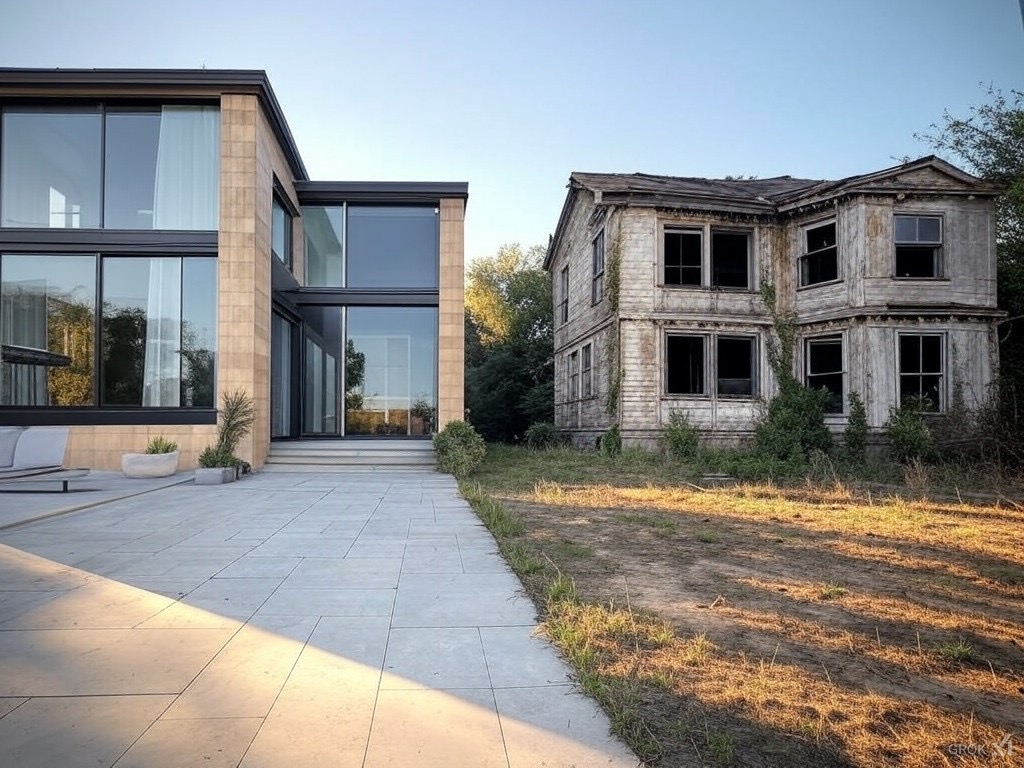
The smarter argument today, especially for busy professionals, parents, investors, and financially cautious buyers, is simple: buy a fully remodeled, move-in ready home over a fixer-upper whenever the numbers, quality, and location make sense. Financial Samurai has argued that in most cases, a fully remodeled home can offer better value and more satisfaction than a project house, especially when construction costs, delays, stress, and opportunity costs are honestly included.
This does not mean every remodeled home is a bargain or every fixer-upper is a disaster wearing avocado-green tile. It means buyers should stop comparing purchase prices only. The real comparison is total cost, total time, total risk, and total life disruption. Once those are added up, the move-in ready home often stops looking “expensive” and starts looking like the adult in the room.
What “Move-In Ready” Really Means
A move-in ready home is not just a house with fresh paint and a bowl of lemons on the kitchen island. A truly remodeled, move-in ready property has updated major systems, functional layouts, modern finishes, safe electrical and plumbing, solid roofing, efficient heating and cooling, and bathrooms that do not look like they were designed during a national carpet surplus.
The best remodeled homes usually include updated kitchens, refreshed bathrooms, new flooring, repaired exterior surfaces, improved lighting, modern appliances, and corrected maintenance issues. More importantly, the improvements are already done before you close. You can move in, unpack, sleep, cook, shower, work, and host Thanksgiving without explaining to your guests why the dining room currently contains a toilet.
Buyers Are Paying More for Remodeled Homes
Recent housing data supports the shift. Zillow found that homes described as remodeled sold for a 3.7% premium, while fixer-upper homes sold for a 7.3% discount compared with similar properties. Zillow also reported that remodeled listings received 26% more daily saves and 30% more daily shares than comparable homes. In plain English: buyers are not just admiring move-in ready homes; they are clicking, saving, sharing, and paying for them.
Why? Because buyers are exhausted. Mortgage rates are higher than the ultra-low-rate years, household budgets are stretched, and many buyers do not have another $80,000 sitting around for surprise renovation adventures. The idea of rolling the cost of an already finished home into a long-term mortgage is often more manageable than paying contractors, buying materials, and funding temporary housing out of pocket.
The Hidden Cost of a Fixer-Upper
The classic fixer-upper pitch sounds seductive: “Buy it cheaper, renovate it your way, and build instant equity.” That can work. But the sentence is missing a few words: “if you estimate correctly, hire well, avoid major surprises, secure permits, manage delays, stay married to your budget, and do not discover that the electrical panel is older than the Beatles.”
Whole-house remodeling costs can be substantial. Angi estimates the average whole-house remodel at about $52,000, with projects ranging widely depending on scope, rooms, materials, permits, and structural issues. HomeAdvisor’s cost data shows that even a bathroom remodel can run into five figures, and costs vary significantly based on location, square footage, plumbing changes, and finish quality.
That is before you add the hidden expenses: storage units, eating out because your kitchen is missing, temporary rent, permit fees, inspection fixes, contractor mistakes, delivery delays, and the emotional price of brushing your teeth in a laundry sink for three months. Renovation math has a funny way of turning “we will just update a few things” into “why is there a backhoe in the driveway?”
Renovation Inflation Has Changed the Equation
The fixer-upper strategy worked better when labor was cheaper, materials were easier to source, and contractors returned calls before the next lunar eclipse. Today, the remodeling market is bigger, busier, and more expensive. Harvard’s Joint Center for Housing Studies projected homeowner improvement and repair spending in the hundreds of billions of dollars, with spending expected to remain historically high into 2026.
Labor costs have also pressured renovation budgets. AP reported that repair and remodeling costs rose faster than overall inflation in 2025, driven partly by labor-intensive work such as tile, bathroom projects, and other skilled trades. When renovation costs rise faster than expected, the fixer-upper discount must be large enough to compensate. Often, it is not.
Move-In Ready Homes Reduce Financial Uncertainty
A fully remodeled home gives buyers one major advantage: clarity. You know the purchase price. You know the mortgage payment. You know the property taxes, insurance estimate, and closing costs. There may still be surprises, because houses have personalities and sometimes they are dramatic, but the biggest projects are already visible and completed.
With a fixer-upper, your purchase price is only the opening act. A house listed $75,000 below a remodeled comparable may require $125,000 in work. If the buyer also needs to live somewhere else during construction, the real cost climbs further. A bargain that requires six months of dust, decision fatigue, and budget creep is not always a bargain. Sometimes it is an unpaid internship in project management.
Financing a Fixer-Upper Can Be Complicated
Renovation loans exist, and they can be useful. FHA’s 203(k) program allows eligible borrowers to finance the purchase or refinance of a home along with rehabilitation costs through one mortgage, including a Limited 203(k) option for smaller improvements and a Standard 203(k) option for larger projects. Fannie Mae’s HomeStyle Renovation mortgage and Freddie Mac’s CHOICERenovation mortgage also provide ways to finance improvements through conventional loan structures.
But useful does not mean effortless. Renovation loans may require contractor bids, lender approval, appraisals based on after-improved value, inspections, escrow draws, timelines, and more paperwork. For buyers who love spreadsheets, this may sound like a spa day. For everyone else, buying a finished home can be the simpler and saner option.
Time Is Money, and Renovations Eat Both
Financial Samurai’s broader personal finance philosophy often comes back to one underrated idea: time has value. A fixer-upper does not only consume cash. It consumes weekends, evenings, attention, patience, and mental bandwidth. If you have a demanding job, young children, aging parents, a side business, or a strong preference for not arguing about grout colors at 11 p.m., a remodeled home may be worth the premium.
Imagine two buyers. Buyer A purchases a move-in ready home for $900,000. Buyer B purchases a fixer-upper in the same neighborhood for $800,000 and expects to spend $80,000 renovating. On paper, Buyer B wins. But if the renovation becomes $140,000, takes eight months, and requires $20,000 in temporary living costs, Buyer B may have paid more financially and emotionally. Buyer A, meanwhile, has been living normally, building routines, and not learning what “subfloor moisture issue” means.
Better Quality of Life Starts on Day One
Home is not just an asset. It is where you wake up, recover, work, raise kids, cook dinner, argue about thermostat settings, and hide snacks from people you love. A move-in ready home improves quality of life immediately. The kitchen works. The bathroom works. The lights work. The floors are not a tetanus-themed obstacle course.
That matters because homeownership satisfaction is not only about equity growth. It is also about whether your home supports your daily life. A buyer who pays more for a remodeled home may still come out ahead if the property reduces stress, saves time, and allows the household to enjoy the home from the first week.
Resale Value: Finished Homes Appeal to More Buyers
Move-in ready homes often attract a larger buyer pool because they remove friction. A young family may not want to renovate. A remote worker may need a functioning office immediately. An older buyer may prefer convenience and safety. A relocating professional may need to land on Friday and start work on Monday. None of these buyers want a charming 1920s bungalow whose kitchen says, “I remember the Hoover administration.”
The National Association of Realtors has reported that buyers drawn to new construction often cite avoiding renovations and major repair issues as a key reason. That same psychology supports remodeled resale homes. Buyers want fewer problems, fewer decisions, and fewer large cash expenses after closing.
Not All Remodeled Homes Are Equal
Of course, a remodeled home is only better if the remodel was done well. A poor flip can be more dangerous than an honest fixer-upper because problems may be hidden behind trendy finishes. Shiny quartz counters do not fix bad wiring. New paint does not solve drainage issues. A barn door cannot heal structural damage, no matter how emotionally committed Instagram is to barn doors.
What to inspect carefully
Before buying a fully remodeled home, review permits, contractor records, inspection reports, warranties, roof age, HVAC age, plumbing updates, electrical panel capacity, drainage, foundation condition, window quality, appliance warranties, and finish durability. Hire a strong inspector. Consider specialists for sewer lines, roofs, foundations, or chimneys when appropriate. A remodeled home should make life easier, not simply hide yesterday’s problems under luxury vinyl plank.
When a Fixer-Upper Still Makes Sense
A fixer-upper can still be a smart purchase for the right buyer. Investors, contractors, architects, experienced renovators, and buyers with flexible living arrangements may benefit from buying a property that needs work. A fixer-upper may also make sense if the location is exceptional, the discount is large, the problems are mostly cosmetic, and the buyer has reliable contractor relationships.
The key is honesty. If you have never managed a renovation, do not assume you will become a construction genius because you watched three videos and bought a laser level. Renovating is a skill. Managing contractors is a skill. Budgeting for unknowns is a skill. If you lack those skills, you can still renovate, but you should pay for guidance and build a serious contingency fund.
A Practical Framework for Comparing Both Options
To compare a move-in ready home with a fixer-upper, start with the purchase price difference. Then estimate renovation costs using real contractor bids, not wishful thinking scribbled on a napkin. Add permit fees, design fees, temporary housing, storage, financing costs, and a contingency of at least 15% to 25% for surprises. Then assign a dollar value to your time and stress. Yes, stress gets a line item. It has earned one.
Next, compare the finished value. If the fixer-upper plus renovation costs equals or exceeds the price of a comparable remodeled home, the move-in ready home probably wins. If the fixer-upper remains meaningfully cheaper after all costs and the work is manageable, it may be worth considering. The decision should be based on total economics, not the intoxicating fantasy of “potential.” Potential is lovely, but it does not install drywall.
Specific Example: The $100,000 Illusion
Suppose a remodeled home costs $750,000 and a fixer-upper nearby costs $650,000. The fixer-upper appears to save $100,000. But it needs a kitchen remodel, two bathrooms, flooring, paint, roof repairs, electrical updates, landscaping, and new appliances. The initial contractor estimate is $90,000. Then the roof repair becomes a replacement, the electrical panel needs upgrading, and the city requires additional permits. The final cost becomes $135,000.
Now the fixer-upper costs $785,000 before counting stress, delays, and temporary living disruptions. Meanwhile, the buyer of the remodeled home paid $750,000 and spent the first six months enjoying life instead of choosing between brushed nickel and matte black while quietly questioning every decision since college.
Experience Section: Lessons From Real-World Homebuying and Renovation
One of the clearest lessons from real estate is that buyers routinely underestimate renovation complexity. People walk through an outdated home and say, “We can just open this wall.” That sentence should come with dramatic music. Walls may contain plumbing, electrical, ductwork, structural supports, or the ghosts of previous DIY decisions. What looks like a weekend project can quickly become a five-trade negotiation involving a contractor, engineer, electrician, plumber, and your rapidly fading optimism.
Another experience-based lesson is that the best contractors are rarely waiting around with empty calendars. Skilled tradespeople are busy, especially in markets where remodeling demand is high. If a buyer closes on a fixer-upper expecting work to begin immediately, they may be disappointed. It is common to wait weeks or months for good contractors. Cheap and available is not always a bargain. Sometimes it is a warning label with a truck.
Move-in ready buyers avoid much of this scheduling risk. They may still want to personalize the home with paint, furniture, window treatments, or landscaping, but those are optional improvements rather than survival tasks. There is a huge emotional difference between “I want to replace this backsplash eventually” and “we cannot use the upstairs bathroom until further notice.”
There is also a relationship cost to renovation. Couples may agree on the big picture and then discover they have wildly different opinions about cabinet hardware, tile size, lighting temperature, and whether a kitchen island should be “statement-making” or “not the price of a used car.” Renovation forces hundreds of decisions. Decision fatigue is real, and it can make even reasonable people care deeply about things they had never noticed before, such as baseboard height.
Families with children face another challenge: construction disrupts routines. Dust, noise, tools, blocked rooms, and workers coming in and out can make daily life harder. Remote workers may struggle with noise and unreliable spaces. Pet owners may need to manage safety and access. Anyone who has taken a work call while a tile saw screams in the background understands why move-in ready homes deserve respect.
From an investment perspective, remodeled homes can also protect buyers from over-improving. When buyers renovate themselves, they may choose finishes based on personal taste rather than resale appeal. A fully remodeled home that already matches broad market preferences may be safer, especially if the buyer plans to sell within five to ten years. Neutral, durable, timeless upgrades often age better than highly customized design choices.
Finally, move-in ready homes create psychological momentum. Instead of spending the first year fixing problems, owners can build a life. They meet neighbors, host friends, settle children into schools, create routines, and enjoy the property. That enjoyment is not always captured in a spreadsheet, but it matters. Money is supposed to improve life, not turn every weekend into a hardware-store scavenger hunt.
Final Verdict: Pay for Done When Done Is Done Well
Buying a fully remodeled, move-in ready home over a fixer-upper is not about being lazy. It is about being realistic. In today’s housing market, renovation costs are high, good contractors are busy, financing can be complicated, and buyers are placing real value on homes that are already finished. A move-in ready home may cost more upfront, but it can reduce uncertainty, protect your time, improve your daily life, and appeal to future buyers.
The best purchase is not always the cheapest house. It is the home that offers the strongest combination of location, quality, price, livability, and risk control. If a remodeled home has been upgraded properly, priced fairly, and inspected carefully, paying more for move-in ready comfort can be one of the smartest financial and lifestyle decisions a buyer makes. The fixer-upper dream is not dead, but it should come with a calculator, a contingency fund, and a very honest look in the mirror.