
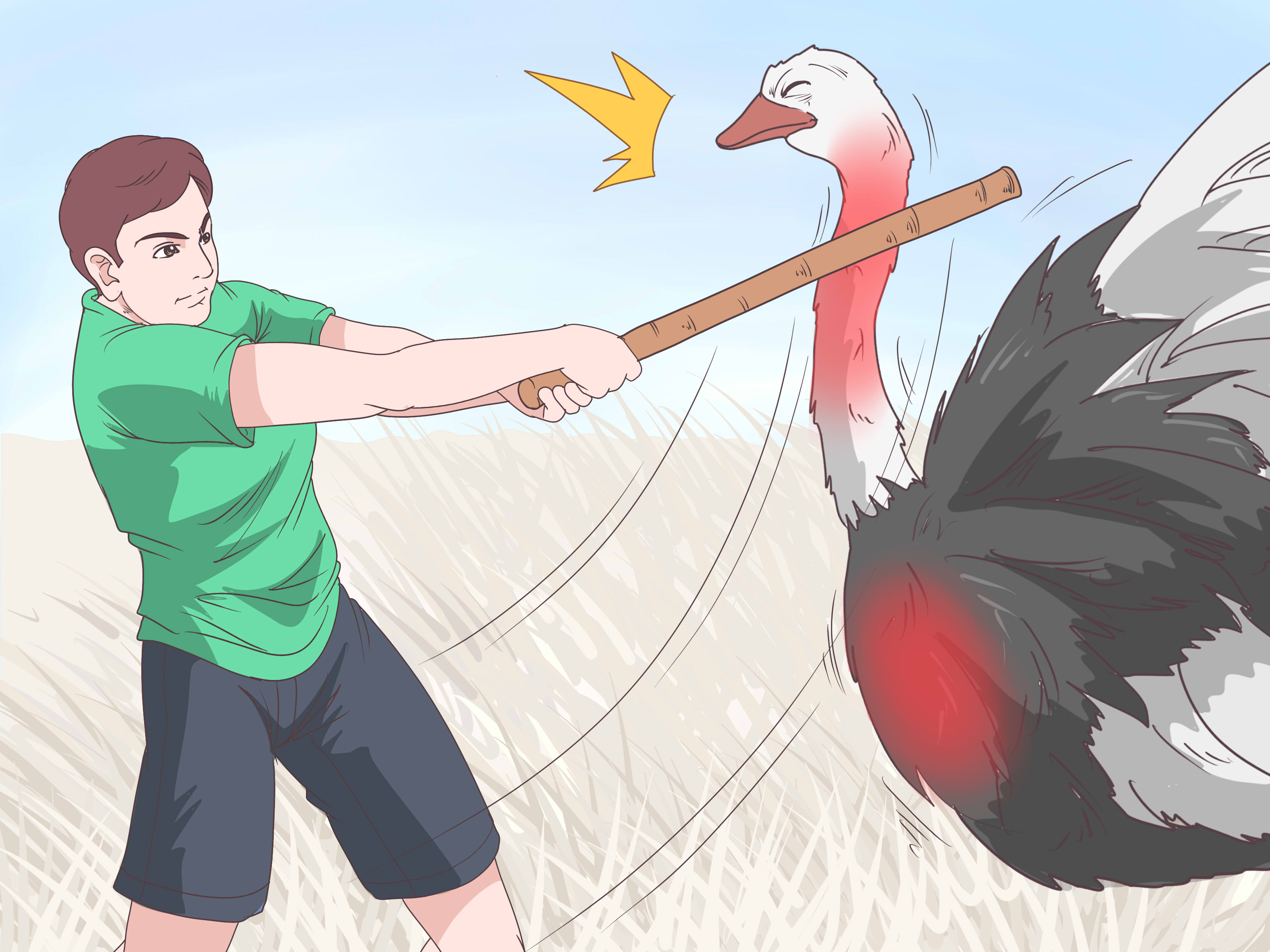
Let’s begin with the answer your ego does not want but your knees will appreciate: no, the average person should not try to beat an ostrich in a fight. In fact, the correct strategy for an ostrich fight is the same strategy for a surprise math test, a family group chat argument, or a mysterious smell coming from the fridge: avoid it early, calmly, and with dignity.
The question “Can you beat an ostrich in a fight?” sounds like the kind of debate that starts at 1:00 a.m. among people who have watched too many animal videos. But underneath the comedy is a surprisingly useful lesson about animal behavior, human overconfidence, and why nature gave some birds the body plan of a feathered velociraptor with cardio.
Ostriches are not cartoon chickens with better posture. They are the largest living birds on Earth, capable of reaching around 9 feet tall and weighing more than many adult humans. They cannot fly, but they run with the confidence of an Olympic sprinter who skipped arm day because wings were already included. Their long legs are not decorative. They are engines, stabilizers, and, when threatened, serious defensive tools.
So, could a human beat an ostrich? In a controlled fantasy scenario, someone may imagine tactics, courage, or movie-style heroics. In the real world, the better question is: why are you close enough to find out? A fight with an ostrich is not a sporting event. It is a dangerous wildlife encounter, and the best win is never entering the ring.
What Makes an Ostrich So Intimidating?
The ostrich’s reputation comes from a combination of size, speed, balance, and defensive power. A mature ostrich can tower over a person, especially when it raises its head and neck. That height alone can make the encounter feel less like meeting a bird and more like being judged by a suspicious patio umbrella with legs.
Unlike many birds, ostriches have only two toes on each foot. One of those toes carries a large claw. This matters because ostriches defend themselves primarily by kicking forward. A kick from a frightened or cornered ostrich can cause severe injury. That does not mean ostriches are roaming around looking for human opponents. It means they are built to survive in open habitats where predators are real and hesitation can be costly.
Speed Is Their First Superpower
Ostriches are famous for running fast. They can sprint at speeds far beyond what a human can maintain and use their wings for balance while changing direction. Their stride is long, their legs are powerful, and their body is designed for efficient movement across open ground. If an ostrich wants to leave, you are not catching it. If an ostrich wants space, you should give it more than it asked for.
This is important because most ostrich conflicts are not “fights” in the dramatic sense. Ostriches usually prefer to avoid danger. Running is their first choice. Trouble starts when a person corners one, gets too close to a nest, ignores warning signs, or treats a wild animal like a selfie prop with feathers.
That Kick Is Not a Joke
People sometimes imagine birds as fragile because many familiar birds are small. An ostrich rewrites that assumption in permanent marker. Its legs are muscular, and its forward kick is a serious defensive action. The kick is not just about blunt force; the feet and claws add risk. Even if someone is strong, brave, or very committed to making terrible life choices, an ostrich has natural weapons that humans simply do not.
There is also the issue of reach. An ostrich’s long legs allow it to strike from a distance that many people underestimate. That means a person may think they are “just outside danger” while the ostrich strongly disagrees. Nature does not offer a warning label, but if it did, the ostrich would come with one in bold font.
Can a Human Physically Beat an Ostrich?
In plain terms: the average unarmed human is at a major disadvantage. Humans are clever, social, and good at using tools, planning, and complaining about Wi-Fi. But in a direct physical contest with a large ostrich, our natural equipment is unimpressive. We do not have claws, thick protective hide, or legs capable of launching a high-speed defensive strike.
Humans also tend to misjudge animal strength because we compare animals to ourselves emotionally rather than biologically. An ostrich may look goofy. It may blink in a way that suggests it forgot why it walked into the room. But looking funny is not the same as being harmless. Hippos look like river sofas and are famously dangerous. Geese look like angry pillows and still terrorize parks across America. The animal kingdom has a strong record of hiding chaos behind silly shapes.
The Problem With “Fight Logic”
Online debates often turn animal encounters into imaginary video game matchups: human versus ostrich, one round, neutral arena, no weapons, who wins? But real animals do not follow game rules. They panic, flee, kick, charge, twist, fall, or strike unexpectedly. Real ground is uneven. Real people slip. Real injuries happen fast.
A human’s best advantage is decision-making. That advantage disappears the moment someone decides to test themselves against a giant bird. The smartest human strategy is not fighting better; it is not fighting at all. That may not sound heroic, but neither does explaining to a doctor that you were defeated by poultry’s final boss.
Why Would an Ostrich Attack?
Ostriches are not villains. They are animals responding to perceived threats. An ostrich may become aggressive if it feels trapped, if a person gets too close, if chicks are nearby, or if the bird has been stressed by poor handling. In farms, zoos, wildlife parks, and safari-style settings, professional handlers use barriers, spacing, and careful behavior because they understand the risk.
The most dangerous human behavior is usually overconfidence. People approach animals because the animal seems calm, because they want a photo, or because they believe they can read the situation. Unfortunately, “it seemed fine” is not a reliable wildlife safety plan. Many animals look calm until they decide they are not.
Warning Signs to Respect
An agitated ostrich may posture, spread or flap its wings, hiss, move toward a perceived threat, or show defensive body language. However, you should not wait for a dramatic warning. The safer rule is simple: keep distance, avoid cornering the animal, and follow all instructions from guides, farmers, zookeepers, or posted signs.
Never feed, tease, chase, touch, or crowd an ostrich. This is not only safer for people; it is better for the animal. Human interference can stress wildlife and captive animals, disrupt normal behavior, and create risky situations that end badly for everyone involved.
What Should You Do Instead of Fighting an Ostrich?
If you ever find yourself near an ostrich, the goal is not victory. The goal is distance. Stay calm, do not provoke it, and move away carefully if you are too close. Do not run toward it, wave objects at it, or try to prove dominance like you are auditioning for a nature documentary hosted by bad decisions.
If you are in a managed setting such as a wildlife park, farm, or zoo, follow staff instructions immediately. If you are in a vehicle during a safari-style encounter, stay inside unless told otherwise by trained staff. If you are on foot, give the bird a clear path to move away. Animals are more likely to defend themselves when they feel trapped.
The Real “Win” Is Prevention
Winning against an ostrich means preventing conflict before it begins. That includes respecting fences, reading signs, keeping children close, avoiding sudden movements, and not treating large birds like props. A photo is not worth an injury. A viral video is not worth becoming the cautionary tale in someone else’s article.
People often ask whether ostriches are aggressive, but the better question is whether humans are being respectful. Most animal incidents happen because people close the distance. Give wildlife room, and many “dangerous” encounters never become encounters at all.
Ostrich vs. Human: A Realistic Comparison
Let’s compare the matchup without turning it into a how-to guide for a terrible idea.
Size and Reach
A large ostrich can be taller and heavier than many people. Its long legs give it reach, and its height gives it visual advantage. A person standing close to an ostrich is not facing a small farm bird; they are facing a large, fast, defensive animal.
Speed and Mobility
The ostrich wins easily. Humans are endurance walkers and decent runners compared with some animals, but ostriches are built for speed on land. Their movement is explosive, and their balance is excellent.
Natural Weapons
The ostrich has powerful legs and clawed toes. Humans have hands, problem-solving skills, and the ability to leave. In this scenario, leaving is the strongest human feature.
Intelligence and Planning
Humans win in planning, but that advantage should be used to avoid danger. Intelligence is not proven by fighting an ostrich. Intelligence is proven by recognizing that the ostrich has already specialized in being an ostrich for millions of years, while you specialize in forgetting where you put your phone.
Common Myths About Ostriches
Myth 1: Ostriches Bury Their Heads in the Sand
This old myth is false. Ostriches do not avoid danger by hiding their heads in the ground. They may lower their heads and necks close to the ground, especially when tending nests or trying to be less noticeable, but they are not pretending the world disappeared. That strategy belongs to humans ignoring email.
Myth 2: Ostriches Are Dumb and Easy to Handle
Ostriches are not “dumb” in the way people often claim. They are adapted to their environment. Their survival depends on alertness, speed, and defense. Calling an animal dumb because it does not behave like a person is like calling a submarine bad at climbing trees.
Myth 3: If You Are Strong, You Can Control One
Strength is not enough. Large animals move unpredictably, and panic can multiply danger. Professionals who work with ostriches rely on training, experience, barriers, and safety protocols. They do not stroll in with confidence and a motivational playlist.
Why This Question Is So Popular Online
“Can you beat an ostrich in a fight?” works as internet bait because it combines comedy with genuine uncertainty. Ostriches look both ridiculous and terrifying. Their eyes are huge, their necks are dramatic, and their running style seems designed by a committee of cartoonists and engineers. They are funny until you remember they can outrun you and kick hard enough to make your weekend plans vanish.
The question also taps into a bigger human habit: ranking ourselves against animals. Could you beat a goose? A raccoon? A kangaroo? A chimpanzee? Usually, the answer is “please stop asking and stand farther away.” Humans are amazing because we cooperate, invent, communicate, and build systems. We are not amazing because we can win surprise combat with wildlife.
The Ethical Side: Don’t Turn Animals Into Opponents
It is fun to ask silly hypothetical questions. It is not fun to harass animals. Ostriches deserve respect as living creatures, not as opponents in a backyard gladiator fantasy. Whether an ostrich is wild, farmed, or living in a zoo, it should be treated with space and care.
Trying to provoke an animal can injure the animal too. A frightened ostrich may run into fencing, hurt itself, or become more difficult for caretakers to manage. In public wildlife spaces, reckless behavior can also lead to stricter rules, fines, or the animal being blamed for a situation caused by humans. That is unfair and avoidable.
Experience Notes: What Encounters With Ostriches Teach Us
People who have seen ostriches up close often describe the same emotional journey: amusement, curiosity, surprise, and then a sudden realization that the bird is much larger than expected. From a distance, an ostrich can look like a strange feathered celebrity wandering across the landscape. Up close, it becomes clear that this animal is not built for cuddles. It is built for distance, speed, and serious personal boundaries.
At wildlife parks and farms, visitors often notice how alert ostriches are. Their large eyes scan constantly. Their heads rise and turn. Their bodies may seem relaxed, but they are paying attention. That alertness is part of their survival strategy. In open habitats, spotting movement early matters. For humans, the lesson is simple: if the ostrich is watching you carefully, do not interpret that as an invitation to come closer. It may simply be deciding whether you are boring, suspicious, or a problem with shoes.
Another common experience is underestimating their speed. An ostrich standing still can appear awkward, almost decorative. Then it moves, and suddenly the comedy ends. The transition from “funny bird” to “athletic machine” happens quickly. Their bodies lean, their legs stretch, and their wings help with balance. Watching one run is like seeing a feather duster discover turbo mode.
People who work around large birds often emphasize calm behavior. Sudden movements, loud teasing, crowding, or trying to feed animals without permission can create stress. Even if an ostrich has lived near people, it is still an ostrich. Familiarity does not erase instinct. A bird that tolerates a trained handler may not tolerate a stranger with a phone, snacks, and the confidence of someone who just read half a fact online.
One useful takeaway from real-world encounters is that respect looks boring, and boring is good. The safest visitors are not the ones trying to get the closest photo. They are the ones standing back, watching quietly, and letting the animal behave naturally. That may not create the wildest social media clip, but it creates a better memoryand keeps everyone’s kneecaps in the original factory settings.
There is also a humility lesson here. Humans often assume we are automatically in charge because we are smart. But intelligence should make us more cautious, not more reckless. The ostrich does not need to understand your intentions. It only needs to decide whether you feel threatening. Once an animal reaches that point, your explanation will not matter. You cannot negotiate with a startled ostrich by saying, “Actually, I’m just making content.”
So the experience-based answer is this: the closer people get to ostriches, the less funny the fight question becomes. Seeing their height, legs, claws, and speed in person usually turns confidence into respect very quickly. That respect is healthy. It reminds us that animals do not exist to test our bravery. They exist in their own lives, with their own instincts, needs, and limits.
Final Verdict: Can You Beat an Ostrich in a Fight?
No, not in any way that a sensible person should test. An ostrich is too large, too fast, too powerful, and too unpredictable for a direct physical confrontation to be anything but dangerous. The best answer is not “yes” or “no” with a battle plan. The best answer is: do not fight an ostrich.
If you want to admire ostriches, watch them from a safe distance. Learn about their speed, their eggs, their social behavior, and their role in their ecosystems. Laugh at their strange elegance. Appreciate the fact that nature created a bird that looks like it is late for a meeting and still capable of outrunning nearly everyone in the parking lot.
The real champion is the person who respects wildlife, avoids unnecessary risk, and goes home with a good story instead of a medical bill. In the battle of human versus ostrich, the smartest move is to let the ostrich win the imaginary fight while you win at common sense.
SEO Tags
Note: This article is written for informational and entertainment purposes only. Do not approach, provoke, chase, or attempt to fight an ostrich or any wild animal.













