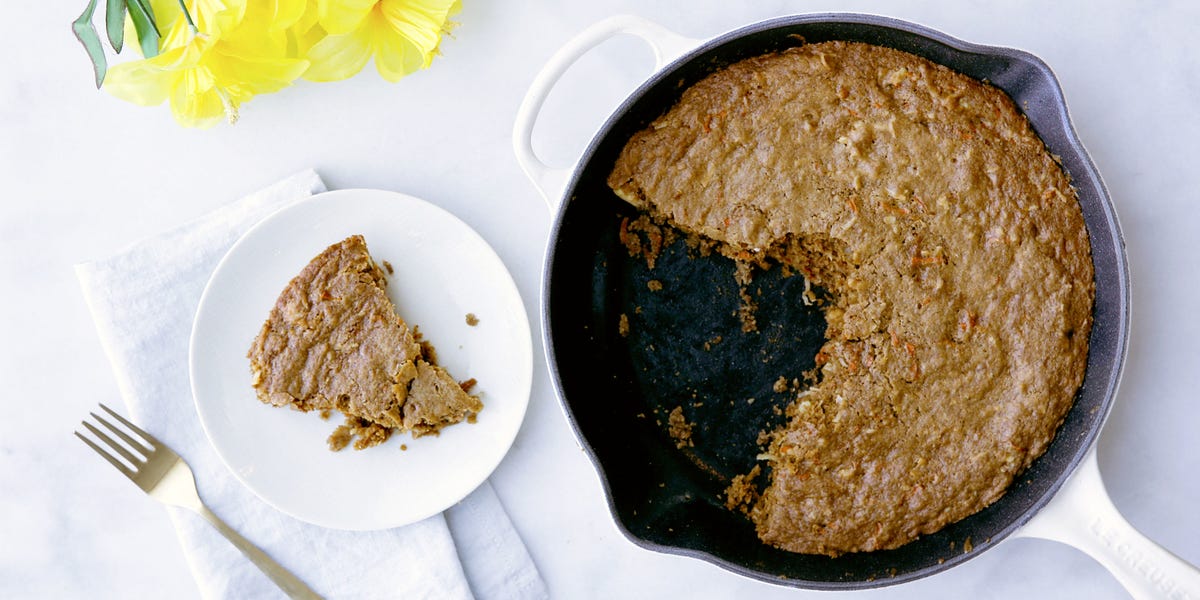
There are desserts that politely sit on a plate, and then there are desserts that arrive in a cast-iron skillet like they own the room. This carrot cake skillet blondie belongs firmly in the second category. It has the warm cinnamon-and-ginger personality of classic carrot cake, the chewy brown-sugar center of a blondie, and a swipe of tangy cream cheese glaze that makes everyone suddenly “just want a tiny bite.”
This original recipe is inspired by the cozy, one-pan spirit of Good Housekeeping blondie recipes, but it is written from scratch for home bakers who want maximum flavor with minimal dishwashing. Freshly grated carrots, toasted nuts, coconut, brown sugar, and melted butter create a dessert that feels familiar without becoming a full-on layer-cake project. In other words: carrot cake took off its fancy shoes and got comfortable.
Why This Carrot Cake Skillet Blondie Works
A traditional carrot cake is soft, tall, and frosted from every possible angle. A blondie is denser, chewier, and built around brown sugar, butter, and a lightly crisp top. Combining the two creates a dessert with the best kind of identity crisis: it is part bar cookie, part snack cake, and entirely likely to disappear before the coffee finishes brewing.
The skillet helps create contrast. The edges become golden and slightly crisp, while the center stays soft and chewy. Brown sugar adds caramel-like depth, carrots bring moisture and subtle sweetness, and cinnamon and ginger provide the unmistakable carrot cake aroma. Toasted pecans or walnuts add crunch, while shredded coconut gives the blondie a little extra texture without turning it into a tropical vacation brochure.
Freshly shredded carrots are worth the small amount of effort. They are softer and more moist than packaged shredded carrots, which can be dry and stubborn in baked goods. Finely grating whole carrots also helps them melt into the batter instead of leaving behind vegetable-sized surprises.
Carrot Cake Skillet Blondie Recipe
Yield: 8 to 10 servings
Prep Time: 20 minutes
Bake Time: 22 to 28 minutes
Total Time: About 50 minutes
Equipment You Will Need
- 10-inch oven-safe cast-iron skillet
- Large mixing bowl
- Whisk
- Rubber spatula
- Box grater or food processor grating attachment
- Small bowl for the cream cheese glaze
Ingredients for the Carrot Cake Blondie
- 1/2 cup unsalted butter, melted and cooled slightly
- 1 1/4 cups packed dark brown sugar
- 1 large egg, at room temperature
- 1 large egg yolk
- 2 teaspoons vanilla extract
- 1 1/3 cups all-purpose flour
- 1/2 teaspoon baking powder
- 1/4 teaspoon baking soda
- 1/2 teaspoon kosher salt
- 1 teaspoon ground cinnamon
- 1/2 teaspoon ground ginger
- 1/8 teaspoon ground nutmeg
- 3/4 cup finely grated carrots, lightly packed
- 1/2 cup chopped pecans or walnuts, toasted if possible
- 1/3 cup sweetened shredded coconut
- 1/4 cup raisins, optional
Ingredients for the Cream Cheese Glaze
- 3 ounces brick-style cream cheese, softened
- 1 tablespoon unsalted butter, softened
- 3/4 cup confectioners’ sugar
- 1/2 teaspoon vanilla extract
- 1 to 2 teaspoons milk or cream
- Pinch of salt
How to Make Carrot Cake Skillet Blondies
1. Prepare the Skillet and Oven
Heat the oven to 350°F. Grease a 10-inch oven-safe cast-iron skillet with butter or nonstick baking spray. If your skillet has been through several chili nights, do not worry; it can still make dessert. Just make sure it is clean, dry, and well-greased.
2. Mix the Wet Ingredients
In a large bowl, whisk the melted butter and dark brown sugar until glossy and mostly smooth. Add the egg, egg yolk, and vanilla. Whisk for about 30 seconds, until the mixture looks thick and shiny.
The extra yolk helps create a richer, chewier blondie center. Brown sugar is especially useful here because its molasses notes support the warm spices and give the dessert its butterscotch-like personality. Blondie recipes commonly rely on butter, brown sugar, eggs, vanilla, flour, and a small amount of leavening for their dense-chewy structure.
3. Add the Dry Ingredients
Add the flour, baking powder, baking soda, salt, cinnamon, ginger, and nutmeg to the bowl. Fold gently with a rubber spatula until only a few flour streaks remain. Do not beat the batter aggressively. Blondies are not trying out for a marathon; they want a calm, brief mixing session.
4. Fold in the Carrot Cake Add-Ins
Fold in the grated carrots, nuts, coconut, and raisins if using. The batter will be thick, which is exactly what you want. Thick batter means the carrots, nuts, and coconut stay evenly distributed instead of sinking into a mysterious basement layer.
Carrot cake variations often use nuts, raisins, coconut, or pineapple, but restraint matters. Too many add-ins can make a tender batter heavy and muddle the spice flavor.
5. Bake Until the Center Is Just Set
Spread the batter evenly in the prepared skillet. Bake for 22 to 28 minutes, until the edges are deeply golden and the center looks set but still soft. A toothpick inserted near the center should come out with a few moist crumbs, not a clean résumé.
Do not wait for the toothpick to emerge perfectly dry. Blondies continue setting as they cool, and overbaking can turn a chewy skillet dessert into something better suited for drywall repair. For dense carrot-cake-style bakes, a few moist crumbs are a better sign than a completely dry tester.
6. Make the Cream Cheese Glaze
While the blondie cools for 15 to 20 minutes, beat the softened cream cheese and butter together until smooth. Mix in the confectioners’ sugar, vanilla, salt, and enough milk to create a thick but drizzle-friendly glaze.
Drizzle the glaze over the warmnot hotblondie. If the skillet dessert is piping hot, the glaze will melt into a cream cheese puddle. Delicious? Probably. Photogenic? Not so much.
Tips for the Best Chewy Skillet Blondies
Use Fresh Carrots Instead of Bagged Shreds
Fresh carrots have more moisture and a softer texture once baked. Use the small holes of a box grater so the carrot pieces disappear into the blondie instead of behaving like crunchy orange confetti.
Choose Dark Brown Sugar for Deeper Flavor
Light brown sugar works, but dark brown sugar adds more molasses flavor. That richness makes the blondie taste especially cozy with cinnamon, ginger, toasted nuts, and cream cheese glaze.
Toast the Nuts When You Have Time
Toast pecans or walnuts in a dry skillet over medium-low heat for about 4 to 6 minutes, stirring often. Let them cool before adding them to the batter. This simple step makes the nuts taste nuttier, which sounds obvious because it is obvious, but it is still one of baking’s most reliable little upgrades.
Cool Before Slicing
Let the skillet blondie cool at least 30 minutes before cutting into wedges. It will be tempting to attack it immediately with a spoon. You are an adult and technically may do that. But cooling helps the center firm up into clean, chewy slices.
Easy Variations for This Carrot Cake Blondie Recipe
Make It Nut-Free
Leave out the pecans or walnuts and add an extra 1/4 cup of shredded coconut, raisins, or white chocolate chips. If serving guests, remember that nuts and nut-containing products can be a serious allergen concern, so use clean utensils and clearly label the dessert.
Add Pineapple Carefully
For a more traditional carrot cake flavor, add 1/4 cup well-drained crushed pineapple. Squeeze it gently in a paper towel first. Pineapple can add moisture and sweetness, but too much liquid can make the center overly soft.
Try Brown Butter
Brown the butter before mixing the batter for a deeper, toasted flavor. Cook the butter until it smells nutty and the milk solids are golden brown, then cool it slightly before combining it with the sugar. Watch it closely; brown butter can go from “fancy bakery aroma” to “tiny kitchen tragedy” very quickly.
Use a Square Pan Instead
No cast-iron skillet? Bake the batter in a greased 8-inch square pan. Start checking it around 22 minutes. A square pan gives you classic blondie bars, while the skillet gives you rustic wedges and a little extra drama at the table.
How to Serve and Store Carrot Cake Skillet Blondies
Serve this dessert slightly warm with coffee, chai, black tea, or a scoop of vanilla ice cream. For a brunch-worthy version, add a little orange zest to the cream cheese glaze and serve the blondie with fruit on the side. Suddenly, it looks like you planned everything days in advance.
Store leftovers covered in the refrigerator for up to 4 days because of the cream cheese glaze. For the best texture, let a slice sit at room temperature for 15 minutes before eating. You can also warm an unglazed wedge for a few seconds in the microwave, then add a spoonful of glaze or ice cream.
Wash fresh carrots under running water before peeling and grating them, and keep cutting boards, utensils, and work surfaces clean during preparation. Basic produce and kitchen hygiene are small habits that make baking safer and less chaotic.
Troubleshooting Your Carrot Cake Blondie
The Blondie Is Too Dry
The most likely culprit is overbaking. Pull the skillet from the oven when the center is just set and still looks slightly soft. Remember that cast iron holds heat, so the dessert keeps cooking for a few minutes after it leaves the oven.
The Center Is Too Gooey
Give it more cooling time first. If the center is still loose after 45 minutes, return the skillet to the oven for 3 to 5 more minutes. Every oven has its own emotional weather system, so use visual cues along with the timer.
The Glaze Is Too Thin
Add confectioners’ sugar one tablespoon at a time. If it is too thick, add milk one-half teaspoon at a time. Cream cheese glaze should flow slowly from a spoon, not sprint across the blondie like it has a connecting flight.
Kitchen Experiences: Why This Dessert Becomes a Repeat Recipe
The first time you make a carrot cake skillet blondie, it may feel like an experiment. Carrot cake in a skillet? Blondies with vegetables? Coconut wandering around in a cookie bar? It sounds like the sort of recipe invented after someone looked into a refrigerator at 8 p.m. and decided conventional baking rules were optional. Then the skillet comes out of the oven, the kitchen smells like cinnamon and brown sugar, and suddenly the entire idea makes perfect sense.
One of the best things about this dessert is how relaxed it feels. There are no cake layers to level, no piping bags to fill, and no frosting technique that requires the steady hands of a surgeon. You stir, spread, bake, drizzle, and serve. The skillet does most of the visual work for you. A browned edge, a glossy cream cheese drizzle, a few chopped pecans on top, and people assume you have a dessert strategy. You do not need to tell them that your strategy was mostly “use the pan that was already clean.”
This recipe is especially useful when you want something homemade but do not want to commit to an entire weekend baking project. It works for spring brunches, Easter dessert tables, fall gatherings, potlucks, or random Tuesday nights when your carrots are quietly aging in the crisper drawer. It is also an excellent answer to the classic question, “What can I bring that is not another tray of brownies?” The answer is: bring blondies that taste like carrot cake and watch everyone become unusually interested in the recipe.
The texture is part of the charm. A good skillet blondie has crisp edges, a tender center, and enough chew to make each bite feel satisfying. The carrots soften into the batter, so the dessert does not taste remotely like a side dish. Instead, they support the spice, keep the blondie moist, and add a gentle sweetness that makes the brown sugar taste even warmer. The nuts add a little crunch, while coconut gives each bite a soft, slightly chewy finish.
There is also room for personality. Raisin fans can add raisins. Raisin skeptics can leave them out and avoid starting a family group-chat argument. Pecan lovers can pile on pecans. Walnut loyalists can defend their choice with confidence. You can make the glaze thick and dramatic, thin and glossy, or skip it entirely and serve the blondie with ice cream. The recipe is flexible enough to forgive small changes, which is exactly what makes it a useful keeper.
Most importantly, a carrot cake skillet blondie feels generous. It is easy to place the skillet in the center of the table, hand out spoons or small plates, and let everyone serve themselves. That shared, slightly messy experience is part of the fun. A layered cake can feel formal. A skillet blondie says, “Come in, sit down, and do not worry about getting the perfect slice.” That is the kind of dessert energy worth keeping around.
Final Thoughts
This carrot cake skillet blondie recipe is proof that you do not need a towering layer cake to enjoy the classic flavors of carrot cake. With brown sugar, warm spices, fresh carrots, toasted nuts, and a simple cream cheese glaze, you get a chewy, cozy dessert that is easy enough for a weeknight and impressive enough for guests.
Serve it warm, slice it generously, and prepare for someone to ask whether there is more in the kitchen. There probably will not be. That is not a problem with the recipe. That is a compliment.
Note: This is an original editorial recipe and not a reproduction of any Good Housekeeping recipe. Its method and baking guidance were informed by widely used American carrot-cake, blondie, skillet-baking, and food-safety practices from reputable cooking and food-safety publishers.