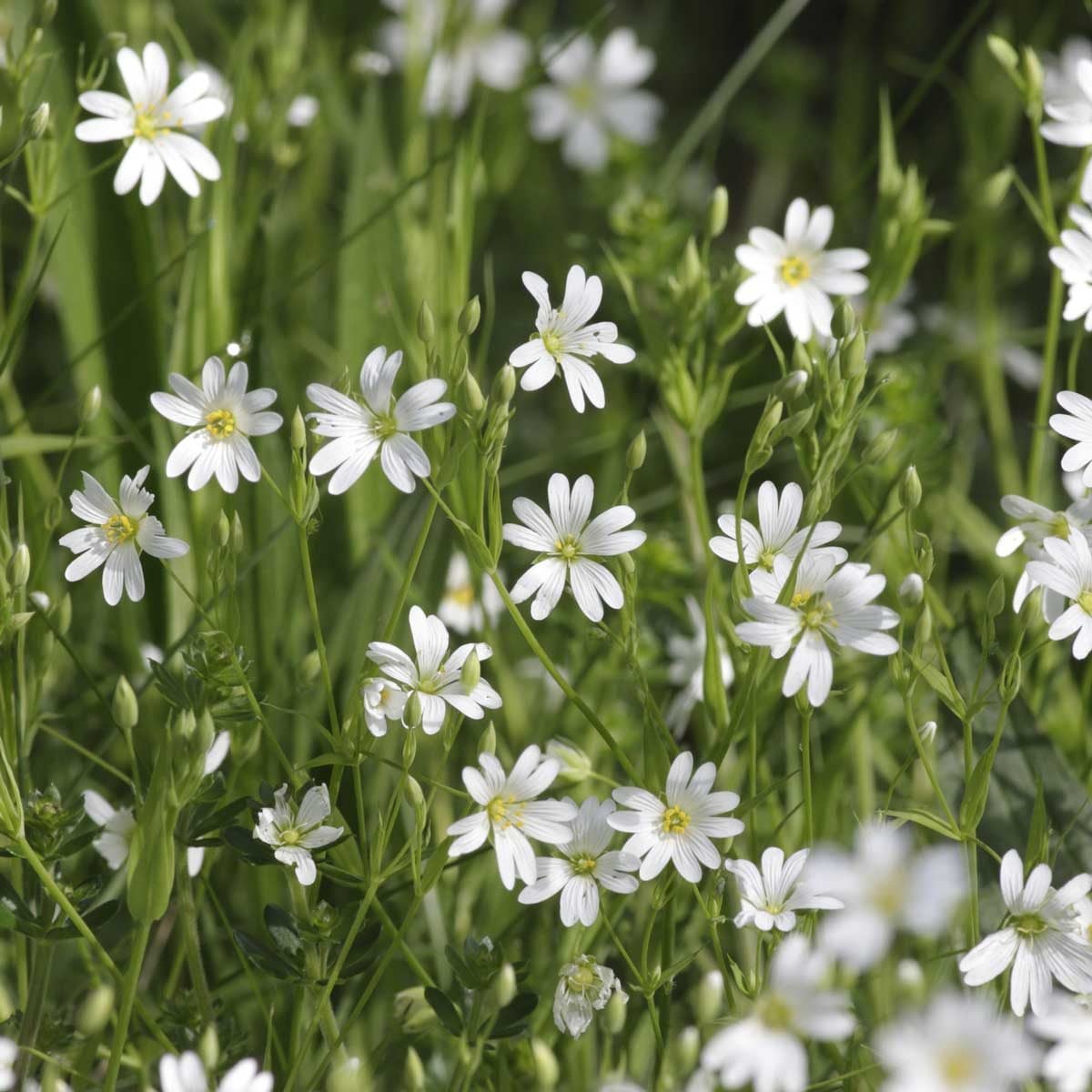
Common chickweed may look delicate, with tiny white flowers and soft green leaves, but do not let its innocent appearance fool you. This cool-season weed can spread across a lawn or garden bed like it has signed a long-term leaseand brought several thousand seeds as roommates.
Fortunately, common chickweed removal is usually manageable when you act early. Its roots are shallow, young plants pull easily, and several cultural, mechanical, and chemical control methods can stop an infestation. The real challenge is preventing new seedlings from replacing the plants you remove.
This guide explains how to identify common chickweed, remove it from lawns and garden beds, choose appropriate control methods, and make your landscape less inviting to future generations.
What Is Common Chickweed?
Common chickweed, botanically known as Stellaria media, is a cool-season annual broadleaf weed in the carnation family. It is found throughout the United States and frequently appears in lawns, vegetable gardens, flower beds, nurseries, fields, paths, and other disturbed areas.
In much of the country, common chickweed germinates during late summer or fall, survives the winter as a small plant, grows rapidly in late winter and spring, produces seed, and then dies as temperatures rise. In mild or consistently moist locations, however, it may germinate or flower during other parts of the year.
How to Identify Common Chickweed
Correct identification matters because chickweed can resemble mouse-ear chickweed, sticky chickweed, speedwell, and several other low-growing plants. Look for the following characteristics:
- Thin, branching stems that spread outward and form tangled mats
- Small, bright green, oval leaves arranged opposite one another
- A pointed tip on each leaf
- A single line of fine hairs running along one side of the stem
- Tiny white flowers with five deeply divided petals that appear to be ten
- A shallow, fibrous root system
Common chickweed leaves are generally smooth. Mouse-ear and sticky chickweeds tend to have noticeably hairier leaves and stems. Common chickweed may grow only an inch or two tall in a regularly mowed lawn, but plants in shaded garden beds can become taller and looser.
Why Common Chickweed Spreads So Quickly
Common chickweed succeeds through speed, timing, and an almost unreasonable enthusiasm for reproduction. Young plants can begin flowering within weeks of germination. Individual plants may produce thousands of seeds, and those seeds can remain in the soil for years.
Michigan State University reports that seed production can range from hundreds to tens of thousands of seeds per plant. Research summarized by the university also indicates that buried chickweed seed can persist for many years. Removing today’s plants is therefore only one part of the job; preventing new seed production is equally important.
Conditions That Encourage Chickweed
Common chickweed is especially comfortable in locations with:
- Cool temperatures
- Moist or poorly drained soil
- Frequent, shallow irrigation
- Thin, weak, or closely mowed turf
- Bare soil in garden beds
- Partial shade
- Compacted soil
- High fertility or leftover nitrogen
A chickweed infestation is often a symptom as well as a weed problem. It may be announcing that the lawn is too thin, the area is overwatered, the soil is compacted, or the site receives too little sunlight for the existing grass. Treating the plant without correcting those conditions is like repeatedly mopping the floor while ignoring the leaking pipe.
How to Remove Common Chickweed by Hand
Hand removal is one of the simplest chickweed control methods for flower beds, vegetable gardens, paths, and small lawn patches. The plant’s roots are shallow, so it often lifts from moist soil with surprisingly little resistance.
Step 1: Work Before Seed Formation
Remove chickweed as soon as you recognize it. Plants become more troublesome after flowering because developed seeds may fall while you are pulling or carrying the weeds. Early removal also prevents mats from expanding and rooting at stem nodes.
Step 2: Moisten Dry Soil
Pull after rainfall or water the area lightly beforehand. Moistnot muddysoil releases roots more easily and reduces the chance of snapping the stems above the crown.
Step 3: Find the Center of the Mat
Instead of grabbing a handful of outer stems, slide your fingers or a hand cultivator beneath the mat and locate its central growing point. Lift from underneath to remove the crown and root system together. This method is especially useful when chickweed has spread outward like a miniature green spiderweb.
Step 4: Collect the Entire Plant
Do not leave flowering or seeding stems on the soil. Bag mature plants or dispose of them according to local yard-waste rules. Young, seed-free material may be composted in a well-managed pile, but mature seed capsules are better kept out of a casual backyard compost heap.
Step 5: Cover the Open Ground
Removal exposes soil that may already contain chickweed seed. Replant, mulch, overseed, or otherwise cover the area promptly. Bare ground is not empty for long; it is merely accepting applications from the next group of weeds.
Removing Chickweed From Garden Beds
Garden beds offer several nonchemical options because you can work around individual ornamental or vegetable plants more precisely than you can in turf.
Shallow Cultivation
A stirrup hoe, collinear hoe, or hand cultivator can sever young chickweed just below the soil surface. Work on a dry day so uprooted seedlings dry rather than reroot. Keep cultivation shallow because excessive digging can bring buried weed seeds into the germination zone.
Tilling can destroy an established stand before planting a new garden, but frequent deep tillage is not always helpful. Each major soil disturbance may uncover another layer of dormant seed. UC Integrated Pest Management and Clemson Extension both identify cultivation as effective, particularly when winter annuals are handled before they set seed.
Mulching
After removing existing plants, apply approximately three inches of coarse organic mulch around established ornamentals. Shredded bark, wood chips, pine bark, or another suitable material can block light, reduce chickweed germination, and make future seedlings easier to pull.
Do not pile mulch against trunks, crowns, or vegetable stems. Maintain a small air gap around plants to reduce moisture-related disease and decay. Also inspect mulch periodically, because organic materials break down and become thinner over time. Clemson Extension specifically recommends maintaining a substantial mulch layer because chickweed seeds generally require light for successful establishment.
Solarization Before Planting
In warm, sunny climates, soil solarization may reduce chickweed and other weed seedlings before a bed is planted. The process generally involves moistening prepared soil and covering it tightly with clear plastic during the hottest part of the year. Heat becomes trapped beneath the plastic and raises soil temperatures.
Solarization requires strong sunlight, careful installation, and several weeks of treatment, so it is not a quick fix for an actively planted border. It is more appropriate for an empty vegetable plot or a bed being renovated.
How to Control Chickweed in a Lawn
Pulling a few isolated plants from turf is practical. Pulling a dense mat woven through several hundred square feet of grass is technically possible, but it may also inspire new vocabulary. Successful lawn control usually combines spot removal, proper turf care, and, when necessary, a lawn-safe herbicide.
Strengthen the Grass First
Dense turf shades the soil and leaves fewer spaces where chickweed seedlings can establish. Improve lawn competitiveness by:
- Mowing at the recommended height for the grass species
- Avoiding extremely close mowing
- Overseeding thin cool-season lawns at the appropriate time
- Fertilizing according to soil-test recommendations
- Correcting drainage problems
- Watering deeply and only as needed
- Aerating compacted soil when appropriate
- Using shade-tolerant turf or a lawn alternative in deeply shaded sites
University of Missouri Extension emphasizes that a thick lawn maintained at an appropriate mowing height provides strong natural weed suppression. Closely mowed, compacted, shaded, or chronically wet turf is far more vulnerable to chickweed invasion.
Use Preemergent Herbicides at the Correct Time
A preemergent herbicide targets germinating seedlings; it does not kill chickweed that is already visible. Because common chickweed typically germinates in fall, preventive applications are generally made in late summer or early fall, before local soil temperatures favor emergence.
Timing differs by climate. A calendar date recommended in Georgia may be wrong for Minnesota, Colorado, or coastal California. Contact a local Cooperative Extension office or follow regional turf guidance rather than selecting a date based solely on a national gardening article.
Preemergent products can also interfere with desirable grass seed. Do not apply one shortly before overseeding, reseeding, or establishing sod unless the product label specifically permits that use.
Use a Selective Postemergent Product for Existing Weeds
For chickweed already growing in a lawn, choose a selective broadleaf herbicide labeled for both chickweed and the specific turfgrass species. Depending on the product and location, effective active ingredients may include combinations containing 2,4-D, mecoprop or MCPP, dicamba, triclopyr, or fluroxypyr.
Young, actively growing chickweed is generally easier to control than a mature, flowering mat. Spot treatment reduces unnecessary herbicide use and limits exposure to desirable plants.
Read the entire label before application. Turfgrass tolerances vary, and a product suitable for tall fescue may not be suitable for St. Augustinegrass, centipedegrass, or another warm-season lawn. Avoid applying dicamba over the root zones of sensitive trees and shrubs when the label warns against it.
Does Vinegar Kill Chickweed?
Acetic-acid herbicides can damage very young common chickweed, but ordinary kitchen vinegar should not be treated as a harmless magical potion. Contact products burn exposed foliage and may injure nearby grass, flowers, vegetables, and ornamentals. They also work best on tiny seedlings and may require repeat applications.
Commercial horticultural vinegar may contain much higher concentrations of acetic acid than household vinegar. These products can cause serious eye and skin injuries and should be handled only according to label directions. Use a registered herbicide product rather than a homemade salt-and-vinegar mixture, which can damage soil and surrounding plants.
University of Maryland Extension reports that acetic-acid products tend to perform best on very young weeds with only a few leaves. Larger weeds are more likely to survive, and higher-strength formulations carry greater handling risks.
How to Prevent Common Chickweed From Returning
Stop Seed Production
The most important preventive habit is removing plants before seed capsules mature. A single missed patch can replenish the soil seed bank and undo months of otherwise excellent maintenance.
Keep Soil Covered
Use mulch, groundcovers, dense turf, cover crops, or closely spaced desirable plants. Uncovered soil receives sunlight and fluctuating moisturethe exact invitation many annual weed seeds have been waiting for.
Adjust Irrigation
Repair leaks, redirect downspouts, and avoid watering on a fixed schedule when the soil is already moist. In lawns, water deeply enough to support grass roots but allow the surface to dry between irrigation cycles whenever the grass species and climate permit.
Improve Drainage and Compaction
Core aeration, soil improvement, grading corrections, and changes to foot-traffic patterns may help where chickweed repeatedly appears in compacted or waterlogged locations. Addressing the site problem provides longer-lasting results than spraying the same patch every spring.
Inspect Imported Materials
Check nursery plants, compost, topsoil, manure, and mulch for chickweed seedlings. Clean soil from tools and equipment after working in heavily infested areas so seeds are not carried to clean beds.
Common Chickweed Control Mistakes
- Waiting for a white carpet: Flowers mean seed production is near or already underway.
- Pulling only the outer stems: The central crown may remain and continue growing.
- Leaving soil bare: Open ground encourages another wave of seedlings.
- Mowing the lawn too short: Scalping weakens grass and allows more light to reach weed seeds.
- Applying preemergent after weeds appear: Preemergent products do not remove mature plants.
- Using an unlabeled herbicide: The wrong product can injure turf, ornamentals, vegetables, or nearby trees.
- Ignoring excess moisture: A constantly wet location will continue favoring chickweed.
- Expecting one treatment to solve everything: Dormant seeds may produce new seedlings for several seasons.
Seasonal Chickweed Management Calendar
Late Summer to Early Fall
Repair thin turf, improve drainage, apply mulch, and consider a labeled preemergent treatment before typical fall germination. Coordinate herbicide applications carefully with any planned lawn seeding.
Fall and Winter
Inspect moist, shaded areas for tiny seedlings. Pull, hoe, or spot-treat while plants are small. Early action requires less effort and prevents dense mats from developing.
Late Winter to Spring
Remove surviving plants before flowering and seed formation. Repair bare lawn areas left behind as chickweed dies or is removed.
Late Spring and Summer
Evaluate why the infestation occurred. Correct compaction, irrigation, shade, drainage, and turf-density problems. Refresh mulch and monitor cooler microclimates where chickweed may persist.
Practical Experiences and Lessons From Chickweed Cleanup
The following experience-based scenarios show why chickweed control works best as a process rather than a single dramatic afternoon involving gloves, a trash bag, and unrealistic optimism.
Experience 1: The Shady Lawn That Kept Turning Green Too Early
A common situation begins with a homeowner noticing beautiful green patches in late winter. Unfortunately, the lawn itself is still dormant. The enthusiastic greenery is chickweed spreading beneath mature shade trees.
The first response is often to spray the visible plants. They disappear, but the chickweed returns the next year because the underlying problem remains: grass is struggling in dense shade, the soil stays damp, and mowing is too low.
A more successful approach starts with pulling or spot-treating the existing chickweed before seed set. The lawn is then mowed at an appropriate height, compacted soil is aerated, and irrigation is reduced in the shaded section. Where grass cannot grow densely, the homeowner replaces it with a shade-tolerant groundcover and mulch.
The lesson is simple: chickweed was not the original problem. It was the plant best equipped to exploit an unsuitable lawn site.
Experience 2: The Vegetable Bed With an Endless Green Carpet
Another familiar scenario occurs in a vegetable garden prepared by deep tilling every spring. Chickweed appears in thick sheets shortly afterward. The gardener hoes it down, tills again, and is rewarded with another enthusiastic crop.
The repeated cultivation is bringing buried seed closer to the surface. The better strategy is to remove the current plants, disturb the soil only as much as necessary, and cover unused areas with mulch or a cover crop. New seedlings are sliced off with a shallow hoe before they flower.
After several seasons of preventing seed production, the population typically becomes more manageable. It may not vanish completely because old seeds remain in the soil, but the garden stops producing chickweed at industrial scale.
Experience 3: The One-and-Done Herbicide Expectation
A third pattern begins when a selective herbicide successfully browns a mature lawn infestation. The homeowner celebrates, puts away the sprayer, and assumes the chickweed chapter is closed.
Several weeks later, new plants emerge. This does not necessarily mean the product failed. The original application controlled emerged plants, but it could not eliminate every dormant seed. Some dense mats may also have prevented complete spray coverage.
A realistic program combines follow-up inspection with better lawn maintenance. Small survivors are removed before they flower, thin areas are overseeded at the proper time, and future preemergent applications are scheduled before fall germination. Product labels are followed carefully, especially regarding repeat treatments and reseeding intervals.
The important lesson is that weed control is rarely a duel between one gardener and one plant. It is a long-term effort to change which plants have the competitive advantage.
Experience 4: The Mulch Layer That Became Decorative Dust
Gardeners sometimes report that mulch “did not work,” only to discover that a once-thick layer has decomposed to less than an inch. Chickweed seeds can germinate where the mulch is thin, disturbed by animals, or mixed with soil.
Refreshing the mulch to an effective depth after removing existing plants greatly reduces new growth. The best results come from maintaining coverage rather than applying mulch once and forgetting it for several years. Mulch is not wallpaper; it changes, settles, decomposes, and occasionally needs attention.
Conclusion
Common chickweed removal becomes much easier when the plant is identified and controlled early. Pull small patches from moist soil, cultivate young seedlings shallowly, maintain adequate mulch, and use lawn herbicides only when they are correctly labeled for the weed and turf species.
For lasting prevention, focus on the conditions that allowed chickweed to thrive. Build dense turf, avoid close mowing, correct drainage and compaction, reduce unnecessary irrigation, cover bare soil, and prevent every possible plant from producing seed. Chickweed may be persistent, but it is not invincible. It simply has excellent timingand far too many children.
Note: This article synthesizes weed-identification and management guidance from United States university extension programs and integrated pest management resources, including UC IPM, Penn State Extension, Michigan State University, University of Maryland Extension, University of Georgia Extension, University of Missouri Extension, NC State Extension, Clemson Cooperative Extension, Colorado State University Extension, and Purdue Extension. Always follow local regulations and the complete pesticide label, which is the legal authority for product use.