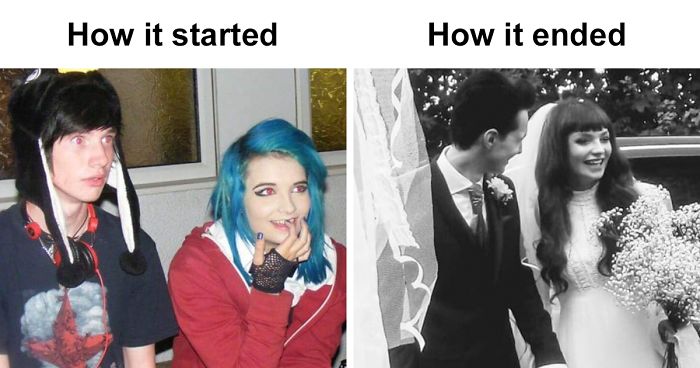
Every love story has a beginning. Sometimes it starts with a nervous message that reads like it was typed by someone wearing oven mitts. Sometimes it begins with two strangers sitting next to each other in class, pretending not to notice each other while absolutely noticing each other. And sometimes it starts with a joke, a dating app match, a shared playlist, a badly timed coffee spill, or a “we should hang out sometime” that somehow becomes a mortgage, two dogs, three kids, and a garage full of mystery cables.
That is the magic behind the viral “How It Started” vs. “How It Ended” couple trend. In 46 wholesome posts, couples shared the adorable, awkward, hilarious, and deeply moving contrast between their first tiny spark and the life they eventually built together. The format is simple: one photo, message, or memory shows the beginning; the second reveals where the story went. But the emotional effect? Absolutely unfair. One minute you are casually scrolling. The next, you are smiling at your phone like it just handed you a warm cinnamon roll.
These posts work because they show love as a timeline, not a movie trailer. They remind us that lasting relationships rarely arrive with perfect lighting and a dramatic soundtrack. More often, love begins in ordinary moments that no one realizes are important yet. A clumsy first text becomes a wedding speech. A blurry prom photo becomes a family portrait. A casual “hi” becomes a lifetime of shared grocery lists, inside jokes, and arguing lovingly about the correct dishwasher-loading strategy.
Why the “How It Started” vs. “How It Ended” Trend Feels So Good
The internet can be a chaotic soup of opinions, ads, arguments, and people confidently misusing the word “literally.” That is why wholesome couple posts hit so hard. They offer a small, bright interruption. Instead of cynicism, they deliver proof that tenderness still exists. Instead of drama, they show patience, commitment, timing, and growth.
The phrase “How It Started” vs. “How It Ended” became popular because it turns any life change into a compact story. For couples, it is especially powerful. Romance already depends on storytelling. Partners often remember the beginning of their relationship as a shared origin myth: the first conversation, the first date, the first road trip, the first “I love you,” the first time someone met the other person’s family and survived Aunt Linda’s 47 questions.
When couples share these moments publicly, they invite everyone else into the emotional before-and-after. Viewers get to see the transformation without needing the whole novel. It is the romantic version of a home renovation reveal, except the “after” photo has more wedding rings and fewer shiplap walls.
What the 46 Wholesome Couple Posts Usually Have in Common
The best “how it started vs. how it ended” couples posts are not all the same, but they often share a few patterns. Some begin with a screenshot of the first DM, where one person was brave, smooth, or accidentally weird. Others show teenage sweethearts who grew up together, long-distance couples who finally closed the gap, or friends who slowly realized everyone else had already figured out they were in love.
1. The First Message That Changed Everything
One of the most charming versions of the trend is the first-message reveal. It might be a dating app opener, a social media reply, or a painfully casual “hey” that somehow carried the emotional weight of destiny. The humor comes from the gap between how small the message looked at the time and how huge it became later.
It is easy to laugh at a clumsy opener once it has turned into a wedding photo. What once looked like an ordinary notification becomes relationship history. Suddenly, “You seem cool” is not lazy flirting; it is archival material.
2. The Teenage Crush That Became Real Life
Another beloved category features couples who knew each other in school. Their “started” photo might show braces, dramatic side bangs, oversized hoodies, or prom poses that deserve both respect and gentle legal protection. The “ended” photo might show them married, holding a baby, or standing in front of a house they bought together.
These posts appeal because they show time doing its strange little dance. People change, mature, and grow into themselves, yet the emotional thread remains. There is something deeply sweet about seeing two people move from hallway crushes to adult partners who now discuss insurance, dinner plans, and why the thermostat has been touched again.
3. The Friends-to-Lovers Plot Twist
Friends-to-lovers stories are basically catnip for the wholesome side of the internet. The beginning often looks casual: two friends in a group photo, a silly caption, a birthday shoutout, or a message that has no romantic fireworks whatsoever. Then the ending arrives with engagement rings, wedding outfits, or matching family pajamas.
This kind of post is satisfying because it suggests that love does not always need to crash into your life like a parade float. Sometimes it sits next to you for years, makes you laugh, remembers your coffee order, and waits patiently until both of you finally develop enough emotional intelligence to notice.
4. The Long-Distance Victory Lap
Some of the most emotional couple posts come from long-distance relationships. Their “started” image might be a video call screenshot, airport goodbye, or countdown calendar. The “ended” side often shows a shared apartment, wedding, or reunion that feels like the final scene of a movie where everyone in the theater is pretending they are not crying.
Long-distance love requires more than romance. It demands planning, trust, communication, and the ability to make a phone battery last through a two-hour emotional debrief. When those couples finally get their “ended” moment, the internet cheers because the result feels earned.
5. The “We Were Just Kids” Transformation
There is a special kind of tenderness in posts where the first picture shows two very young people, not yet aware of how big their story will become. They might look awkward, shy, overly confident, or dressed according to a fashion trend that future historians will struggle to defend. Then the second photo shows them older, steadier, and still together.
These posts do not say love is easy. They say growth is possible. They show that some couples do not simply “find” the right person once and then coast forever. They keep choosing each other through new jobs, moves, family changes, stress, bad haircuts, and all the other plot twists adulthood keeps throwing like confetti from a leaf blower.
Why People Love Seeing Other Couples’ Love Stories
At first glance, it might seem strange that strangers’ relationship timelines can make people feel so invested. But humans are story-loving creatures. We look for beginnings, turning points, and meaningful endings. A couple’s before-and-after post gives the brain exactly what it wants: a clear arc with emotional payoff.
There is also a hopeful quality to these posts. They suggest that ordinary moments matter. The person you meet at a party, in class, through a mutual friend, on a dating app, or during a completely unglamorous errand could become someone central to your life. That does not mean every awkward conversation is destiny. Sometimes an awkward conversation is just an awkward conversation, and everyone involved should be allowed to move on peacefully. But the possibility is charming.
These posts also make love feel more realistic. They are not just about perfect proposals or curated wedding photos. Many show the weird beginning: the first text, the shy selfie, the old photo with questionable filters, the moment before anyone knew what was coming. That honesty makes the ending sweeter. It says, “Look, we were not polished. We were just people. And somehow, this happened.”
The Relationship Lessons Hidden Inside the Trend
Beyond the cuteness, “How It Started” vs. “How It Ended” couple posts reveal several real relationship lessons. The first is that small gestures can become meaningful over time. A message, a compliment, a shared joke, or a moment of attention can open the door to something deeper.
Relationship experts often emphasize communication, responsiveness, and emotional connection as key ingredients in healthy partnerships. The couple trend illustrates those ideas in a visual way. The first moment may be small, but what happens afterward depends on whether both people keep showing up. Love is not built only by grand gestures. It is built by returning the call, remembering the detail, apologizing when needed, celebrating the little wins, and resisting the urge to use “fine” as a complete emotional report.
The second lesson is that timing matters, but effort matters more. Some couples meet at the perfect moment. Others meet before they are ready, reconnect later, or spend years moving from friendship into romance. The final post usually hides a lot of work: conversations, patience, vulnerability, forgiveness, and practical decisions.
The third lesson is that shared memories strengthen identity. Couples often become closer when they can look back and say, “That was us then, and this is us now.” The contrast does not just show change. It confirms continuity. The couple has a story that belongs to them, complete with humble beginnings and private jokes no one else fully understands.
How Social Media Changed the Way Couples Tell Their Stories
In the past, a couple’s origin story might have been shared at family dinners, anniversaries, or weddings. Today, social media has turned these stories into visual mini-memoirs. A screenshot from five years ago can sit beside a wedding photo and instantly communicate the emotional journey.
This shift has benefits and drawbacks. On the positive side, it lets people celebrate love, preserve memories, and inspire others. It also gives couples a creative way to mark milestones. A post can become a digital anniversary card, a public thank-you, or a tiny museum exhibit titled “Here Is How We Became Us.”
On the other hand, social media can pressure couples to perform happiness. Not every relationship needs a public launch, a perfect caption, or a viral timeline. Some of the healthiest couples are quietly thriving offline, where the lighting is bad but the communication is excellent. The best version of the trend is not about proving love to an audience. It is about honoring the story behind the relationship.
Why Wholesome Content Still Wins Online
Wholesome posts succeed because they make people feel something without exhausting them. The internet often rewards outrage, but tenderness has staying power. A sweet couple post can cross age groups, cultures, and relationship statuses because it taps into universal feelings: hope, nostalgia, affection, and the joy of seeing people find each other.
Even people who are single, recently heartbroken, or firmly committed to their cat’s emotional availability can enjoy these posts. They are not only about romance. They are about growth. They show that beginnings can be messy and still lead somewhere beautiful. They remind us that people are capable of commitment, silliness, resilience, and choosing matching outfits even when no one asked them to.
Specific Examples of “How It Started” vs. “How It Ended” Couple Stories
Imagine a couple whose first exchange was a short dating app message about pizza toppings. Nothing poetic. No violins. Just two people debating pineapple like the future of civilization depended on it. Years later, their “how it ended” photo shows them cutting a wedding cake, probably still disagreeing about pineapple but now legally bound to continue the debate.
Another example might show two college students in a study group, sitting near each other with laptops open and absolutely no idea they would one day share a last name. Their ending could be a family photo, a graduation-to-marriage timeline, or a snapshot outside their first home.
Then there are couples who began as online friends. Their first image might show a gaming chat, a comment thread, or a shared meme. Their ending might show them meeting in person, moving in together, or building a life that started with pixels and became grocery runs, holidays, and someone asking, “Did you feed the dog?” from the other room.
The sweetness lies in the contrast. The beginning rarely looks important. The ending reveals it was.
How Couples Can Create Their Own Meaningful Before-and-After
You do not need a viral post to celebrate your relationship timeline. Couples can create their own “how it started vs. how it ended” moment privately or publicly. Look through old photos, early messages, first-date memories, travel snapshots, or the first picture you took together. Then pair it with a current photo that shows where the relationship is now.
The goal is not perfection. In fact, the imperfect beginnings are often the best part. A grainy photo may hold more feeling than a professional portrait. A goofy message may say more than a polished caption. The point is to recognize the journey.
For anniversaries, this kind of reflection can be especially meaningful. It gives couples a chance to remember what first connected them and appreciate what has changed. It can also restart gratitude. When you see the beginning beside the present, you remember that the relationship is not just a routine. It is a story still being written, even if today’s chapter includes laundry.
Experiences Related to the Topic: What These Couple Posts Teach Us About Real Love
The most relatable part of the “How It Started” vs. “How It Ended” trend is that it makes love feel human. In real life, relationships often begin without any grand certainty. Many couples do not know they are stepping into something life-changing when they first meet. They are just answering a message, saying yes to coffee, joining a group hangout, helping someone with directions, or laughing at the same ridiculous joke.
One common experience behind these posts is the slow realization. At first, two people may treat each other casually. They talk because it is easy. They spend time together because it feels natural. Then, somewhere between ordinary conversations and shared routines, the relationship changes shape. The person who was once “someone I know” becomes “the person I want to tell first.” That shift is quiet, but it is powerful.
Another experience is the awkward beginning. Many couples have a first chapter that would not impress a romance novelist. Someone sent a weird text. Someone misread a signal. Someone showed up late. Someone wore an outfit that now lives in family legend. Yet those imperfect beginnings become beloved because they are real. A perfect start is nice, but an honest start gives the relationship texture.
Long-term couples also understand that the “ended” side of the trend is not truly an ending. It is simply the latest milestone. A wedding, a baby, a home, an anniversary, or a reunion may look like the final frame, but real relationships keep moving. After the beautiful photo comes the everyday work: paying bills, supporting career changes, caring for family, navigating conflict, and deciding what to eat when both people say, “I don’t care,” while caring very much.
These posts also highlight the importance of small emotional investments. Couples often stay close because they keep making room for each other. They listen to stories they have heard before. They send check-in texts. They celebrate tiny victories. They forgive human moments. They learn each other’s stress signals. They build inside jokes so specific that no outsider could understand them without a documentary crew and three flashbacks.
For people reading these stories, the takeaway is not that every relationship must become a fairytale. It is that meaningful love often grows from ordinary care. The first message matters, but the thousands of messages after it matter more. The first photo is cute, but the years of choosing each other create the real transformation.
That is why the 46 wholesome posts feel so satisfying. They compress years of effort, laughter, uncertainty, and devotion into one simple comparison. They remind us that beginnings are often humble, endings are often new beginnings, and love, when handled with patience and humor, can turn a tiny spark into a whole shared universe.
Conclusion
“Couples Are Sharing ‘How It Started’ Vs. ‘How It Ended’ In 46 Wholesome Posts” is more than a cute internet roundup. It is a reminder that love stories are built in layers. The first layer may be a message, a glance, a joke, a class photo, or a casual meeting. The later layers are made from trust, communication, shared memories, and the decision to keep turning toward each other.
The reason these posts keep winning hearts is simple: they give us hope without pretending love is effortless. They show beginnings that looked ordinary and outcomes that feel extraordinary. They celebrate couples who grew, waited, learned, laughed, survived distance, and turned awkward first moments into lifelong memories.
And honestly, that is the best kind of internet content. No shouting. No scandal. Just people saying, “Here is where we began. Look at us now.” Adorable. Dangerous to mascara. Highly recommended with snacks.
Note: This article is an original, publication-ready synthesis based on publicly available relationship research, digital culture coverage, and real social media trend patterns. It has been fully rewritten with no copied captions, no source-code artifacts, and no unnecessary reference markers.