
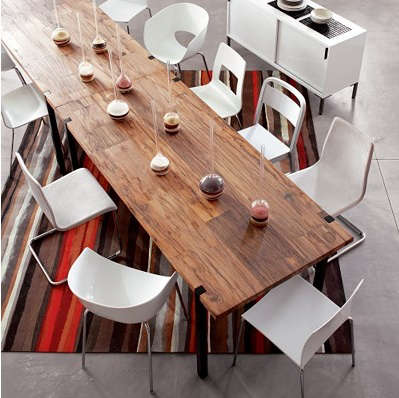
The Darjeeling Dining Table is the kind of furniture piece that does not politely sit in the corner and wait to be noticed. It enters the dining room with history in its bones, industrial metal under its elbows, and reclaimed wood on top that looks as if it has already heard better dinner stories than most of us have told. Once associated with CB2 and still discussed across design blogs and secondhand furniture marketplaces, the Darjeeling Dining Table has earned a small but devoted following among people who love rustic modern dining rooms, sustainable materials, and furniture with a little attitude.
At first glance, it seems simple: a rectangular reclaimed wood dining table with blackened metal legs. Look closer, and the personality comes out. The tabletop is often described as a mosaic of reclaimed saal wood, originally sourced from old Indian railroad ties. That detail alone gives the table a conversation-starting quality. It is not merely “brown table, four legs, please pass the potatoes.” It is more like, “This table may have had a past life involving trains, monsoon weather, and dramatic cinematic landscapes.”
For homeowners, renters, decorators, and furniture treasure hunters, the Darjeeling Dining Table offers a strong case study in what makes a dining table worth remembering. It blends reclaimed wood, industrial design, practical seating, and a lived-in look that makes scratches feel less like disasters and more like tiny chapters. In this guide, we will look at what makes the Darjeeling Dining Table special, how it fits into modern American homes, how to style it, what to know before buying one secondhand, and how to care for it without treating dinner like a museum tour.
What Is the Darjeeling Dining Table?
The Darjeeling Dining Table is best known as a rustic industrial dining table associated with CB2, the modern home brand connected to Crate & Barrel. Although it appears to be discontinued as a standard new retail item, it continues to show up through resale platforms, design archives, rental listings, and home renovation blogs. That afterlife matters. A forgettable table disappears when it leaves the catalog; a memorable one keeps being searched, listed, discussed, and moved from apartment to townhouse with the help of several strong friends and possibly a bribe of pizza.
The table’s defining features are its reclaimed saal wood top, patchwork plank surface, and dark square-tube metal legs. Listings and archived descriptions commonly place its size around 80 inches wide by 36 inches deep, with a standard dining height in the range of about 29.5 to 31 inches. That footprint makes it large enough for family meals, dinner parties, laptops, board games, school projects, and the occasional dramatic “we need to talk” conversation.
Why the Name “Darjeeling” Matters
Darjeeling is a city in the Indian state of West Bengal, widely known for its tea, Himalayan scenery, and colonial-era hill-station identity. The table’s name likely borrows from that sense of place, travel, and rugged material romance. While the table is not a tea product, the name gives it an atmosphere: global, earthy, weathered, and slightly mysterious. It sounds less like a SKU number and more like a story your stylish friend tells while pouring chai.
Design Analysis: Rustic Meets Industrial
The strongest appeal of the Darjeeling Dining Table is its balance of warmth and structure. The reclaimed wood top adds texture, irregularity, and natural color variation. The blackened metal legs bring clean lines, contrast, and an industrial edge. Together, they create a look that can work in lofts, renovated bungalows, modern farmhouses, open-plan apartments, and homes that have no idea what style they are but are trying their best.
Unlike polished formal dining tables, the Darjeeling table does not demand matching china, crystal stemware, or guests who know which fork is emotionally correct. It invites a more relaxed kind of dining. Its surface already has visible character, so the first water ring does not feel like a tragedy. The table looks better when life happens around it.
The Reclaimed Wood Surface
The tabletop is the star. Reclaimed wood dining tables are popular because they offer grain, variation, and authenticity that newly manufactured surfaces often try to imitate. In the Darjeeling Dining Table, the wood is typically arranged in a plank or mosaic-like pattern. This patchwork quality gives the surface movement, making it visually interesting even when it is not styled with flowers, candles, or a heroic bowl of lemons.
Saal wood, also called sal wood, comes from the Shorea robusta tree and is known as a dense hardwood used in heavy-duty applications in parts of South Asia. In furniture, that density contributes to a feeling of substance. This is not a featherweight table you casually slide across the room because you suddenly felt inspired by a Pinterest board. It is a solid piece, and several secondhand listings describe it as heavy. Translation: measure your doorways and recruit help before pickup day.
The Metal Base
The black metal legs keep the table from feeling too rustic. Without them, the reclaimed wood top might lean heavily farmhouse or cabin. With them, the design becomes sharper and more urban. The square-tube construction and dark finish give it a workshop-inspired look, while the inset legs help preserve a clean rectangular silhouette.
This mix of wood and metal is one reason the table remains desirable. It can bridge several aesthetics: industrial dining room, rustic modern kitchen, eclectic loft, masculine minimalism, and even warm contemporary interiors. It is flexible without being bland, which is harder to achieve than it sounds. Many tables are either so plain they vanish or so dramatic they start demanding their own Instagram account.
Size and Seating: Is the Darjeeling Dining Table Practical?
With an approximate 80-inch length and 36-inch depth, the Darjeeling Dining Table is best suited for medium to large dining spaces. It can typically seat six people comfortably and up to eight when needed, depending on chair width and how much elbow room your guests expect. If your friends gesture wildly while telling stories, plan for six. If everyone is polite and compact, eight may work.
For a table of this size, room clearance is important. A good rule of thumb is to leave about three feet of space around the table so people can pull out chairs and move behind seated guests. In a narrow dining room, the 80-inch length may feel grand; in an open-plan space, it can act as a visual anchor between the kitchen and living area.
Best Rooms for This Table
The Darjeeling Dining Table works especially well in:
- Open-concept kitchen and dining areas where a strong table helps define the eating zone.
- Urban lofts with exposed brick, concrete, black-framed windows, or high ceilings.
- Modern farmhouse interiors that need a little less “barn wedding” and a little more edge.
- Eclectic homes where vintage, global, and contemporary pieces already mingle happily.
- Family dining rooms where durability and forgiving texture matter more than a flawless glossy finish.
How to Style the Darjeeling Dining Table
Because the Darjeeling Dining Table already has a strong personality, styling it is about balance. The goal is not to bury the reclaimed wood under a mountain of decorations. Let the table breathe. It did not survive its design journey just to disappear under plastic placemats shaped like autumn leaves.
Chair Pairings That Work
One of the best ways to style this table is by mixing materials. Leather dining chairs bring warmth and sophistication. Black metal chairs lean into the industrial look. Upholstered chairs soften the rugged surface and make long dinners more comfortable. Wood chairs can work too, but choose a tone that complements rather than competes with the tabletop.
Avoid overly ornate matching chairs unless you intentionally want contrast. The Darjeeling table is rugged and linear, so chairs with clean silhouettes usually feel more natural. For a collected look, consider using host chairs at the ends and simpler side chairs along the length. This keeps the room from looking like it was purchased in one afternoon during a caffeine-fueled furniture emergency.
Lighting Above the Table
A rectangular dining table benefits from lighting that follows its shape. Linear chandeliers, multiple pendants, or a long sculptural fixture can visually connect the room. Black metal lighting works well if you want an industrial mood. Brass, aged bronze, or woven pendants soften the table and add warmth.
The key is scale. A tiny pendant over an 80-inch table can look like a lonely lightbulb having an existential crisis. Choose a fixture with enough presence to match the table’s visual weight.
Rugs and Flooring
If you use a rug under the Darjeeling Dining Table, choose one large enough for chairs to remain on the rug when pulled out. A rug that is too small makes the room look awkward and turns every chair movement into a border-crossing event. Flatweave rugs, low-pile wool rugs, and indoor-outdoor rugs are practical choices because dining rooms are places where crumbs go to audition for permanent residence.
Because the table has a textured surface, rugs with subtle patterns often work better than extremely busy designs. Natural fiber, muted geometric, vintage-inspired, or faded Persian-style rugs can all pair beautifully with the table’s rustic industrial mood.
Buying a Darjeeling Dining Table Secondhand
Since the Darjeeling Dining Table is not commonly available as a current new retail item, many shoppers find it through secondhand furniture platforms, local marketplaces, estate sales, rental resale, or design-conscious classifieds. Buying used can be smart, especially for a heavy reclaimed wood dining table. However, it requires careful inspection.
What to Check Before Buying
First, confirm the dimensions. Most listings describe the table as approximately 80 inches long and 36 inches deep, but height details vary slightly across sellers. Ask for exact measurements, especially if you have a tight dining area or plan to pair it with specific chairs.
Second, check the surface condition. Reclaimed wood naturally has cracks, marks, knots, and color variation. That is part of the charm. However, you want to distinguish character from damage. Look for deep splits, loose planks, wobbling, stains that bother you, or areas where the wood feels unstable.
Third, inspect the metal base. Ask whether the legs are secure, whether any welds appear cracked, and whether the table sits level. A little patina is fine. A table that rocks like a café table on a cobblestone street is less charming when you are serving soup.
Finally, plan transportation. This table is large and reportedly very heavy. Bring moving blankets, straps, and more human muscle than optimism. If stairs are involved, say a small prayer to the furniture gods.
Care and Maintenance for Reclaimed Wood
The Darjeeling Dining Table is not a delicate glass table, but that does not mean it should be treated like a garage workbench. Reclaimed wood can last for years with sensible care. The most important rule is simple: moisture is not your friend. Wipe spills quickly, use coasters, and avoid leaving wet glasses or hot pans directly on the surface.
For routine cleaning, use a soft cloth or microfiber towel. A slightly damp cloth can remove everyday dust and crumbs, but do not soak the wood. If the surface is unfinished or minimally sealed, harsh cleaners can stain, dry out, or discolor it. Mild soap diluted in water may be acceptable for finished wood, but always test in a hidden area first.
Should You Seal the Table?
Some owners love the raw, unfinished look. Others prefer to add a protective finish, especially if the table is used daily by children, guests, pets, or adults who claim they are “careful” and then immediately spill salsa. A clear matte sealant, hardwax oil, or professional furniture finish can help protect the wood while preserving its natural look.
Before refinishing or sealing, consider the table’s existing condition. If you are unsure whether it already has a finish, consult a furniture refinisher. Reclaimed wood can absorb products unevenly, and the patchwork construction may include variations in density and grain. In other words, do not freestyle with mystery chemicals five minutes before Thanksgiving.
Why Reclaimed Wood Still Feels Relevant
Reclaimed wood furniture remains popular because it offers sustainability, uniqueness, and emotional texture. Every board has variation. Every mark suggests age. In a market filled with flat-packed sameness, reclaimed wood gives a room something human.
From an environmental perspective, using reclaimed wood can reduce demand for newly harvested lumber and keep usable material out of the waste stream. It also preserves old-growth character that is difficult to reproduce quickly. A dining table made from reclaimed material feels less disposable, and that matters in a culture where too many furnishings are treated like temporary accessories.
The Darjeeling Dining Table fits this broader shift toward furniture with longevity and visible material honesty. It is not perfect, and that is the point. The wood does not pretend to be plastic-smooth. The metal does not pretend to be dainty. The whole piece says, “Yes, I have texture. Please serve pasta.”
Darjeeling Dining Table vs. Similar Dining Tables
If you love the Darjeeling look but cannot find one, look for similar features rather than the exact name. Search for reclaimed wood dining table, industrial dining table, wood and metal dining table, rustic modern dining table, or 80-inch dining table. Comparable tables may use acacia, mango wood, teak, pine, oak, or mixed reclaimed hardwoods.
However, not all “reclaimed-style” tables are truly reclaimed. Some are new wood distressed to look old. That is not automatically bad, but it is different. If sustainability and authenticity matter to you, ask sellers about the material source, construction, and finish. Solid wood construction, visible joinery, stable legs, and a durable protective surface are more important than romantic product names.
Who Should Buy This Table?
The Darjeeling Dining Table is a good fit for someone who wants a statement dining table with warmth, texture, and industrial structure. It suits people who enjoy natural imperfections and do not panic when furniture looks lived-in. It is especially attractive for buyers who appreciate discontinued designs and secondhand finds.
It may not be ideal for someone who wants a pristine, glossy, formal dining surface. If you dream of a table so polished that guests can check their hair in it, the Darjeeling table may feel too rugged. If you prefer furniture that already looks like it has survived a few excellent dinner parties, this table is right in your lane.
Common Mistakes to Avoid
One mistake is pairing the Darjeeling Dining Table with furniture that is too visually heavy. Because the table already has a substantial top and metal base, bulky chairs can make the room feel crowded. Choose chairs with open backs, tapered legs, or upholstered forms that lighten the overall composition.
Another mistake is ignoring scale. An 80-inch table can overwhelm a small dining room. Before buying, tape the dimensions on the floor and live with the outline for a few days. Walk around it. Pull out imaginary chairs. Pretend to carry a casserole. If you keep bumping into invisible furniture, the real table will not magically become smaller.
A third mistake is overdecorating the surface. The reclaimed wood is already decorative. A simple runner, ceramic bowl, low greenery, or candles may be enough. Let the table’s material do its job.
500-Word Experience Section: Living With a Darjeeling Dining Table
Living with a Darjeeling Dining Table feels different from living with a basic dining table. A basic table does what it is told: holds plates, accepts chairs, tries not to wobble. The Darjeeling table participates. It changes the mood of the room the moment it arrives. Suddenly the dining area feels more intentional, as if someone with excellent taste and slightly sore arms just upgraded the entire household.
The first experience most owners have is not poetic. It is logistical. This table is big, heavy, and not interested in your narrow hallway. Moving it requires planning. You measure the doorway, then measure it again because denial is not a moving strategy. You gather friends, promise snacks, and watch everyone become very serious around the phrase “tilt it slowly.” Once the table is finally in place, though, the room usually makes sense in a new way. The size feels generous. The wood feels grounded. The metal legs make everything look a little sharper.
Daily use is where the table becomes lovable. Breakfast looks better on it, even if breakfast is just toast eaten while standing because the morning went off the rails. Coffee mugs feel at home. A laptop looks less sterile against the reclaimed wood. Dinner plates, linen napkins, takeout containers, homework papers, and birthday cupcakes all somehow belong. That is the strength of the design: it can handle beauty and chaos at the same time.
The surface teaches you to relax. On a glossy table, every mark feels like a tiny accusation. On the Darjeeling Dining Table, the wood already has variation, lines, patches, and history. You still use coasters. You still wipe spills. You do not become a furniture goblin. But you stop treating the table like a fragile object and start treating it like part of the household. A faint mark from a dinner party becomes a memory instead of an emergency.
Guests notice it. Someone will run a hand over the top and ask what kind of wood it is. Someone else will ask where you found it. If you bought it secondhand, you get the added pleasure of telling the acquisition story, which often includes suspense, negotiation, a borrowed vehicle, and one person who underestimated the weight. Furniture with a story makes hosting easier because the room has a built-in icebreaker. No one has to begin with the weather unless they truly want to.
Styling it over time is also enjoyable. In summer, the table looks fresh with a pale linen runner, clear glassware, and a bowl of citrus. In fall, it handles stoneware, candles, and warm colors without looking like a seasonal catalog exploded. During holidays, it can go festive without becoming fussy. The rustic industrial base keeps the sweetness in check, like a friend who lets you decorate but gently removes the seventh centerpiece.
The best experience, however, is how the table encourages gathering. Its long shape makes room for shared meals, side dishes, board games, work sessions, and conversations that stretch past dessert. It feels sturdy enough for real life, not just staged life. Over time, that may be the Darjeeling Dining Table’s greatest quality. It is not simply a beautiful piece of furniture. It is a durable stage for ordinary days, special nights, and all the crumbs in between.
Conclusion: Is the Darjeeling Dining Table Worth It?
The Darjeeling Dining Table remains compelling because it combines design presence with practical durability. Its reclaimed saal wood top, industrial metal base, generous proportions, and rugged character make it more than a place to eat. It becomes the visual anchor of a dining room and a functional surface for modern life.
For shoppers who love reclaimed wood, rustic modern design, and secondhand furniture with personality, the Darjeeling Dining Table is worth watching for. It may require patience to find, muscle to move, and thoughtful care to maintain, but the reward is a table that feels distinctive instead of disposable. In a world full of furniture that looks perfect online and forgettable in person, that is no small thing.
Note: This article is written from a synthesis of real product references, resale listings, furniture care guidance, dining room design standards, and current interior styling practices. Always verify measurements, condition, finish, and availability with the seller before purchasing a secondhand Darjeeling Dining Table.













