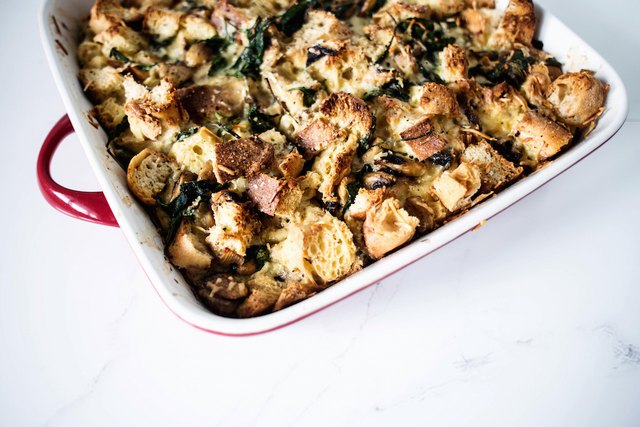
An overnight strata is what happens when bread, eggs, cheese, and a few flavorful fillings agree to handle breakfast while you sleep. Assemble everything the night before, place the dish in the refrigerator, and bake it the next morning. Instead of juggling skillets while guests hover near the coffee maker, you get a golden, custardy breakfast casserole that comfortably feeds a crowd.
This easy overnight strata recipe combines breakfast sausage, spinach, sharp cheddar, sturdy bread, and a lightly seasoned egg custard. It is simple enough for a lazy weekend but impressive enough for Christmas morning, Easter brunch, a baby shower, or any gathering where cooking individual omelets would test both your patience and your smoke alarm.
What Is an Overnight Strata?
A strata is a layered breakfast casserole made with bread, eggs, milk, cheese, and optional meats or vegetables. It resembles a savory bread pudding, although it is usually heartier, cheesier, and designed to be served as a main dish.
The name comes from the layers, or “strata,” created by arranging bread and fillings in a baking dish. Once the egg mixture is poured over everything, the bread gradually absorbs the custard. Refrigerating the casserole overnight gives that process plenty of time to happen, producing a tender interior with a crisp, browned top.
How a Strata Differs From Quiche and Frittata
A quiche contains a rich egg filling baked inside a pastry crust. A frittata is mostly eggs and is generally started in a skillet. A strata includes a substantial amount of bread, which acts as both structure and starch. In other words, a strata brings its own toast to the party.
Why This Easy Overnight Strata Recipe Works
The best breakfast casseroles balance convenience with texture. This version works because each ingredient has a specific job.
- Day-old bread absorbs the egg mixture without immediately collapsing.
- Breakfast sausage adds savory flavor and makes the dish satisfying enough to serve as a main course.
- Spinach and onion provide freshness, color, and a welcome break from all that cheese.
- Sharp cheddar delivers bold flavor without requiring specialty ingredients.
- Dijon mustard and seasonings keep the custard from tasting flat.
- An overnight rest allows the bread to absorb the liquid evenly, reducing dry spots and puddles of egg.
Most of the work happens before bedtime. In the morning, your main responsibilities are preheating the oven and pretending that waking up to a prepared breakfast was the result of extraordinary organizational talent.
Easy Overnight Strata Recipe
Recipe Overview
- Prep time: 25 minutes
- Chilling time: 8 to 12 hours
- Baking time: 50 to 60 minutes
- Resting time: 10 minutes
- Yield: 8 to 10 servings
- Recommended pan: 9-by-13-inch baking dish
Ingredients
- 1 tablespoon unsalted butter, for greasing the baking dish
- 1 pound breakfast sausage
- 1 medium yellow onion, finely chopped
- 2 garlic cloves, minced
- 5 ounces fresh baby spinach
- 10 cups cubed day-old French, Italian, or sourdough bread
- 2 cups shredded sharp cheddar cheese, divided
- 1 cup shredded mozzarella, Monterey Jack, or Gruyère cheese
- 10 large eggs
- 3 cups whole milk
- 1 tablespoon Dijon mustard
- 1 teaspoon kosher salt
- 1 teaspoon dried thyme
- 1/2 teaspoon ground black pepper
- 1/4 teaspoon smoked paprika
- 2 tablespoons chopped fresh parsley or chives, optional
Step 1: Prepare the Baking Dish
Coat the bottom and sides of a 9-by-13-inch baking dish with butter. A well-greased pan makes serving easier and preserves the crisp, cheesy edges, which are usually the first pieces to disappear.
Step 2: Cook the Sausage and Vegetables
Place a large skillet over medium heat. Add the breakfast sausage and cook for 6 to 8 minutes, breaking it into small crumbles with a wooden spoon. Continue cooking until the meat is browned and no pink remains.
Transfer the cooked sausage to a paper-towel-lined plate, leaving about 1 tablespoon of fat in the skillet. Add the chopped onion and cook for 3 to 4 minutes, until softened. Stir in the garlic and cook for 30 seconds.
Add the spinach a handful at a time. Cook until wilted and until most of the released moisture has evaporated, about 2 to 3 minutes. Removing excess moisture is important; watery vegetables can turn a promising strata into a breakfast swimming pool.
Step 3: Build the Layers
Spread half of the bread cubes across the prepared baking dish. Top with half of the sausage, half of the spinach mixture, 1 cup of cheddar, and half of the second cheese.
Add the remaining bread, sausage, and spinach mixture. Finish with the remaining mozzarella, Monterey Jack, or Gruyère. Reserve the final cup of cheddar for the top.
The layers do not need to look perfect. Aim for an even distribution so that every serving includes bread, filling, and cheese rather than one mysterious corner containing all the sausage.
Step 4: Make the Egg Custard
In a large mixing bowl, whisk the eggs until the yolks and whites are fully combined. Add the milk, Dijon mustard, salt, thyme, black pepper, and smoked paprika. Whisk again until smooth.
Pour the egg mixture slowly and evenly over the layered bread. Use a spatula or clean hands to gently press the bread into the liquid. The cubes do not need to be completely submerged, but they should all make contact with the custard.
Step 5: Refrigerate Overnight
Sprinkle the reserved cheddar over the top. Cover the baking dish tightly with foil or reusable food wrap and refrigerate for at least 8 hours. The assembled strata may be refrigerated for up to 24 hours before baking.
During this rest, the bread absorbs the seasoned egg mixture while the flavors mingle. It is essentially meal preparation performed by the refrigerator, which deserves more credit than it usually receives.
Step 6: Bake the Strata
The next morning, remove the strata from the refrigerator while the oven preheats to 350°F. Allow the dish to stand at room temperature for approximately 20 minutes. Avoid leaving an egg-based casserole unrefrigerated for an extended period.
Keep the dish covered with foil and bake for 30 minutes. Remove the foil and continue baking for 20 to 30 minutes, until the top is golden, the edges are bubbling, and the center is fully set.
A thin knife inserted near the center should come out without visible liquid egg. For the most reliable food-safety check, the center should reach at least 160°F on an instant-read thermometer.
Step 7: Rest and Serve
Let the baked strata rest for 10 minutes before cutting it into squares. This pause allows the custard to settle and makes the portions easier to serve. Garnish with parsley or chives and bring the dish to the table while it is warm.
How to Choose the Best Bread for Strata
The bread determines whether your overnight breakfast strata becomes pleasantly custardy or unpleasantly soggy. Choose a sturdy loaf with enough structure to absorb liquid without dissolving.
Excellent Bread Options
- French bread: Mild, affordable, and easy to find.
- Sourdough: Adds a pleasant tang and maintains its texture well.
- Italian bread: Soft enough to become tender but sturdy enough for overnight soaking.
- Challah: Creates a richer, softer strata with a slightly sweet background.
- Whole-grain bread: Adds nuttiness and extra texture, especially in vegetable-heavy versions.
Day-old bread is ideal because some of its moisture has evaporated. If your bread is fresh, spread the cubes on a baking sheet and place them in a 300°F oven for 10 to 15 minutes. They should feel dry around the edges but should not become deeply toasted.
Very soft sandwich bread can work in an emergency, but it tends to compress. Think of it as the backup singer rather than the headliner.
Easy Ingredient Substitutions
A strata is wonderfully flexible, making it useful for leftover bread, vegetables, cheese, and cooked meat. Keep the general proportions similar and avoid adding ingredients that release excessive water.
Meat Variations
- Replace sausage with 2 cups of diced cooked ham.
- Use 8 to 10 slices of cooked, crumbled bacon.
- Try cooked turkey sausage for a lighter option.
- Add shredded cooked chicken for a breakfast-for-dinner version.
Vegetarian Variations
Omit the sausage and increase the cooked vegetables to approximately 3 cups. Mushrooms, broccoli, asparagus, bell peppers, kale, caramelized onions, and roasted tomatoes are all excellent choices.
Cook fresh vegetables before layering them into the casserole. Mushrooms, spinach, zucchini, and similar vegetables contain considerable moisture, which should be cooked away before the overnight soak. Thawed frozen spinach should be squeezed thoroughly.
Cheese Variations
Cheddar is reliable, but Gruyère, Swiss, fontina, Monterey Jack, mozzarella, pepper Jack, and smoked Gouda also melt well. Crumbled feta or goat cheese can add a tangy accent, although they work best when paired with a milder melting cheese.
Seasoning Variations
Replace thyme with rosemary, sage, Italian seasoning, or chopped fresh herbs. For a Southwestern strata, use pepper Jack cheese, roasted green chiles, cumin, and cooked chorizo. For a Mediterranean version, combine spinach, feta, roasted red peppers, oregano, and cooked turkey sausage.
Common Strata Mistakes and How to Avoid Them
Using Too Much Liquid
The bread should absorb the custard without floating in it. Measure both the bread and milk rather than estimating wildly before your first cup of coffee. If your loaf is especially soft, reduce the milk by approximately 1/4 cup.
Adding Raw, Watery Vegetables
Vegetables should generally be sautéed, roasted, or otherwise cooked before they enter the baking dish. Removing excess water concentrates their flavor and protects the texture of the casserole.
Forgetting to Season the Custard
Bread and eggs are mild. Salt, mustard, pepper, herbs, and a flavorful cheese prevent the finished dish from tasting like a damp loaf wearing a cheese hat.
Skipping the Chilling Time
A strata can sometimes be baked after a short rest, but an overnight chill produces more even absorption. If you are short on time, allow at least one hour and press the bread gently into the custard several times.
Cutting It Immediately
The center continues to settle after the casserole leaves the oven. Resting it for 10 minutes results in cleaner slices and reduces the chance of molten cheese launching itself onto an unsuspecting brunch guest.
What to Serve With Overnight Strata
This make-ahead breakfast casserole is rich and filling, so simple side dishes work best. Serve it with fresh berries, melon, citrus segments, or a lightly dressed green salad. Roasted breakfast potatoes are a good choice when feeding a particularly hungry crowd.
For a complete brunch menu, pair the strata with fruit salad, yogurt, muffins, coffee, tea, and orange juice. Hot sauce, salsa, pesto, or tomato relish can be offered at the table so guests can customize their portions.
Storage, Freezing, and Reheating
Refrigerating Leftovers
Refrigerate leftover strata within two hours of serving. Cover the baking dish tightly or transfer portions to airtight containers. For best quality and safe handling, enjoy refrigerated leftovers within three to four days.
Reheating
Reheat individual portions in the microwave until steaming hot. To reheat several servings, cover them with foil and warm them in a 325°F oven for approximately 15 to 20 minutes. Previously cooked egg dishes should be reheated to 165°F.
Freezing
Strata freezes best after it has been baked. Cool it, cut it into portions, and wrap each serving tightly. Place the portions in a freezer-safe container and freeze for up to two months for the best texture.
Thaw frozen servings overnight in the refrigerator before reheating. The bread may become slightly softer after freezing, but the flavor remains excellent.
Frequently Asked Questions
Can I Make Strata Without Refrigerating It Overnight?
Yes. Let the assembled casserole rest for at least one hour before baking so the bread can begin absorbing the custard. The texture may be slightly less uniform than a true overnight strata, but it will still be delicious.
Can I Use Non-Dairy Milk?
Unsweetened, unflavored oat or soy milk can replace whole milk. Avoid sweetened or vanilla-flavored products unless you are attempting to invent a breakfast casserole that confuses everyone at the table.
Why Is My Strata Soggy?
Common causes include overly soft bread, too much milk, uncooked watery vegetables, or insufficient baking time. Continue baking until the center is set, covering the top loosely with foil if it becomes too brown.
Why Is My Strata Dry?
Dry strata usually results from too little custard, extremely dry bread, or overbaking. Measure the ingredients carefully and begin checking the center near the lower end of the recommended baking time.
Can I Assemble It More Than One Day Ahead?
For the best balance of quality and food safety, assemble the strata no more than 24 hours before baking. If you need to work further ahead, cook the meat and vegetables separately, refrigerate them, and assemble the casserole the evening before serving.
Real-World Experiences and Lessons From Making Overnight Strata
Home cooks often discover that the appeal of an overnight strata has as much to do with the morning experience as it does with the recipe. Preparing breakfast for several people can become surprisingly chaotic. Bacon needs attention, pancakes demand continuous flipping, toast burns the moment someone asks where the coffee filters are, and scrambled eggs wait for nobody.
A make-ahead strata changes that rhythm. The kitchen work happens during a quieter part of the day, often after dinner. The sausage can be browned, the bread cubed, and the casserole assembled without an audience asking when breakfast will be ready. By morning, the countertops are clean, the ingredients are already combined, and the cook can participate in the gathering instead of operating a one-person diner.
One of the most useful lessons shared by experienced strata makers is that older bread is not merely acceptable; it is preferable. A loaf that seems too dry for sandwiches often becomes the ideal base for an egg casserole. This makes strata particularly satisfying after holidays, when extra dinner rolls, baguettes, or sandwich bread are occupying valuable kitchen territory. The dish transforms those leftovers into something intentional rather than allowing them to begin an archaeological career at the back of the pantry.
Another recurring lesson involves vegetables. Adding raw spinach, mushrooms, or zucchini may seem efficient, but those ingredients release water while baking. The result can be a loose, uneven center. Spending a few extra minutes cooking the vegetables beforehand produces a more flavorful and dependable casserole. The same principle applies to meat: sausage and bacon should be fully cooked and drained before assembly.
Cheese selection also affects the experience. Mild cheese provides creaminess, while a smaller amount of strongly flavored cheese can make the entire casserole taste more interesting. Sharp cheddar, Gruyère, smoked Gouda, and pepper Jack are especially effective. Combining one assertive cheese with one mild melting cheese creates both flavor and the stretchy, browned top people quietly compete for.
The overnight soak is forgiving, but the morning bake still benefits from attention. Ovens vary, baking dishes conduct heat differently, and a casserole taken directly from a very cold refrigerator may require extra time. Checking the center rather than relying only on the clock prevents disappointment. A browned surface can appear finished while the middle is still loose, so a thermometer or thin knife is more useful than optimistic staring.
Hosts also learn that strata is an excellent “buffer” dish. It remains warm for a while after baking and does not collapse if brunch starts 15 minutes late. That flexibility matters when guests arrive at different times, children require emergency wardrobe changes, or someone announces that they brought a complicated coffee machine requiring a brief engineering degree.
Perhaps the best practical experience is discovering how easily the formula adapts. Once the basic balance of bread, custard, cooked fillings, and cheese becomes familiar, the recipe stops feeling rigid. Ham and Swiss can replace sausage and cheddar. Roasted vegetables can create a meatless version. Leftover holiday bread can become a festive breakfast. The ingredients change, but the dependable method remains the same.
That reliability is why overnight strata earns repeat appearances. It delivers the comfort of a hot homemade breakfast without demanding a heroic morning performance. Assemble it at night, bake it when everyone wakes up, and accept the compliments with appropriate humilityor at least with a straight face.
Conclusion
This easy recipe for overnight strata turns basic breakfast ingredients into a warm, satisfying meal for a family or brunch crowd. Sturdy bread absorbs a savory egg custard while sausage, spinach, onion, and cheese add layers of flavor. Because the casserole is assembled in advance, the morning preparation is limited to preheating the oven, baking, and making sure nobody steals all the crispy corner pieces.
Use the recipe as a dependable starting point, then adapt it with the cooked vegetables, meat, herbs, and cheeses you already enjoy. With thoughtful seasoning, properly drained fillings, and enough time for the bread to soak, your overnight breakfast casserole will emerge puffed, golden, and ready to make the morning considerably easier.